Unlike many GameFi projects that primarily use tokens for in-game spending, Hamster Kombat focuses on building a sustainable ecosystem incentive model. The project aims to convert game users into long-term ecosystem participants through Seasons, community governance, and ecosystem development—instead of attracting one-time airdrop claimants.
As the Hamster Foundation drives ongoing ecosystem growth, HMSTR’s use cases have expanded from game rewards to governance, partner incentives, and broader value connectivity across future products, positioning it as a key asset in the Telegram gaming ecosystem.
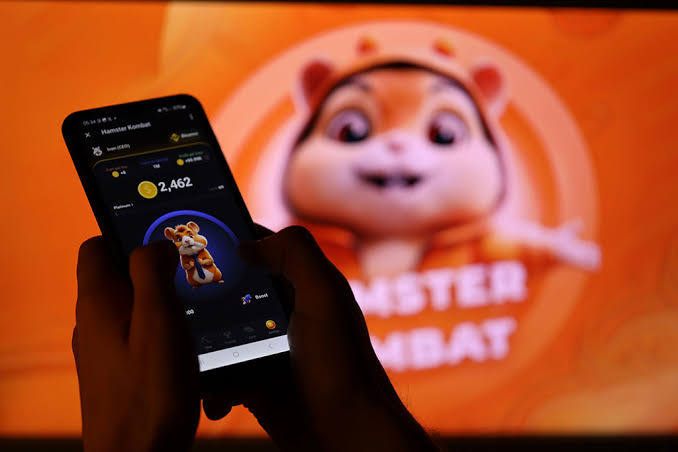
What Role Does HMSTR Play in Hamster Kombat
HMSTR is the essential bridge between the Hamster Kombat game ecosystem and the on-chain economy. Players’ in-game actions and long-term contributions can ultimately be tied to on-chain assets through HMSTR, allowing game rewards to integrate with the broader Web3 ecosystem.
Unlike traditional in-game currencies limited to a single title, HMSTR is a publicly issued on-chain token, tradable and manageable across supported platforms. This structure enables the game economy to interact with the entire TON ecosystem, rather than being confined to one application.
The official positioning of HMSTR is as an ecosystem token—not merely a reward point. With the rollout of more Mini Apps, community events, and ecosystem products, HMSTR will facilitate value transfer between products, providing a unified economic foundation for future growth.
Currently, HMSTR’s primary roles are:
| Role |
Main Function |
| Game Rewards |
Season rewards and community incentives |
| Ecosystem Asset |
Value transfer across products |
| Governance Proof |
Supports community governance mechanisms |
| Long-term Incentive |
Incentives for developers, partners, and ecosystem development |
This approach makes HMSTR a foundational element for Hamster Kombat’s long-term ecosystem, not just a single game.
Core Use Cases of HMSTR
HMSTR’s most direct use is as a game reward. Players who participate in Seasons, complete specific tasks, or join official events may receive HMSTR incentives, directly linking gameplay to on-chain assets.
Beyond player rewards, HMSTR serves as an ecosystem incentive. The project has set aside tokens to support developers, partners, and future ecosystem initiatives, enabling more projects to join the Hamster Kombat ecosystem and expand the community.
As the Hamster Foundation continues ecosystem development, HMSTR will also take on governance functions. Qualified token holders will be able to participate in ecosystem decision-making, allowing the community to help shape the project’s long-term trajectory.
According to official disclosures, HMSTR’s main applications include:
- Season reward distribution
- Community activity incentives
- Ecosystem partner support
- Community governance
- Long-term ecosystem development
Notably, HMSTR is not positioned as a payment token, nor is it a requirement for game access. Its primary roles are ecosystem incentives and value connectivity, not gating gameplay.
How HMSTR Connects Game Rewards and Ecosystem Incentives
Hamster Kombat’s rewards are not structured as one-off airdrops, but as part of a sustainable incentive system. The Season mechanism is the key link between in-game activity and HMSTR distribution.
Players who complete tasks, level up, or join community events during different Seasons can earn rewards according to official rules. This model ties token allocation to long-term engagement, rather than short-term clicks.
Additionally, a portion of HMSTR is allocated to developer programs, ecosystem partnerships, and community building. As more Mini Apps and products join the Hamster Foundation, this unified incentive structure further expands HMSTR’s real-world utility.
Game rewards, community incentives, and ecosystem development together form HMSTR’s long-term distribution logic, making the token both a player reward and an economic driver for ecosystem growth.
HMSTR’s Supply Model
HMSTR features a fixed supply model. According to official tokenomics, HMSTR’s total supply is capped at 100,000,000,000 (100 billion) tokens, with no announced mechanism for additional issuance. Circulating supply will be determined by the unlocking schedule and ecosystem incentive plans, not inflation.
Unlike many Web3 games that allocate large token shares to teams or investors, Hamster Kombat reserves the majority of tokens for the community. The goal is to use multi-season rewards to involve real players in distribution, rather than concentrating tokens among a small group.
Per the Token Generation Event (TGE), HMSTR’s initial allocation is as follows:
| Allocation Category |
Percentage |
Main Use |
| Season 1 Player Rewards |
60% |
First-round community airdrop and player incentives |
| Season 2 Player Rewards |
15% |
Subsequent season rewards |
| Team |
8% |
Long-term team incentives |
| Partnerships & Grants |
6% |
Partner and ecosystem support |
| Liquidity |
4% |
Market liquidity support |
| Marketing |
4% |
Community promotion and marketing |
| Binance Launchpool |
3% |
Launchpool event allocation |
In total, 75% of HMSTR is allocated to the player community, a defining feature of Hamster Kombat’s tokenomics that underscores its community-driven growth strategy.
However, a fixed total supply does not mean all tokens are released at once. Each category is unlocked according to the official schedule, so circulating supply will evolve with the ecosystem.
HMSTR’s Role in Governance
Beyond rewards, HMSTR is set to play a central role in community governance. As the Hamster Foundation develops the ecosystem, the plan is to gradually increase community input on key decisions, making HMSTR both a reward and a governance asset.
Governance will focus on ecosystem development, including product planning, community events, partner support, and foundation grants. Unlike traditional games where updates are dictated by the operations team, community governance empowers long-term participants to drive ecosystem growth.
While governance features are still evolving, HMSTR is already positioned as a core governance token. As the ecosystem expands, HMSTR’s governance scope will likely grow, transitioning from an incentive token to a governance asset.
Thus, HMSTR’s value lies not only in game rewards, but also in the governance rights that come with long-term ecosystem participation—a trend seen across leading Web3 games as they shift from Play-to-Earn to community-driven models.
How HMSTR’s Value Cycle Works
HMSTR’s value cycle is built on the interplay between user growth, game operations, and ecosystem expansion—not just token trading. The goal is to continually update game content and expand the Telegram ecosystem, increasing HMSTR’s real-world utility.
As more users engage in Seasons, complete tasks, and enter the Hamster Kombat ecosystem, HMSTR is used for rewards and value transfer. Developer programs, partner projects, and community governance further broaden its application, attracting more participants to ecosystem development.
The value cycle is as follows:
New users join Telegram games
            ↓
Participate in Seasons and community activities
            ↓
Earn HMSTR incentives
            ↓
Engage in ecosystem governance and product interactions
            ↓
Developers and partners join
            ↓
Ecosystem expands
            ↓
Attract more users
It’s important to note that HMSTR’s value cycle depends on sustained ecosystem operations, not automatic protocol yield. Game updates, community engagement, developer participation, and the number of ecosystem products all influence HMSTR’s long-term utility. The Hamster Foundation, ongoing Seasons, and ecosystem expansion are all vital to HMSTR’s continued success.
Summary
HMSTR is the core token of the Hamster Kombat ecosystem, serving as a game reward, ecosystem incentive, governance asset, and value transfer medium. Unlike traditional game points, HMSTR is built on a public blockchain, enabling the game economy to connect with the broader Web3 ecosystem.
75% of the token supply is allocated to the player community, reflecting a design philosophy that prioritizes community-driven ecosystem growth. As the Hamster Foundation, Seasons, and Telegram Mini Apps continue to evolve, HMSTR will grow from a reward token into the central value carrier for the entire Hamster Kombat ecosystem.
FAQ
What is the main function of HMSTR?
HMSTR is the native token of Hamster Kombat, used for game rewards, ecosystem incentives, community governance, and value transfer across different products.
What is the total supply of HMSTR?
According to official tokenomics, HMSTR’s total supply is fixed at 100 billion (100,000,000,000) tokens.
How many tokens are allocated to players?
75% of HMSTR is allocated to the player community, with 60% for Season 1 and 15% for Season 2, reflecting a community-first allocation strategy.
Can HMSTR participate in governance?
Yes. HMSTR is officially designated as a future governance token, enabling community members to take part in ecosystem development and governance. Specific governance features will be rolled out as the ecosystem grows.
How is HMSTR different from in-game coins?
In-game coins are typically limited to in-game use, while HMSTR is a publicly issued on-chain token, usable for ecosystem incentives, governance, and value transfer between products.
Where does HMSTR’s value come from?
HMSTR’s value is driven by the growth of the Hamster Kombat ecosystem—including user expansion, Season operations, community governance, developer participation, and increasing real-world use cases for HMSTR—not just game rewards.