Artificial intelligence is changing how information is processed and technology research is conducted in the field of cybersecurity. From code analysis and vulnerability identification to automated task orchestration, AI can help researchers handle complex information more efficiently while also giving attackers new tools to work with. When these capabilities are used for malicious purposes, they form the security phenomenon known as AI-Assisted Exploit. This is not a completely independent attack technique, but rather an enhanced capability created when AI becomes involved in traditional cyberattack processes.
Understanding AI-Assisted Exploit requires more than examining what tasks a model can perform. It is also necessary to distinguish AI's specific role in the attack chain, its actual capability boundaries, and its potential security impact. This article begins with a basic definition, explains how AI can participate in information gathering, vulnerability research, and attack preparation, reviews common applications, and further discusses its technical limitations and security implications for the crypto asset sector.
Key Takeaways
-
The core of AI-Assisted Exploit is capability enhancement. AI can help attackers process information, analyze code, and prepare attack materials, but this does not mean the attack is completed entirely by artificial intelligence.
-
AI can become involved at multiple stages of a cyberattack. From information gathering and vulnerability research to attack preparation and result analysis, AI may provide varying degrees of assistance.
-
Common applications include vulnerability research, phishing, and malware-assisted development. These approaches are usually combined with traditional attack methods rather than completely replacing them.
-
AI outputs have accuracy and execution limitations. Models may misinterpret code or overlook context, and whether a vulnerability can be exploited still requires practical verification.
-
AI affects both attacks and defense. Applications such as code review, threat intelligence analysis, and anomaly detection also provide new technical support for crypto asset security.
Basic Definition of AI-Assisted Exploit
AI-Assisted Exploit refers to attackers using artificial intelligence in cyberattack activities to improve the efficiency of information processing, vulnerability research, attack preparation, or attack execution. AI can participate in code comprehension, public information organization, anomaly analysis, content generation, and the automation of certain tasks. However, it is generally only an auxiliary tool in the attack chain and does not mean that the attack is completed independently by artificial intelligence.
Traditional cyberattacks often require attackers to spend time researching target systems, understanding software architecture, identifying potential vulnerabilities, preparing attack materials, and adjusting their approach based on the target environment. With the development of large language models, code analysis models, and automated agents, some tasks that previously relied on manual work can now receive AI assistance. For example, AI can help researchers read complex code, summarize publicly disclosed vulnerability information, explain anomalous logs, or suggest directions for further testing based on known issues. When these capabilities are used maliciously, attackers may also use them to shorten preliminary research time and lower the barrier to certain technical tasks.
It is important to note that AI-Assisted Exploit is not an independent attack category with a fixed technical path. Instead, it is a general description of how AI participates in attack activities. It can be combined with traditional attack methods such as vulnerability exploitation, phishing, malware, impersonation, and supply chain attacks. To determine whether an activity constitutes AI-Assisted Exploit, the key consideration is whether AI substantially participated in the attack preparation, analysis, or execution process—not whether the attacker merely used an AI tool.
How AI-Assisted Exploit Works
AI may participate in different stages of the cyberattack lifecycle. It can process large volumes of text and code and, under certain conditions, call external tools and organize execution results. Therefore, AI's role may be limited to a single step, or it may be combined with other automated tools to create a relatively coherent workflow.
During the information-gathering stage, AI can help organize public materials, technical documentation, software version information, and relationships between system components. Attackers may use these capabilities to understand the target environment more quickly and filter technical information that warrants further research. However, analyzing public materials does not equal gaining system access, nor does it prove that a target contains an exploitable vulnerability.
During the vulnerability research stage, AI can assist with reading source code, explaining function logic, identifying suspicious data-handling methods, and suggesting areas that require further review. For example, permission checks, input validation, data boundaries, and external-call logic may all become subjects of security review. AI outputs still require verification because a model may misunderstand code context, mistake normal logic for a vulnerability, or overlook an issue that only occurs under specific execution conditions.
During the attack preparation stage, AI may be used to generate or adjust text content, organize technical information, assist in writing testing materials, or analyze the results of previous operations. In social engineering attacks, models can help attackers generate communications tailored to specific scenarios. In technical attacks, models may help organize public vulnerability information or explain complex error messages. Whether an actual attack can then be completed depends on factors including the target system's environment, permissions, vulnerability conditions, and security controls.
During the execution and feedback stage, some automated systems can connect models with scripts, scanning tools, or other software and continue processing information based on task results. This combination may improve the efficiency of repetitive work, but its capability boundaries are limited by tool permissions, model reliability, and the operating environment. AI cannot use its language-generation capabilities to bypass all authentication, access controls, or system defenses.
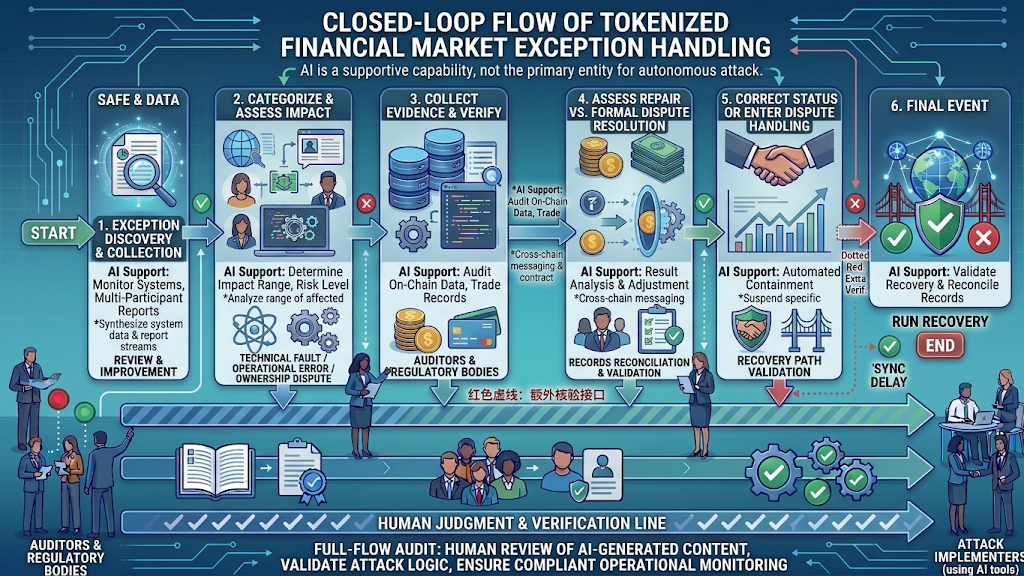
AI-Assisted Vulnerability Research and Exploitation Preparation
Software vulnerabilities may result from insufficient input validation, incorrect access controls, code logic flaws, dependency issues, or improper system configurations. AI can help researchers understand code structures, summarize potential issues, and filter areas that warrant further testing. If attackers use similar capabilities for malicious purposes, they may be able to analyze public code more quickly, research disclosed vulnerabilities, and identify potentially similar flaws across different systems.
However, identifying suspicious code does not equal discovering a real vulnerability. Whether an issue can be exploited usually also depends on the operating environment, permission conditions, external dependencies, system configuration, and specific execution path. Even if AI helps attackers locate suspicious areas more quickly, this does not directly establish that an attack will succeed.
AI-Assisted Phishing and Social Engineering
Phishing relies on deceiving users into disclosing account information, credentials, or authorization permissions. AI can help generate more natural text, adjust language styles, translate content into different versions, and tailor communications to specific scenarios. As a result, some phishing content is no longer limited to traditional templates with obvious spelling errors or awkward wording.
In the crypto asset sector, spoofed trading platforms, wallet services, project announcements, airdrop campaigns, and customer support communications may all become attack scenarios. Attackers may use AI to generate seemingly professional technical explanations or service notifications, leading users to believe they are communicating with a trusted organization. Users should understand that fluent language, standardized formatting, or the use of professional terminology does not prove that a message is authentic.
AI-Assisted Malware and Automated Tasks
AI may also be used to assist with malware research, code comprehension, content modification, and attack task management. Attackers may use models to explain existing code, organize technical materials, or adjust malicious communications. When AI is combined with automated tools, some repetitive operations may be handled more efficiently.
However, AI-generated code may not run properly, and generated content is not necessarily capable of bypassing security detection. Whether malware can have a real-world impact still depends on factors such as the operating system, permission settings, endpoint protection, network environment, and detection rules. Describing AI as a tool capable of automatically generating undetectable malware would exaggerate its actual capabilities and obscure the technical conditions that truly matter in attack activities.
Differences Between AI-Assisted Exploit and Traditional Cyberattacks
AI-Assisted Exploit does not change the fundamental objectives of cyberattacks. Regardless of the tools used, attackers generally still need to identify target weaknesses, bypass some form of security control, and achieve objectives such as stealing information, controlling systems, disrupting services, or transferring assets. The primary changes involve how information is processed, the efficiency of attack preparation, and the execution cost of certain tasks.
In traditional attack activities, code reading, information filtering, copywriting, and log analysis often require significant manual effort. AI can assist with these tasks, making it easier for attackers to process large volumes of information and potentially lowering the preparation barrier for certain attack activities. However, complex systems still involve environmental dependencies, permission constraints, and multiple layers of protection, and vulnerability exploitation still requires practical verification. AI can accelerate some tasks, but this does not mean attackers can bypass all technical limitations.
Another important difference is that the capability improvements brought by AI are not exclusive to attackers. Security researchers can also use models for code review, vulnerability detection, threat intelligence analysis, and security incident organization. AI may therefore improve both the efficiency of attack preparation and the efficiency of defensive response. Ultimately, security outcomes still depend on the technical capabilities, resource investment, permission management, and security operations of both sides.
Technical Limitations and Risk Boundaries of AI-Assisted Exploit
Understanding AI-Assisted Exploit requires distinguishing between what a model can generate and whether the generated content is accurate or can be executed in a real environment. A model may make incorrect judgments or overlook critical context in the code. In security research, unverified model output can only serve as an analytical lead. It cannot be used directly as a vulnerability conclusion or evidence that an attack will succeed.
AI tools themselves may also become a new source of security risks. If developers or security teams provide models with sensitive code, keys, internal logs, or user data, they need to consider data leakage, access controls, and third-party service data-processing rules. AI agents with tool-calling permissions may also be affected by malicious input, instruction manipulation, or improper permission configurations. Therefore, when organizations use AI for security analysis, they also need to establish clear security boundaries for the AI systems themselves.
From a management perspective, the aspect of AI-Assisted Exploit that warrants attention is not whether a particular model can independently complete a complex attack. The more important questions are whether it makes work that previously required significant manual effort easier to scale, and whether organizations can promptly identify and remediate basic security weaknesses. Software updates, access permission controls, sensitive credential protection, log monitoring, and continuous security testing remain important measures for reducing risk.
AI-Assisted Exploit and Crypto Asset Security
The crypto asset ecosystem consists of blockchain networks, smart contracts, wallets, trading platforms, cross-chain services, and various applications. User asset security depends not only on on-chain protocols but also on factors such as account authentication, endpoint devices, browser extensions, third-party interfaces, and human actions. This multilayered structure means that attackers may look for weaknesses through different entry points, and AI-assisted capabilities may also affect multiple parts of the ecosystem.
In smart contract scenarios, AI can help developers review code logic, organize access controls, and analyze anomalous behavior. In wallet scenarios, AI may be used to generate spoofed customer support messages or more deceptive phishing content. In infrastructure scenarios, AI may also help security teams organize risk information related to nodes, APIs, and dependencies. Attack conditions vary across scenarios, so all risks should not be simply attributed to smart contract vulnerabilities.
For crypto asset users, the most direct protective measures remain safeguarding private keys and seed phrases, verifying official domains, handling signing requests carefully, and reviewing contract permissions and transaction details before granting authorization. Project teams and service providers should combine code audits, dependency management, permission isolation, key management, and continuous monitoring. AI can be part of a security toolkit, but it cannot replace independent audits and strict access controls.
Gate and Crypto Asset Security Awareness
During digital asset trading and management, security risks do not come only from blockchain protocols or smart contracts. They may also arise in areas such as account login, identity verification, device security, phishing links, and user authorization. For users of digital asset services such as Gate, understanding AI-Assisted Exploit helps them identify more deceptive impersonation attempts and maintain appropriate verification habits when managing their accounts and assets.
Users should access the platform through official channels, properly safeguard their account credentials and verification information, and never disclose passwords, verification codes, private keys, or seed phrases to anyone. When encountering third-party tools that claim to provide AI trading agents, automated returns, or account assistance, users should first verify the source, permission scope, and data-processing practices. In particular, users should be cautious of requests to install unknown software, import wallet seed phrases, or perform unusual authorizations.
From an industry perspective, AI is changing both attack methods and security operations in the digital asset sector. Areas such as risk analysis, anomalous behavior detection, and security information organization provide platforms and service providers with new technical options. However, the specific AI systems used by a platform, the business processes in which they are deployed, and the defensive capabilities they provide should be determined based on the platform's public disclosures. For users, understanding the basic mechanisms of AI-Assisted Exploit can support a more rational assessment of security information and help industry participants recognize that improved technical capabilities do not automatically lead to improved security. Security systems still require continuous development.
FAQ
What Is AI-Assisted Exploit?
AI-Assisted Exploit generally refers to attackers using artificial intelligence to assist in discovering, analyzing, or exploiting weaknesses in software and systems. AI can participate in information gathering, code analysis, attack content generation, and result evaluation, but this does not mean the attack is completed autonomously by AI.
Is AI-Assisted Exploit the Same as Automated Cyberattacks?
They are not exactly the same. Automated attacks emphasize using programs to perform repetitive tasks, while AI-Assisted Exploit emphasizes using the analytical, generative, and reasoning capabilities of models to enhance the attack process. The two can be combined, but AI-Assisted Exploit may also occur in only one specific stage.
Can AI Automatically Discover and Exploit All Software Vulnerabilities?
No. AI can assist in identifying suspicious code and potential weaknesses, but model outputs may be inaccurate. Whether a vulnerability can be exploited in practice also depends on the operating environment, permission conditions, system configuration, and other technical factors.
How Does AI-Assisted Exploit Affect Crypto Asset Users?
It may increase the degree of customization in phishing messages, assist with the development of spoofed websites and malware, and accelerate certain vulnerability research tasks. Users should focus on protecting account credentials, private keys, and seed phrases, verifying website sources, and carefully reviewing wallet signing and authorization requests.
Can AI Also Be Used to Defend Crypto Asset Security?
Yes. AI can assist with code review, anomalous transaction detection, threat intelligence analysis, and security incident organization. However, these capabilities still require professional verification and should be used together with access controls, independent audits, and incident response mechanisms.