As artificial intelligence evolves from software applications into real-world scenarios, robots are emerging as a vital vehicle for AI technology. Unlike traditional automated equipment, the new generation of robots must not only perform fixed actions but also leverage AI models to understand their environment, execute tasks, and adapt to complex situations. This shift is making both hardware capabilities and intelligent systems the new focal points of industry competition.
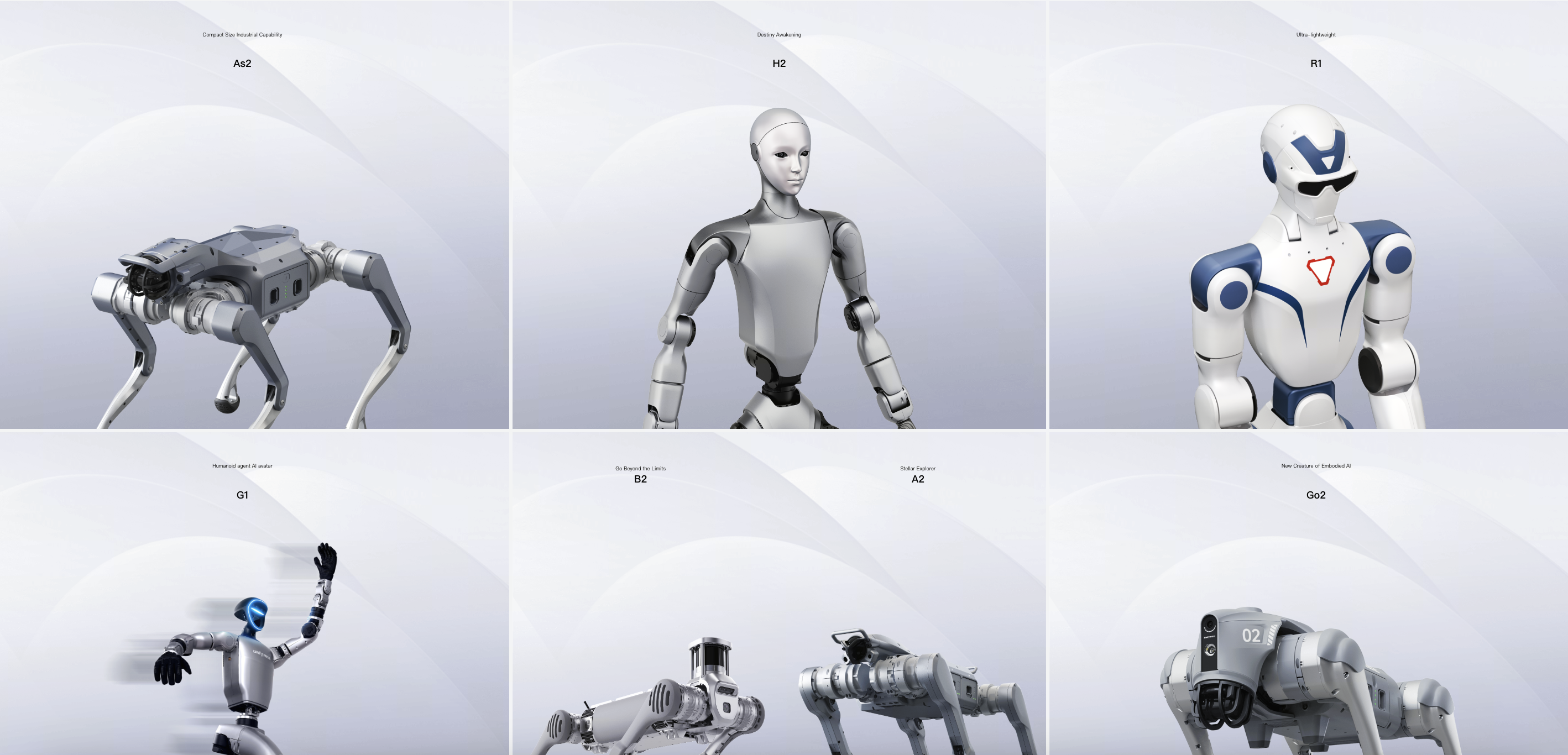
From the commercial deployment of the Go2 quadruped robot to the R&D of the G1 and H1 humanoid robots, Unitree is strategically addressing the diverse needs of the robotics sector. By providing low-cost, high-performance platforms, the company is advancing robotics technology across education, research, industry, and future service applications.
Key Points
-
Unitree G1 is a humanoid robot tailored for developers and research markets, emphasizing the integration of AI with robotics applications.
-
H1 is Unitree’s high-performance humanoid robot platform, focusing on advanced mobility, human-like proportions, and future commercial potential.
-
Go2 is Unitree’s flagship quadruped robot, a popular choice in robotics education and the consumer market due to its accessibility.
-
Unitree’s product ecosystem spans quadruped robots, humanoid robots, and development platforms, covering both consumer and industrial-grade markets.
What Is Unitree G1
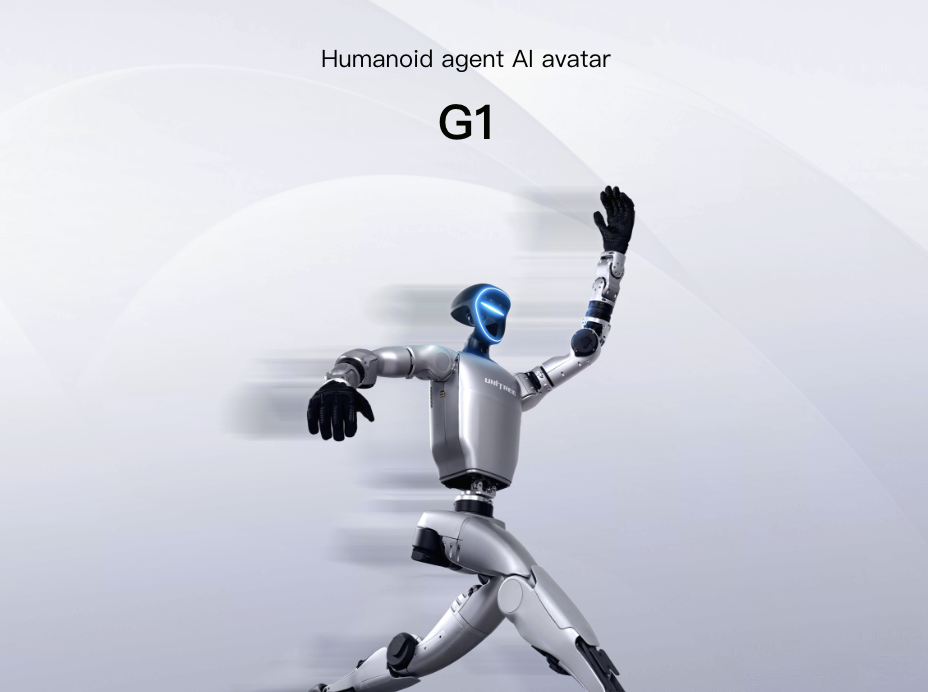
Unitree G1 is a humanoid intelligent robot developed by Unitree Robotics, positioned for developers, research institutions, and markets exploring robotics applications. It marks a significant step as Unitree expands from quadruped robots to general-purpose robotics.
Humanoid robots are widely regarded as a critical path for embodied intelligence (Embodied AI) because most human environments are designed around the human form. Doors, stairs, tools, and manufacturing equipment typically assume users have two legs and two hands, so robots with human-like structures can naturally integrate into these environments.
G1’s core strengths are its openness and development capabilities. Unlike traditional industrial robots that execute fixed tasks, G1 is designed as an AI platform, enabling developers to train algorithms, control movements, and build intelligent applications.
From a technical standpoint, humanoid robots must overcome several complex challenges, including:
-
Stable bipedal locomotion
-
Coordinated multi-joint control
-
Environmental perception
-
Human–machine interaction
Robots must constantly adjust their posture to maintain dynamic balance and make decisions in response to environmental changes. This means humanoid robots are not just mechanical innovations but integrated systems that combine AI, control algorithms, and advanced sensors.
The launch of G1 signals Unitree’s transformation from a “robot hardware supplier” to a provider of embodied intelligence platforms.
How Do H1 and G1 Differ
While both H1 and G1 are humanoid robots from Unitree, they target distinct market segments. G1 is oriented toward developers and the research community, prioritizing flexibility, openness, and ease of use. It serves as an experimental platform for universities, a testbed for robotics algorithms, and a tool for AI application development. H1, on the other hand, is a high-performance humanoid platform aimed at future commercial deployment.
Their differences are most evident in several areas:
-
Size and structure. H1 features proportions similar to an adult human, making it well-suited for simulating real-world tasks. G1 is more compact, ideal for R&D and experimentation.
-
Mobility. Dynamic motion control is a core technical challenge for humanoid robots. Beyond standing and walking, robots must run, turn, and avoid obstacles. H1 emphasizes stability and load capacity, laying the groundwork for industrial applications.
-
Application focus. G1 is aimed at fostering a developer ecosystem and driving innovation. H1 is positioned for future commercial use in manufacturing, logistics, and service industries.
Strategically, G1 functions as a development platform, while H1 is closer to a next-generation general-purpose robot.
Why Is Go2 a Leading Robot Dog
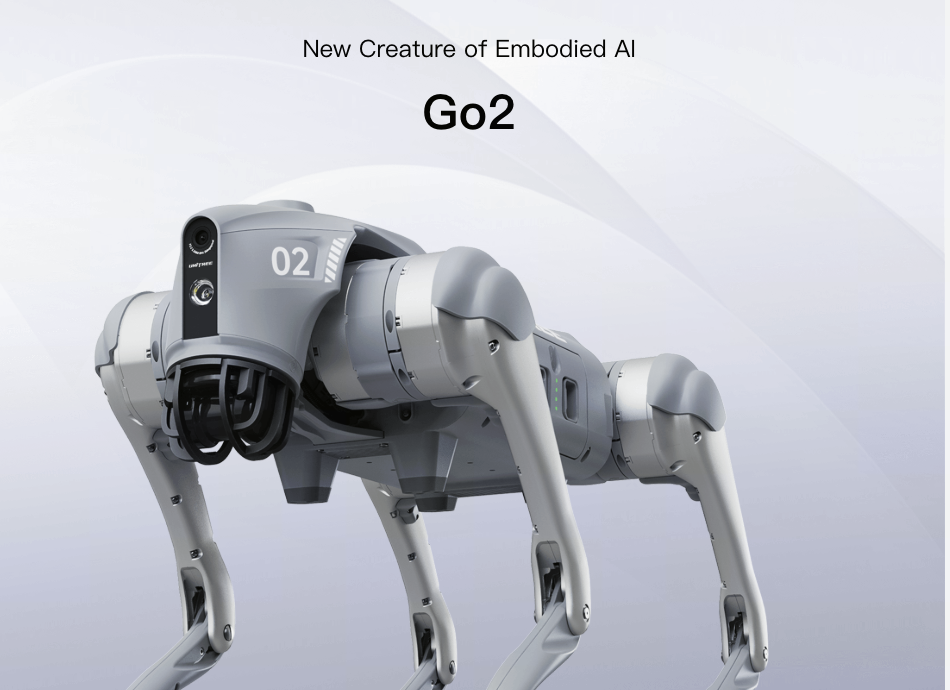
Go2 stands out as Unitree’s flagship quadruped robot and a cornerstone product for commercializing robotics. Compared with humanoid robots, quadruped technology is more mature and thus more readily adopted in practical scenarios.
Go2’s strengths include:
Mobility. Its quadruped design offers superior adaptability over wheeled robots, enabling movement across stairs, uneven terrain, and complex environments.
Intelligent interaction. Leveraging AI advances, today’s robot dogs are more than remote-controlled devices—they feature visual perception, voice interaction, and autonomous navigation.
Developer ecosystem. Go2 provides open interfaces, allowing users to conduct algorithm research and expand functionality on the platform.
For universities, robotics enthusiasts, and enterprise R&D teams, Go2 is an accessible, cost-effective experimental platform.
These factors have made Go2 a standout in the market.
What Are the Application Scenarios for Quadruped Robots
Quadruped robots excel in mobility, making them ideal for use cases that demand adaptation to challenging environments.
Key application areas include:
Scientific Research and Education
Robotics research demands robust experimental platforms. Quadruped robots enable universities and enterprises to test motion control, vision algorithms, and AI models.
Industrial Inspection
In hazardous or complex environments—such as factories, energy facilities, and large equipment sites—robots assist with inspection tasks.
Security and Special Environments
Quadruped robots can access areas that are difficult or dangerous for humans, including rough terrain and disaster zones.
Entertainment and Consumer Markets
As costs decline, robot dogs are entering the consumer space for demonstrations, interactive experiences, and personal use.
Currently, quadruped robots are mainly used as auxiliary tools and are still far from fully replacing human labor.
What Are the Commercial Applications of Humanoid Robots
Humanoid robots offer greater long-term potential than quadrupeds, primarily because their structure fits seamlessly into human-centric environments.
Potential future applications include:
-
Manufacturing: Performing repetitive tasks to boost productivity
-
Logistics: Handling, sorting, and transporting goods
-
Commercial services: Reception, information assistance, and customer service
-
Home scenarios: Providing household assistance in the future
However, commercializing humanoid robots is significantly more challenging. These robots must move, understand their surroundings, and execute complex tasks. For instance, a simple “tidy the room” command at home requires object recognition, path planning, and multi-step execution.
Thus, humanoid robotics remains in a phase of rapid advancement.
How Does Unitree Address Both Consumer and Industrial Markets
Unitree’s product strategy follows a progressive path from entry-level to high-performance intelligent robots. Go2 targets the consumer and developer segments, lowering adoption barriers and broadening the user base. G1 serves developers and research institutions as an experimental platform for AI in robotics. H1 is focused on industrial and commercial robotics.
This portfolio enables Unitree to address market needs at every stage. Unlike companies solely focused on high-end industrial robots, Unitree builds its user and developer base with consumer products, then gradually expands into high-value applications.
Future competition in robotics will hinge not only on product performance but also on the ability to build a comprehensive ecosystem.
What Are Unitree’s Competitive Advantages
Unitree’s prominence in robotics is driven by several factors:
-
Advanced motion control. Years of R&D in quadruped robots have built expertise in motor control, mechanical design, and dynamic balance.
-
Speed to market. While some robotics firms remain in the lab, Unitree has rapidly brought market-ready products to users.
-
Cost efficiency. Robotics requires substantial hardware—motors, sensors, and controls. China’s manufacturing supply chain gives Unitree a cost edge.
Additionally, Unitree is advancing the integration of AI and robotics, cultivating a developer ecosystem with open platforms. Gate now lists UNITREEUSDT Perpetual Futures Pre-Market, offering price discovery tools based on market expectations for Unitree’s future value.
This product is settled in USDT, supports 1–10x leverage trading, and allows both long and short strategies. Since Unitree has not yet IPO’d, this does not represent direct equity purchase but instead reflects market views on the company’s future valuation.
What Is the Future Direction for Robotics Products
The robotics industry is likely to evolve in three main directions:
-
Enhanced AI capabilities. With advances in multimodal models, robots will gain deeper understanding and handle more complex real-world tasks.
-
Expanded application scenarios. Robots will move from labs to manufacturing, logistics, commercial services, and beyond.
-
Open ecosystems. Robots will become more like smartphones, generating long-term value through hardware, software, algorithms, and applications.
For Unitree, the core of future competition is not just building robots—it’s enabling true intelligence. If AI models are the “brain,” then motion control, mechanical design, and sensing are the “body.” Only by integrating both can embodied intelligence scale.
Summary
Unitree G1, H1, and Go2 each represent distinct innovation paths in humanoid and quadruped robotics. Go2 accelerates the commercialization of quadrupeds with its accessibility, G1 provides a humanoid platform for developers and researchers, and H1 signals Unitree’s vision for general-purpose robots.
As AI, large models, and robotics technology converge, robots are set to drive the next phase of the AI industry. The competitive landscape will be shaped not just by hardware, but by AI capability, software ecosystems, and commercial application.
With its multi-product strategy, Unitree is emerging as a key player in the embodied intelligence market and a focal point in the global robotics industry. Its future success in large-scale commercialization will depend on the pace of technological breakthroughs, the expansion of use cases, and the strength of its robotics ecosystem.