1. UMA Coin Project Introduction
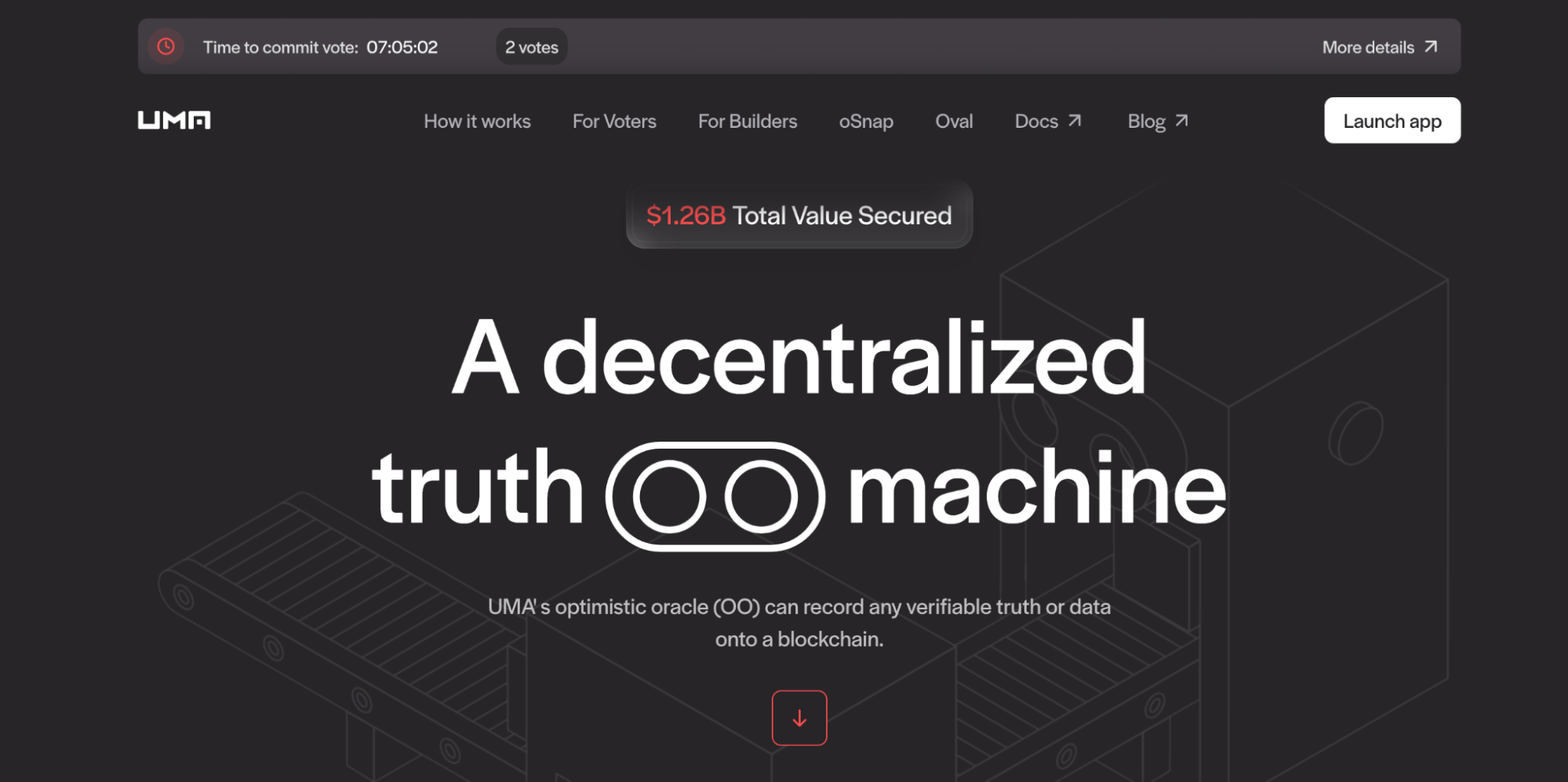
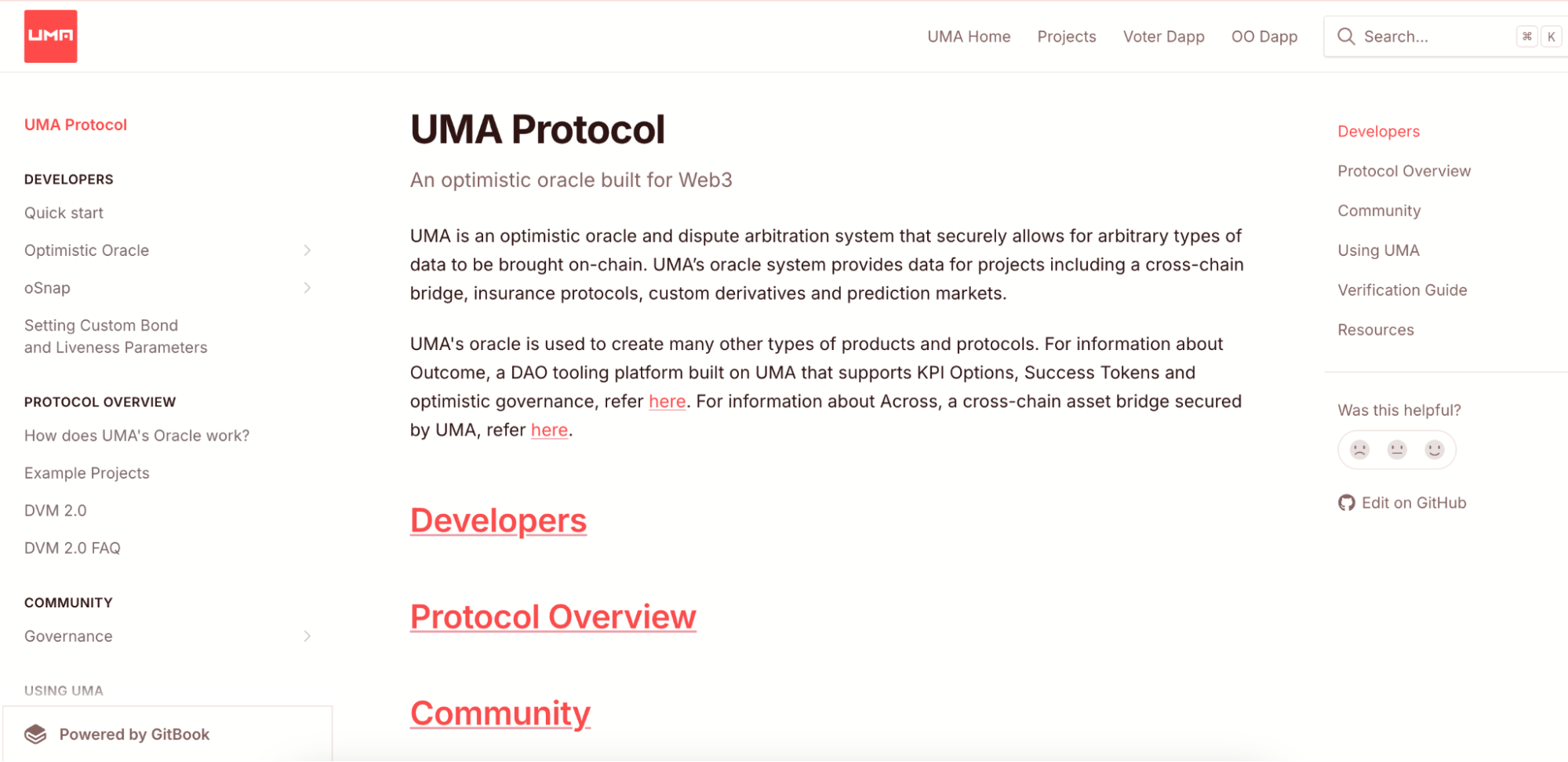
UMA Coin is the core cryptographic asset of UMA, a decentralized financial contract platform. UMA is focused on providing secure and reliable oracle services and innovative financial contract tools for various decentralized applications (DeFi, cross-chain bridges, insurance, prediction markets, etc.). The platform ensures the accuracy and verifiability of data on the chain through its ‘Optimistic Oracle’ system, enabling developers to efficiently design, deploy, and maintain various contracts. UMA Coin is used for platform governance, community rewards, and providing secure economic mechanisms for oracles, among other functions.
In the DeFi space, the significance of oracles cannot be overstated, as they are responsible for bringing external data onto the blockchain. Therefore, accuracy and decentralization are essential. UMA employs a unique ‘Optimistic Oracle Mechanism’ that reduces the dispute costs associated with traditional oracle systems, improves data verification efficiency, and lays the foundation for more complex financial scenarios. Due to its central role within the ecosystem, UMA Coin has become a popular asset among both investors and developers.
Source:UMA Official Website
2. UMA Coin project background
Founding Team and Establishment History
UMA was co-founded by Hart Lambur and Allison Lu. Hart Lambur has worked at Wall Street hedge funds and has extensive experience in designing financial derivatives. Allison Lu has a background in finance and technology, having worked at several financial institutions. The core team also includes CTO Matthew Rice and COO Melissa Quinn. They began developing the UMA project at the end of 2018 and officially launched UMA Coin on April 28, 2020.
Core issues addressed
The traditional financial derivatives market is often controlled by centralized institutions, with high barriers to entry and high counterparty risks. UMA’s goal is to provide users with a permissionless contract design and trading environment using decentralized contracts and trusted oracles, thereby significantly reducing the barriers to using financial derivatives and structured products. The proposed ‘Optimistic Oracle’ model is an attempt to achieve maximum data reliability with minimal economic incentives.
Early project development
- Early 2020: Launching Proof of Concept (PoC) to verify the feasibility of the Optimistic Oracle.
- April 28, 2020: UMA Coin was listed on the Gate platform, marking the start of its initial issuance, with a price of approximately $1.1627.
- 2021: With the explosive growth of DeFi, UMA’s contract applications expanded into areas such as cross-chain bridges and prediction markets.
- 2022: Despite the bear market, UMA continued to actively expand its ecosystem, partnering with projects like Polymarket and Across Protocol, leading to steady advancements in both technical and community development.
With the background above, it is clear that UMA Coin is not just a payment or “single-function” token but supports a comprehensive suite of financial and data services.
3. UMA Coin Technical Principles
UMA’s core lies in its optimistic oracle and contract design pattern. Here’s a brief summary:
1. Optimistic Oracle
- Mechanism of Operation: When a smart contract requires external data, an “Asserter” presents a fact statement, such as “price is X” or “an event has occurred.” During a certain dispute period, if no one questions the statement, it is considered true and recorded on the chain; if challenged, it enters the arbitration process and is voted on by UMA’s decentralized validators (DVM, Data Verification Mechanism)
- Economic Incentives: The proposers usually need to pledge a deposit to provide real data; if the data is proven false, the deposit will be forfeited. Challengers who prove the data is false can receive a reward.
2. Decentralized Verification Voting (DVM)
- UMA maintains fairness and prevents vote manipulation through encrypted commitments and revealed voting mechanisms. Voters who cast the correct result are rewarded with inflationary rewards, while incorrect votes are penalized.
- This mechanism enables efficient and cost-effective consensus, even in extreme disputed scenarios, providing high reliability data input for contracts.
3. Universal Financial Contract Template
- The UMA platform provides a series of general contract templates, allowing developers to quickly deploy products such as synthetic assets, perpetual contracts, insurance contracts, and more.
- These templates seamlessly integrate with optimistic oracles, offering low-cost and highly scalable solutions for any DeFi application requiring external data.
4. Flexible Expansion and Modularity
- UMA’s contract design is modular, supporting a variety of on-chain logic combinations, such as KPI Options, oSnap, Success Tokens, and other derivative structures. It can continuously evolve based on community needs.
The “optimism + collateral + arbitration” economic model allows UMA to perform data verification and contract execution with relatively low friction costs in most cases, making it an essential infrastructure within the DeFi ecosystem.
Source:UMA Whitepaper
4. UMA Coin latest market quotes and historical prices
The following is the latest market overview table from Gate (data as of 2025-03-28):


Source:UMA Coin Trading Page
From the historical price trend, UMA Coin reached a historical high of about $41.56 on 2021-02-04, and touched a historical low of about $0.3036 on 2020-04-29. The price fluctuations are closely related to factors such as the DeFi market boom at that time, the overall crypto bull and bear cycles, and other market conditions. The current price still shows a significant gap compared to the peak value, but the project team has been consistently advancing new features and ecosystem partnerships. The market generally holds a positive outlook on the medium and long-term performance of UMA Coin.
5. UMA Coin recent news and updates
1. 2025-03-27: oSnap feature officially supports Safe multi-signature wallet
- Core content: UMA announced that its Optimistic Oracle’s oSnap feature now supports the Safe multi-signature wallet, allowing users to automatically execute on-chain transactions after the Snapshot proposal is passed.
- Meaning: Upgrading the execution process of decentralized governance from “manual” to “automatic” greatly enhances the efficiency of DAO operation.
- Official link: seeUMA Twitter, and detailed tutorials are provided.
2. 2025-03-27: Across Protocol community growth KPI options plan
- Core Content: Community members superUMAns helped Across protocol attract over 500 new users, exceeding the original target. The incentive program is based on the KPI options mechanism provided by UMA to distribute rewards.
- Meaning: UMA is not just a data oracle, but also plays a role in community incentives and cross-project collaboration.
3. 2025-03-26: UMA Oracle protects value over 12.3 billion US dollars (TVS)
- Core content: UMA announced that the total value of its prophecy machine protection reached 12.3 billion U.S. dollars, covering multiple sectors such as cross-chain bridges, insurance protocols, prediction markets, and DAO governance.
- Meaning: Further confirms the security pillar status of UMA in the DeFi ecosystem. The official also provides visual data charts to show the growth trend of this value.
4. 2025-03-25: Deepen cooperation with Polymarket
- Core content: UMA and the prediction market platform Polymarket are optimizing the on-chain data process together, reducing dispute resolution time and lowering margin requirements.
- Meaning: Indicates that UMA continues to focus on improving the efficiency of oracles and expanding the depth of application in the prediction market.
These updates demonstrate UMA’s continuous progress in technical iterations, ecosystem expansion, and governance automation, giving UMA Coin more practical application value.
6. Summary
UMA Coin relies on its optimistic oracle and universal contract template, providing a reliable data source for the DeFi ecosystem that is efficient, low-cost, and equipped with a controversial arbitration mechanism. With the launch of multiple new features since 2025, UMA’s applications in areas such as DAO automated governance, prediction markets, and cross-chain bridges have further expanded. The project’s strengths include a professional financial background, mature contract design, and rich community collaborations; however, it still needs to address market competition and potential risks associated with smart contracts.
Overall, the value of UMA Coin lies in supporting a complete set of decentralized financial infrastructure, and its price performance is closely related to the development of the DeFi industry. For developers, UMA provides replicable financial contracts and oracle solutions; for investors, it means an opportunity to participate in the emerging Web3 financial ecosystem. However, any investment must be fully evaluated for risks and combined with rational decision-making based on one’s own asset allocation. If UMA continues to steadily advance technological upgrades and ecological cooperation, UMA Coin still has certain appreciation potential and industry influence in the future.







