What core trading features does Hyperliquid offer?
Hyperliquid is a blockchain-based decentralized trading platform focused on high-performance perpetual futures trading, while also supporting spot trading and related functions. Its core positioning lies in combining decentralized finance (DeFi) mechanisms with a trading experience similar to that of traditional centralized exchanges (CEXs), providing users with a transparent, secure, and efficient trading environment.
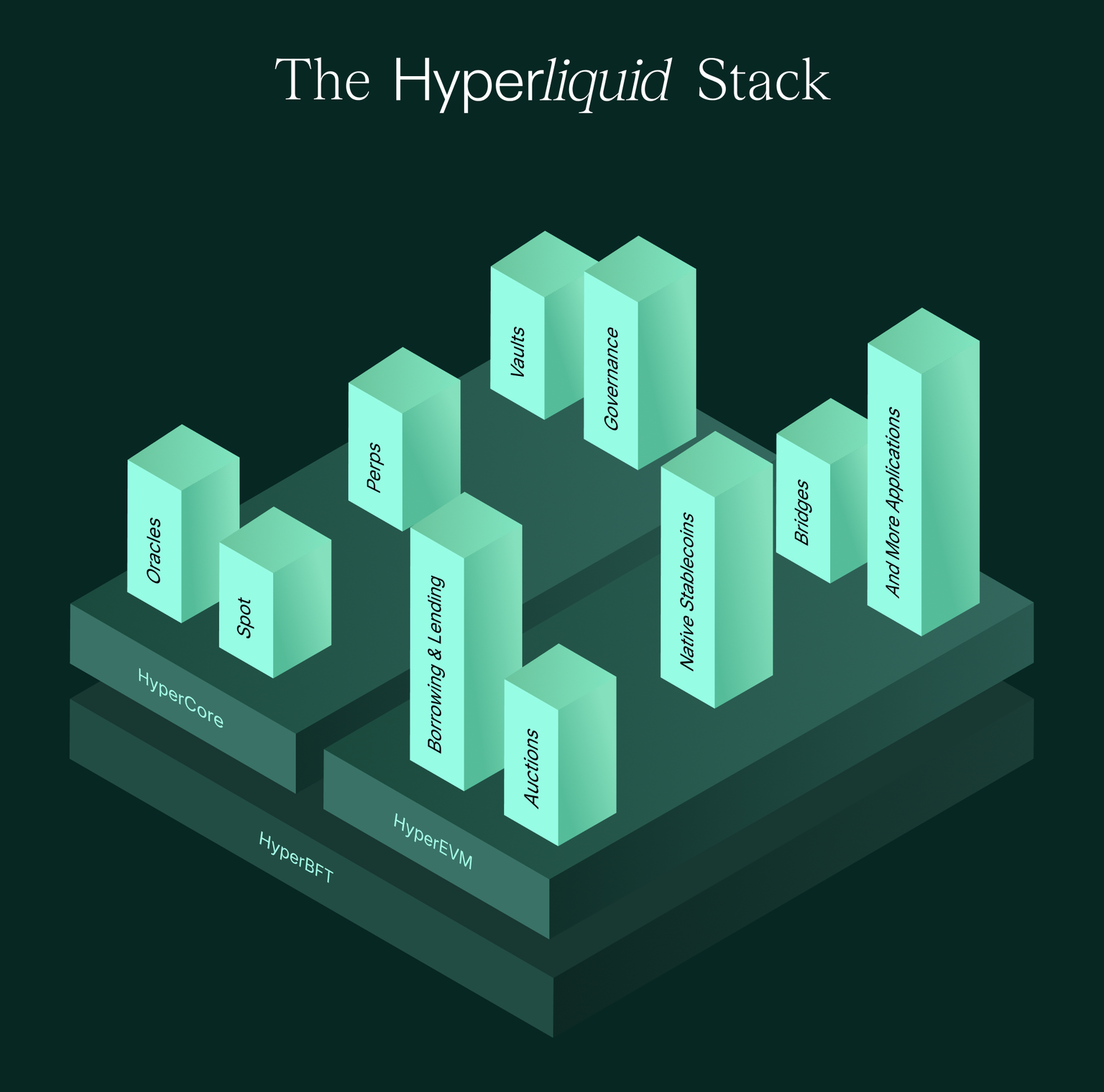
Source: https://hyperliquid.gitbook.io/hyperliquid-docs
The main core trading features include:
- Perpetual futures trading: Supports a wide range of trading pairs, allowing traders to hold positions indefinitely without expiration dates.
- Spot trading: Enables instant execution of buy and sell orders for multiple crypto assets.
- Leverage trading: Allows traders to amplify positions and improve capital efficiency.
- High-performance order book: Achieves fast matching and execution through a self-developed chain and high-throughput engine.
- Deep liquidity pool (HLP): Automated liquidity provision that maintains tight bid-ask spreads and low slippage.
- API and quantitative trading support: Compatible with automated trading strategies, enabling professional traders to build custom tools.
Together, these features form the Hyperliquid trading ecosystem, giving it strong competitiveness in the DeFi perpetual futures market.
Overview of the perpetual futures trading mechanism
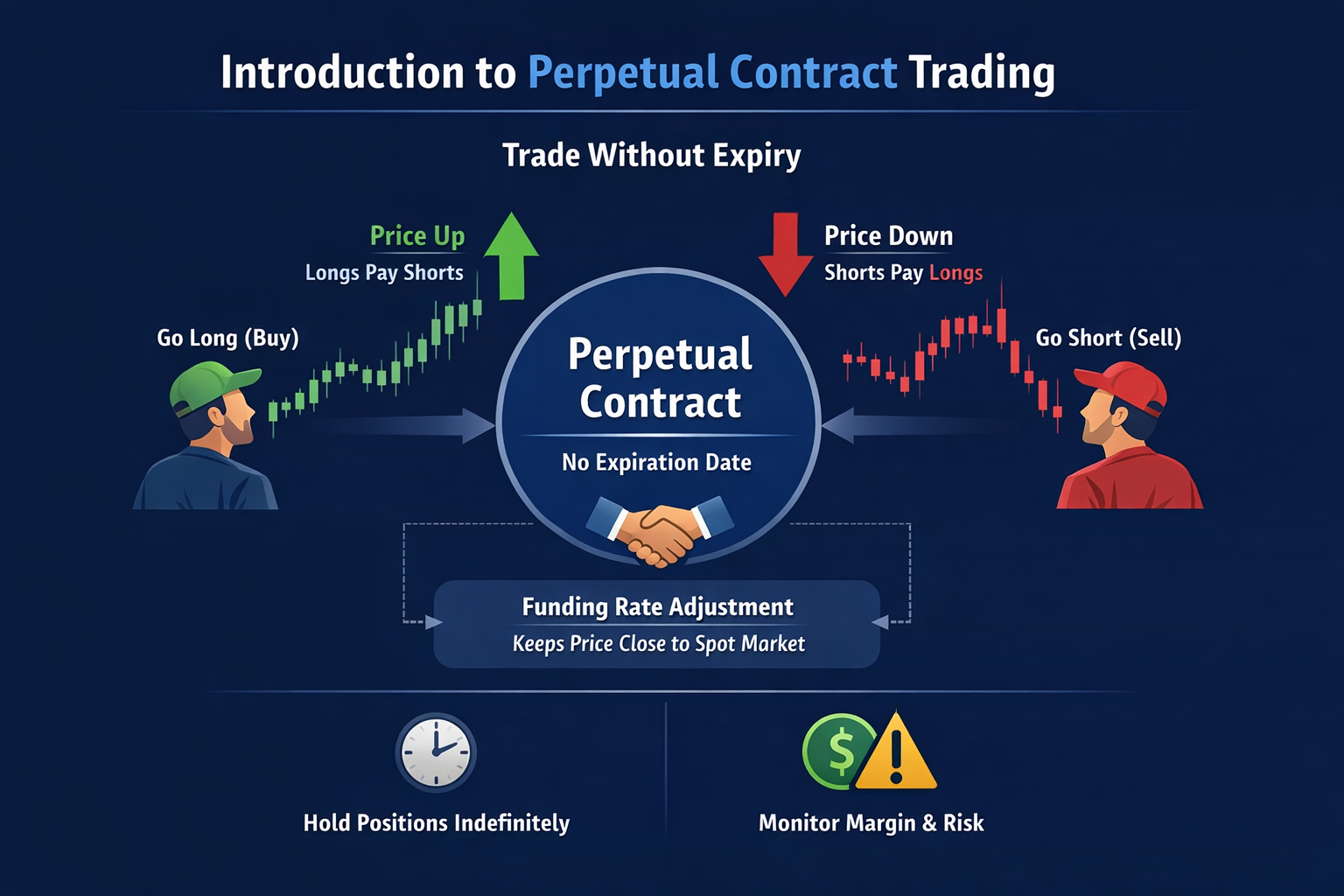
A perpetual contract is a type of derivatives contract that allows traders to go long or short on asset prices without a fixed expiration date, unlike traditional futures. Perpetual contracts typically rely on a funding rate mechanism to keep contract prices anchored to spot prices.
On the Hyperliquid platform:
- Perpetual contracts support multiple asset categories, including cryptocurrencies and commodities.
- Orders are matched via an intelligent matching engine, delivering extremely low-latency execution.
- The funding rate mechanism helps balance long and short positions, reducing the risk of long-term price deviation from spot markets.
Compared with traditional futures, perpetual contracts have no settlement date, allowing traders to maintain positions based on market conditions. This is particularly important for trend-following traders. Hyperliquid’s perpetual futures offering highlights the role of decentralized markets in advancing the derivatives ecosystem.
Leverage and margin trading models
Leverage trading allows traders to expand position size using borrowed funds. Hyperliquid supports high leverage, with key characteristics including:
- Multiple leverage tiers: Supports leverage of up to 50× (may vary by asset).
- Margin system: Uses a dynamic margin calculation mechanism that adjusts risk requirements in real time based on market volatility.
- Liquidation mechanism: Automatically closes positions when margin is insufficient, preventing negative balance risk.
Margin trading is typically divided into two modes: isolated margin and cross margin. In isolated margin mode, risk is limited to a single position, while in cross margin mode, the entire account balance supports multiple positions. Choosing the appropriate margin mode is a core component of risk management.
While leverage trading can magnify profits, it also amplifies risk. Platforms therefore generally recommend that new traders start with lower leverage and smaller position sizes to control potential losses.
Order types and trade execution methods
A mature trading platform should support multiple order types to meet diverse strategy requirements. Hyperliquid currently provides order types that typically include:
- Limit orders: Placed at a specified price and executed when matched.
- Market orders: Executed immediately at the best available market price.
- Stop orders: Automatically triggered when a preset price level is reached.
- Conditional and strategy orders: Such as TWAP and iceberg orders, designed to help large or quantitative traders execute complex strategies.
Combined with an efficient matching engine, these order types enable near-millisecond execution and high-precision order matching, making them particularly suitable for high-frequency and quantitative trading strategies.
In addition, Hyperliquid’s order book is implemented through on-chain or hybrid architectures, enabling transparent order books where every trade can be verified on-chain, improving auditability.
Liquidity and trading depth advantages
Liquidity is a key indicator of market quality, reflected in bid-ask spreads and executable depth. High-liquidity markets reduce slippage risk for large trades and improve price discovery efficiency.
Hyperliquid leverages its internal HLP (Hyperliquidity Provider) mechanism to deliver deep liquidity pools, ensuring that order books consistently contain substantial buy and sell interest. This enables:
- Tight bid-ask spreads and low slippage
- Support for large trade execution, particularly in Bitcoin and other major perpetual markets
- Enhanced price discovery, allowing traders to execute strategies near mid-market prices
Recent on-chain data shows that Hyperliquid’s liquidity in certain major instruments has even surpassed that of some centralized exchanges, which is especially attractive for professional traders executing large orders.
API and quantitative trading support
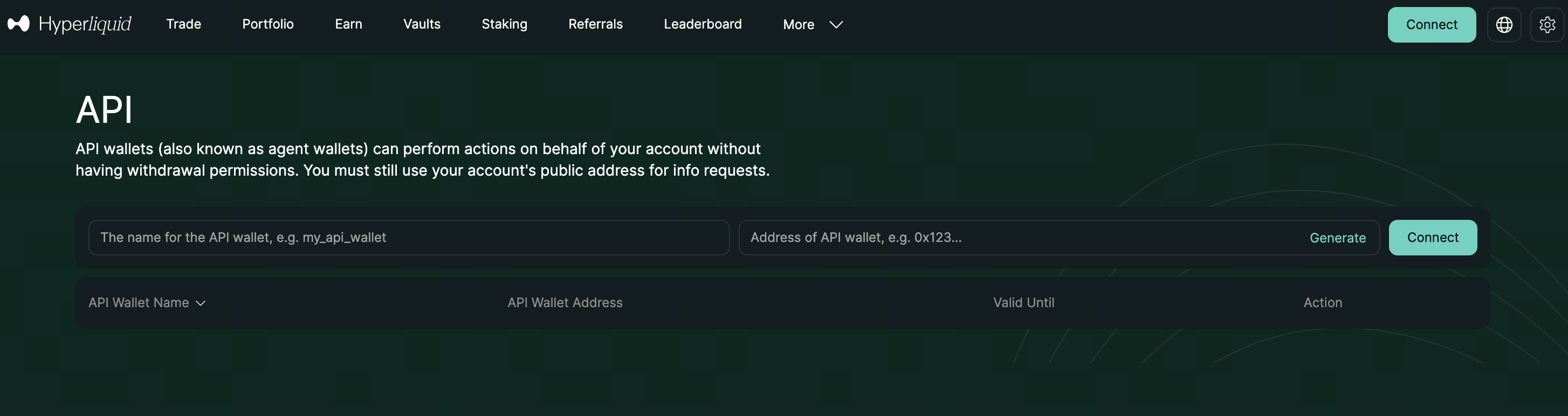
Source: https://app.hyperliquid.xyz/API
For professional and quantitative traders, the availability of stable and user-friendly APIs is a critical factor. Hyperliquid provides:
- REST and WebSocket APIs: For market data retrieval, order placement and closing, and account status monitoring
- Compatibility with mainstream protocols: Certain versions support standardized interfaces such as FIX, facilitating integration with third-party trading systems
- SDKs and developer documentation: Including toolkits for languages such as Python and JavaScript, enabling the development of automated trading tools and strategies
Using these interfaces, traders can easily implement automated order execution, arbitrage strategies, risk control monitoring, and capital management workflows.
Basic workflow for beginners
For traders new to Hyperliquid, trading can generally be started by following these steps:
- Prepare and connect a supported non-custodial wallet (such as MetaMask) and complete network configuration. Hyperliquid uses a non-custodial model, meaning users always retain control of their private keys.
- Deposit assets such as USDC to the platform via official bridges or supported methods for use as margin.
- After funding is complete, select the market and trading pair, confirm whether to trade spot or perpetual contracts, and set appropriate leverage and margin modes. Beginners are generally advised to start with low leverage.
- Choose limit or market orders based on trading strategy to open positions, and set stop-loss conditions to manage risk.
- After opening positions, continuously monitor margin ratios and market volatility, adjusting or closing positions as needed to complete a full trading cycle.
Summary of platform advantages and suitable trader profiles
Hyperliquid trading advantages
- High-performance trading engine: Supports thousands of orders per second with low-latency execution
- Deep liquidity and tight spreads: Particularly strong in major perpetual contract markets
- Rich order tools and API support: Enables strategy-based and quantitative trading
Suitable trader profiles
- Professional traders: Seeking deep liquidity, high-leverage trading, and API-driven strategies
- Quantitative trading teams: Requiring stable interfaces and high-performance matching engines
- DeFi enthusiasts: Preferring non-custodial asset control and transparent on-chain trading
- Trend traders: Utilizing perpetual contracts for flexible long and short strategies
However, perpetual futures trading carries high risk. Inexperienced traders still face liquidation and volatility risks, and are advised to begin with small positions and low leverage to reduce potential losses.







