This comparison suits intermediate readers who already grasp HKD stablecoin basics and need a path-level contrast. Building on the HSBC RedCoin explainer, the sections below compare licence, distribution, first-phase use cases, audience, and undisclosed items; dollar-stablecoin scenes fall under HSBC RedCoin vs USDT. Scene matching is not buy, sell, or hold advice.
Key Takeaways
- HSBC RedCoin is planned inside HSBC’s PayMe and HSBC HK App retail loop; HKDAP is issued by Anchorpoint and reached via authorised distributors for institutions and professional investors.
- Both tie to HKMA stablecoin issuer licences: HSBC path FRS02, Anchorpoint path FRS01; a licence is not full retail access.
- RedCoin’s public notices stress that no HSBC stablecoin has been issued in Hong Kong yet; HKDAP has entered Beta Access for institutions and professional investors.
- Fees, external withdrawals, contract addresses, and full retail calendars remain unevenly disclosed on both sides—verify each item separately.
HSBC RedCoin vs HKDAP at a Glance
Start with who issues, who can access, where it is used, and how far rollout has gone—then read the dimension sections.
| Dimension |
HSBC RedCoin |
HKDAP (HKD At Par) |
| Issuer path |
Planned HSBC issuance |
Issued by Anchorpoint Financial Limited |
| Licence number |
HKMA stablecoin issuer licence FRS02 |
HKMA stablecoin issuer licence FRS01 |
| Public issuance status |
No HSBC stablecoin issued in Hong Kong yet |
Beta Access live for institutions / professional investors |
| First-phase distribution |
PayMe + HSBC HK Mobile App |
Authorised distributors (banks and regulated platforms) |
| First-phase audience |
Retail customers (bank-app closed loop) |
Corporates and professional investors first; retail later |
| First-phase use focus |
P2P / P2M payments; in-App tokenised investments (subject to approval) |
Payments, settlement, treasury, and commercial integration |
| Peg and reserve framing |
HKD; full high-quality liquid segregated reserves; designed 1:1 for HKD |
Regulated HKD-backed stablecoin (HKD At Par) |
| Open exchange trading |
No announced third-party crypto exchange listing |
Not the same as any-spot-list access; distributor rails apply |
The table places a bank-app closed loop beside an institutional/distributor path. Cells reflect verifiable public positioning only; fees, contract addresses, and full chain parameters are omitted where disclosures are not aligned.
What Is HSBC RedCoin?
HSBC RedCoin is HSBC’s planned Hong Kong dollar (HKD) stablecoin, designed for full segregated-reserve backing and 1:1 HKD redemption under HKMA issuer licence FRS02. As one of Hong Kong’s planned fiat referenced stablecoins, it is framed around representing HKD value inside a licensed issuer structure rather than as an algorithmic or interest-bearing product. The HSBC Hong Kong Dollar Stablecoin page and naming announcement both emphasise that no HSBC stablecoin has been issued in Hong Kong yet.

At launch, HSBC plans to offer it only through PayMe and the HSBC HK Mobile App for person-to-person (P2P) and person-to-merchant (P2M) payments, plus App subscriptions to tokenised investment products in a regulatory-approval context. Mechanics and risk boundaries should be cross-checked against issuer pages and the beginner explainer. Until chain, fee, and withdrawal parameters are consistently disclosed, treat “how it works on a public blockchain” claims as incomplete.
What Is HKDAP?
HKDAP (HKD At Par) is a regulated HKD-backed stablecoin issued by Anchorpoint Financial Limited. Anchorpoint is a subsidiary of Standard Chartered Bank (Hong Kong) and is frequently reported as a joint-venture path involving SCBHK, HKT, and Animoca Brands; its licence number is FRS01. Anchorpoint positions HKDAP as another fiat referenced stablecoin under the same Hong Kong issuer regime, but with a different distribution and audience sequence.
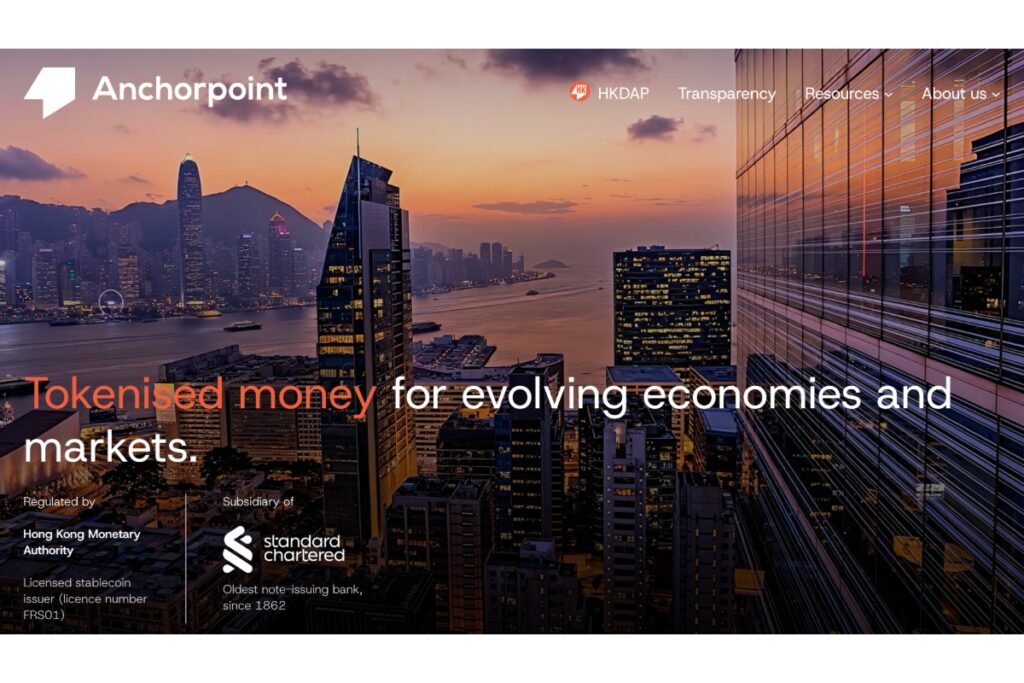
On public timing, HKDAP has started Beta Access for institutional distributors and professional investors, with authorised distributors providing fiat–token conversion rails. Retail coverage is described as a later phase. Details follow Anchorpoint and each distributor’s disclosures—do not read institutional beta as city-wide retail access.
How Do Issuers and Licence Paths Differ?
The core split is who issues and which licence number applies: RedCoin follows an HSBC issuer path (FRS02); HKDAP is issued by Anchorpoint (FRS01). Both sit under Hong Kong’s Stablecoins Ordinance issuer framework for fiat referenced stablecoins, but corporate structure and rollout timing are not the same. Public coverage often describes Anchorpoint’s institutional path via a Standard Chartered–linked joint venture, with distribution emphasised before any retail calendar is treated as fixed.
A licence answers who may issue; it does not mean any customer can hold or withdraw today. HSBC’s HSBC RedCoin naming announcement notes the April 2026 licence grant and stresses non-issuance; Anchorpoint likewise received its licence in April 2026 and has moved into institutional-beta disclosures. Check licence number, issuance status, and reachable channels together. If a page asks you to contact a private wallet operator rather than an issuer or authorised distributor, treat that as a higher-risk signal and return to official sources.
How Do Distribution Channels and Audiences Differ?
Distribution is the clearest readable difference: RedCoin’s launch binds to HSBC’s own retail digital entries; HKDAP uses an authorised-distributor network across bank and regulated-platform interfaces.
For retail payment users, RedCoin’s planned path is “existing PayMe / HSBC App identity → complete pay and receive inside a bank-controlled loop.” For institutions and professional investors, HKDAP is closer to “access via authorised distributors for conversion and commercial integration.” The Standard Chartered announcement as first bank distributor of HKDAP likewise emphasises institutional payments, settlement, and treasury use cases.
Audience timing therefore diverges: RedCoin prioritises a retail closed loop; HKDAP prioritises institutional / professional-investor beta, with retail later. Separating “who can use it first” from “where it is used” is more accurate than comparing brand names alone.
What Do First-Phase Use Cases Emphasise?
RedCoin’s first-phase uses land on everyday payments and bank-app wealth scenes: P2P / P2M via PayMe, and tokenised investment subscriptions on the HSBC HK App subject to approval; wholesale uses are described as a later expansion. Naming notices likewise stress everyday transfers and merchant pay before broader corporate uses.
HKDAP’s first-phase public framing leans commercial and institutional: payments, settlement, treasury, and plugging regulated tokenised HKD into enterprise flows. “What you can do” depends on distributor and client eligibility—not a single bank-app menu. Public distributor notices carefully select institutional rails first; retail timing should be tracked separately rather than assumed from brand awareness alone.
Both paths may later expand, but first-phase centres already fork: one toward a bank retail payments loop, the other toward commercial integration under institutional/platform distribution. Match by whether the use case needs a bank-controlled payment loop or a distributor-mediated treasury rail before treating either path as interchangeable.
What Is Transparent, and What Remains Unevenly Disclosed?
Verifiable items are relatively clear: both sides carry HKMA issuer licence numbers; RedCoin’s channel boundary and not-yet-issued notice appear on HSBC’s own pages; HKDAP’s institutional beta and authorised-distributor path have press releases and issuer notices to cross-check. Hong Kong’s fiat referenced stablecoin rules and each issuer’s local licence page remain the primary verification layer for these two HKD paths.
Items still unevenly disclosed or still evolving include full fee schedules, redemption limits and settlement timing, withdrawal rules, contract-address lists, and exact retail open calendars. If issuer and distributor disclosures are not aligned, treat chain and fee details as “not yet consistently disclosed” rather than fixed facts. Yield stories or “guaranteed returns” attached to either name should be read carefully against the non-interest framing in Hong Kong’s current framework.
Scam risk applies on both sides: claims of “already listed on an exchange,” private subscriptions, or high-yield airdrops should be checked against issuer and authorised-distributor pages—not chat-group links. Logos and ticker lookalikes do not replace licence-number and channel checks.
Which Path Fits Which Use Case?
Match by scene and reachable channel—not by brand heat or a vague “which is better.” The following are objective scene fits, not buy, sell, hold, or investment advice.
Choose the HSBC RedCoin path if:
- The main need is person-to-person or person-to-merchant payments inside PayMe / the HSBC HK App.
- Identity checks, risk controls, and the stablecoin experience should stay in one bank digital channel.
- Tokenised investment subscriptions inside the HSBC App matter, subject to actual approvals and go-live rules.
- Waiting for public issuance and channel opening is acceptable, rather than hunting third-party spot lists.
Choose the HKDAP path if:
- The user is a corporate, institution, or professional investor needing regulated HKD stablecoin access via authorised distributors.
- Use cases centre on payments settlement, treasury, or wiring tokenised HKD into existing commercial flows.
- Eligibility already exists—or is planned—with distributors publicly named in rollout notices (for example Standard Chartered Hong Kong and other authorised platforms).
- Institutional beta and retail timing can diverge, and access will be verified under distributor rules.
If neither path matches current eligibility or channels, the rational move is to wait for disclosure updates—not to substitute an unrelated on-chain token.
Summary
HSBC RedCoin and HKDAP share Hong Kong’s licensed HKD stablecoin track for fiat referenced stablecoins, but the paths fork: RedCoin leans toward an HSBC retail-app payments loop (FRS02, publicly not yet issued); HKDAP leans toward Anchorpoint issuance and authorised-distributor access for institutions and professional investors (FRS01, institutional beta disclosed).
When comparing, verify issuer, licence number, reachable channel, and first-phase use case first, then handle undisclosed fees, withdrawals, and chain-side details. Scene matching lowers the cost of picking the wrong entry point; it does not replace eligibility checks and is not trading advice. Displayed partner lists and years of brand history do not, by themselves, prove that a given user can already hold, redeem, or withdraw either coin.
FAQ
What is the difference between HSBC RedCoin and HKDAP?
The main differences are issuer, distribution, and audience timing. HSBC RedCoin follows an HSBC retail PayMe / App closed loop (licence FRS02, not yet issued); HKDAP is issued by Anchorpoint (licence FRS01) and reached via authorised distributors, prioritising institutions and professional investors.
Are HSBC RedCoin or HKDAP available now?
According to HSBC’s public notices, HSBC RedCoin has not been issued in Hong Kong yet. HKDAP has entered Beta Access for institutions and professional investors; that is not the same as full retail availability. Access depends on authorised-distributor eligibility and rules.
Are both HSBC RedCoin and HKDAP licensed by the HKMA?
Both tie to Hong Kong Monetary Authority stablecoin issuer licences: the HSBC path is FRS02; the Anchorpoint path is FRS01. Holding an issuer licence does not mean any channel already supports buying, selling, or withdrawals—check issuance status and distribution entries together.
Which HKD stablecoin path fits retail payments better?
If the scene is person-to-person or person-to-merchant payments inside a bank app, public plans align more closely with HSBC RedCoin’s PayMe / HSBC HK App loop. HKDAP’s first-phase public focus is more institutional and professional-investor access via distributors; retail coverage is described as a later phase.
Can you buy HSBC RedCoin or HKDAP on crypto exchanges?
HSBC has not announced public trading of HSBC RedCoin on third-party crypto exchanges. HKDAP’s public path emphasises authorised distributors, which is not the same as any exchange spot list; treat “already listed” claims as items to verify on issuer and distributor pages.