As the Bitcoin ecosystem gradually expands to support asset issuance, users are no longer focused solely on the assets themselves, but also on how those assets can be used and circulated. Simple transfers are not enough to support more complex interactions, which is why application-layer projects are needed to organize how assets are used and how users participate.
This challenge typically spans three layers: system structure, asset flow, and execution capability. How well these layers work together determines how usable and efficient assets are in real-world scenarios.
CRYPTOBURG’s Runtime Structure in the Bitcoin Ecosystem
CRYPTOBURG is built on a layered architecture. Its core logic is to use Bitcoin as the settlement foundation, Runes as the asset representation layer, and an application layer to organize user interaction.
At the protocol level, the Bitcoin network handles transaction validation and security. The Runes protocol records assets within the UTXO model, while CRYPTOBURG operates as the application layer, structuring these assets into a usable system for end users. This separation avoids introducing unnecessary complexity into the base layer, helping preserve network stability.
From a design perspective, the system can be understood as a three-part stack: settlement layer, asset layer, and application layer. The settlement layer ensures immutability, the asset layer defines transferable units, and the application layer determines how those units are actually used. This structure allows CRYPTOBURG to build functional pathways without modifying the Bitcoin protocol itself.
The key advantage of this approach is that it pushes complexity upward into the application layer, improving flexibility while maintaining Bitcoin’s original security model.
The Flow of Runes Assets in Practical Use
Understanding how Runes assets move is central to understanding how CRYPTOBURG works. These assets are first created according to specific rules within Bitcoin transactions and exist in the form of UTXOs.
In practice, asset movement goes beyond simple transfers. Instead, it forms structured pathways driven by application scenarios. When users trade, exchange, or participate in community activities, assets move between different addresses, creating a continuous chain of usage.
Mechanically, this process relies entirely on Bitcoin’s native transaction structure and does not require additional smart contract support. CRYPTOBURG’s role is to provide the context in which these flows occur, turning assets from something merely held into something actively used.
The importance of these pathways lies in how they influence asset activity. The clearer and more accessible the flow, the easier it is for users to participate, which in turn increases overall system engagement.
How Users Participate in Asset Usage
User participation is a core part of how the system functions. Within CRYPTOBURG, users typically engage by acquiring assets, holding them, and using them across different scenarios.
Structurally, users interact with the Bitcoin network through wallets, which give them control over asset inputs and outputs. CRYPTOBURG does not custody user assets. Instead, it organizes user actions through application-layer interfaces and logic.
At the mechanism level, every user action is translated into an on-chain transaction. These transactions form the backbone of asset movement. Through ongoing interaction, user behavior becomes network activity, driving the system forward.
This design ensures that control over assets remains entirely with users, while the application layer simplifies the experience and makes participation more intuitive.
What Happens During Transactions and Interactions
During a typical interaction, a user initiates an action, which the system converts into a Bitcoin-compliant transaction structure. This transaction includes inputs, representing existing assets, and outputs, representing destination addresses, and is then broadcast to the network.
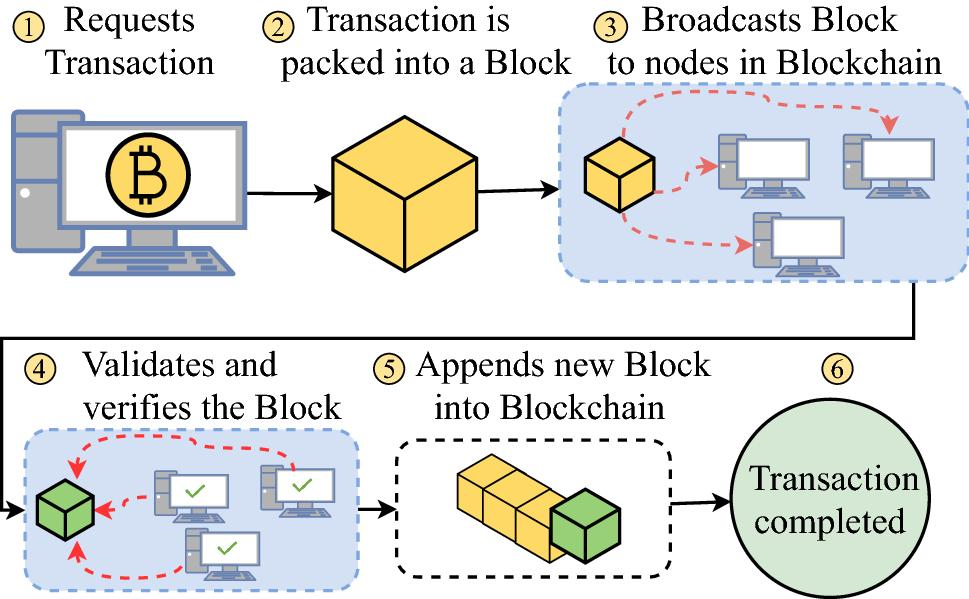
From a technical standpoint, network nodes verify the transaction’s validity by checking whether inputs exist, signatures are correct, and asset balances match. Once validated, the transaction is included in a block and confirmed.
CRYPTOBURG does not alter this process. Instead, it adds supporting logic before and after transaction creation, such as guiding user actions or organizing usage scenarios. This approach preserves decentralization while improving usability.
This step highlights the coordination between the application layer and the underlying network, where all actions ultimately resolve within Bitcoin’s transaction system.
How the Execution Layer Supports Asset Usage
The execution layer exists to address Bitcoin’s limitations in handling complex operations. While Bitcoin is highly secure for settlement, it is not optimized for high-frequency interactions or advanced logic.
At a functional level, the execution layer handles tasks such as scheduling, data processing, and interaction management. These operations can be performed off-chain and later reflected on-chain, reducing the load on the network.
From a structural perspective, the execution layer and settlement layer divide responsibilities. The execution layer determines how actions are carried out, while the settlement layer verifies whether they are valid. This separation enables both flexibility and security.
The execution layer is important because it allows assets to move beyond simple transfers and participate in more sophisticated use cases, improving overall usability.
Boundaries and Limitations of CRYPTOBURG
Although CRYPTOBURG expands how Bitcoin-based assets can be used, it still has limitations. First, all asset transfers ultimately depend on the Bitcoin network, so transaction speed and fees directly affect the user experience.
Second, the design of Runes assets limits their expressive capabilities, making them less suitable for handling complex logic. Some use cases may still require external systems.
In addition, while the execution layer increases flexibility, it also introduces additional complexity, requiring a balance between efficiency and security.
These constraints highlight that CRYPTOBURG’s role is to extend usage pathways rather than replace the underlying protocol. Understanding this helps clarify its position within the broader ecosystem.
Summary
By combining Bitcoin’s settlement capabilities, the Runes asset model, and application-layer execution logic, CRYPTOBURG creates a structured pathway for asset circulation and use, transforming assets from static holdings into dynamic tools.
FAQ
Does CRYPTOBURG change how Bitcoin operates?
No. It relies entirely on Bitcoin’s existing transaction structure.
How do Runes assets circulate within the system?
They move between addresses via Bitcoin transactions and are organized into usage scenarios at the application layer.
What is the role of the execution layer?
It handles complex logic and interaction flows, enhancing how assets can be used.
Do users need additional tools to participate?
In most cases, a wallet and an application interface are sufficient.
Is CRYPTOBURG considered infrastructure?
It is closer to an application-layer project that organizes how assets are used.