Gate’s personal verification framework builds from core identity details to deeper checks. Basic verification confirms information such as your full name, advanced verification usually requires an ID document and related identity checks, and address verification adds proof of residential address. These verification KYC steps determine what your individual verification status allows across the platform, including withdrawal permissions and, in some cases, access to features tied to compliance review or risk controls.
Most users do not need to complete every stage immediately, but understanding each level helps you know how much you can trade or withdraw, which steps are needed to raise a monthly limit where applicable, and how to check or update your status before deposits, withdrawals flagged for review, or other account actions are affected. This guide explains the requirements for each Gate.com verification tier, how those tiers affect account functions and withdrawal limits, and where to check your current level.
Key Takeaways
-
Gate verification can be divided into basic identity verification, advanced identity verification, and address verification.
-
Basic identity verification focuses on core personal information.
-
Advanced identity verification typically requires identity documents and additional identity confirmation.
-
Address verification is used to confirm residential information.
-
Completing higher verification levels can provide broader account permissions and higher withdrawal limits.
-
Exact requirements and limits may vary by region, so users should follow the information shown in their current Gate account.
What Verification Levels Does Gate Have?
Gate identity verification is structured around different levels of identity confirmation rather than requiring every piece of information at once.
For personal accounts, the process can generally be understood in three stages:
| Verification Level |
Main Information Verified |
Main Purpose |
| Basic Identity Verification |
Name, nationality, identification details, and other basic information |
Establishes the user’s basic identity profile |
| Advanced Identity Verification |
Identity document and additional identity confirmation |
Further confirms that the account belongs to the document holder |
| Address Verification |
Residential address and supporting address information |
Confirms the user’s place of residence |
The exact names shown in the interface may vary by region, but the underlying logic is similar: higher verification levels require more complete identity information.
What Is Gate Basic Identity Verification?
Basic identity verification is the first stage of the KYC process and is mainly used to establish a user’s core identity information.
Users are typically asked to provide details such as their full name, nationality, country or region of residence, and identification information. The exact fields depend on what is shown in the current verification interface.
The information entered at this stage should match the documents that may be submitted later. If names, identification details, or other personal information do not match, advanced verification may be delayed or rejected.
What Does Gate Advanced Identity Verification Require?
Advanced identity verification builds on the basic information already provided and further confirms that the account is being used by the legitimate document holder.
Users may need to submit a valid government-issued ID document and complete additional identity checks, such as facial or liveness verification. Depending on the user’s region, supported documents may include a national ID card, passport, or driver’s license.
Document images should be clear and complete, and the personal information shown on the document should match the information entered in the account. If the system cannot verify that the person completing the process matches the document holder, or if the submitted ID document or selfie does not satisfy the check, additional proof may be required.
What Is Gate Address Verification?
Address verification is used to confirm a user’s residential address and acts as an additional layer of identity verification.
Depending on the account and region, users may be asked to provide documents or information that show their current residential address. The accepted document types, date requirements, and formatting rules should be checked directly on the verification page.
Address verification is separate from basic identity verification. Basic KYC confirms who the user is, while address verification focuses on where the user resides.
How Do Different Verification Levels Affect Account Access?
The main difference between verification levels is not simply whether an account is “verified” or “unverified.” Each stage confirms a different amount of user information and can affect what the account is allowed to do on the platform.
| Verification Status |
Typical Effect |
| Verification not completed |
Some account functions may be restricted |
| Basic identity verification completed |
Establishes the user’s basic verified identity |
| Advanced identity verification completed |
Provides a more complete identity verification status |
| Address verification completed |
Can provide additional account permissions and higher withdrawal access |
As verification becomes more complete, the account can generally access broader platform services. However, the exact functions available at each stage should always be checked in the user’s current account interface.
How Do Withdrawal Limits Differ by KYC Level?
Withdrawal permissions generally increase as verification becomes more complete.
Gate has previously described different daily withdrawal limits for different verification levels, with higher tiers receiving higher withdrawal allowances. However, the exact figures shown to users can depend on the current regional service and account rules.
For this reason, users should treat the withdrawal limit shown in their Gate account as the authoritative amount. The verification page and withdrawal interface will indicate the current permissions available to that specific account.
The important point is that a higher verification level can provide greater withdrawal access, while incomplete verification may restrict the amount that can be withdrawn.
Is Address Verification Required?
Not always.
Address verification is an additional verification step rather than a requirement that every user must necessarily complete immediately. Whether it is required depends on the account, region, and the functions the user wants to access.
Users whose current verification level already meets their needs may not need to complete address verification right away. Those who need broader account permissions or higher withdrawal access can follow the current verification prompts shown in their account.
How Can You Check Your Current Gate Verification Level?
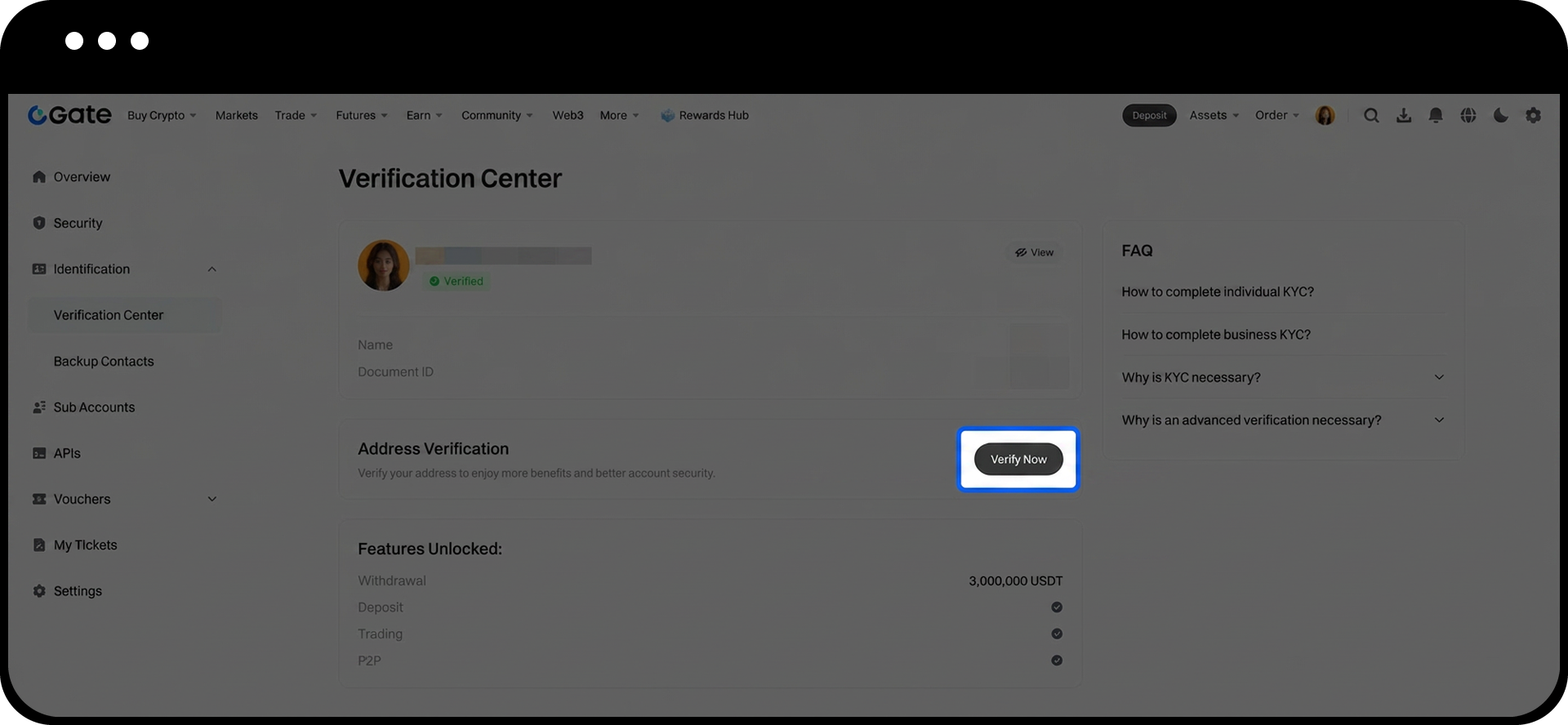
After logging in to Gate, open the identity verification section in the account or user center.
The page should show which verification steps have already been completed, which stages remain available, and what information or documents are required for the next level.
If a withdrawal or another account function requires additional verification, the account interface may also direct the user back to the identity verification section to complete the necessary step.
Why Can Identity Verification Fail?
Verification can fail when submitted information does not match, document images are unclear, the identity check cannot confirm the user successfully, or transactions are subject to additional review based on security requirements and suspicious activity.
For example, a different spelling of the legal name, an expired or unreadable document, glare covering key information, or a failed facial verification can all interrupt the process.
When resubmitting, make sure the document is valid, clearly visible, and matches the personal details entered in the account. Facial verification should also be completed in good lighting without anything covering the face, and some withdrawals flagged for review may require extra verification before processing.
What Should You Do After Completing Verification?
Once verification is completed, return to the account page and confirm that the verification status has been updated.
If the purpose of completing a higher verification level was to increase withdrawal access, open the withdrawal page for the relevant asset and check the current limit shown there.
There is usually no need to resubmit verification information unless Gate requests additional documents, address information, or another identity check, though users should also review current fees before using newly unlocked account functions.
Summary
Gate personal identity verification can be understood in three main stages: basic identity verification, advanced identity verification, and address verification.
Basic verification establishes core personal information, advanced verification further confirms identity documents and the account holder, while address verification confirms residential information. Completing higher verification levels can provide broader account permissions and higher withdrawal access.
For users, the most important step is to follow the verification requirements shown in their own Gate account. Exact requirements and withdrawal limits may differ by region, so the current verification and withdrawal pages should be treated as the final reference.
FAQ
How many main KYC verification levels does Gate have?
Gate personal verification can generally be understood as basic identity verification, advanced identity verification, and address verification.
What is required for Gate advanced identity verification?
Advanced verification typically requires a valid government-issued identity document and additional identity confirmation, such as facial or liveness verification.
Is Gate address verification mandatory?
Not always. Address verification is an additional verification step and whether it is required depends on the account, region, and the functions being used.
Do higher Gate KYC levels increase withdrawal limits?
Generally, more complete verification can provide higher withdrawal access, but the exact amount should be checked in the current Gate account.
Where can I see my current Gate verification level?
Log in to Gate and open the identity verification section in the account or user center to view completed steps and available verification levels.