With the explosive growth of Generative AI and trillion-parameter large language models (LLMs), leading technology giants around the world are engaged in an unprecedented "computing power arms race" in the history of human technology. In this round of industrial transformation, "AI capital expenditures (AI Capex)" have rapidly evolved from a relatively obscure financial metric into a decisive indicator of a large model developer's core competitiveness, strategic commitment, and future ecosystem moat. From procuring massive quantities of high-performance GPU chips, to building power-generation facilities for gigawatt (GW)-scale green-energy data centers, to laying high-speed intercontinental fiber-optic networks, enormous amounts of capital are continuously being transformed into the physical infrastructure of the intelligent era.
However, as capital expenditures routinely reach hundreds of billions of dollars, the market and technology communities have begun to engage in deep reflection: Can extremely high hardware investments generate commensurate commercial returns (ROI) in time? Where are the physical limits of computing power supply? More importantly, as AI capital expenditures increasingly become concentrated among cloud and hardware giants, how will decentralized technologies and blockchain infrastructure absorb and work with this unprecedented computing-power dividend? This article examines AI Capex from the perspectives of artificial intelligence and physical infrastructure, providing a comprehensive analysis of its evolution and long-term impact.
Key Takeaways
- Examine the components of AI capital expenditures (AI Capex) in depth and reveal the "three-way showdown" among data centers, power networks, and chip clusters
- Explain how Scaling Law drives large model developers to continuously expand capital expenditures to maintain their technological lead
- Systematically analyze supply-side bottlenecks in AI infrastructure development, including energy shortages, fiber-optic transmission bandwidth, and supply chain delays
- Explore potential synergies between decentralized physical infrastructure networks (DePIN) and on-chain data ownership enabled by the spillover effects of AI capital expenditures
- Combine the spot ecosystem of leading trading platforms such as Gate to provide users with a rational perspective on allocating assets related to frontier technology and crypto infrastructure
The "Physical Arms Race" Driven by Scaling Law: The Core Components of AI Capex
To understand the surge in AI capital expenditures, it is first necessary to clarify the "Scaling Law" behind large models. Over the past several years of large model development, industry experience has repeatedly confirmed a pattern: The greater the model's computational workload (FLOPs), dataset size, and parameter count, the stronger its emergent capabilities and reasoning performance. Maintaining this pursuit of Scaling Law requires exponentially increasing investment in real capital in the physical world.
Traditional software industry capital expenditures have focused primarily on labor costs and relatively lightweight cloud servers. By contrast, the Capex structure of the AI era is highly asset-intensive:
-
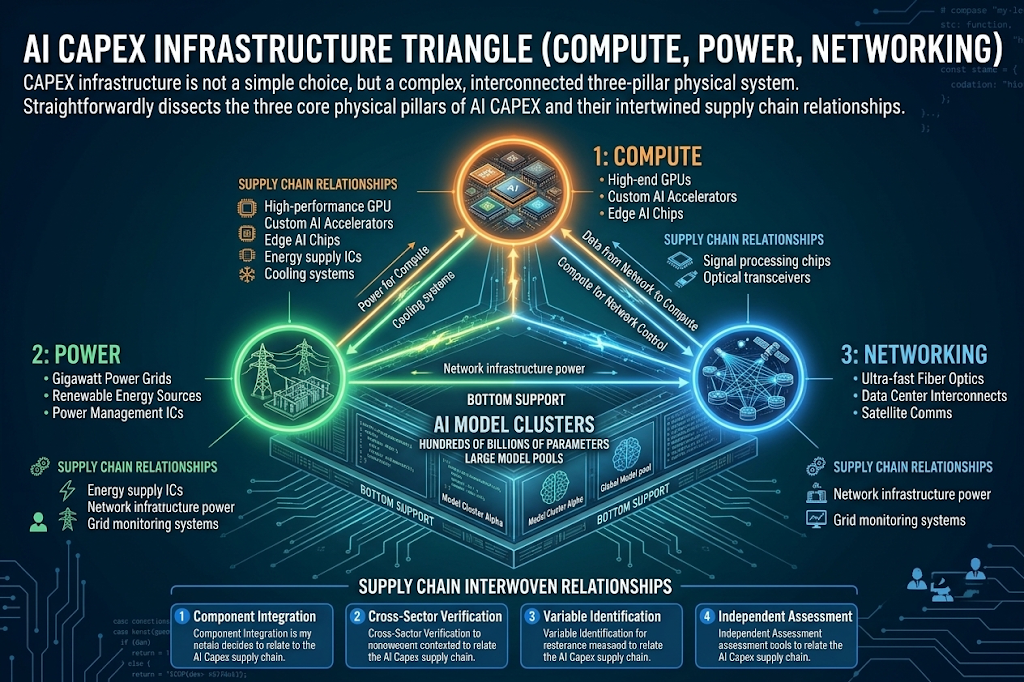
Core Computing Silicon: Top-tier AI training and inference chips account for the largest share of Capex. To support the parallel training of trillion-parameter models, a single data center may need to assemble tens or even hundreds of thousands of high-performance chips into powerful computing clusters.
-
Power & Energy Infrastructure: Computing power is ultimately a conversion of electricity. Gigawatt-scale data center campuses require not only equipment purchases but also long-term access to a stable supply of clean energy, such as nuclear power, geothermal energy, and wind, solar, and energy storage systems, to prevent grid power constraints from becoming a bottleneck that interrupts computation.
-
Networking & Interconnect: In hyperscale clusters, communication latency between chips directly determines overall training efficiency. High-bandwidth fiber optics, lossless switches, and high-performance interconnect protocols have become another major, though less visible, area of capital investment.
This shift toward converting cash flow into physical assets signals that AI competition has moved beyond pure algorithmic innovation to a comprehensive contest for control over global industrial foundations and power supply chains.
Supply-Side Bottlenecks and the Role of Decentralized Computing Networks (DePIN)
Although trillion-dollar AI Capex is reshaping the global computing-power landscape, centralized infrastructure development is inevitably running into the "physical and regulatory wall." First, delays in large-scale power-grid upgrades have left many planned data centers in the awkward position of having server racks but no electricity available. Second, the high concentration of top-tier computing chips has imposed extremely high computing rental costs and barriers on small and midsize innovation teams and research institutions.
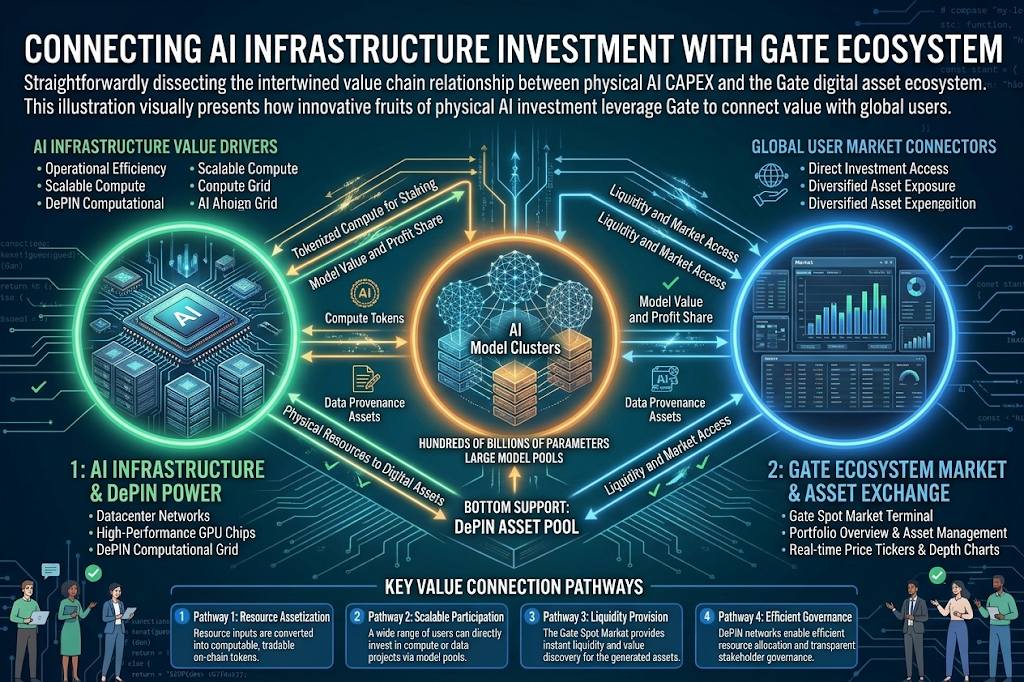
This imbalance and high cost in centralized computing-power supply have created unprecedented opportunities for decentralized physical infrastructure networks (DePIN) and Web3 computing markets to fill the gap. By using blockchain and smart contracts to dynamically aggregate and centrally coordinate idle high-performance GPU capacity distributed around the world, decentralized computing networks can significantly lower the barrier to computing resources for small and midsize AI teams during the inference stage while creating a new value-capture channel for owners of idle hardware.
At the same time, the maturation of decentralized storage protocols, such as Walrus, and on-chain data provenance layers has effectively addressed some of the shortcomings of centralized giants in data traceability and privacy protection. The substantial spillover effects of AI capital expenditures are seamlessly connecting the demand for computing power in the physical world with encrypted on-chain infrastructure, creating a global computing collaboration system that combines efficiency with decentralized resilience.
The Long-Term Interplay Between the Green-Energy Transition and Computing Infrastructure
When examining trillion-dollar AI capital expenditures, one deep trend cannot be overlooked: the close coupling of computing power and energy supply. Traditional data center locations have been determined primarily by network bandwidth and land costs. But as large model training enters the gigawatt (GW)-scale energy era, the certainty of power supply has become a central factor in determining the success of AI capital expenditures. Today, leading technology giants are turning their attention to nuclear power, geothermal energy, and large-scale wind, solar, and energy storage microgrids. Some are even investing directly in small modular reactors (SMRs) to secure long-term clean power for their data centers. The reality that "computing power is electricity" is forcing technology giants to establish long-term ties with global energy infrastructure, driving deep integration between the traditional energy industry and cutting-edge technology. This fundamental shift in the energy landscape is changing not only the physical layout of data centers but also creating a broad testing ground for DePIN in distributed energy coordination and edge-computing collaboration.
Asset Perspectives Under the Frontier-Technology Narrative and Synergies with Gate's Spot Ecosystem
As the dual narrative of "AI infrastructure development + decentralized computing networks (DePIN)" continues to evolve, the boundary between frontier technology and crypto markets is becoming increasingly blurred. AI Capex's enormous demand for hardware and energy is not only increasing the industrial value of traditional technology sectors but also providing solid fundamental support for Web3 sectors such as decentralized computing, AI Data, and high-performance Layer 1 blockchains.
However, for ordinary investors interested in the benefits of technological innovation, finding clarity amid extremely high technical barriers and complex market volatility remains a central challenge. Leading crypto asset trading platforms play an important role in connecting technological innovation in the physical world with the value of on-chain assets. Taking Gate as an example, when users explore and allocate assets related to AI infrastructure, the DePIN sector, and high-performance public blockchains on the Gate platform, they are effectively establishing a convenient channel to the intelligent data economy and the decentralized computing wave.
Through the convenient spot trading, secure custody, and multidimensional asset management services provided by Gate, users can participate in the long-term development of frontier technology sectors with a lower barrier to entry. Whether allocating assets across distributed computing network tokens or tracking the growth potential of AI on-chain data ecosystems, the combination of "centralized trading convenience" and "decentralized infrastructure innovation" offers users around the world an efficient and secure way to navigate market cycles and participate in the benefits of frontier technological innovation.
FAQ
What Is AI Capital Expenditure (AI Capex), and Why Is It So Important to Large Model Development?
AI capital expenditure refers to the long-term capital invested by companies to purchase, upgrade, and maintain AI-related physical assets, such as GPU chips, data centers, power facilities, and networking equipment. It is the physical foundation that enables large models to sustain Scaling Law-driven training, improve inference speed, and build a technological moat.
What Opportunities Can High AI Capital Expenditures Create for Decentralized Computing Networks (DePIN)?
The surge in centralized AI Capex has kept computing costs high and concentrated computing resources in the hands of a small number of major players. By using blockchain to integrate idle GPU capacity from around the world, decentralized computing networks can provide small and midsize developers with lower-cost, more flexible computing resources while enabling them to participate in the growth of the AI industry.
How Can Ordinary Investors Participate in the Convergence of AI and Crypto Infrastructure on Gate?
Investors can conveniently allocate assets related to DePIN decentralized computing networks, AI data infrastructure, and high-performance public blockchains through Gate's spot trading market. With the platform's deep liquidity and secure custody, they can participate in long-term technology growth more smoothly.