To buy XRP on Gate, a user typically needs a secure Gate account, a supported funding method, and a clear plan for storage after the purchase. The basic workflow is to create and secure an account, complete any required verification, deposit fiat or crypto, place an XRP order in the spot market, and then decide whether to keep the asset on Gate or move it to a self-custody wallet.
For first-time buyers, the hardest part is usually not whether XRP can be purchased, but which step comes first, which Gate entry point to use, and whether the asset should stay on the platform after purchase. Breaking the process into smaller steps makes the workflow easier to follow than focusing only on the live price screen.
This guide focuses on the practical path inside Gate: account preparation, funding options, the XRP spot market, order selection, and what to do with XRP after the trade is filled.
Key Takeaways
Buying XRP on Gate usually involves four core steps: account setup, verification if required, funding, and placing a spot order.
Different funding methods, such as bank transfer, card purchase, and crypto transfer, can change fees, speed, and convenience.
The final cost of buying XRP depends not only on market price but also on spreads, trading fees, network fees, and withdrawal fees.
After purchase, XRP can remain on Gate for convenience or be moved to a self-custody wallet for more direct control over private keys.
What Is XRP and Why Do People Buy It on Gate
XRP is a digital asset associated with the XRP Ledger and is widely discussed in the context of cross-border value transfer, liquidity, and payment settlement. Many users first encounter XRP as a large-cap crypto asset that is frequently listed on major exchanges and used in payment-related blockchain discussions.
People buy XRP for different reasons. Some want exposure to a widely traded crypto asset, some want to use it within a broader digital asset portfolio, and others want to understand how a payment-focused token is bought, stored, and transferred in practice through a familiar platform like Gate.
For a beginner, the important point is that buying XRP follows the same broad exchange workflow used for many other liquid crypto assets. The main differences usually come from the payment method, regional availability, and the storage plan after purchase.
What You Need Before Buying XRP on Gate
Before buying XRP on Gate, a user usually needs three things: a Gate account, a funding source, and a storage decision. In practice, this means choosing the platform, completing the required identity checks when applicable, and deciding whether the purchased XRP will stay on Gate or be moved elsewhere.
The funding source may be fiat currency or another cryptocurrency. A fiat route often uses bank transfer, card payment, or a third-party payment processor, while a crypto route involves depositing an existing asset and then trading it for XRP on the spot market.
It is also useful to prepare basic account security before any deposit or trade. Strong login credentials, two-factor authentication, and withdrawal security settings reduce operational risk during the buying process.
Common Ways to Buy XRP on Gate
There are several common ways to buy XRP, and each one changes the user experience slightly.
Buy XRP With Fiat on Gate
One common route is to deposit fiat currency into a Gate account and then buy XRP in the spot market. This method is usually suitable for users who want more control over order type, execution price, and market selection.
Buy XRP With a Bank Card on Gate
Gate may provide direct purchase tools that let users buy XRP with a debit or credit card where supported. This route may feel simpler for beginners, but the convenience can come with different fee structures or payment-processor costs.
Buy XRP With Another Cryptocurrency on Gate
Users who already hold a liquid asset such as USDT or BTC can deposit that asset into Gate and trade it for XRP. This route avoids some fiat onboarding steps, but it still involves trading fees and, in many cases, transfer fees from the original wallet or platform.
Step-by-Step: How to Buy XRP on Gate
The XRP buying process on Gate is easiest to understand as a short sequence of operational steps.
Step 1: Create a Gate Account
Open a Gate account that supports XRP spot trading and is available in the user’s region. During this step, it is helpful to enable two-factor authentication and set basic account protection before depositing funds.
Step 2: Complete Verification if Required by Gate
Some funding methods require identity verification before deposits or purchases can proceed. Verification requirements can differ by product, region, and payment channel, so the user should check Gate’s current rules before continuing.
Step 3: Deposit Fiat or Crypto Into Gate
After the account is ready, deposit fiat currency or transfer in a cryptocurrency that can be traded into XRP. The best route depends on available payment methods, settlement speed, and total cost.
Step 4: Go to the XRP Spot Market on Gate
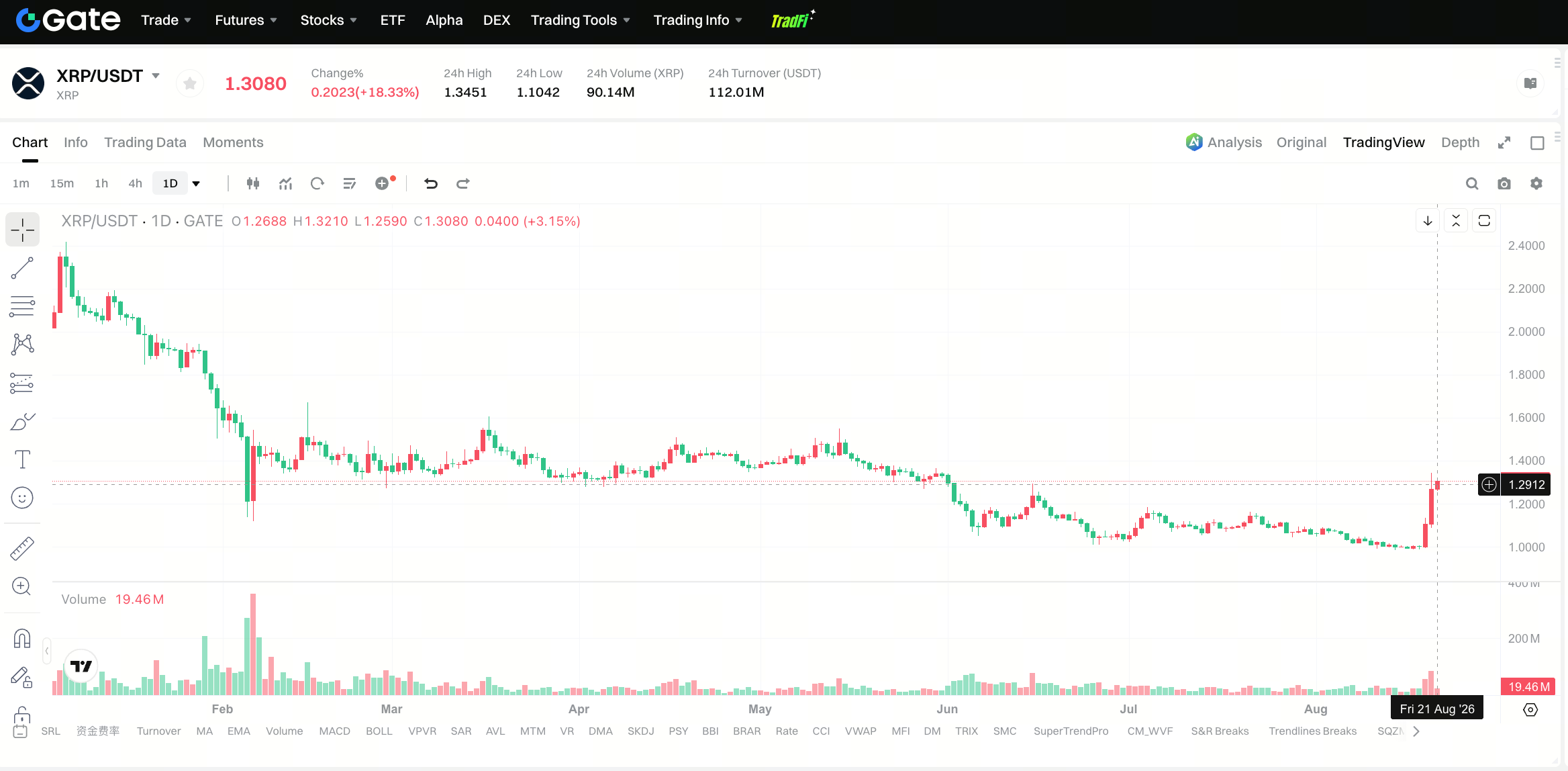
Once the account is funded, navigate to the XRP trading pair that matches the funding asset, such as the XRP/USDT spot trading page. At this point, the user is choosing where the actual conversion into XRP will take place.
Step 5: Choose an Order Type and Confirm on Gate
A market order prioritizes speed, while a limit order prioritizes price control. After entering the purchase amount and reviewing the estimated cost, the user confirms the trade and receives XRP in the Gate account balance if the order executes.
For a platform-first summary, the flow is simple: prepare a Gate account, fund it, open the XRP spot market, and place the order that best matches price control or execution speed.
What Costs Matter When Buying XRP on Gate
The visible XRP price is only one part of the total purchase cost. A user also needs to consider trading fees, spreads, deposit charges when applicable, network transfer fees, and later withdrawal fees if the asset is moved off-platform.
Card purchases may also involve payment-processor costs or foreign-exchange adjustments, while crypto-funded purchases may involve the network fee of the asset being deposited. For this reason, two XRP purchases of the same size can end up with different total costs depending on the route used.
A careful buyer should review the full path, not just the last trading screen. The cheapest-looking funding method is not always the cheapest after every fee is included.
How to Store XRP After Purchase From Gate
After buying XRP, the next decision is storage. Some users leave XRP on Gate for convenience and easier trading access, while others move it to a self-custody wallet to manage their own private keys.
Keeping funds on Gate may be practical for active trading, but self-custody wallets can offer stronger control over asset access when used correctly. The right choice depends on the user’s goals, technical comfort, and security habits.
For long-term holding, hardware wallets are often discussed because they keep private keys offline. For frequent trading, keeping XRP on Gate may be simpler, though it requires trust in the platform account and its security model.
Key Risks to Understand Before Buying XRP on Gate
Buying XRP on Gate involves the same general risk categories that apply to many crypto assets. These include market volatility, operational mistakes during funding or withdrawals, platform risk, and wallet-security risk.
A user should also understand that sending XRP to the wrong address, choosing the wrong network flow, or skipping account-security steps can create losses that are unrelated to market price. In many cases, process mistakes cause more trouble for beginners than the trade itself.
That is why a buying guide should not end at the order screen. Storage, transfer discipline, and fee awareness are part of the same decision.
Summary
Buying XRP on Gate usually means setting up a secure account, choosing a funding route, placing a spot-market order, and then deciding how the asset will be stored. The most useful checklist is simple: confirm Gate access, compare funding methods, review total fees, use the right order type, and plan storage before moving funds.
FAQ
What is the easiest way to buy XRP on Gate?
For many beginners, the easiest route is usually a Gate funding flow that supports fiat deposits or a direct card-based purchase where available. The exact path depends on region, payment availability, and fee preferences.
Can XRP be bought with a credit or debit card on Gate?
Yes. Gate may support card-based XRP purchases in some regions, though the total cost can differ from a bank-transfer or spot-market route because of processor fees and spreads.
Do users need identity verification before buying XRP on Gate?
In many cases, yes. Verification requirements depend on Gate, the region, and the funding method, so users should check the platform’s current policy before depositing or trading.
Is it better to keep XRP on Gate or in a wallet?
It depends on the goal. Keeping XRP on Gate may be more convenient for active trading, while moving it to a self-custody wallet gives the user more direct control over private keys.
What fees should be checked before buying XRP on Gate?
Users should check trading fees, spreads, deposit costs, payment-processor fees when relevant, network transfer fees, and withdrawal fees if XRP will later be moved off Gate.
Author: Will
Reviewer(s): Jayne
Disclaimer
* The information is not intended to be and does not constitute financial advice or any other recommendation of any sort offered or endorsed by Gate.
* This article may not be reproduced, transmitted or copied without referencing Gate. Contravention is an infringement of Copyright Act and may be subject to legal action.
Wrapped XRP, a token pegged to XRP usable across various blockchain networks other than the XRP ledger, aims to enhance liquidity and interoperability within the decentralized finance ecosystem.
Native XRP cannot currently be frozen on the XRP Ledger. Unlike stablecoins and other issued tokens, XRP has no issuer with the authority to freeze individual balances, blacklist an address or claw XRP back from an account.