Key Takeaways
-
The difference between an AI Agent and a Copilot is that the former is beginning to move from assisting with tasks to completing them autonomously
-
The core metrics for traditional SaaS are user seats, but the Agent era may shift the focus to task volume, usage volume, and business outcomes
-
Simple, tool-based SaaS is more vulnerable to disruption, while software that controls enterprise data, permissions, workflows, and system records may have stronger moats
-
The software sector's recent rebound shows that the market is reassessing the narrative that AI will inevitably destroy SaaS
-
The key question is not whether AI will replace software, but whether software can become the infrastructure for Agents
Why AI Agents Are Making SaaS a Tradable Theme Again
For the past two years, AI and SaaS were often framed as an either-or proposition, with AI expected to replace software. If large language models can generate reports, analyze data, write code, and handle customer service directly, do enterprises still need to buy large amounts of software? That concern hit software valuations hard because the traditional SaaS model depends on user seats, renewal rates, and expanding enterprise software budgets.
In 2026, however, the market began embracing a different interpretation. After the valuation shock caused by the idea that AI would destroy SaaS, the software sector rebounded. The earnings and AI product advances of companies such as Salesforce led investors to reconsider the thesis: AI may not reduce software usage at all. It may instead turn software into the backend infrastructure powering Agents. Humans may spend less time operating software, while machines may make more calls to it.
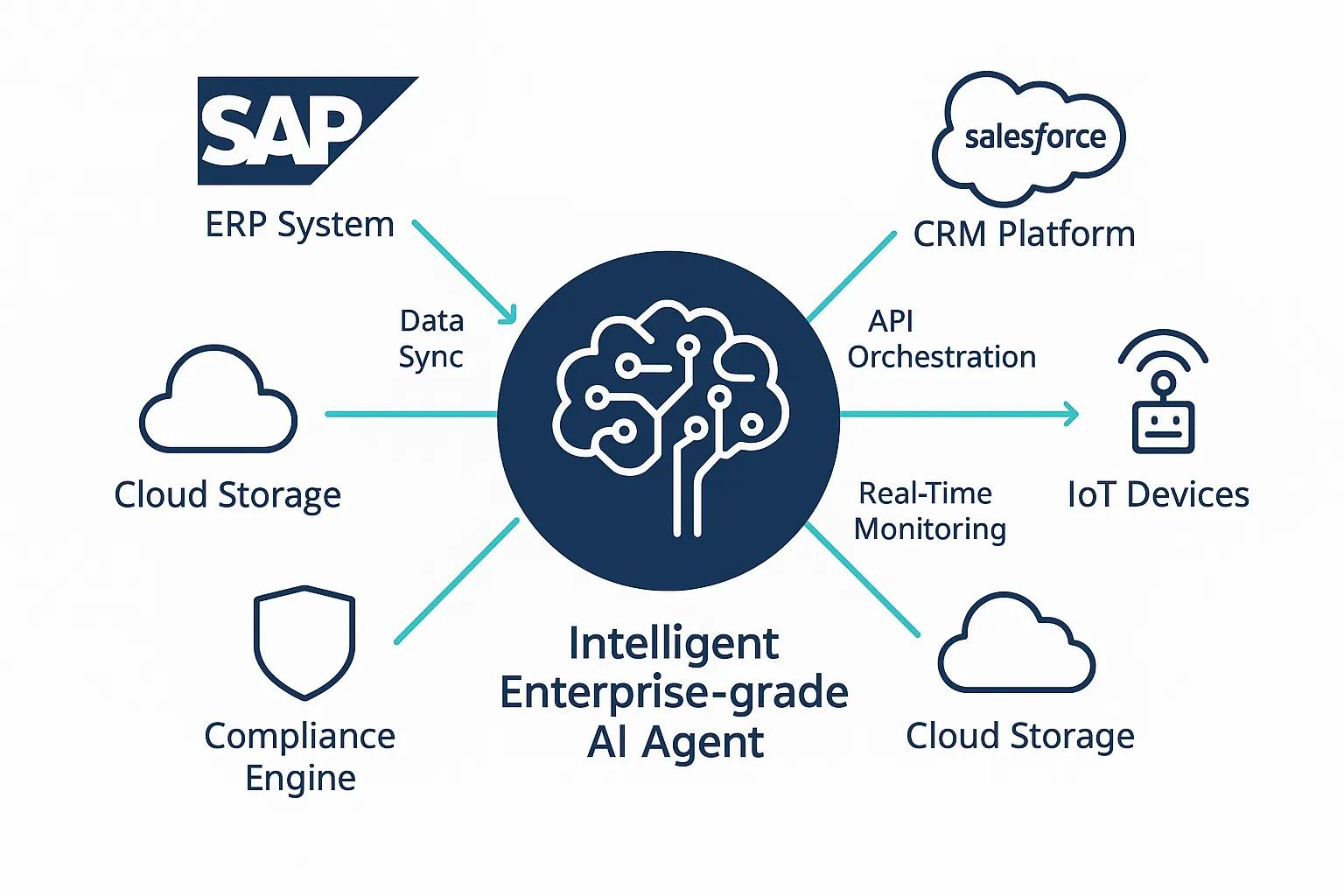
A Copilot mainly adds an intelligent assistant to an existing software interface. An Agent, by contrast, acts more like a digital executor that can plan tasks, call tools, read data, and complete workflows. It may not log in to a CRM every day, but it may continuously call CRMs, databases, email, document, and permissions systems. Software is therefore shifting from a tool operated by people to infrastructure operated by machines.
The Biggest Change in SaaS Is Not That Software Disappears, but That the “User” Changes
The traditional SaaS growth model is straightforward: enterprises add employees, employees need accounts, and account growth drives subscription revenue. That is why seat count, average revenue per user, and net revenue retention have long been core software industry metrics.
The Agent era could fundamentally alter this structure. An enterprise might reduce some manual-operation seats while dramatically increasing its volume of automated tasks. A sales Agent can organize customer information and update the CRM; a finance Agent can read invoices and call an ERP; and a customer service Agent can query a knowledge base and process refunds. Software value is shifting from how many people use it to how much work it gets done.
Pricing models may consequently move beyond seat-only billing toward a combination of seats and usage, per-task pricing, or outcome-based pricing. If Agents drive more software calls, fewer users do not necessarily mean less revenue. But if an Agent bypasses a software product and recombines its functionality directly, products that previously monetized their interfaces may face pressure.
Why Simple SaaS Is More Vulnerable, While System Software May Become Stronger
The products most exposed to replacement are generally simple tools with low data barriers and low switching costs. An app that generates summaries, organizes text, or produces basic reports can be readily absorbed by a general-purpose Agent.
The more valuable software is often the software that owns an enterprise's accumulated data and business rules. CRM, ERP, database, security, and identity management systems do more than provide functionality—they retain the factual records of how the enterprise operates. An Agent can replace human actions, but it cannot easily replace these systems as the source of truth or the center of permission management.
The result could be counterintuitive: in the AI Agent era, the front end may matter less while the backend matters more. Historically, software companies competed over how often users opened their applications. Going forward, the more important question may be which systems an Agent must access to complete a business task.
The Agent Economy Is Forcing SaaS to Rewrite Its Pricing Model
When an Agent executes thousands of tasks each day, the traditional model of charging a fixed amount per person per month is no longer sufficient. Enterprises may need thousands of automated tasks without needing a comparable number of human seats.
Software pricing may develop along three paths: combining seat- and usage-based pricing; charging by task or business outcome; and positioning software as the governance, permissions, and data platform for enterprise Agents. For software companies, this creates both risk and opportunity.
Investors must also rethink their metrics. Beyond revenue and profit, they should track Agent usage, automated task volume, AI product revenue contribution, and whether additional revenue can cover AI inference costs.
The True Entry Point for AI Agents May Not Be the Chat Window, but Enterprise Data and Permissions
For an Agent to execute tasks on an enterprise's behalf, it must understand what is happening inside the organization and what it is authorized to do. That makes data and identity permissions critical infrastructure. Models may handle natural-language understanding, but customer lists, contracts, financial records, inventory, and employee information still have to come from enterprise systems.
This is a significant moat for traditional SaaS. A new model can develop powerful general-purpose capabilities within months, but replicating an enterprise's years of accumulated data relationships, approval rules, and permission structures is far more difficult. Companies that can give Agents secure access to these resources will be better positioned to become the long-term infrastructure layer for enterprise AI.
Enterprise software competition may therefore shift from who offers the best interface to who provides the most reliable data connectivity and permission controls. That would elevate the importance of behind-the-scenes technologies such as databases, identity management, cybersecurity, and API management.
SaaS's Second Growth Curve Must Prove One Thing: AI-Generated Revenue Exceeds AI Costs
AI products do not add revenue at no cost. Every model inference consumes computing resources, and complex Agent tasks may repeatedly call multiple models and enterprise systems. If a software company simply adds AI features without increasing customer spending or expanding usage, AI could compress rather than expand existing profit margins.
When evaluating whether AI is creating a second growth curve, investors should look beyond the number of AI features launched. They should assess whether revenue per customer is increasing, whether customers are broadening their usage, and whether AI gross margins are improving as model costs decline and economies of scale emerge.
This marks a crucial transition for the software industry—from telling an AI story to proving AI's financial impact. Agents will become a genuine new business model for software companies only when they deliver both greater customer value and sustainable unit economics.
Key Areas to Watch
| Software Type |
Impact of AI Agents |
Key Metrics to Watch |
| Simple, Tool-Based SaaS |
Easily absorbed by general-purpose models and Agents |
Functional differentiation, switching costs, user retention |
| System Software |
May become the data and permissions infrastructure for Agents |
Data moat, workflow coverage, API call volume |
| Platform SaaS |
May become the governance and execution platform for enterprise Agents |
AI revenue, Agent usage, ecosystem scale |
| Vertical Industry Software |
Depends on industry knowledge and business process barriers |
Industry data, compliance capabilities, automation rate |
FAQ
What is the difference between an AI Agent and a Copilot?
A Copilot primarily assists users within existing software, while an Agent focuses on autonomous planning, tool calling, and executing multistep tasks.
Will AI Agents make SaaS disappear?
SaaS is more likely to split into distinct categories. Software with simple functionality is easier to absorb, while system software that controls data, permissions, and critical workflows may see even more machine-driven usage.
Why might SaaS shift from seat-based pricing to usage-based pricing?
Because an Agent does not necessarily correspond to a human account, task volume, call volume, and business outcomes are more natural billing units.
What should investors focus on most when evaluating AI software stocks?
They should focus on the actual revenue contribution of AI products, customer expansion, Agent usage, data and workflow moats, and whether inference costs can be covered by incremental revenue.
What is the biggest industry risk posed by AI Agents?
If model providers or new Agent platforms capture the value, traditional software could shift from being the primary entry point to becoming a backend supplier, weakening its bargaining power.