Square
Following
Hot
News
Notifications
Profile
Share your thoughts
placeholder
Article
#Gate推出行业首个资金安全证明
Exchange security has long been measured by a single headline number: reserve ratio. It is a useful number, but it answers only one question. It tells you whether assets exist in amounts that cover liabilities at the moment of measurement. It does not tell you how those assets are stored, who can move them, or how quickly they could be reached in a crisis.

Gate's latest move is to publish a second layer of disclosure. Its new PoSEC system, described as proof of fund security, aims to show how assets are stored and how much of them is protected offline. The announcement repo
Falcon_Official
#Gate推出行业首个资金安全证明
Reserves Tell You How Much. PoSEC Asks Where It Sits.
For years, the standard question about an exchange was simple: does it hold enough assets to cover what users are owed? Proof of reserves answered that question, and it still matters. But a reserve ratio says nothing about how those assets are stored. Two exchanges can show identical reserve numbers while keeping very different shares in cold storage, hot wallets or third-party custody. That gap is what Gate is now trying to close.

What Gate announced

Gate has launched what it describes as the industry's first PoSEC, or proof of fund security, system. Where PoR confirms that assets exist and cover liabilities, PoSEC focuses on the storage structure behind those assets and on the coverage available to protect them. Gate's announcement reports cold storage coverage of 104.58% and says 88.26% of stored assets sit in cold storage. It also says an independent third-party audit mechanism has been introduced and that verification is underway.

Those are Gate's own figures. I could not confirm them from an independent source, and the audit is still in progress, so the results should be read as a company disclosure until the audit concludes.

Why cold storage share matters

Hot wallets are connected to the internet and are needed for daily withdrawals. Cold storage keeps keys offline and is far harder to drain through a remote attack. A higher cold-storage share generally means less of user money is exposed to a single compromise. The question for any exchange is not only whether it has the funds, but how many of those funds would be exposed if a hot wallet were breached.

What "coverage above 100%" can and cannot mean

Cold storage coverage above 100% suggests that cold-stored assets exceed the stated liability base that the system measures against. That can be reassuring, but it depends on how the liability base is defined, how often it is updated, and whether it includes every product. A figure is only as useful as its definition, so the methodology matters as much as the headline.

The audit gap is the real test

Any security claim is only as strong as its verification. Gate says an independent third-party audit mechanism is in place and that verification is underway. The key question is what the auditor will examine: wallet control, key management, custody procedures, and the reconciliation between reported and on-chain balances. Users should look for the scope, the auditor's name, the period covered, and whether findings are published in full.

What users should ask any exchange

Reserve ratios are the start of the conversation. Users should also ask for the share of assets in cold storage, the custody arrangements for each asset, how often balances are reconciled, whether an independent auditor has reviewed key management, what happens to user funds in a security incident, and how any insurance or compensation is funded and capped.

The bottom line

PoSEC is a step beyond proof of reserves, because it addresses where assets are kept and how they are protected. Gate's disclosed figures are encouraging, but they are company-reported, and the audit is still in progress. A good exchange should make its security data verifiable, specific and regularly updated, not just impressive at launch.

repost-content-media
Morning market update
live-cover
LIVE2,093
Trenches
ZIG
Z
bade
b
ZIG
0x8c...1145
Market Cap
$.
Change
.
24h Vol
$.
Holders
.
BTC
B
bade
b
BTC
C5xp...pump
Market Cap
$.
Change
.
24h Vol
$.
Holders
.
CORLA
C
bade
b
CORLA
0xba...7777
Market Cap
$.
Change
.
24h Vol
$.
Holders
.
STONK
S
bade
b
STONK
6GmA...UNgx
Market Cap
$.
Change
.
24h Vol
$.
Holders
.
DESSA
D
bade
b
DESSA
npz2...pump
Market Cap
$.
Change
.
24h Vol
$.
Holders
.
Right-side opportunities are rare—you may not see one even a few times in a week. You have to wait for a breakout before entering, and then use protection.

With left-side trades, you must never get greedy; they’re all short-term. But 80%-90% of the market is range-bound, so there are plenty of opportunities. As long as you maintain a certain win rate and identify the right entry points, you can still achieve great results through compounding.

In other words, capture opportunities on both higher and lower timeframes[阴险]
post-image
Accept the drawdown, but resent the present
The underlying logic of this world is always an exchange governed by the conservation of energy.
Everything you gain, whether money, status, love, or personal growth, has to be exchanged for something else: time, effort, patience, risk, or restraint. There are no exceptions.
You only see others make big profits trading, not how many consecutive stop-losses they endured or how many times they held on through sharp pullbacks in unrealized gains; you only see others thriving in their careers, not how much entertainment they gave up or how many risks the
  • 5
Morning Market Update
live-cover
LIVE1,518
While others are still saying “trust me,” Gate has already started showing its work!

In the crypto industry, there’s a classic line: “Trust me, I won’t let you down.”
It sounds touching, but when it comes to the security of funds, sentiment alone isn’t enough! 🤣
Gate continues to explore ways to make fund security more transparent, and has introduced a proof-of-reserves mechanism that gives users the opportunity to learn about the platform’s reserves through publicly available proof information.
What does this mean?
It means the industry isn’t just competing on trading volume, products, and
  • 29
Exclusive Perks for New and Existing Users, Share $25,000 in SPCXG https://www.gate.com/campaigns/6724?ref=VLARBF1YAG&ref_type=132
post-image
SPCXG+0.22%
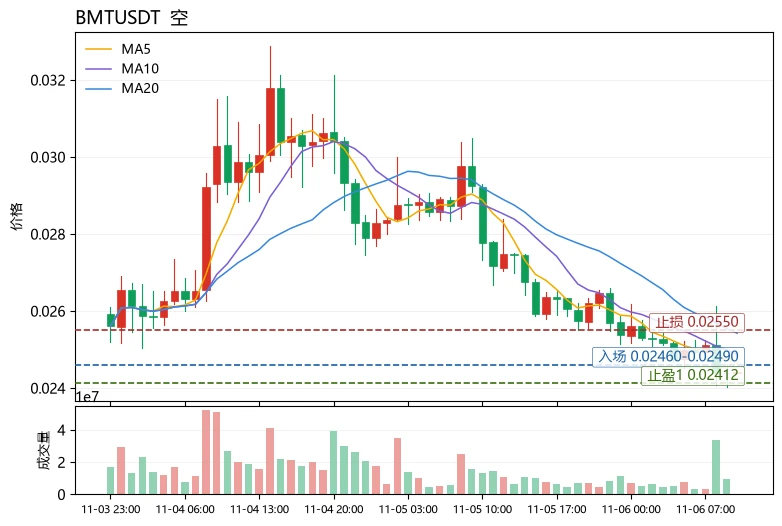
$BMT Current price 0.02441. The first resistance above is MA20 at 0.02543, while the lower Bollinger Band at 0.02412 is the last short-term line of defense. The Fear & Greed Index is at 28, in the fear zone, as risk appetite across the broader market contracts. BTC weakness is dragging altcoins broadly lower, and BMT has plunged 16.29% in 24 hours on just 5.4M USDT in trading volume—a typical catch-up decline amid fading liquidity.
Technically, MA5 at 0.02465 has crossed below MA20 at 0.02543, forming a bearish alignment. The MACD histogram remains negative at -3.893e-05, while RSI at 33.0 is
post-image
MUB
MUBMubbin
Pump.Fun
MC:$3.42KHolders:1
0%
BMT+5.93%
#pi Things have to be done one step at a time. Most of the code is now open source, but the project is still under development. The project team still holds the project’s fate in its hands, and decentralized deployment is not yet complete. That’s where things stand right now. Complaining all you want won’t help. As for whether the project has a future, we’ll just have to wait and see—no one can guarantee it. Take it or leave it
PI-0.60%
  • 1
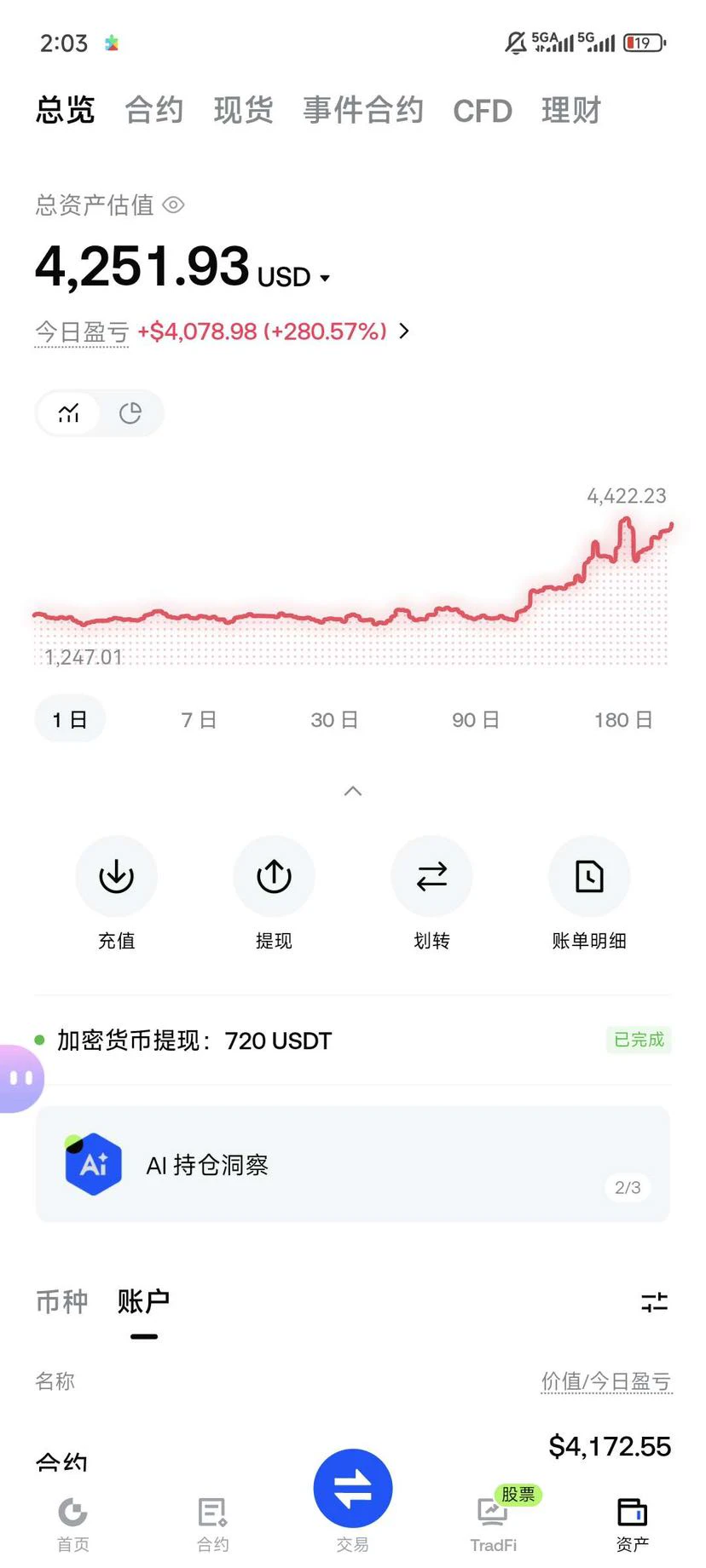
Caught the rebound after $TAO broke below its intraday low and the RSI became extremely oversold. Precisely captured a 265% gain on the reversal. 📈 📈Profit: $ 195 Keep it simple:
$ZEC and $CYBER .
post-image
TAO+0.41%
CYBER-5.40%
$TRUMP Those 200-plus whale shorts in the futures market are basically taking punches to the face now.

The funding rate has plunged to -80%, so short sellers wake up every day and have to pay interest just to hold on. This market has long been tightly controlled, and there’s practically no selling pressure on the spot side.
Their entry prices are all clustered around 1.83. It would only take a small spark to push the price to that level. The forced buy orders from more than 200 traders getting liquidated in succession would instantly take over the market, and the market maker wouldn’t even ne
post-image
TRUMP-0.90%
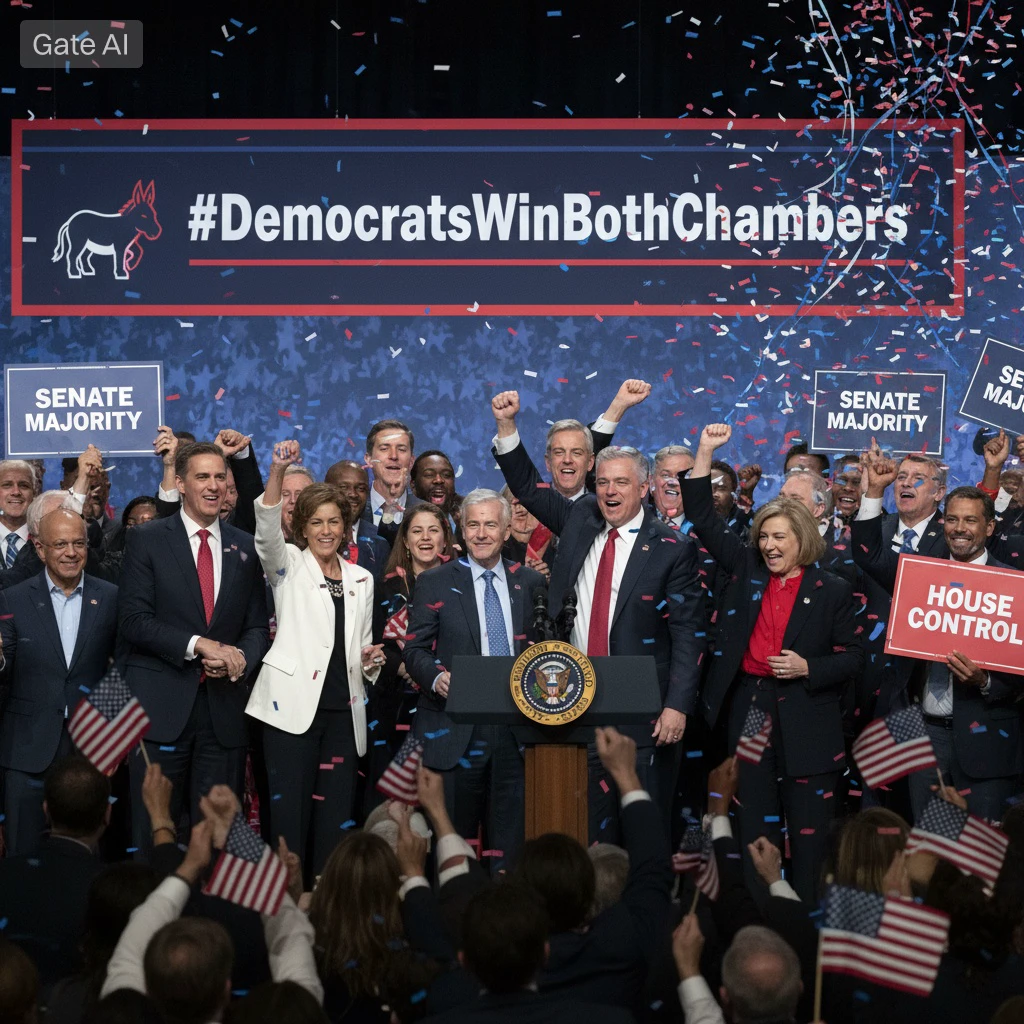
#民主党赢得美国两院 #美股财报季 𝗗𝗲𝗺𝗼𝗰𝗿𝗮𝘁𝘀 𝗪𝗶𝗻 𝗕𝗼𝘁𝗵 𝗖𝗵𝗮𝗺𝗯𝗲𝗿𝘀, 𝗮𝗻𝗱 𝘁𝗵𝗲 𝗘𝗹𝗲𝗰𝘁𝗶𝗼𝗻 𝗥𝗮𝗹𝗹𝘆 𝗟𝗮𝘀𝘁𝗲𝗱 𝗢𝗻𝗲 𝗗𝗮𝘆: 𝗔 𝗙𝗼𝘂𝗿-𝗗𝗮𝘆 𝗧𝗶𝗺𝗲𝗹𝗶𝗻𝗲 𝗼𝗳 𝘁𝗵𝗲 𝗥𝗲𝘀𝘂𝗹𝘁 𝗮𝗻𝗱 𝘁𝗵𝗲 𝗠𝗮𝗿𝗸𝗲𝘁𝘀

Tuesday, November 3: the vote

Democrats won the Senate and the House. In the Senate they hold at least 54 seats to 44, after flipping seven Republican seats: Texas, Kansas, South Carolina, Iowa, Ohio, Maine and North Carolina. They held Georgia, New Hampshire, Michigan, New Jersey and Illinois, and Republicans held Florida and Kentucky. Alaska and Mississippi are s
post-image
Falcon_Official
#DemocratsWinBothChambers Divided Government Arrives in Washington
The 2026 midterm elections have changed the balance of power in Washington. According to an Associated Press tally reported by NPR, Democrats have won majority control of the U.S. Senate. That ends two years of unified Republican control and sets up divided government with President Trump in the White House during the final two years of his second term.

Senate: Where the count stands

NBC News reported Democrats at 54 seats and Republicans at 44, with two races still uncalled, in Alaska and Mississippi. The Mississippi race between Scott Colom and incumbent Cindy Hyde-Smith was separated by only a few dozen votes in the latest count, so it can still change. Before the election, Republicans held a 53 to 47 majority.

Among the confirmed results, Josh Turek defeated Ashley Hinson in Iowa, and Roy Cooper defeated Michael Whatley in North Carolina. Democrats also held Georgia, where Jon Ossoff won re-election, and New Hampshire, where Chris Pappas was declared the winner.

House: The count is still moving

NBC News projected Democrats at 258 seats and Republicans at 177, against the 218 needed for a majority. Other reports from the same night described the count as too early to call. Final certification may take days or weeks, so treat the exact House margin as provisional until official results are in.

What divided government changes

Democratic control of the Senate gives the party a say over which judicial and executive nominees receive floor votes, along with a stronger oversight role. NPR notes that the new majority sets the stage for investigations that could dominate the rest of Trump's term. For policy, this usually means fewer major bills passed without bipartisan support, and more fights over budgets, nominations and subpoenas.

Taxes, tariffs and spending

Divided government typically slows large tax changes and new spending programs, since legislation requires agreement in both chambers. Tariffs have largely been set through executive action, so their path depends less on Congress, although lawmakers can still influence trade policy through legislation, hearings and funding decisions. Government spending will likely become a contentious area in budget talks. I did not verify specific proposals for the coming session, so these points describe the structure of divided government rather than a forecast of any particular bill.

Regulation and crypto policy

CoinShares has said that progress on U.S. crypto market-structure legislation may slow under a Democratic-controlled Congress. Bitcoin may be less exposed to that risk than exchanges and token issuers, which face more direct regulatory scrutiny. For the crypto sector, the practical question is how quickly a regulatory framework can pass, not whether it can pass at all.

Markets on election week

U.S. equities rallied after the result. Bitcoin dropped to about $75,600 during the count, then recovered above $80,000 on November 4. That recovery came despite spot Bitcoin ETFs posting about $1.16 billion in net outflows across three sessions, so the rebound is not yet backed by steady institutional demand. The market reaction looks like relief that uncertainty is clearing, rather than a verdict on the policy outlook.

Treasury yields and the dollar

I did not verify yield or currency moves for this session, so I will not quote them. Divided government is often read as a brake on large spending, which could ease pressure on long-term yields. But the effect depends on deficits, inflation and Federal Reserve policy, and those can outweigh the political signal. The same applies to the dollar, which responds more to rate expectations than to the composition of Congress.

Sectors to watch

Sectors most sensitive to policy shifts include healthcare, energy, defense, financials and technology. Manufacturers and importers depend on tariff policy. Banks, crypto firms and large technology platforms are most exposed to regulatory decisions. Each sector still moves mainly on its own earnings and fundamentals, so election results alone are a weak guide to individual stocks.

A neutral market outlook

Divided government usually means fewer large legislative swings, more oversight and more gridlock. Markets often prefer predictability, and the immediate reaction has been positive. But the near-term policy path depends on negotiations that have not yet started. The election removes one source of uncertainty and adds another, which argues for balanced positioning rather than a strong directional bet.

Watch the Alaska and Mississippi calls, the final House count, ETF flows into Bitcoin, and any early budget or tariff proposals from either side. The bigger effect of this election will be on how policy gets made over the next two years, more than on any single market in the first few days.
repost-content-media
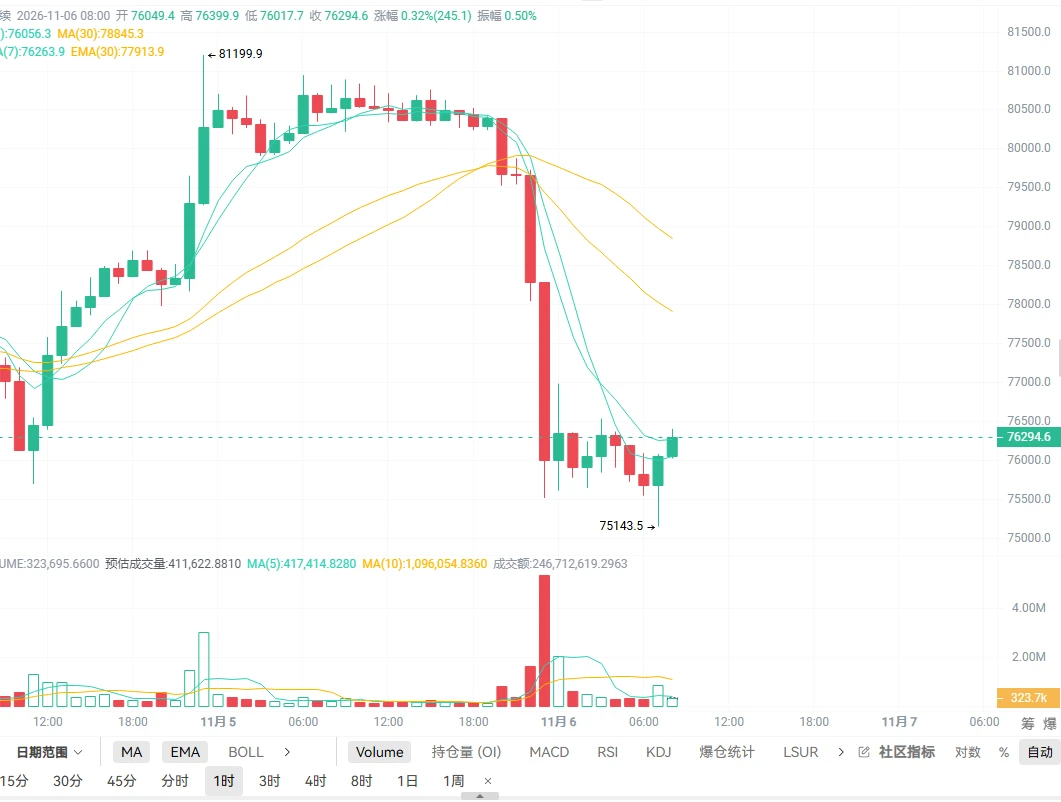
Yang Guang bit | November 6: BTC catches its breath at the lows after a sharp plunge; still short on the rebound
【Today's Strategy】
Entry timing: Price rebounds to the 76800–77500 range
Stop-loss: 78200,
Take-profit targets:
First target: 75500–75200
Second target: 74500–74000
【Key Takeaway】
On November 5, all three major U.S. stock indexes plunged—the Dow fell 3.44%, the S&P 500 fell 4.36%, and the Nasdaq fell 5.52%. The Nasdaq dropped more than 10% from its all-time high, entering correction territory, while the VIX surged over 62% in a single day, breaking above 27. The immediate catalyst w
post-image
BTC-0.65%
  • 1
🚨 Signal card · just captured
Source: Aesthetic_Meow Asset: $T Short entry: 0.004624 Targets: 0.0046001886 / 0.0045874891 / 0.0045763771 Stop-loss: 0.0046557486
Come to think of it, I reposted this person's $FOGO trade earlier today, and here they are again—their reflexes are seriously quick.
As usual: I only relay the info; judge for yourself whether it's legit. Whether to follow and how much to put in is up to you, dear 😤
Personal notes shared for informational purposes only, not investment advice. #US stocks AI sector trends diverge: cloud service providers strengthen while data cen
FOGO-3.35%
$AIN Down 45% in a day, plunging straight from 0.32 to 0.12, with $290 million in trading volume—it was a full-on stampede. BTC is grinding sideways around a key level, and as expectations for Fed rate cuts shrink, altcoins are the first to get drained—this 45% drop in $AIN isn’t an isolated project failure; it reflects a broad retreat in risk appetite, with capital moving out of high-volatility assets and into Bitcoin and stablecoins. The order book shows support around 0.12, but 0.15–0.16 was a continuation level in the recent downtrend; if a rebound reaches that range without volume pickin
AIN+3.85%
BTC-0.67%
  • 6
  • 3
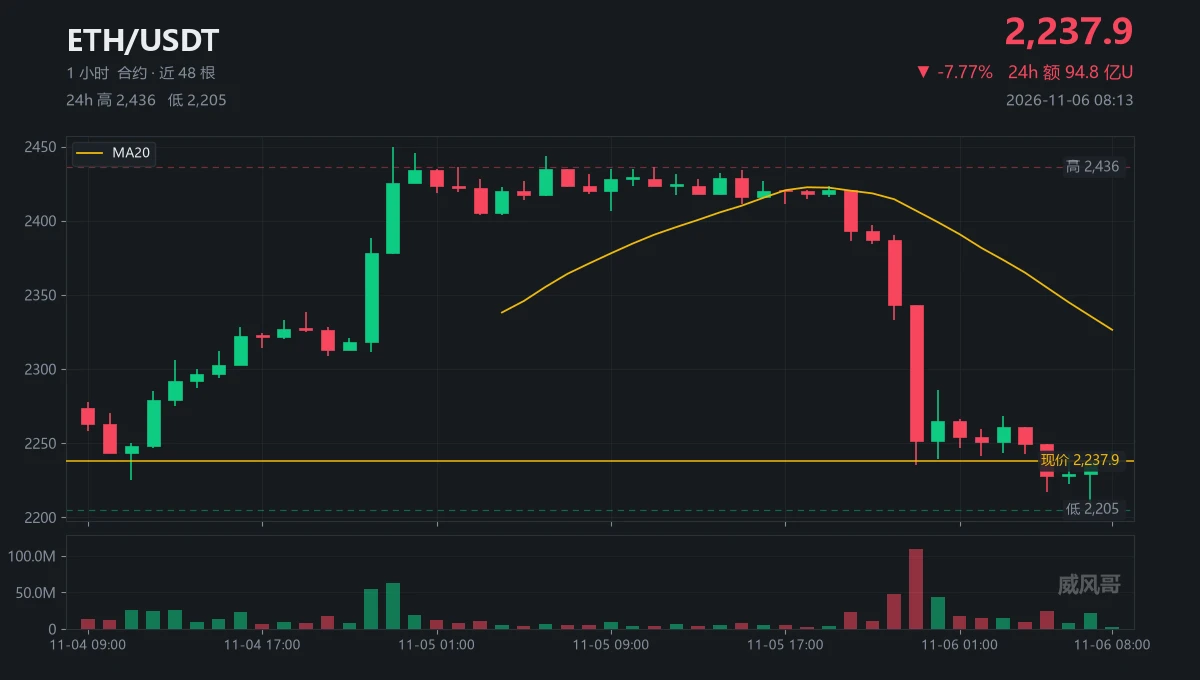
At 7:58 a.m., I went through all 48 hourly ETH candles from start to finish
My eyes were dry, and I never touched the keyboard
Someone asked: It’s down more than 7%—can we buy in?
I answered: First, let’s see how many times 2205.02 showed up today
They asked again: Isn’t that just one low?
I answered: At 07:00, it plunged to 2205.02 and closed at 2237. I got in, but only at 2237
They asked again: What about above?
I answered: 2251.4—the first gate for a rebound is wherever last night’s 23:00 candle closed
They asked: What if it can’t get above it?
I answered: If it can’t, keep looking lower; i
post-image
ETH-1.23%
  • 8
  • 2
#美股史诗级抛售 #10月非农数据聚焦 #作手分析 #WCTCS9 $NAS100 ‌
🔥 US stocks and crypto plunge across the board, trapping long positions! Crisis or long-term opportunity? Trader breaks down three key reasons behind the sell-off
Trading watchlist: $BTC $ETH $NVDA $GOOGL $ANTHROPIC
On November 5, US stocks and crypto markets suffered a sharp sell-off. The Nasdaq fell 5.52%, the Philadelphia Semiconductor Index plunged 12.3%, and NVDA fell about 9%, while semiconductor stocks such as MU and AMD fell even more. BTC dropped below $76,000, while ETH, HYPE and others also pulled back sharply.
I don't hide my live
Trader
#美股史诗级抛售 #10月非农数据聚焦 #作手分析
🔥 U.S. stocks and crypto plunge together, leaving long positions underwater! Crisis or long-term opportunity? Trader breaks down the three key reasons behind the selloff

Trading watchlist: $BTC $ETH $NVDA $GOOGL $ANTHROPIC

On November 5, U.S. stocks and crypto markets suffered a sharp selloff. The Nasdaq fell 5.52%, the Philadelphia Semiconductor Index plunged 12.3%, and NVDA fell about 9%, with semiconductor stocks such as MU and AMD dropping even more. BTC fell below $76,000, while ETH, HYPE, and others also pulled back sharply.

I’m transparent about my live positions: my HYPE, GOOGL, and ANTHROPIC long positions are currently also showing unrealized losses.

But I don’t think this downturn means the long-term cases for AI and crypto assets are over. Some high-quality assets may, in fact, be presenting long-term spot opportunities worth watching.

I. Three reasons behind this selloff

1️⃣ U.S. midterm elections shift expectations for AI investment

The Democratic Party won control of both chambers of Congress, raising concerns that future data center construction, energy supply, and AI infrastructure investment could face stricter regulation.

But this is only the trigger. The deeper question is whether massive AI capital expenditures can translate into sustained revenue and profits. As the market starts questioning returns on investment, valuations may be repriced.

2️⃣ The AI industry shifts from storytelling to proving profitability

In the past, the market was willing to pay high valuations for AI growth. Now, institutions are paying closer attention to orders, revenue, profits, and cash flow.

Chip demand may remain strong over the long term, but data center construction requires massive investment. Financing costs, energy supply, construction approvals, and investment payback periods could all affect the pace of industry expansion.

AI hasn’t disappeared; the market is simply starting to demand that companies demonstrate real profitability.

3️⃣ U.S. stock losses combine with crypto market liquidations

U.S. tech stocks plunged, and risk appetite quickly declined. CoinDesk, citing CoinGlass data, reported that more than $1 billion in leveraged positions were liquidated in the crypto market over the past 24 hours, with longs accounting for the vast majority.

But the crypto market was already under pressure from ETF outflows, shrinking stablecoin supply, and other factors. The decline in U.S. stocks acted as a catalyst, while leveraged liquidations further amplified the losses.

II. Why is Trader starting to look for long-term spot opportunities?

My logic is simple: short-term price declines don’t mean long-term business value has disappeared.

For NVDA, I’m watching AI chip demand and orders; for GOOGL, cloud business and AI commercialization; for BTC and ETH, capital flows and ecosystem development; and for HYPE, platform revenue and token value capture.

Of course, a big drop doesn’t mean an asset is cheap. For assets like ANTHROPIC, which are still subject to valuation expectations, it’s especially important to watch financing, computing costs, and whether future revenue materializes.

III. What will Trader do next?

I handle spot investing and futures trading separately:

• Spot: Build positions in high-quality assets I’m bullish on in batches, spread out the buying period, and don’t go all-in at once trying to call the bottom.

• Futures: Don’t blindly add to positions just because they’re underwater, and never hold on indefinitely. Wait for signs of stabilization, a breakout, and a confirmed retest before looking for opportunities on the right side of the trend.

• Risk management: If fundamentals change or the price structure continues to weaken, reassess instead of stubbornly sticking to the original view.

Tonight at 21:30 Beijing time, the U.S. will also release its October nonfarm payrolls report. The data could further affect expectations for Fed rate cuts and the performance of risk assets.

Trader believes this correction is worth watching, but it’s still too early to declare that a bottom has formed.

Don’t try to call the top or bottom, and don’t chase the first big green candle. The macro sets the direction; the structure determines the entry.

How are you planning to respond to this selloff?

A. Build a spot position in batches

B. Reduce exposure and wait for confirmation

C. Stay bearish and wait for a deeper bottom

D. Wait on the sidelines for now

Let the market provide the answer instead of trying to predict it!

(Personal opinion for discussion only; not investment advice.)
NAS100+1.47%
  • 1
$AIN After staying at these highs for so long, it’s starting to move. Net selling volume over the past half hour is 2M. Are we going to repeat the same mistake?
post-image
AIN+3.85%
  • 1
No need for so much skepticism; 55x took 10 days
Load More

Join 40 M users in our growing community

⚡️ Join 40 M users in the crypto craze discussion

💬 Engage with your favorite top creators

👍 See what interests you

Trending Topics

USStocksFaceHistoricSelloff

60.36k Views3.41k Discussing

U.S. stocks suffered a sharp selloff on Thursday, with the Nasdaq closing down more than 5% and the Philadelphia Semiconductor Index falling over 12%. AI and chip stocks including $NVDA and $AMD were hit especially hard. Markets are reassessing AI valuations, data-center spending and future returns. Is this just short-term deleveraging, or the start of a deeper correction in the AI trade? Which sectors are you watching next?

GateLaunchesPoSECProofOfSecurity

10.49k Views556 Discussing

USNonfarmPayrolls

8.23k Views3.95k Discussing

View More