The Laser Eyes Crypto Meme: Origins and Creators Explained

The Laser Eyes Crypto Meme: Origins and Creators Explained

Explore the significance of the red-eye meme in cryptocurrency—from its beginnings with Bitcoin to its rise as an emblem of financial defiance. Learn how laser eyes symbolize the drive toward a decentralized economy in Gate and throughout the blockchain community.
Bitcoin
Memecoins
Web 3.0
Crypto Insights
Macro Trends
2026-01-17 21:15:57
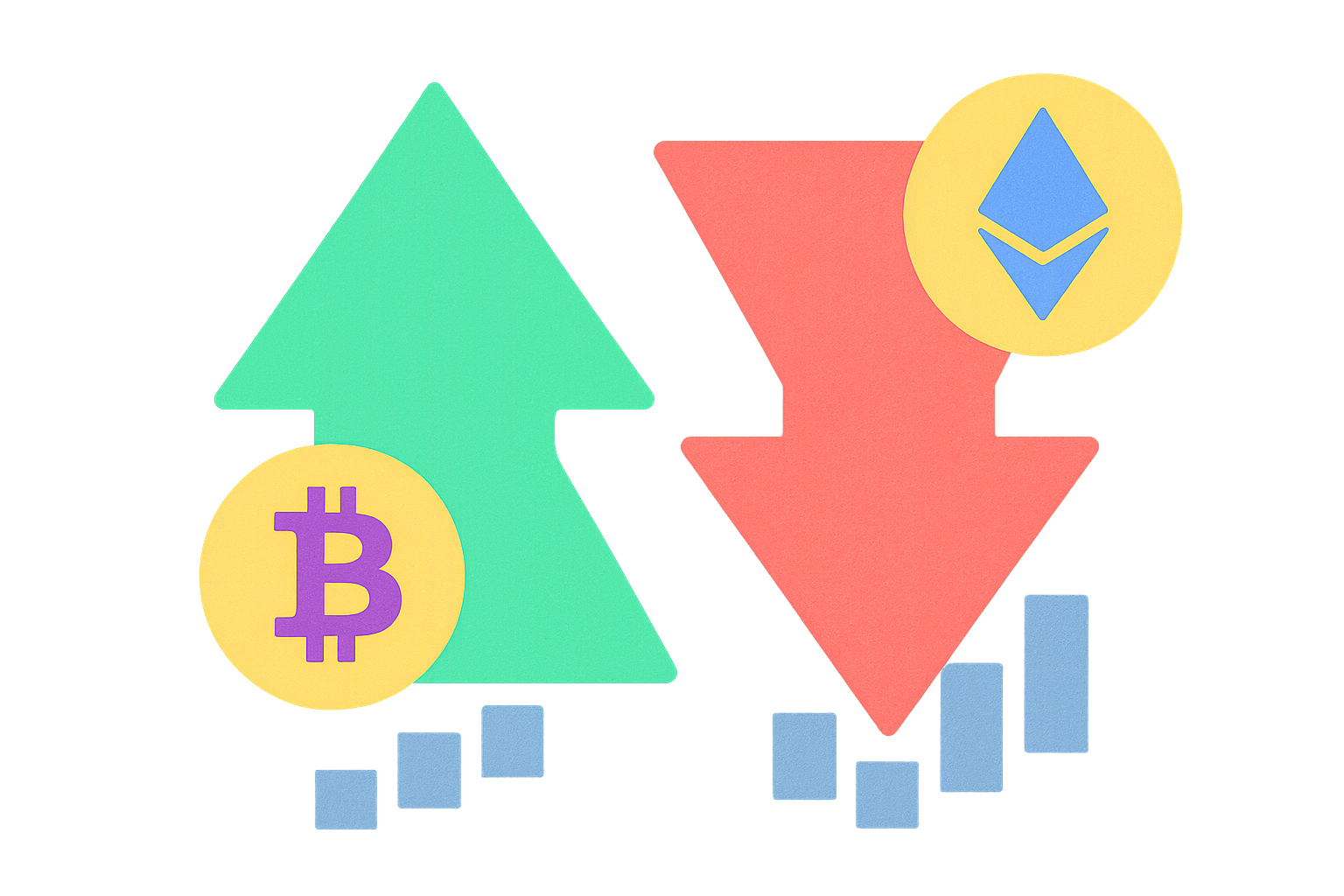
Bullish vs Bearish: Understanding the Key Differences in Cryptocurrency Trading

Bullish vs Bearish: Understanding the Key Differences in Cryptocurrency Trading

This comprehensive guide demystifies bullish and bearish market sentiment, essential terminology for cryptocurrency traders at all levels. Learn how bullish markets feature rising prices and investor optimism, while bearish markets show falling prices and pessimistic sentiment. Discover the psychological drivers and characteristics of both market conditions, including price patterns, trading volumes, and investor behavior. The article equips you with practical strategies for navigating bull markets through momentum trading and managing bearish periods with risk protection. Real-world examples and technical indicators like RSI and Moving Averages help you identify market trends on Gate or other platforms. Whether you're trading Bitcoin, Ethereum, or altcoins, mastering these core concepts enables informed decision-making and effective communication within the trading community for long-term success.
Crypto Trading
Crypto Tutorial
Investing In Crypto
Macro Trends
Cryptocurrency market
2026-01-17 19:50:47
What Does "Money Printer Go Brrr" Mean?

What Does "Money Printer Go Brrr" Mean?

This article demystifies the 'Money Printer Go Brrr' meme and its crypto implications by explaining quantitative easing mechanisms and monetary policy. It traces how the Federal Reserve's dramatic rate cuts and $700 billion bond purchases during the pandemic sparked unprecedented liquidity, driving Bitcoin from $5,000 to $69,000 and fueling crypto speculation. The article explores the economic paradox: while QE stimulates markets and employment, excessive money supply creates inflation affecting everyday goods, disproportionately impacting lower-income households. It examines how aggressive interest rate increases aimed to reverse inflation without triggering recession, while revealing why crypto and asset markets remain surprisingly resilient despite tightening cycles. Essential reading for understanding crypto volatility, monetary policy effects, and why Gate traders must grasp these macroeconomic dynamics shaping digital asset prices.
Macro Trends
Crypto Insights
Cryptocurrency market
DeFi
Crypto Tutorial
2026-01-17 19:11:18
Buy the Rumor, Sell the News: Does It Work?

Buy the Rumor, Sell the News: Does It Work?

This comprehensive guide explores the 'Buy the Rumor, Sell the News' trading strategy and its application in cryptocurrency markets. The article examines how this market timing approach capitalizes on speculation-driven price movements, using Dogecoin as a compelling case study to demonstrate both potential profits and significant risks. It emphasizes that successful execution requires deep market knowledge, precise timing, and critical thinking rather than relying on pre-packaged formulas. The guide highlights why this strategy remains risky for novice investors, recommending instead a foundation-building approach focused on fundamental analysis and disciplined risk management. Through practical examples and expert insights, readers gain clarity on distinguishing rumor phases from news confirmations, understanding market psychology, and developing personalized trading frameworks aligned with their investment objectives rather than chasing volatile opportunities.
Crypto Trading
Investing In Crypto
Altcoins
Doge
Macro Trends
2026-01-17 10:29:26
How Does Macroeconomic Data Impact Cryptocurrency Prices: Fed Policy, Inflation, and Market Correlation in 2026

How Does Macroeconomic Data Impact Cryptocurrency Prices: Fed Policy, Inflation, and Market Correlation in 2026

This comprehensive guide examines how macroeconomic data drives cryptocurrency valuations in 2026. The article analyzes Fed rate decisions, demonstrating that anticipated rate cuts post-May 2026 expand liquidity and boost Bitcoin demand, with projections ranging from $110,000 to $170,000. It explores inflation's impact through CPI and PCE metrics, showing how above-consensus data triggers crypto sell-offs while cooling inflation strengthens bullish arguments. The guide further reveals volatility transmission mechanisms between traditional markets and cryptocurrencies, identifying gold's three-month lead over Bitcoin as a potential indicator. Essential for traders and investors seeking to anticipate crypto price movements through macroeconomic signals and monetary policy shifts on Gate exchange.
Bitcoin
Ethereum
Macro Trends
Crypto Insights
Cryptocurrency market
2026-01-17 10:14:02
Ukrainian Crypto Blogger Konstantin Galich Found Dead Amid Market Turmoil

Ukrainian Crypto Blogger Konstantin Galich Found Dead Amid Market Turmoil

This comprehensive guide examines the tragic death of cryptocurrency educator Konstantin Galich and its broader implications for the digital asset industry. The article covers the October incident involving the prominent crypto influencer, his substantial contributions to blockchain education through various platforms, and the severe market turmoil that coincided with the event. During a 24-hour period surrounding the incident, over $19 billion in cryptocurrency contracts experienced liquidations, reflecting the extreme volatility characteristic of crypto markets. The guide explores critical connections between financial market stress and mental health challenges within the cryptocurrency community, highlighting the psychological pressures faced by industry professionals during periods of instability. Through detailed investigation updates and community responses, the article underscores the importance of mental health support and industry awareness. The FAQ section addresses key questions about Galich's infl
Crypto Insights
Cryptocurrency market
Blockchain
Web 3.0
Macro Trends
2026-01-17 10:03:42
What are the top cryptocurrency competitors compared to Bitcoin by market cap and performance in 2026?

What are the top cryptocurrency competitors compared to Bitcoin by market cap and performance in 2026?

This comprehensive guide examines the top cryptocurrency competitors challenging Bitcoin's dominance in 2026. While Bitcoin maintains approximately 58% market dominance, Ethereum, Solana, and BNB Chain have emerged as formidable alternatives, each offering distinct technological advantages. The article compares Bitcoin's exceptional stability—with 2.24% daily volatility—against altcoins' higher transaction efficiency and smart contract capabilities. Bitcoin's market share is projected to decline to 45% as institutional investors diversify across multiple blockchain platforms. Key differentiators include Layer-2 scalability solutions, smart contract functionality, and robust ecosystem innovations. The guide analyzes performance metrics, market evolution, and competitive positioning, helping investors understand how these cryptocurrency platforms address different use cases from decentralized finance to real-world asset tokenization on Gate and other platforms.
Bitcoin
Ethereum
Solana
BNB
Altcoins
+5
2026-01-17 09:16:42
How Does Macroeconomic Policy and Inflation Impact Cryptocurrency Prices in 2026

How Does Macroeconomic Policy and Inflation Impact Cryptocurrency Prices in 2026

This comprehensive guide explores how macroeconomic policy and inflation shape cryptocurrency valuations in 2026. It examines Federal Reserve interest rate transmission channels and their direct impact on Bitcoin and Ethereum prices through liquidity and real yield repricing. The analysis reveals strong inverse correlations between real Treasury yields and crypto valuations, with CPI data releases triggering pronounced short-term volatility. The article documents volatility spillover effects between traditional markets, gold, and digital assets, demonstrating increased cryptocurrency integration into mainstream finance. Additionally, it addresses market fragmentation caused by heightened macroeconomic uncertainty, showing Bitcoin, Ethereum, and XRP responding divergently to monetary policy signals and currency fluctuations. Through empirical data and institutional perspectives, this resource helps traders and investors understand complex macroeconomic-crypto linkages, optimize portfolio positioning, and navig
Bitcoin
Ethereum
Macro Trends
ETF
Crypto Insights
2026-01-17 08:49:30
A Practical Guide to Information Catalysts in the Global Crypto Asset Market

A Practical Guide to Information Catalysts in the Global Crypto Asset Market

Discover the exact meaning and proper usage of "間違う" in English. This resource offers clear guidance for English learners, featuring example sentences frequently used by native speakers, pronunciation tips, and distinctions from similar words. You'll also find effective strategies for mastering English in the Web3 era.
Crypto Insights
Macro Trends
Crypto Trading
Stablecoin
2026-01-17 07:54:32
A Guide to the Latest Trends in Cryptocurrency Trading and Investment Strategies

A Guide to the Latest Trends in Cryptocurrency Trading and Investment Strategies

Beginner’s Guide to Crypto Assets Blog. This resource delivers comprehensive coverage of key Web3 asset management topics, including trading strategies, investment approaches, the latest updates from exchanges such as Gate, analysis of macroeconomic indicators, Layer 2 tokens, AI-powered crypto assets, and effective copy trading. Designed for both beginners and intermediate users, it offers in-depth insights ranging from blockchain technology fundamentals to actionable investment techniques.
Layer 2
AI
Crypto Trading
Macro Trends
DeFi
2026-01-17 04:55:18
What factors influence the value of Bitcoin and the price of cryptocurrencies?

What factors influence the value of Bitcoin and the price of cryptocurrencies?

Discover the key drivers behind Bitcoin’s price: supply and demand, competition, mining dynamics, regulatory developments, and market sentiment. Gate provides an in-depth analysis of the factors affecting BTC price changes for crypto traders and investors.
Bitcoin
Crypto Insights
Investing In Crypto
Mining
Macro Trends
2026-01-17 03:35:36
What Does "Money Printer Go Brrr" Mean?

What Does "Money Printer Go Brrr" Mean?

This article decodes the 'Money Printer Go Brrr' meme, exploring its origins and significance within cryptocurrency and financial markets. It explains Quantitative Easing (QE) as the sophisticated monetary mechanism behind the humorous phrase, detailing how central banks expand money supply to stimulate economies during downturns. The article traces the Federal Reserve's aggressive monetary expansion during the pandemic period, which drove Bitcoin from $5,000 to $69,000 and triggered significant inflation across goods and services. It examines the economic consequences of excessive money printing, including currency devaluation and purchasing power erosion, while discussing how policymakers subsequently implemented interest rate hikes to combat inflation. Perfect for crypto investors and readers seeking to understand the intersection of monetary policy, inflation dynamics, and digital asset valuations on Gate and other financial platforms.
DeFi
Macro Trends
Crypto Insights
Web 3.0
Cryptocurrency market
2026-01-16 23:23:48
How does Federal Reserve policy affect crypto prices in 2026: inflation, interest rates, and market volatility explained

How does Federal Reserve policy affect crypto prices in 2026: inflation, interest rates, and market volatility explained

This article examines how Federal Reserve monetary policy shapes cryptocurrency valuations through three interconnected mechanisms. First, rate hikes compress crypto valuations by elevating discount rates, constraining liquidity, and expanding risk premiums—forces that particularly pressure altcoins while institutional investors redirect capital toward fixed-income assets. Second, inflation data creates divergent outcomes: rising CPI strengthens Bitcoin's safe-haven demand while eroding altcoin prices through reduced risk appetite. Third, traditional market volatility transmits directly to crypto markets, with S&P 500 corrections triggering synchronized cryptocurrency drawdowns through portfolio rebalancing and shared macroeconomic signals. The article provides essential guidance for navigating 2026's volatile landscape, where Fed decisions will continue driving correlated movements across traditional and digital asset classes, requiring investors to adjust leverage, diversify strategically across Gate exchan
Bitcoin
Ethereum
Macro Trends
Crypto Insights
Altcoins
2026-01-16 08:19:16
U.S. Debt Buyback Explained: What a $2B Treasury Move Means for Bitcoin Near $96K

U.S. Debt Buyback Explained: What a $2B Treasury Move Means for Bitcoin Near $96K

On January 14, the U.S. Treasury ran a scheduled debt buyback and accepted around $2 billion in bids for off-the-run Treasury bonds in the long end of the curve, broadly in the 2046 to mid-2050s maturity window. This buyback is part of a recurring liquidity support program that was restarted in May 2024 to improve trading conditions in a massive Treasury market, without issuing additional debt for the purpose. Crypto accounts reacted instantly. Bulls framed it as a “cash injection.” Skeptics called it routine maintenance. The reality sits in the middle, and it is more interesting than either hot take. A Treasury buyback is not the same as quantitative easing, and it is not the government turning on a money printer for Bitcoin. It is closer to financial plumbing, and plumbing matters because Treasuries are the baseline collateral of global finance. At the same time, Bitcoin was holding near $96,000 around this period. That context matters, because crypto tends to amplify macro regimes. When rates volatility
Crypto Insights
Macro Trends
Bitcoin
2026-01-16 03:36:34
Inflation vs Deflation: What They Mean and Their Key Differences

Inflation vs Deflation: What They Mean and Their Key Differences

This comprehensive guide explores deflation and inflation in the cryptocurrency ecosystem, examining how these economic forces differ from traditional fiat currency dynamics. The article defines both phenomena, analyzing their core causes including money supply changes, demand shifts, and supply-demand imbalances. It compares three key inflationary mechanisms—demand-pull, cost-push, and built-in inflation—while contrasting deflation's deflationary spiral effects. The guide specifically addresses how cryptocurrencies like Bitcoin operate as deflationary assets through fixed supply caps and halving events, versus inflationary cryptocurrencies with expandable supplies. By highlighting the fundamental differences between these economic forces and their distinct impacts on digital versus traditional financial systems, readers gain essential insights for navigating both cryptocurrency investments and macro-economic trends on platforms like Gate.
Bitcoin
Ethereum
Crypto Insights
Macro Trends
Cryptocurrency market
2026-01-15 21:44:31
Jumper to
Page