This article delves into the multifaceted landscape of MahaDAO, examining its origins, technological architecture, market performance, and community dynamics. Launched in 2020, MahaDAO seeks to address financial inequality and enhance cross-border payment efficiency. The article explores its decentralized governance model, the ARTH ecosystem, strategic collaborations, and challenges faced. It offers insights for crypto enthusiasts and stakeholders interested in DeFi innovations. With a focus on vital statistics and real-world implications, readers will gain a comprehensive understanding of MahaDAO's transformative role in the financial sector.
MahaDAO's Positioning and Significance
In 2020, MahaDAO (MAHA) was launched to address financial inequality and inefficiencies in cross-border payments. As a decentralized autonomous organization (DAO), MahaDAO plays a crucial role in the DeFi sector.
As of 2025, MahaDAO has become an essential asset in the ARTH ecosystem, with an active community of token holders participating in governance. This article will analyze its technical architecture, market performance, and future potential.
Origin and Development History
Background
MahaDAO was created in 2020 to tackle financial inequality and improve the efficiency of cross-border transactions. It emerged during the blockchain technology boom, aiming to empower users with greater financial autonomy and control.
MahaDAO's introduction brought new possibilities for decentralized finance and community-driven governance.
Key Milestones
- 2020: Mainnet launch, introducing the MAHA and ARTH token system.
- 2021: Major upgrade implementing improved governance mechanisms.
- 2022: Adoption by various DeFi protocols, pushing the price to its all-time high of $25.15.
- 2023: Ecosystem expansion, with multiple DeFi applications integrating MAHA and ARTH tokens.
With support from its community and the MahaDAO Foundation, the project continues to optimize its technology, security, and real-world applications.
How Does MahaDAO Work?
Decentralized Control
MahaDAO operates on a decentralized network of computers (nodes) worldwide, free from control by banks or governments. These nodes collaborate to validate transactions, ensuring system transparency and attack resistance, granting users greater autonomy and enhancing network resilience.
Blockchain Core
MahaDAO's blockchain is a public, immutable digital ledger recording every transaction. Transactions are grouped into blocks and linked through cryptographic hashes, forming a secure chain. Anyone can view the records, establishing trust without intermediaries.
Ensuring Fairness
MahaDAO utilizes a governance mechanism where MAHA token holders vote on key aspects of the ecosystem. This participatory approach maintains the stability and control parameters of the ARTH token. MAHA holders guide the organization by deciding on various activities and updates within the ARTH ecosystem.
Secure Transactions
MahaDAO employs public-private key encryption to protect transactions:
- Private keys (like secret passwords) are used to sign transactions
- Public keys (like account numbers) are used to verify ownership
This mechanism ensures fund security, while transactions maintain a level of pseudonymity. Additional security features may include multi-signature capabilities and advanced cryptographic techniques to enhance user protection and privacy.
Circulation Overview
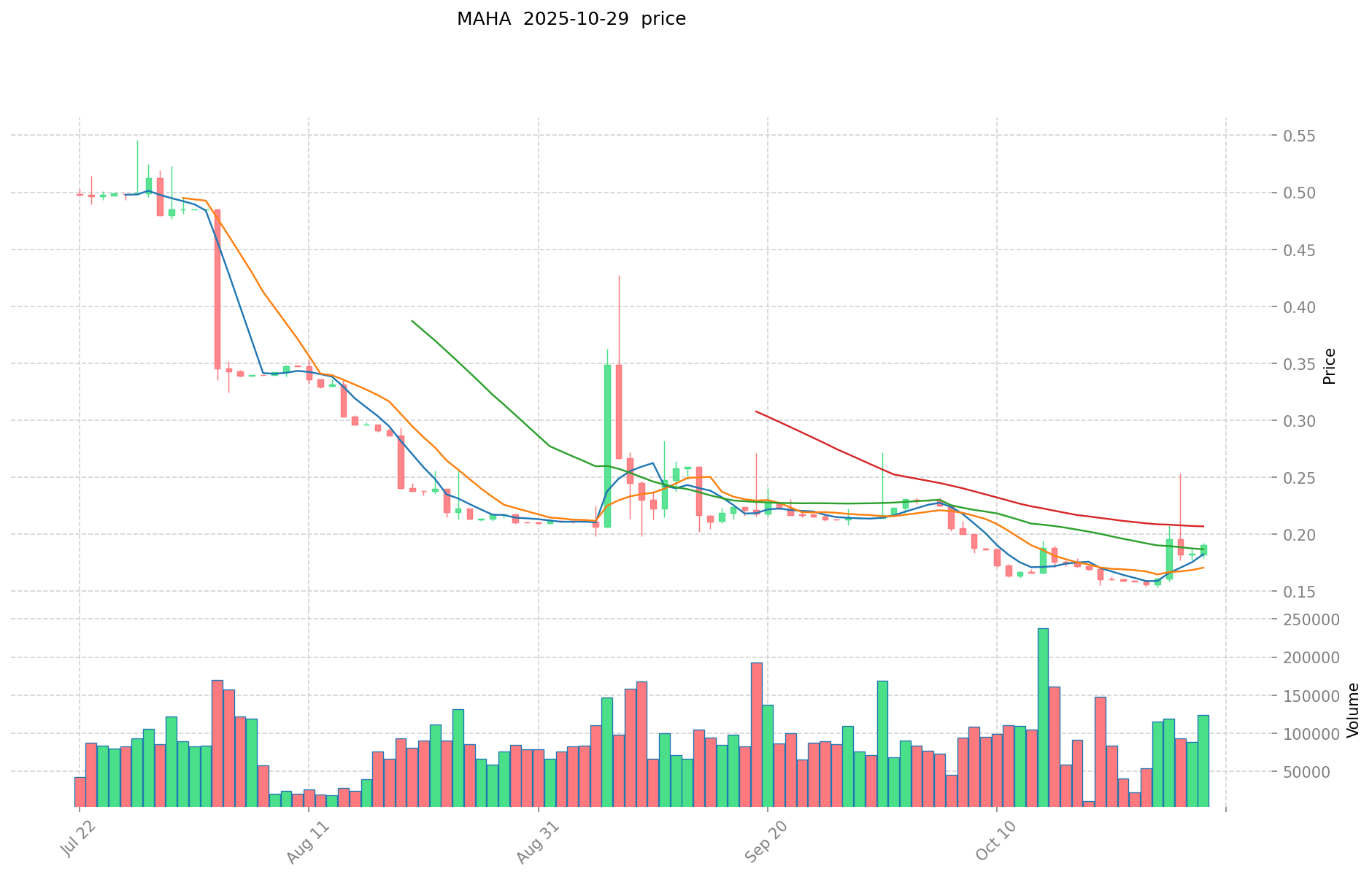
As of October 29, 2025, MAHA has a circulating supply of 6,490,025.150857918 tokens, with a total supply of 9,900,000 tokens.
Price Fluctuations
MAHA reached its all-time high of $25.15 on January 18, 2021.
Its lowest price was $0.164176, recorded on October 24, 2025.
These fluctuations reflect market sentiments, adoption trends, and external factors.
Click to view the current MAHA market price
On-chain Metrics
- Daily Trading Volume: $25,267.721641 (indicates network activity)
- Active Addresses: 3,671 (reflects user engagement)
MAHA Ecosystem Applications and Partnerships
Core Use Cases
MAHA's ecosystem supports various applications:
- DeFi: ARTH token, providing algorithmic stablecoin functionality.
- Governance: MAHA token, enabling community-driven decision-making.
Strategic Collaborations
MAHA has established partnerships with blockchain projects and DeFi protocols to enhance its technological capabilities and market influence.
These partnerships provide a solid foundation for MAHA's ecosystem expansion.
Controversies and Challenges
MAHA faces the following challenges:
- Technical Hurdles: Maintaining stability of the ARTH token
- Regulatory Risks: Potential scrutiny of algorithmic stablecoins
- Competitive Pressure: Emergence of other DeFi and DAO platforms
These issues have sparked discussions within the community and market, driving MAHA's continuous innovation.
Fan Enthusiasm
MAHA's community is vibrant, with active participation in governance and DeFi activities.
On X platform, related posts and hashtags (such as #MAHA and #ARTH) frequently trend.
Token price movements and ecosystem updates ignite community enthusiasm.
Sentiment on X shows a mix of opinions:
- Supporters praise MAHA's decentralized governance and innovative stablecoin model.
- Critics focus on price volatility and challenges in maintaining ARTH's stability.
Recent trends indicate cautious optimism amidst market fluctuations.
Hot Topics
X users actively discuss MAHA's governance proposals, ARTH stability mechanisms, and DeFi integrations,
showcasing both its transformative potential and the challenges in achieving widespread adoption.
- Official Website: Visit MahaDAO official website for features, use cases, and latest updates.
- Whitepaper: MAHA's technical documents detail its architecture, goals, and vision.
- X Updates: On X platform, MAHA uses @themahadao handle, as of October 29, 2025, with posts covering technical updates, community events, and partnership news.
MAHA Future Roadmap
- Ecosystem Goals: Expand ARTH adoption and integrate with more DeFi protocols
- Long-term Vision: Become a leading decentralized governance platform and stablecoin provider
How to Participate in MAHA?
- Purchase Channels: Buy MAHA on Gate.com
- Storage Solutions: Use Web3 wallets for secure storage
- Governance Participation: Engage in community decisions through the MahaDAO governance platform
- Ecosystem Building: Visit the developer documentation to contribute to the MAHA ecosystem
Summary
MAHA redefines decentralized finance through its innovative governance model and algorithmic stablecoin, offering community-driven decision-making and financial stability.
Its active community, rich resources, and unique market position set it apart in the cryptocurrency sphere.
Despite facing regulatory uncertainties and technical challenges, MAHA's innovative spirit and clear roadmap secure its important role in the future of decentralized technology.
Whether you're a newcomer or an experienced player, MAHA is worth watching and participating in.
FAQ
What does Maha USA do?
Maha USA is a commission established in 2025 to study health issues and promote healthy living. It focuses on childhood health, food regulation, and public health initiatives.
What is the MAHA Plan?
The MAHA Plan is a health strategy launched in 2025, focusing on food regulation, SNAP restrictions, and promoting alternative health theories. It aims to improve public health but has faced criticism from medical experts.
What is the MAHA trend in groceries?
MAHA (Make America Healthy Again) is a marketing trend in groceries that promotes products as healthier alternatives, often using 'clean' ingredients. However, it may not actually improve health outcomes.
What is MAHA food?
MAHA food refers to ultra-processed foods containing harmful ingredients often banned in many countries. These foods typically include chemicals detrimental to health and are associated with negative health outcomes.
* The information is not intended to be and does not constitute financial advice or any other recommendation of any sort offered or endorsed by Gate.