What is BCH: A Comprehensive Guide to Bitcoin Cash and Its Role in the Cryptocurrency Market
Bitcoin Cash's Positioning and Significance
In 2017, ViaBTC launched Bitcoin Cash (BCH), aiming to address scalability issues in the Bitcoin network. As a hard fork of Bitcoin, BCH positioned itself as a more efficient and scalable version of digital cash, focusing on everyday transactions and global adoption.
As of 2025, Bitcoin Cash has established itself as a top 15 cryptocurrency by market capitalization, with a significant user base and an active developer community. This article will delve into its technical architecture, market performance, and future potential.
Origin and Development History
Birth Background
Bitcoin Cash was created by ViaBTC in 2017, based on the Bitcoin ABC proposal. It emerged from a hard fork of the original Bitcoin blockchain, addressing the need for on-chain scaling and improved transaction capacity. BCH was born during a period of heated debate within the Bitcoin community about scaling solutions, aiming to provide faster and cheaper transactions for everyday use.
Important Milestones
- 2017: Mainnet launch, implementing 8MB blocks for increased transaction capacity.
- 2017: BCH price reached its all-time high of $3,785.82 on December 20.
- 2018: Experienced its all-time low of $76.93 on December 16.
- 2025: Currently ranked 13th by market capitalization, with a price of $567.23.
With support from its community and various development teams, Bitcoin Cash continues to optimize its technology, security, and real-world applications.
How Does Bitcoin Cash Work?
No Central Control
Bitcoin Cash operates on a decentralized network of computers (nodes) spread across the globe, free from control by banks or governments. These nodes collaborate to verify transactions, ensuring system transparency and resistance to attacks, granting users greater autonomy and enhancing network resilience.
Blockchain Core
BCH's blockchain is a public, immutable digital ledger that records every transaction. Transactions are grouped into blocks and linked through cryptographic hashes, forming a secure chain. Anyone can view the records, establishing trust without intermediaries. Bitcoin Cash's larger block size (initially 8MB, later increased) allows for more transactions per block compared to Bitcoin.
Ensuring Fairness
Bitcoin Cash uses a Proof of Work (PoW) consensus mechanism to validate transactions and prevent fraudulent activities like double-spending. Miners maintain network security through computational work and receive BCH rewards. Its innovation includes larger block sizes for higher transaction throughput.
Secure Transactions
BCH utilizes public-private key cryptography to secure transactions:
- Private keys (like secret passwords) are used to sign transactions
- Public keys (like account numbers) are used to verify ownership
This mechanism ensures fund security, with transactions remaining pseudonymous. Additional features include a new difficulty adjustment algorithm for more consistent block times.
Bitcoin Cash (BCH) Market Performance
Circulation Overview
As of December 15, 2025, Bitcoin Cash's circulating supply is 19,966,934.27165078 coins, with a total supply of 19,967,078.02165078. The maximum supply is capped at 21,000,000 coins, following a deflationary model similar to Bitcoin.
New coins enter the market through mining, which affects its supply and demand dynamics.
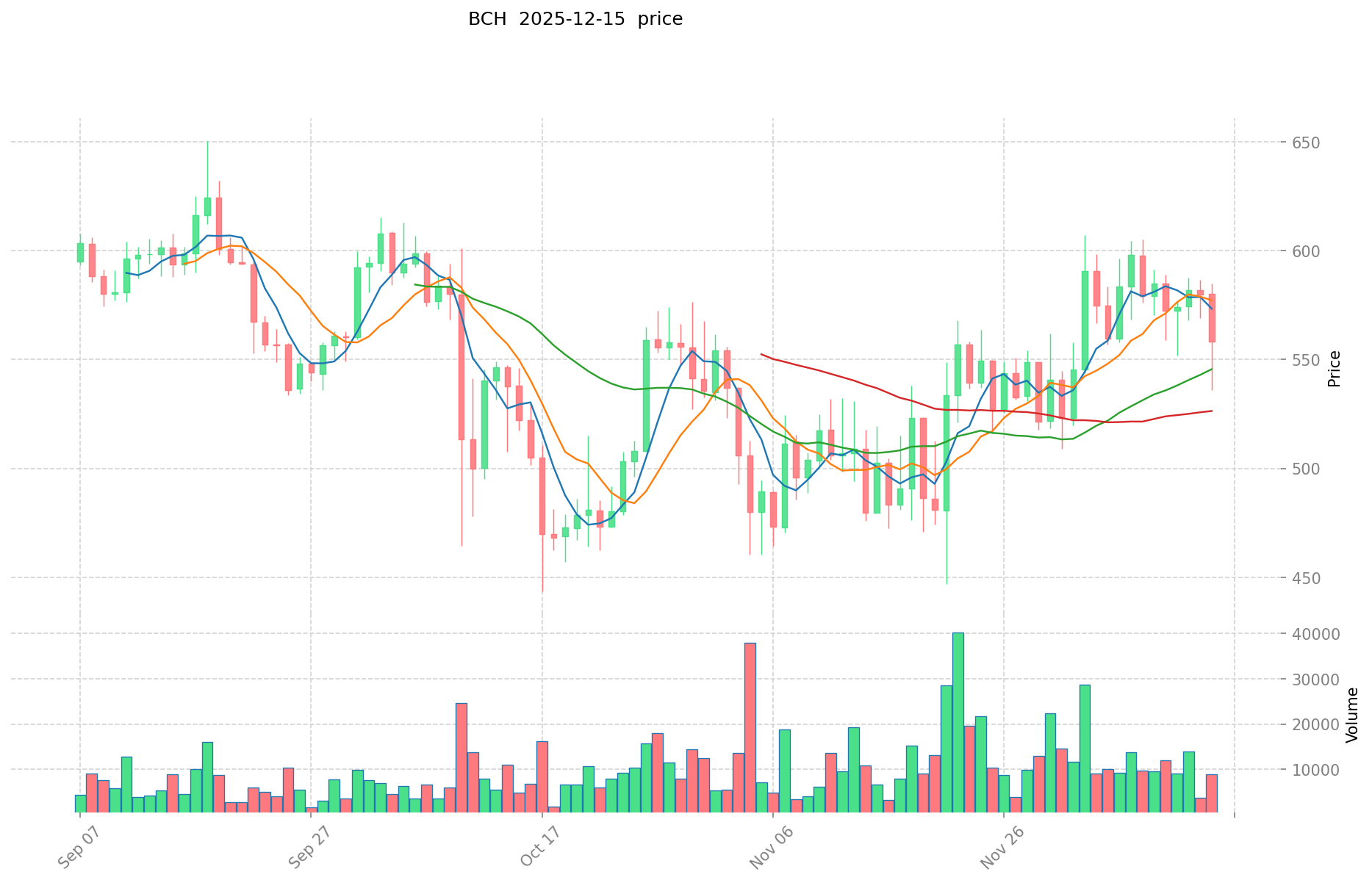
Price Fluctuations
BCH reached its all-time high of $3,785.82 on December 20, 2017, driven by the overall cryptocurrency market bull run and increased adoption.
Its lowest price was $76.93, recorded on December 16, 2018, due to the broader crypto market crash and regulatory uncertainties.
These fluctuations reflect market sentiment, adoption trends, and external factors affecting the cryptocurrency space.
Click to view the current BCH market price
On-Chain Metrics
- Daily Transaction Volume: Data not available (indicates network activity)
- Active Addresses: Data not available (reflects user engagement)
- Staking Rate: Not applicable for Bitcoin Cash as it uses a Proof-of-Work consensus mechanism
BCH Ecosystem Applications and Partnerships
Core Use Cases
BCH's ecosystem supports various applications:
- Payments: Facilitating fast and low-cost transactions for everyday purchases.
- Remittances: Enabling cross-border money transfers with reduced fees.
Strategic Collaborations
BCH has established partnerships with several businesses and platforms to expand its adoption and use cases. These partnerships provide a solid foundation for BCH's ecosystem expansion.
Controversies and Challenges
BCH faces the following challenges:
- Technical Issues: Scalability concerns and potential network congestion.
- Regulatory Risks: Uncertain regulatory landscape in various jurisdictions.
- Competitive Pressure: Competition from other cryptocurrencies and payment systems.
These issues have sparked discussions within the community and market, driving continuous innovation for BCH.
BCH Community and Social Media Atmosphere
Fan Enthusiasm
The BCH community is vibrant, with active participation in discussions and development. On X, posts and hashtags related to BCH often gain traction, reflecting community engagement. Factors such as price movements and network upgrades tend to ignite community enthusiasm.
Social Media Sentiment
Sentiment on X shows a mix of opinions:
- Supporters praise BCH's fast transactions and low fees, viewing it as a practical digital cash solution.
- Critics focus on issues such as price volatility and adoption challenges.
Recent trends indicate varying sentiment based on market conditions and developments.
Hot Topics
X users actively discuss BCH's role in the broader cryptocurrency ecosystem, its potential for mainstream adoption, and comparisons with other digital currencies.
More Information Sources for BCH
- Official Website: Visit BCH.info for features, use cases, and latest updates.
- GitHub: Explore BCH development on BCHD, K-nuth, and Bitcoin Verde.
- Reddit: Join discussions on r/btc for community insights and news.
BCH Future Roadmap
- Technical Goals: Continuous improvements in scalability and transaction speed.
- Ecosystem Objectives: Expanding merchant adoption and use cases.
- Long-term Vision: Becoming a widely used global digital cash system.
How to Participate in BCH?
- Purchase Channels: Buy BCH on Gate.com.
- Storage Solutions: Use secure wallets compatible with BCH.
- Contribute to Development: Visit GitHub repositories to contribute code or report issues.
- Join Community Discussions: Participate in forums and social media platforms.
Summary
BCH redefines digital currency through blockchain technology, offering transparency, security, and efficient payments. Its active community, rich resources, and market presence make it stand out in the cryptocurrency space. Despite facing challenges like regulatory uncertainties and technical hurdles, BCH's innovative spirit and clear roadmap position it as a significant player in the future of decentralized technologies. Whether you're a newcomer or an experienced user, BCH is worth following and engaging with.
FAQ
What is BCH used for?
BCH is used for fast, low-cost digital payments. It enables quick peer-to-peer transactions and serves as a medium of exchange in the crypto ecosystem.
Which is better, BTC or BCH?
BTC is generally considered better for long-term investment due to its established market presence and higher price. BCH offers faster transactions and lower fees. The choice depends on your specific needs and investment goals.
What is the meaning of BCH?
BCH stands for Bitcoin Cash, a cryptocurrency that forked from Bitcoin in 2017. It aims to offer faster and cheaper transactions compared to Bitcoin.
What is BCH in banking?
BCH in banking refers to Bitcoin Cash, a digital currency created in 2017 as a fork of Bitcoin. It's designed for fast, low-cost peer-to-peer transactions.
Share
Content
Bitcoin Cash's Positioning and Significance
Origin and Development History
How Does Bitcoin Cash Work?
Bitcoin Cash (BCH) Market Performance
BCH Ecosystem Applications and Partnerships
Controversies and Challenges
BCH Community and Social Media Atmosphere
More Information Sources for BCH
BCH Future Roadmap
How to Participate in BCH?
Summary
FAQ
How to Buy Cryptocurrency


Trending Cryptocurrencies



XZXX: A Comprehensive Guide to the BRC-20 Meme Token in 2025

Bitcoin Fear and Greed Index: Market Sentiment Analysis for 2025

Top Crypto ETFs to Watch in 2025: Navigating the Digital Asset Boom
5 ways to get Bitcoin for free in 2025: Newbie Guide

Bitcoin Market Cap in 2025: Analysis and Trends for Investors
2025 Bitcoin Price Prediction: Trump's Tariffs' Impact on BTC

TON vs UNI: Which Cryptocurrency Token Offers Better Investment Potential in 2024?

What is UNI: A Comprehensive Guide to Uniswap's Governance Token and Its Role in Decentralized Finance

What is WLFI: A Comprehensive Guide to Wireless Local Area Network Frequency Integration

What is CRO: A Comprehensive Guide to Conversion Rate Optimization for Business Growth
What is PYUSD: A Comprehensive Guide to PayPal's USD Stablecoin