This article provides an in-depth comparison between BloodLoop (BLS) and Bitcoin Cash (BCH) in terms of scalability and efficiency within the cryptocurrency landscape. It explores price history, market status, supply mechanisms, institutional adoption, technical developments, and macroeconomic factors. By addressing questions such as "Which is the better buy right now?" it caters to both new and experienced investors seeking to optimize their investment strategy in these assets. With a focus on key factors affecting investment value and risk management, it's tailored for readers interested in diversifying their crypto portfolios.
Introduction: BLS vs BCH Investment Comparison
In the cryptocurrency market, BloodLoop (BLS) vs Bitcoin Cash (BCH) comparison has been an unavoidable topic for investors. The two not only differ significantly in market cap ranking, application scenarios, and price performance, but also represent different positioning in the crypto asset landscape.
BloodLoop (BLS): Launched in 2024, it has gained market recognition for its innovative 5v5 hero shooter game experience and sustainable in-game economy.
Bitcoin Cash (BCH): Since its inception in 2017, it has been hailed as a "peer-to-peer electronic cash system," and is one of the cryptocurrencies with high global trading volume and market capitalization.
This article will comprehensively analyze the investment value comparison between BLS and BCH, focusing on historical price trends, supply mechanisms, institutional adoption, technological ecosystems, and future predictions, attempting to answer the question investors care about most:
"Which is the better buy right now?"
I. Price History Comparison and Current Market Status
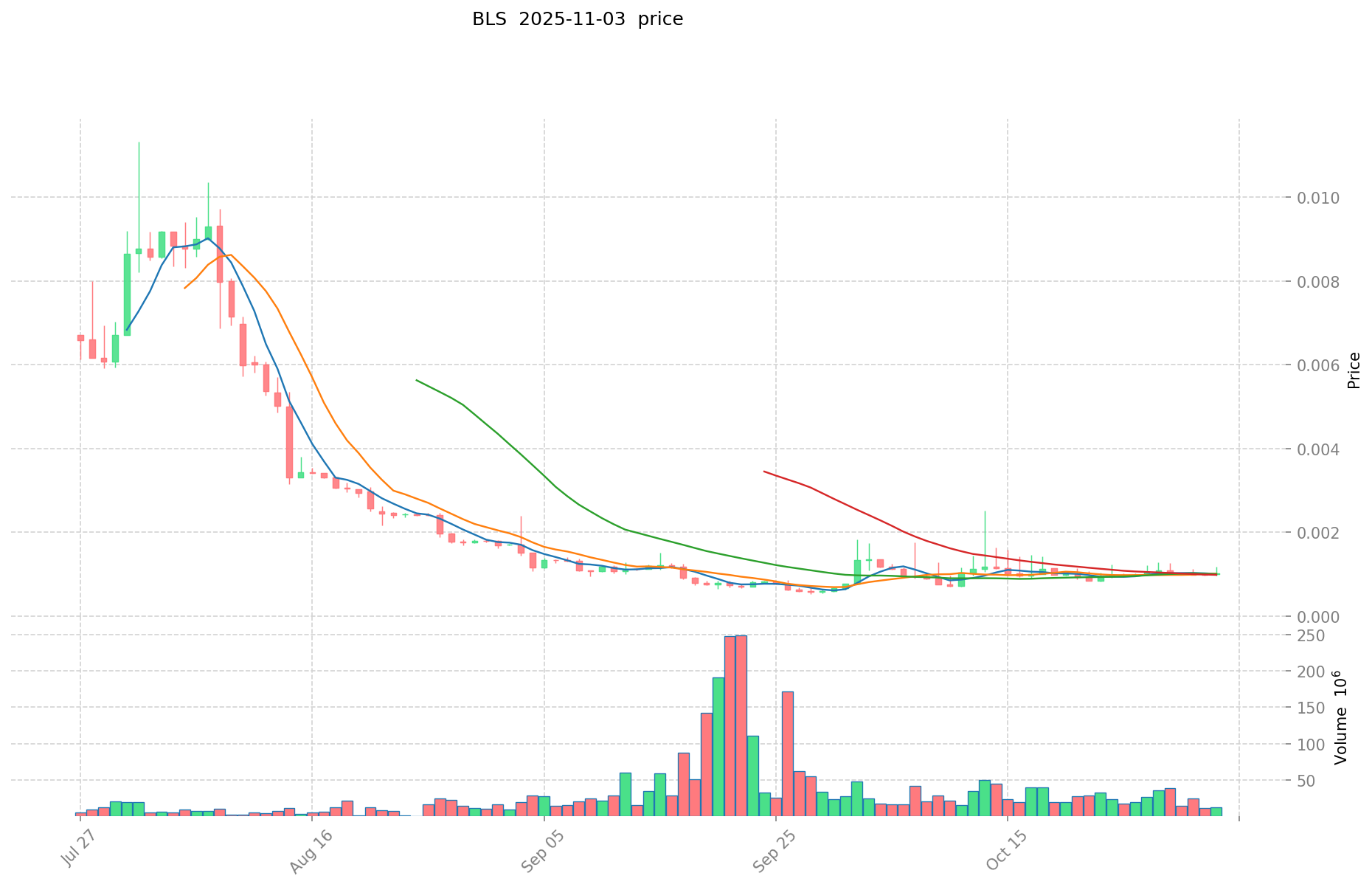
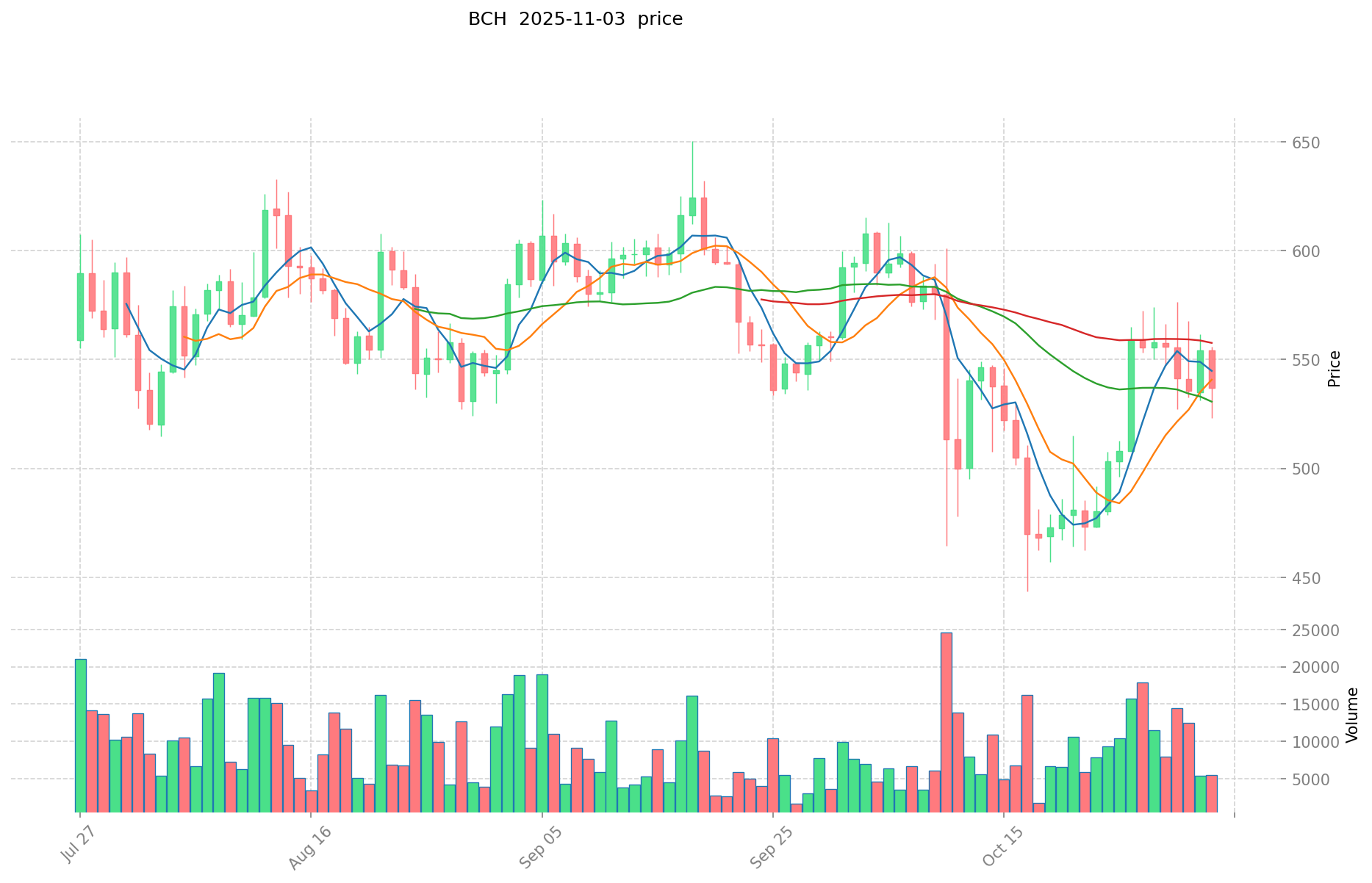
BloodLoop (BLS) and Bitcoin Cash (BCH) Historical Price Trends
- 2024: BLS reached its all-time high of $0.5372 on July 3, 2024.
- 2017: BCH was created through a hard fork of Bitcoin on August 1, 2017, with an initial price of $555.89.
- Comparative analysis: In the recent market cycle, BLS dropped from its peak of $0.5372 to a low of $0.0005201, while BCH has shown more stability, currently trading at $525.96 after reaching an all-time high of $3,785.82 in December 2017.
Current Market Situation (2025-11-03)
- BLS current price: $0.0010251
- BCH current price: $525.96
- 24-hour trading volume: BLS $15,558.26 vs BCH $3,989,341.32
- Market Sentiment Index (Fear & Greed Index): 42 (Fear)
Click to view real-time prices:
- Check BLS current price Market Price
- Check BCH current price Market Price
II. Core Factors Affecting BLS vs BCH Investment Value
Supply Mechanism Comparison (Tokenomics)
- BLS: Enhances Ethereum's scalability through aggregation techniques that enable more validators
- BCH: Fixed supply with a maximum cap of 21 million coins, following Bitcoin's original model
- 📌 Historical pattern: BCH has experienced significant price volatility, with dramatic rises and falls since its 2017 fork
Institutional Adoption and Market Applications
- Institutional holdings: BCH has attracted attention from some investors seeking "Bitcoin alternatives"
- Enterprise adoption: BCH focuses on efficient small payment applications, while BLS serves as a technical improvement for Ethereum's security and scalability
- National policies: Regulatory attitudes vary by jurisdiction, with both facing general crypto regulatory scrutiny
Technical Development and Ecosystem Building
- BLS technical upgrade: Enables Ethereum to process more validators, reducing minimum stake requirements from 1500 to 32 ETH
- BCH technical development: Expanded block size from Bitcoin's 1MB to 32MB, implemented smart contract functionality in 2021
- Ecosystem comparison: BCH aims to serve as "electronic cash" with faster and cheaper transactions than Bitcoin, while continuing to develop its smart contract capabilities
Macroeconomic Factors and Market Cycles
- Performance during inflation: BCH has been positioned as a store of value alternative, though with mixed results
- Macroeconomic monetary policy: Interest rates and USD strength significantly impact both assets' market performance
- Geopolitical factors: Global economic uncertainty and market sentiment shifts affect both technologies, as seen during events like the COVID-19 pandemic
III. 2025-2030 Price Prediction: BLS vs BCH
Short-term Forecast (2025)
- BLS: Conservative $0.00064386 - $0.001022 | Optimistic $0.001022 - $0.00124684
- BCH: Conservative $421.352 - $526.69 | Optimistic $526.69 - $689.9639
Mid-term Forecast (2027)
- BLS may enter a growth phase, with prices expected in the range of $0.000864938529 - $0.001516776261
- BCH may enter a bullish market, with prices expected in the range of $432.03379989 - $851.17106844
- Key drivers: Institutional capital inflow, ETF, ecosystem development
Long-term Forecast (2030)
- BLS: Base scenario $0.001781586593159 - $0.002405141900764 | Optimistic scenario $0.002405141900764+
- BCH: Base scenario $1044.243749478006 - $1242.65006187882714 | Optimistic scenario $1242.65006187882714+
View detailed price predictions for BLS and BCH
Disclaimer: The above predictions are based on historical data and market analysis. Cryptocurrency markets are highly volatile and subject to rapid changes. These forecasts should not be considered as financial advice. Always conduct your own research before making investment decisions.
BLS:
| 年份 |
预测最高价 |
预测平均价格 |
预测最低价 |
涨跌幅 |
| 2025 |
0.00124684 |
0.001022 |
0.00064386 |
0 |
| 2026 |
0.0013726482 |
0.00113442 |
0.0009188802 |
10 |
| 2027 |
0.001516776261 |
0.0012535341 |
0.000864938529 |
22 |
| 2028 |
0.00188381104548 |
0.0013851551805 |
0.000844944660105 |
35 |
| 2029 |
0.001928690073328 |
0.00163448311299 |
0.001340276152651 |
59 |
| 2030 |
0.002405141900764 |
0.001781586593159 |
0.00146090100639 |
73 |
BCH:
| 年份 |
预测最高价 |
预测平均价格 |
预测最低价 |
涨跌幅 |
| 2025 |
689.9639 |
526.69 |
421.352 |
0 |
| 2026 |
681.326184 |
608.32695 |
547.494255 |
15 |
| 2027 |
851.17106844 |
644.826567 |
432.03379989 |
22 |
| 2028 |
1092.0782738712 |
747.99881772 |
583.4390778216 |
42 |
| 2029 |
1168.448953160412 |
920.0385457956 |
717.630065720568 |
74 |
| 2030 |
1242.65006187882714 |
1044.243749478006 |
835.3949995824048 |
98 |
IV. Investment Strategy Comparison: BLS vs BCH
Long-term vs Short-term Investment Strategy
- BLS: Suitable for investors focused on Ethereum ecosystem potential and scalability solutions
- BCH: Suitable for investors seeking a more established alternative to Bitcoin with faster transaction speeds
Risk Management and Asset Allocation
- Conservative investors: BLS: 5% vs BCH: 15%
- Aggressive investors: BLS: 15% vs BCH: 25%
- Hedging tools: Stablecoin allocation, options, cross-currency portfolios
V. Potential Risk Comparison
Market Risk
- BLS: Higher volatility due to newer market entry and lower liquidity
- BCH: Price fluctuations influenced by Bitcoin's market movements and competition from other cryptocurrencies
Technical Risk
- BLS: Scalability, network stability, and potential vulnerabilities in smart contract implementation
- BCH: Mining centralization, potential security vulnerabilities in larger block sizes
Regulatory Risk
- Global regulatory policies may impact both, with BCH potentially facing more scrutiny due to its positioning as a payment system
VI. Conclusion: Which Is the Better Buy?
📌 Investment Value Summary:
- BLS advantages: Innovative technology improving Ethereum's scalability, potential for growth within the Ethereum ecosystem
- BCH advantages: Established history, wider adoption for payments, larger market cap and liquidity
✅ Investment Advice:
- New investors: Consider a small allocation to BCH for exposure to an established cryptocurrency with faster transaction speeds
- Experienced investors: Diversify with both BLS and BCH, adjusting allocation based on risk tolerance and market trends
- Institutional investors: Evaluate BCH for potential inclusion in crypto portfolios, monitor BLS development for future opportunities
⚠️ Risk Warning: The cryptocurrency market is highly volatile. This article does not constitute investment advice.
None
VII. FAQ
Q1: What are the main differences between BLS and BCH?
A: BLS is a newer cryptocurrency focused on improving Ethereum's scalability, while BCH is an established Bitcoin fork aimed at faster and cheaper transactions. BLS operates within the Ethereum ecosystem, whereas BCH functions as an independent cryptocurrency for payments.
Q2: Which cryptocurrency has shown better price stability?
A: Bitcoin Cash (BCH) has demonstrated more price stability compared to BloodLoop (BLS). BCH is currently trading at $525.96, while BLS has experienced significant volatility, dropping from its peak of $0.5372 to $0.0010251.
Q3: How do the supply mechanisms differ between BLS and BCH?
A: BLS enhances Ethereum's scalability through aggregation techniques, while BCH has a fixed supply cap of 21 million coins, similar to Bitcoin's model. This difference in tokenomics can impact their long-term value proposition and market behavior.
Q4: What are the key factors affecting the investment value of BLS and BCH?
A: The main factors include supply mechanisms, institutional adoption, technical development, ecosystem building, macroeconomic factors, and market cycles. BCH benefits from wider adoption and a larger market cap, while BLS offers potential growth within the Ethereum ecosystem.
Q5: How do the price predictions for BLS and BCH compare for 2030?
A: By 2030, BLS is predicted to reach $0.001781586593159 - $0.002405141900764 in the base scenario, while BCH is expected to reach $1044.243749478006 - $1242.65006187882714. These predictions suggest potentially higher percentage growth for BLS, albeit from a much lower base price.
Q6: What are the primary risks associated with investing in BLS and BCH?
A: Both cryptocurrencies face market, technical, and regulatory risks. BLS may experience higher volatility due to its newer status and lower liquidity. BCH faces risks related to mining centralization and competition from other cryptocurrencies. Both are subject to evolving global regulatory policies.
Q7: How should investors approach allocating their portfolio between BLS and BCH?
A: Conservative investors might consider allocating 5% to BLS and 15% to BCH, while more aggressive investors could allocate 15% to BLS and 25% to BCH. The exact allocation should be based on individual risk tolerance, investment goals, and market conditions. Diversification and regular portfolio rebalancing are recommended.
* The information is not intended to be and does not constitute financial advice or any other recommendation of any sort offered or endorsed by Gate.