Beginner Guide to Short Selling

2025-08-14 05:12:58
Crypto glossary
Article Rating : 4.5
half-star
0 ratings
Quickly understand the basic knowledge of shorting, including its meaning, trading process, main uses, and precautions, to help beginners clarify the core logic of this reverse investment method.
Beginner Guide to Short Selling

What is shorting?


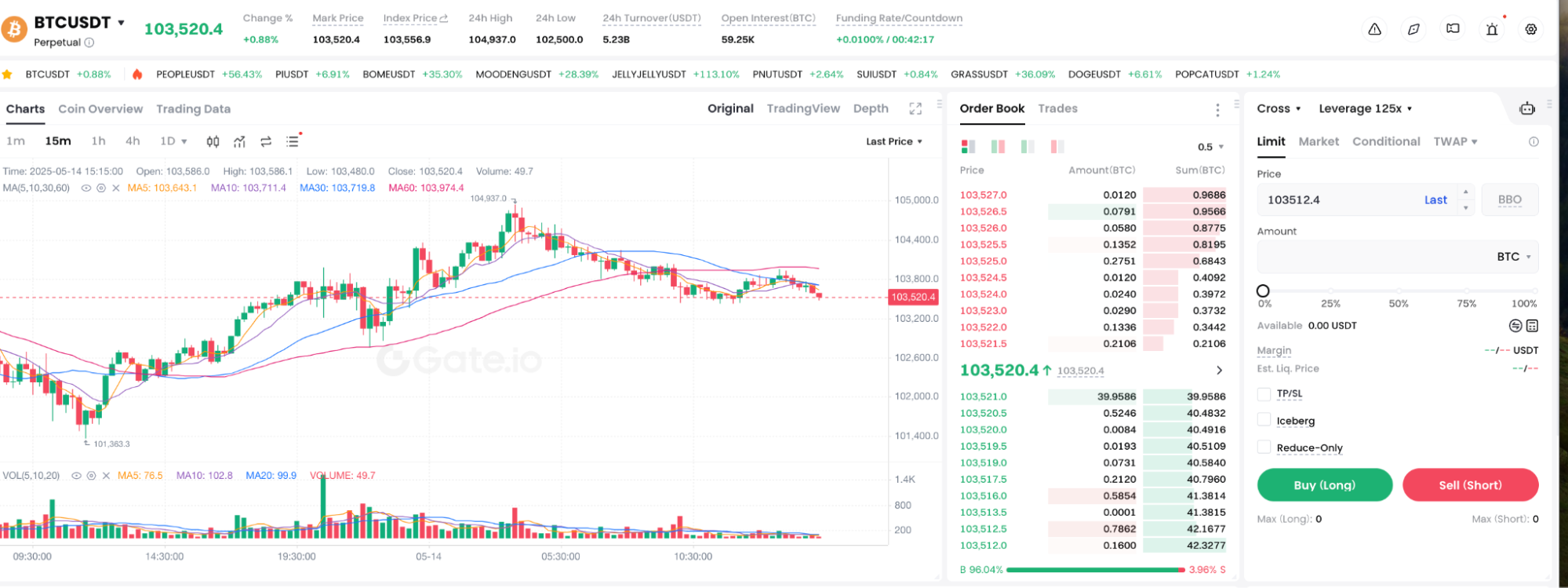
Image:https://www.Gate.com/futures/USDT/BTC_USDT

Short Selling, also known as “做空”, is an investment method used when anticipating a decline in the price of a certain asset. Contrary to the traditional “buy low, sell high” approach, the logic of shorting is “sell high, buy low”. Investors will first borrow a certain asset, sell it at the current price, and then buy it back at a lower price in the future to return it, thereby earning the price difference profit.

For example: if you expect a stock to be overvalued, you can borrow and sell it at 90 yuan per share first. If the stock later drops to 60 yuan, you can buy it back and return it, making a profit of 30 yuan per share.

How to execute shorting?

Shorting trades typically involve several key steps:

  1. Obtain shorting permission
    Not all accounts or platforms automatically support shorting, investors need to ensure they have the relevant permissions, usually requiring the opening of margin or contract accounts.
  2. Borrowed assets
    Borrowing the assets you want to short, such as stocks or cryptocurrencies, through a platform or brokerage.
  3. Market sell
    Selling borrowed assets at the current market price, locking in an initial selling price.
  4. Waiting for the market to adjust
    Investors wait for asset prices to fall so they can buy back at a lower price.
  5. Buy back and settle the difference
    When the price drops to the appropriate level, investors buy back the assets at the market price and return them to the lender. The difference between the selling and buying prices, minus the costs, is the actual profit.

Common use cases of shorting

Shorting is not only for profiting from a decline, but also commonly used in the following scenarios:

  1. Arbitrage strategies in volatile markets
    Investors can establish hedging positions between long and short positions, lock in arbitrage opportunities, and reduce one-sided risks.
  2. Capture valuation bubbles
    When some assets are clearly hyped beyond their fundamentals, investors may short them to speculate on the price returning to rationality.
  3. Hedging systemic risk
    Institutions or individuals holding large assets may use shorting indices or related assets for portfolio protection.
  4. Flexibility in the digital asset market
    In the cryptocurrency market, shorting provides investors with the ability to trade in both directions, allowing them to participate regardless of market fluctuations.

Shorting strategy precautions

Although shorting has unique advantages, it also comes with high risks and complex costs:

  • Loss is not up
    The asset price has unlimited upside potential, and as a seller, you must ultimately buy back at the market price. This theoretically results in unlimited potential losses.
  • Additional margin risk
    If the price moves in an unfavorable direction, the platform or broker may issue a margin call or even force liquidation.
  • Floating borrowing cost
    The cost of borrowing high-demand assets is often expensive and may continue to erode profits.
  • Platform risk and liquidity constraints
    The cryptocurrency market is particularly so, with different platforms having different contract systems and clearing mechanisms, careless operations can easily lead to passive losses.
  • Regulatory restrictions on risk
    Some countries or markets may restrict or even prohibit shorting in extreme cases, which may affect strategy execution.

Summary suggestion

Short selling provides investors with the potential to profit when the market falls, and can also be used as a risk management tool. However, due to its complexity, variable costs, and potential for significant losses, it is not suitable for inexperienced beginners to attempt lightly.

Investor advice:

  • Fully understand the relevant principles before attempting to short.
  • Practice using a demo account;
  • Choose a reliable platform (such as Gate, etc.);
  • Set stop loss carefully and manage leverage ratio reasonably;
  • Always pay attention to market fluctuations and policy risks.

Mastering shorting is not only a part of improving investment skills, but also helps you understand the market operation logic from multiple perspectives.

For visual aids, please visit Gate’s BTC perpetual contract page:
https://www.Gate.com/futures/USDT/BTC_USDT

* The information is not intended to be and does not constitute financial advice or any other recommendation of any sort offered or endorsed by Gate.
Related Articles
How is DeFi different from Bitcoin?

How is DeFi different from Bitcoin?

In 2025, the DeFi vs Bitcoin debate has reached new heights. As decentralized finance reshapes the crypto landscape, understanding how DeFi works and its advantages over Bitcoin is crucial. This comparison reveals the future of both technologies, exploring their evolving roles in the financial ecosystem and their potential impact on investors and institutions alike.
2025-08-14 05:20:32
The impact of the launch of Bitcoin ETF on the price of Bitcoin

The impact of the launch of Bitcoin ETF on the price of Bitcoin

The launch of Bitcoin ETF (Exchange-Traded Fund) has had a significant impact on the price of Bitcoin. Here is a detailed impact assessment based on the latest research and market analysis:
2025-08-14 04:26:33
Spot Trading Guide for Beginners: How to Choose the Right Crypto Exchange

Spot Trading Guide for Beginners: How to Choose the Right Crypto Exchange

Spot trading is the preferred way to enter the encryption market. This article introduces the core concepts, operation process, platform selection points, and common misconceptions of Spot Trading from a novice perspective, helping you to get started steadily.
2025-08-14 05:04:30
In-Depth Analysis of “Ponzi Scheme Rhetoric”: How to Spot and Avoid Scam Traps

In-Depth Analysis of “Ponzi Scheme Rhetoric”: How to Spot and Avoid Scam Traps

This article provides a comprehensive analysis of the five common tricks in "funding platter rhetoric," helping readers to identify eyewash disguised as high-yield investment opportunities and safeguard their own financial security.
2025-08-14 05:19:51
How to Trade Perpetual Contracts? A Complete Guide to the Logic and Profit Mechanism of Crypto Derivatives

How to Trade Perpetual Contracts? A Complete Guide to the Logic and Profit Mechanism of Crypto Derivatives

Perptual Futures are the most common leveraged tools in the cryptocurrency market, suitable for short-term and medium-term traders. This article will comprehensively analyze the profit mechanism, operation steps, and platform selection (such as Gate), helping you master the core of Perptual Futures trading.
2025-08-14 05:04:55
What Is TP in Text Slang? Complete Guide to Its Usage

What Is TP in Text Slang? Complete Guide to Its Usage

The article "What Is TP in Text Slang? Complete Guide to Its Usage" explores the diverse meanings of "TP" across digital communication platforms. It highlights how "TP" can signify "Talk Private" in general texting, "Teleport" in gaming, along with specialized uses such as "Take Profit" and "Token Protocol" in cryptocurrency and Web3 communities. The piece provides insight into the evolution of slang terms and their adaptation to various online contexts, aiding readers in mastering "TP" usage for effective cross-platform communication. This guide serves digital communicators seeking clarity on slang's varied meanings and practical applications.
2025-09-09 18:23:14
Recommended for You
Best Uniswap Alternatives for 2026: Leading Decentralized Exchange

Best Uniswap Alternatives for 2026: Leading Decentralized Exchange

Uniswap stands as a major decentralized exchange with a total value locked of $3.93 billion USD, yet it is not the sole choice within the crypto industry. Many users seek alternatives featuring lower Gas fees, connectivity to other blockchain ecosystems, exclusive Stablecoin pools, derivatives, or MEV protection.
2026-09-10 12:32:49
Best Hyperliquid Alternatives: Top Decentralized Perpetual Futures Platforms in 2026

Best Hyperliquid Alternatives: Top Decentralized Perpetual Futures Platforms in 2026

The best Hyperliquid alternatives in 2026 include Aster, Lighter, dYdX, Jupiter Perps, Drift Protocol, GMX and AFX. These platforms compete in the perp DEX category by providing decentralized perpetual futures and leveraged trading with different fee structures, liquidity incentives, execution models, asset coverage and risk profiles.
2026-09-10 12:28:14
Japan FSA Crypto Regulation: Exchange and Tax Rules

Japan FSA Crypto Regulation: Exchange and Tax Rules

Japan FSA crypto regulation makes cryptocurrencies legal but regulated digital assets. Crypto exchanges must satisfy Financial Services Agency registration, custody, anti-money-laundering and customer-protection requirements, while reforms enacted in 2026 bring crypto assets closer to the regulatory treatment of traditional financial products under the Financial Instruments and Exchange Act (FIEA).
2026-09-10 09:32:44
HKMA Stablecoin Regulation: Issuer Licensing Rules

HKMA Stablecoin Regulation: Issuer Licensing Rules

HKMA stablecoin regulation requires issuers carrying on regulated fiat-referenced stablecoin, or FRS, issuance to obtain a licence from the Hong Kong Monetary Authority.
2026-09-10 09:31:29
Hong Kong SFC Crypto Regulation: Licensing Rules

Hong Kong SFC Crypto Regulation: Licensing Rules

The SFC Hong Kong crypto framework requires centralised virtual asset trading platforms operating in Hong Kong, or actively marketing regulated services to Hong Kong investors, to obtain appropriate Securities and Futures Commission licences.
2026-09-10 09:29:57
Hong Kong Crypto Regulation: SFC, ETFs and Stablecoins

Hong Kong Crypto Regulation: SFC, ETFs and Stablecoins

Hong Kong crypto regulation uses several overlapping regimes. The Securities and Futures Commission (SFC) regulates virtual asset trading platforms, securities-related crypto assets and investment products, while the Hong Kong Monetary Authority (HKMA) supervises licensed fiat-referenced stablecoin issuers.
2026-09-10 09:28:04