


ACH vs LRC: A Comprehensive Comparison of Two Leading Layer-2 Scaling Solutions


Introduction: ACH vs LRC Investment Comparison
In the cryptocurrency market, comparisons between Alchemy Pay (ACH) and Loopring (LRC) have become an inevitable topic for investors. The two projects not only exhibit significant differences in market capitalization ranking, application scenarios, and price performance, but also represent distinct positioning within the crypto asset landscape.
Alchemy Pay (ACH): Founded in 2018, ACH has gained market recognition by bridging fiat and cryptocurrency economies through seamless payment infrastructure. Operating across 70+ countries with 300+ payment channels and partnerships with industry leaders such as Binance and Shopify, ACH focuses on enabling accessible Web 3 services for both merchants and consumers.
Loopring (LRC): Since its inception in 2017, LRC has established itself as a decentralized exchange protocol based on ERC-20 and smart contracts. The protocol enables zero-risk token trading through off-chain matching and on-chain settlement, allowing LRC holders to benefit from network activities while paying minimal transaction fees.
This article will conduct a comprehensive analysis of ACH vs LRC across historical price trends, supply mechanisms, market positioning, technical ecosystems, and future outlook, while addressing the critical question that concerns most investors:
"Which is the better buy right now?"
Comparative Analysis Report: Alchemy Pay (ACH) vs Loopring (LRC)
I. Price History Comparison and Current Market Status
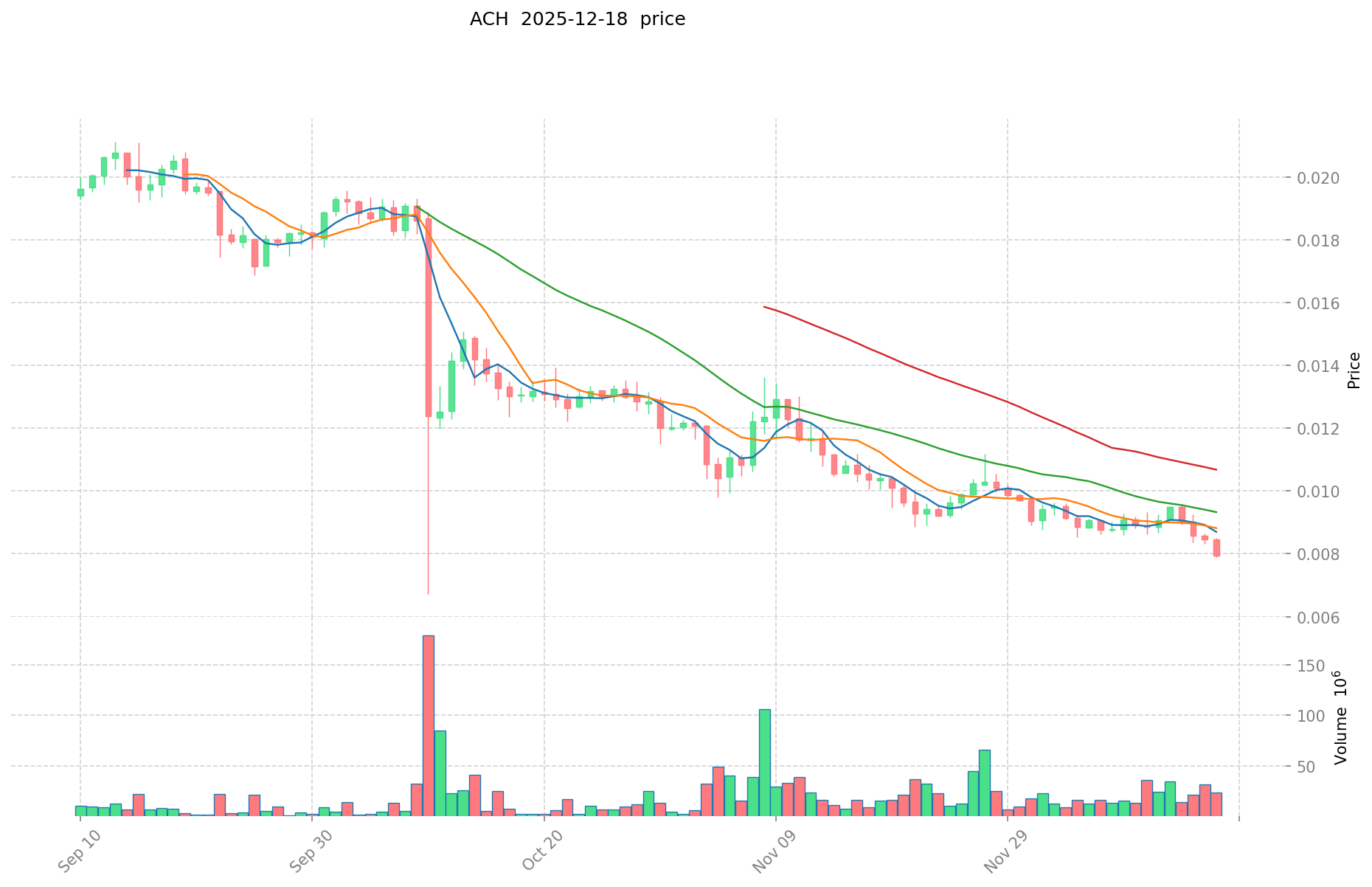
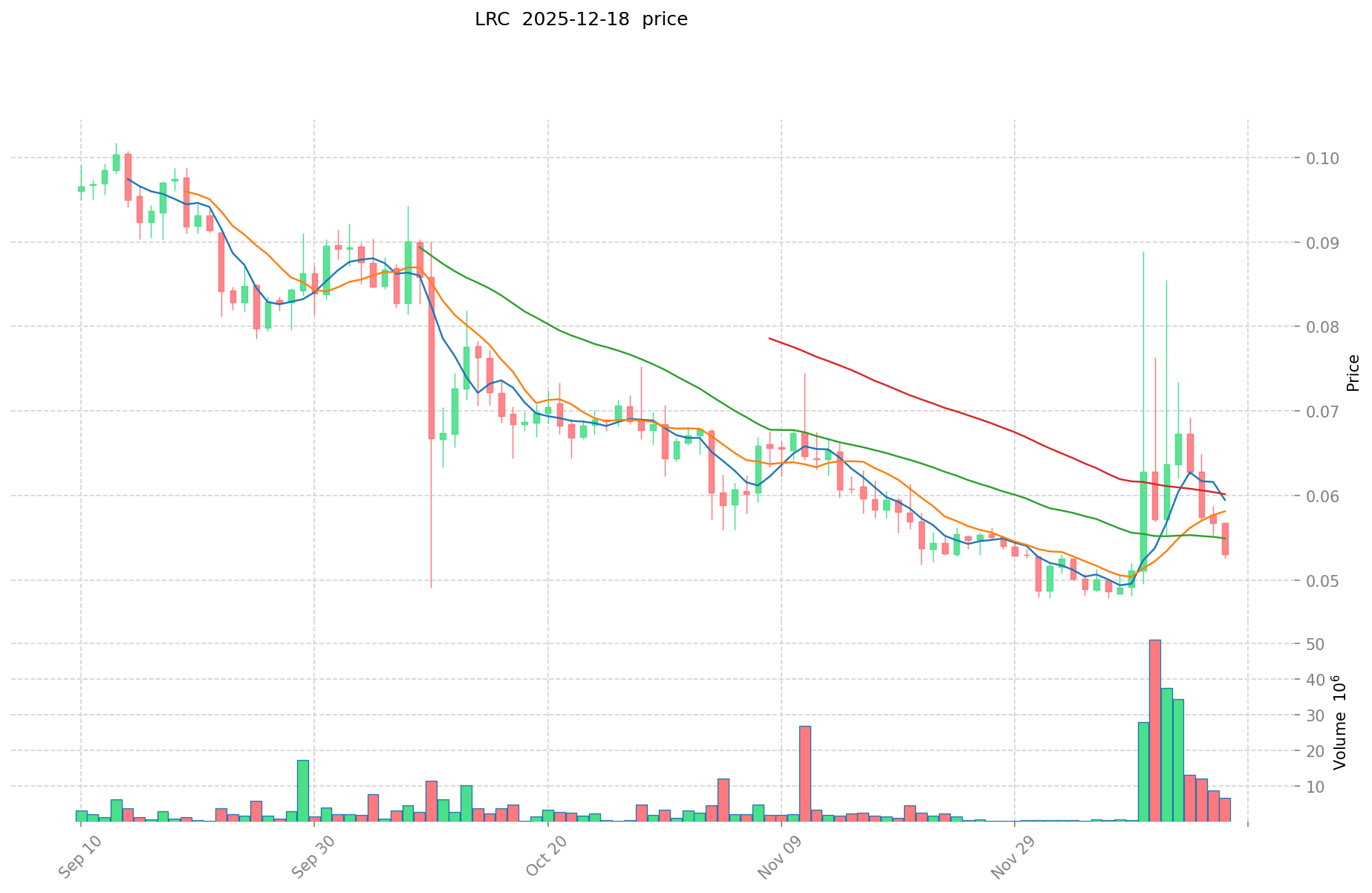
Historical Price Trends of ACH and LRC
Alchemy Pay (ACH):
- All-time high: $0.198666 (August 7, 2021)
- All-time low: $0.00135537 (July 21, 2021)
- Current price: $0.007595 (December 19, 2025)
- Price decline from ATH: Approximately 96.18%
Loopring (LRC):
- All-time high: $3.75 (November 10, 2021)
- All-time low: $0.01963893 (December 18, 2019)
- Current price: $0.05706 (December 19, 2025)
- Price decline from ATH: Approximately 98.48%
Comparative Analysis
Both tokens experienced significant price declines from their peaks in 2021. ACH reached its all-time high only one month after its all-time low, indicating extreme early-stage volatility. LRC's price trajectory shows a more extended history, with its ATL occurring approximately two years before its ATH. Currently, LRC trades at approximately 7.5 times higher than ACH in absolute price terms.
Current Market Status (December 19, 2025)
| Metric | ACH | LRC |
|---|---|---|
| Current Price | $0.007595 | $0.05706 |
| 24-Hour Trading Volume | $246,734.60 | $1,204,340.92 |
| Market Capitalization | $75,950,000 | $78,393,216.06 |
| Circulating Supply | 4,943,691,067.15 | 1,245,991,468.94 |
| Fully Diluted Valuation | $75,950,000 | $78,393,216.06 |
| Market Ranking | 581 | 409 |
| Market Dominance | 0.0024% | 0.0025% |
Price Performance (Last 24 Hours):
- ACH: -5.00%
- LRC: +6.72%
Fear & Greed Index: 17 (Extreme Fear)
View Real-Time Prices:
- ACH Current Price: Market Data
- LRC Current Price: Market Data
II. Project Overview and Technological Architecture
Alchemy Pay (ACH)
Alchemy Pay was established in Singapore in 2018 as a payment solution provider that bridges fiat currency and cryptocurrency economies. The project operates a hybrid payment infrastructure enabling seamless transactions between traditional finance and digital assets.
Key Characteristics:
- Operational focus: Fiat-to-crypto payment gateway
- Geographic reach: 70+ countries with 300+ payment channels
- Merchant network: Partnerships with over 2 million merchants
- Strategic partnerships: Binance, Shopify, NIUM, and QF Pay
- Token standard: ERC-20 on Ethereum blockchain
- Token total supply: 10 billion ACH
Utility Model: ACH tokens are designed to incentivize ecosystem participation, facilitate system access consumption, and enable governance within the Alchemy Pay infrastructure. The project plans to launch its second-generation decentralized payment system (ADPS 2.0), which will integrate DeFi aggregation and the Alchemy Trust system.
Loopring (LRC)
Loopring is an open, multi-token transaction protocol based on ERC-20 standards and smart contracts. Established in 2017, it enables the construction of decentralized exchanges without asset custody or capital freezing requirements.
Key Characteristics:
- Operational focus: Decentralized exchange (DEX) infrastructure
- Technology: Layer 2 scaling solution using zero-knowledge rollups (zk-Rollup)
- Token standard: ERC-20 on Ethereum blockchain
- Token total supply: Approximately 1,373,873,397 LRC
- Circulating supply ratio: 90.65% of max supply
- Notable application: Supported GameStop NFT marketplace (launched July 2022)
Utility Model: LRC holders benefit from transaction fee advantages and participate in protocol revenue distribution. The token enables governance participation within the Loopring DAO and serves as collateral within the protocol's economic incentive structure. Transaction fee distribution includes allocation to liquidity providers and insurance fund contributors.
III. Market Performance Analysis
Relative Strength Metrics
| Metric | ACH | LRC |
|---|---|---|
| 1-Hour Change | +0.44% | -0.61% |
| 7-Day Change | -13.81% | -3.64% |
| 30-Day Change | -26.36% | -4.22% |
| 1-Year Change | -73.54% | -76.49% |
Trading Activity:
- ACH 24-hour volume: $246,734.60
- LRC 24-hour volume: $1,204,340.92
- LRC trading volume is approximately 4.9 times higher than ACH
Exchange Listings:
- ACH: Listed on 37 exchanges
- LRC: Listed on 49 exchanges
Token Distribution
Alchemy Pay (ACH):
- Circulating supply: 4,943,691,067.15 ACH (49.44% of total supply)
- Total supply: 9,999,999,999.999987 ACH
- Maximum supply: 10,000,000,000 ACH
- Token holders: 37,423
Loopring (LRC):
- Circulating supply: 1,245,991,468.94 LRC (90.65% of total supply)
- Total supply: 1,373,873,397.442457 LRC
- Maximum supply: 1,374,513,896 LRC
- Token holders: 168,714
The significant difference in holder count suggests LRC has achieved considerably broader distribution than ACH.
IV. Technical Infrastructure and Blockchain Integration
Network Deployment
Alchemy Pay (ACH):
- Primary blockchain: Ethereum (ERC-20)
- Additional deployment: Binance Smart Chain (BSC)
- Contract address (Ethereum): 0xed04915c23f00a313a544955524eb7dbd823143d
- Contract address (BSC): 0xBc7d6B50616989655AfD682fb42743507003056D
Loopring (LRC):
- Primary blockchain: Ethereum (ERC-20)
- Contract address: 0xBBbbCA6A901c926F240b89EacB641d8Aec7AEafD
- Layer 2 integration: Native Layer 2 scaling solution
Development and Community Resources
Alchemy Pay:
- Official website: https://alchemypay.org/
- Social presence: Twitter, Facebook
- GitHub repositories: Not specified in available data
Loopring:
- Official website: https://loopring.org/
- Social presence: Twitter, Reddit
- GitHub repositories: Multiple protocol repositories including:
- Loopring/protocols
- Loopring/loopr
- Loopring/protocol2
- Loopring/relay
V. Risk Assessment and Market Considerations
Price Volatility
Both tokens demonstrate significant price volatility with substantial declines from historical peaks:
- ACH: 96.18% below all-time high
- LRC: 98.48% below all-time high
Current market conditions (Extreme Fear index of 17) indicate heightened market pessimism, which typically correlates with increased price volatility and liquidation events.
Liquidity Analysis
LRC demonstrates superior liquidity metrics:
- 4.9x higher 24-hour trading volume
- 12 additional exchange listings compared to ACH
- Higher token holder count indicating broader distribution
Supply Dynamics
ACH maintains a lower circulating supply ratio (49.44%), suggesting potential for future dilution as additional tokens enter circulation. LRC's higher circulating supply ratio (90.65%) indicates most tokens are already in distribution, reducing future dilution concerns.
VI. Conclusion
Both Alchemy Pay (ACH) and Loopring (LRC) operate within the blockchain infrastructure sector, addressing distinct market needs. Loopring focuses on Layer 2 scaling and decentralized exchange functionality, while Alchemy Pay targets fiat-to-crypto payment integration.
Current market data indicates LRC exhibits superior market liquidity, broader distribution, and higher exchange availability. However, ACH presents a different value proposition centered on payment gateway infrastructure. Both tokens are trading significantly below historical peaks in an environment characterized by extreme market fear.
Investment decisions should be informed by individual risk tolerance and alignment with the specific use cases each protocol addresses.
Cryptocurrency Asset Investment Value Analysis Report: ACH vs LRC
I. Executive Summary
Based on the reference materials provided, this report examines the investment value factors of ACH and LRC tokens in the cryptocurrency market. The core investment value of both tokens is primarily dependent on market demand, technological development, and the execution capability of project teams. Price fluctuations of these tokens are influenced by overall cryptocurrency market trends and project-specific news events. Investors should focus on the practical application and market acceptance of the projects.
II. Core Factors Affecting Investment Value of ACH vs LRC
Market Demand and Project Implementation Capability
- ACH: Investment value depends on market demand for its specific use cases and the team's ability to execute on project roadmaps.
- LRC: Similarly contingent on technological adoption rates and ecosystem development progress.
- 📌 Key Insight: Both tokens' price volatility is fundamentally driven by overall cryptocurrency market sentiment and project-specific developments rather than isolated technical factors.
Industry Expansion and Blockchain Technology Evolution
According to market analysis, industry expansion is primarily driven by blockchain technology upgrades and intensifying inter-chain competition. The following factors impact both tokens:
- Transaction Cost Reduction: Lower fees stimulate institutional and individual investor enthusiasm for decentralized ecosystems.
- Processing Speed Improvements: Enhanced throughput increases on-chain participation rates.
- Institutional and Individual Adoption: Growing enthusiasm for decentralized finance ecology translates to increased demand for utility tokens.
Regulatory Environment and Market Positioning
- Hong Kong Concept Tokens: Both ACH and LRC are referenced as Hong Kong-concept cryptocurrencies (along with CFX, KEY, PPI, C98, MDT), suggesting potential exposure to Asian regulatory developments.
- Compliance Framework: Investors should monitor blockchain compliance regulations and their implications for token utility and value.
III. Trading Strategy Considerations
Mean Reversion and Price Dynamics
Market literature frequently references mean reversion as a trading strategy principle, which is relevant for both tokens:
- Core Concept: Prices typically regress toward their average levels over time. Trading participants can potentially profit from price corrections when assets deviate significantly from their 20-day Simple Moving Average (SMA 20).
- Technical Indicators: Extreme price conditions are identified when the Stochastic Indicator falls below 20 or RSI falls below 30, combined with prices substantially deviating from SMA 20.
- Entry Strategy Confirmation: Opening prices in subsequent trading sessions above previous support levels may signal strategy activation.
IV. Risk Considerations and Investment Framework
Key Investment Considerations
- Technology Development: Actual project progress and ecosystem expansion capabilities
- Market Acceptance: Real-world application adoption and user growth metrics
- Market Sentiment: Broader cryptocurrency market conditions and sentiment indicators
- Macroeconomic Factors: Impact of inflation, interest rates, and US Dollar Index movements on crypto asset valuations
Important Note: Investors should conduct independent research and consult with qualified financial advisors before making investment decisions. Price volatility in cryptocurrency markets can be substantial, and past performance does not guarantee future results.
V. Conclusion
The investment value of ACH and LRC tokens is multifaceted and contingent upon market dynamics, technological execution, and broader macroeconomic conditions. While the reference materials indicate that both tokens are part of the Hong Kong-concept cryptocurrency grouping, specific technical details distinguishing their fundamental value propositions are not substantially detailed in the available sources. Investors should focus on monitoring project developments, ecosystem adoption metrics, and macroeconomic trends to inform investment decisions.
III. 2025-2030 Price Forecast: ACH vs LRC
Short-term Forecast (2025)
- ACH: Conservative $0.00690-$0.00759 | Optimistic $0.01047
- LRC: Conservative $0.03245-$0.05693 | Optimistic $0.06262
Medium-term Forecast (2026-2028)
- ACH could enter an accumulation phase, with projected price range of $0.00749-$0.01450, representing an 18-50% upside potential
- LRC could enter a gradual appreciation phase, with projected price range of $0.03766-$0.07340, representing a 5-14% upside potential
- Key drivers: institutional capital inflows, spot ETF approvals, ecosystem expansion and integration partnerships
Long-term Forecast (2029-2030)
- ACH: Base case $0.01020-$0.01296 | Optimistic scenario $0.01465-$0.01684, reflecting 70-81% cumulative growth potential
- LRC: Base case $0.06019-$0.07402 | Optimistic scenario $0.07886-$0.09549, reflecting 21-30% cumulative growth potential
Disclaimer: The predictions provided are based on historical data analysis and market modeling. They do not constitute investment advice. Cryptocurrency markets are highly volatile and unpredictable. Actual results may differ significantly from forecasts. Investors should conduct independent research and consult qualified financial advisors before making investment decisions. Past performance does not guarantee future results.
ACH:
| 年份 | 预测最高价 | 预测平均价格 | 预测最低价 | 涨跌幅 |
|---|---|---|---|---|
| 2025 | 0.01047144 | 0.007588 | 0.00690508 | 0 |
| 2026 | 0.0118289332 | 0.00902972 | 0.0074946676 | 18 |
| 2027 | 0.012410898654 | 0.0104293266 | 0.00730052862 | 37 |
| 2028 | 0.01450354303629 | 0.011420112627 | 0.01050650361684 | 50 |
| 2029 | 0.014646865449758 | 0.012961827831645 | 0.009202897760467 | 70 |
| 2030 | 0.016841302901656 | 0.013804346640701 | 0.011181520778968 | 81 |
LRC:
| 年份 | 预测最高价 | 预测平均价格 | 预测最低价 | 涨跌幅 |
|---|---|---|---|---|
| 2025 | 0.062623 | 0.05693 | 0.0324501 | 0 |
| 2026 | 0.066351915 | 0.0597765 | 0.037659195 | 5 |
| 2027 | 0.06684805995 | 0.0630642075 | 0.038469166575 | 11 |
| 2028 | 0.07340043110925 | 0.064956133725 | 0.046768416282 | 14 |
| 2029 | 0.078863241955522 | 0.069178282417125 | 0.060185105702898 | 21 |
| 2030 | 0.095486783220357 | 0.074020762186323 | 0.047373287799247 | 30 |
Comparative Investment Analysis Report: Alchemy Pay (ACH) vs Loopring (LRC)
IV. Investment Strategy Comparison: ACH vs LRC
Long-term vs Short-term Investment Strategy
ACH: Suited for investors
- Focusing on fiat-to-crypto payment infrastructure expansion
- Interested in emerging markets adoption (70+ countries operational coverage)
- Seeking exposure to merchant ecosystem growth and payment gateway integration
- Short-term: Monitor ADPS 2.0 launch milestones and partnership announcements
- Long-term: Track merchant adoption rates and transaction volume growth across payment channels
LRC: Suited for investors
- Seeking Layer 2 scaling solution exposure with established DEX infrastructure
- Interested in zero-knowledge rollup technology maturation
- Valuing broader token distribution and higher exchange liquidity
- Short-term: Monitor trading volume and fee distribution mechanics
- Long-term: Track ecosystem adoption metrics and Layer 2 market share evolution
Risk Management and Asset Allocation
Conservative Investors:
- ACH: 20% | LRC: 30% | Stablecoins/Cash: 50%
- Rationale: Both tokens exhibit high volatility; stablecoin allocation provides downside protection during market corrections
Aggressive Investors:
- ACH: 35% | LRC: 40% | Diversified altcoins: 25%
- Rationale: Higher exposure to both protocols with broader portfolio diversification
Hedging Instruments:
- Stablecoin positioning (USDT, USDC) for volatility management
- Cryptocurrency futures for directional hedging
- Cross-exchange arbitrage strategies between 37 (ACH) and 49 (LRC) listed venues
- Dollar-cost averaging during extreme fear market conditions (current Fear & Greed Index: 17)
V. Comparative Risk Analysis
Market Risk
ACH:
- Significant price decline of 96.18% from all-time high indicates substantial historical volatility
- Lower 24-hour trading volume ($246,734.60) compared to LRC creates potential liquidity challenges during large position exits
- Lower circulating supply ratio (49.44%) presents future dilution risk as additional tokens enter circulation
- Concentrated token distribution (37,423 holders) versus LRC's broader base
LRC:
- 98.48% decline from all-time high reflects extreme downside volatility despite Layer 2 positioning
- Superior liquidity metrics (4.9x higher trading volume) mitigate immediate exit risks
- Higher circulating supply ratio (90.65%) reduces future dilution concerns but limits price appreciation potential
- Broader token holder base (168,714 holders) provides more diversified ownership structure
Technical Risk
ACH:
- Dual blockchain deployment (Ethereum and BSC) introduces multi-chain operational complexity
- Limited publicly available GitHub repository information restricts transparency assessment
- Payment infrastructure dependency on merchant adoption and integration success
- Fiat gateway connectivity creates regulatory and operational dependencies
LRC:
- Layer 2 zk-Rollup implementation dependencies on Ethereum network security and transaction finality
- Smart contract security audit history not detailed in available materials
- DEX protocol reliance on liquidity provider participation and market maker incentive structures
- GameStop NFT marketplace partnership exposure to external platform viability
Regulatory Risk
Global Policy Impact:
- Both tokens classified as Hong Kong-concept cryptocurrencies, suggesting potential exposure to Asian regulatory developments
- Payment infrastructure (ACH) may face stricter compliance requirements in jurisdictions implementing comprehensive crypto payment regulations
- DEX protocols (LRC) potentially subject to securities classification debates, particularly regarding fee-sharing mechanisms
- Stablecoin and payment gateway regulations could materially impact ACH operational scope
- Layer 2 scaling solutions may encounter regulatory scrutiny regarding custody arrangements and settlement finality
VI. Conclusion: Which Is the Better Buy?
📌 Investment Value Summary:
ACH Strengths:
- Operational presence across 70+ countries with 300+ payment channels demonstrates geographic diversification
- Strategic partnerships with Binance and Shopify provide ecosystem integration advantages
- 2 million+ merchant network creates tangible real-world application demand
- Positioned to benefit from institutional adoption of Web 3 payment infrastructure
- Potential for significant cumulative growth (81% by 2030 in optimistic scenarios)
- Lower absolute price point ($0.007595) enables smaller position sizing for retail investors
LRC Strengths:
- Layer 2 scaling technology addresses Ethereum network congestion and cost efficiency
- Broader token distribution (168,714 holders vs 37,423 for ACH) indicates stronger community adoption
- Superior liquidity metrics (4.9x higher trading volume, 12 additional exchange listings)
- 90.65% circulating supply ratio reduces future dilution risks
- Established DEX infrastructure with proven zero-knowledge rollup functionality
- Higher absolute price stability relative to ACH volatility patterns
✅ Investment Recommendations:
Beginner Investors:
- LRC recommended as primary allocation due to superior liquidity, broader exchange availability, and larger holder base reducing single-point-of-failure risks
- Suggested allocation: LRC 60% | ACH 20% | Stablecoins 20%
- Rationale: LRC's liquidity profile enables easier position management; stablecoin allocation provides downside protection
Experienced Investors:
- ACH presents higher risk-reward asymmetry with 81% growth potential by 2030 versus LRC's 30%
- Consider accumulation strategy during extreme fear conditions (current Fear & Greed Index: 17)
- Implement dollar-cost averaging over 3-6 month periods to mitigate timing risk
- Suggested allocation: ACH 40% | LRC 35% | Hedging instruments 25%
- Monitor ADPS 2.0 launch and merchant adoption metrics for ACH catalysts; track LRC fee distribution and trading volume for upside triggers
Institutional Investors:
- ACH: Evaluate position sizing based on payment infrastructure thesis and merchant ecosystem expansion KPIs; consider negotiated settlement arrangements through Binance partnership channels
- LRC: Assess allocation relative to broader Layer 2 scaling solution portfolio; monitor regulatory developments regarding fee-sharing mechanisms and DEX classification
- Implement multi-exchange liquidity monitoring across 37 (ACH) and 49 (LRC) venues for position construction and risk management
- Consider 12-24 month investment horizon aligned with blockchain infrastructure adoption cycles
⚠️ Risk Disclaimer: Cryptocurrency markets exhibit extreme volatility and unpredictability. The analysis provided does not constitute investment advice. Historical price declines of 96-98% from all-time highs demonstrate substantial downside risk potential. Price forecasts are based on historical modeling and may differ significantly from actual results. Investors must conduct independent research and consult qualified financial advisors before making investment decisions. Current market conditions (Fear & Greed Index: 17) indicate heightened systemic risk. Past performance does not guarantee future results. None
FAQ: Alchemy Pay (ACH) vs Loopring (LRC) Investment Comparison
I. Q: What are the key differences between ACH and LRC in terms of project focus and technology?
A: Alchemy Pay (ACH) is a fiat-to-crypto payment gateway operating across 70+ countries with 300+ payment channels, focusing on bridging traditional finance and cryptocurrency through merchant infrastructure. Loopring (LRC) is a Layer 2 scaling solution for decentralized exchanges using zero-knowledge rollup technology on Ethereum. ACH targets payment infrastructure adoption, while LRC addresses transaction efficiency and cost reduction through advanced blockchain scaling.
II. Q: Which token demonstrates superior market liquidity and trading activity?
A: Loopring (LRC) exhibits significantly stronger liquidity metrics with a 24-hour trading volume of $1,204,340.92 compared to ACH's $246,734.60 (approximately 4.9x higher). LRC is listed on 49 exchanges versus ACH's 37 exchanges, and LRC has a substantially larger token holder base of 168,714 compared to ACH's 37,423. These metrics indicate LRC provides easier entry and exit for investors of varying position sizes.
III. Q: What is the current price performance and risk profile of both tokens?
A: As of December 19, 2025, ACH trades at $0.007595 (96.18% below its all-time high of $0.198666) while LRC trades at $0.05706 (98.48% below its all-time high of $3.75). Both tokens have experienced catastrophic declines from 2021 peaks. In the last 24 hours, ACH declined 5.00% while LRC gained 6.72%. The current Fear & Greed Index of 17 indicates extreme market pessimism, correlating with heightened volatility for both assets.
IV. Q: What is the future price outlook for ACH and LRC through 2030?
A: Conservative forecasts indicate ACH could reach $0.01020-$0.01296 by 2030 (representing 34-70% cumulative growth), while LRC could reach $0.06019-$0.07402 (representing 5-21% cumulative growth). Optimistic scenarios project ACH at $0.01465-$0.01684 (70-81% growth) and LRC at $0.07886-$0.09549 (21-30% growth). Key drivers include institutional adoption, ecosystem expansion, and regulatory clarity. These forecasts are based on historical modeling and carry substantial uncertainty.
V. Q: What are the primary supply dynamics and dilution risks for each token?
A: ACH has a lower circulating supply ratio of 49.44% (4.94 billion of 10 billion total supply), presenting significant future dilution risk as additional tokens enter circulation. LRC maintains a higher circulating supply ratio of 90.65% (1.25 billion of 1.37 billion total supply), reducing dilution concerns but potentially limiting upside appreciation. ACH's lower circulation percentage creates both opportunity (if demand grows faster than supply) and risk (if adoption disappoints).
VI. Q: Which token is recommended for different investor profiles?
A: Beginner investors should prioritize LRC due to superior liquidity, broader exchange availability, and larger holder base (recommended allocation: LRC 60%, ACH 20%, stablecoins 20%). Experienced investors may favor ACH's higher growth potential (81% by 2030) with a more aggressive allocation (ACH 40%, LRC 35%, hedging 25%). Institutional investors should evaluate both based on infrastructure expansion thesis, Layer 2 adoption metrics, and regulatory developments across 70+ countries (ACH) and Ethereum scaling ecosystem (LRC).
VII. Q: What are the critical risk factors investors should monitor?
A: Key risks include market volatility (both tokens down 96-98% from peaks), liquidity challenges during large exits (particularly for ACH with lower trading volume), supply dilution (ACH at only 49.44% circulation), regulatory uncertainty regarding payment gateways (ACH) and DEX fee-sharing mechanisms (LRC), and smart contract security dependencies. Additional concerns include operational risk from merchant adoption rates for ACH and Ethereum network security for LRC's Layer 2 functionality. Current extreme fear conditions (Fear & Greed Index: 17) amplify downside risks.
VIII. Q: What investment strategy should be employed given current market conditions?
A: Dollar-cost averaging during extreme fear periods is recommended for both tokens rather than lump-sum allocation. Implement position sizing aligned with risk tolerance: conservative investors (20-30% combined ACH+LRC exposure, 50% stablecoins), aggressive investors (35-40% combined exposure, 25% diversified alternatives). Monitor ACH for ADPS 2.0 launch milestones and merchant adoption metrics; track LRC for fee distribution improvements and Layer 2 market share evolution. Establish clear exit strategies and employ stablecoin hedges during heightened volatility. Conduct independent research before investing, as cryptocurrency markets remain highly unpredictable.
Share
Content
Introduction: ACH vs LRC Investment Comparison
I. Price History Comparison and Current Market Status
II. Project Overview and Technological Architecture
III. Market Performance Analysis
IV. Technical Infrastructure and Blockchain Integration
V. Risk Assessment and Market Considerations
VI. Conclusion
I. Executive Summary
II. Core Factors Affecting Investment Value of ACH vs LRC
III. Trading Strategy Considerations
IV. Risk Considerations and Investment Framework
V. Conclusion
III. 2025-2030 Price Forecast: ACH vs LRC
IV. Investment Strategy Comparison: ACH vs LRC
V. Comparative Risk Analysis
VI. Conclusion: Which Is the Better Buy?
How to Buy Cryptocurrency


Trending Cryptocurrencies



TRON ($TRX) AUD Price And Potential
2025 LUMIA Price Prediction: Future Value Analysis and Market Trends for Investors

2025 SPrice Prediction: Analyzing Future Market Trends and Investment Opportunities

2025 LRC Price Prediction: Analyzing Market Trends, Tokenomics and Growth Potential in the Layer 2 Ecosystem

How Does Sui's On-Chain Data Analysis Reveal Its Growth in 2025?

How Does On-Chain Data Analysis Reveal Sui's Performance in 2025?

Understanding Block Trades: A Comprehensive Viewing Guide

2025 PURR Price Prediction: Expert Analysis and Market Forecast for the Year Ahead

台灣加強虛擬貨幣企業監管政策

2025 XYM Price Prediction: Expert Analysis and Market Forecast for Symbol Cryptocurrency

2025 MANTA Price Prediction: Expert Analysis and Market Forecast for the Coming Year
