








#SpaceXMarketCapSurpassesTSMC
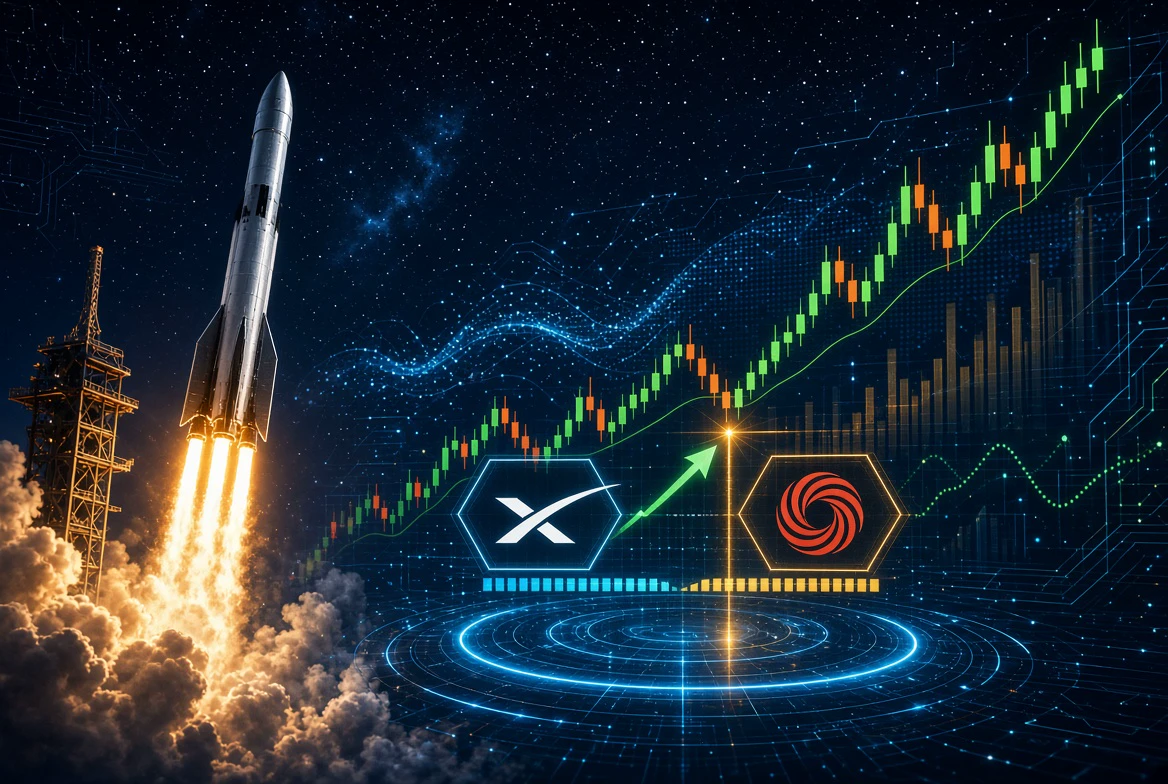
On October 21, SpaceX (SPCX) delivered one of the most eye-catching sessions of the year. Shares surged more than 10–12% intraday, briefly pushing its market capitalization to approximately $2.22–2.25 trillion and overtaking TSMC (TSM), which sat near $2.21 trillion.
That single session turned heads for a reason: a still-young public company (IPO in June 2026) temporarily leapfrogged one of the most profitable and strategically important semiconductor firms on the planet.
What triggered the move
The catalyst was SpaceX’s third-quarter numbers:
Revenue: $14.6 billion, up 161% year-over-year
Stronger-than-expected profitability metrics
Forward-looking comments from Elon Musk suggesting annual recurring revenue could reach $500 billion to $1 trillion by the end of 2027 if current trends hold
Starlink growth, Starship progress, and the expanding AI-related compute narrative all fed the narrative that SpaceX is no longer “just a rocket company.”
Context that matters
TSMC remains the undisputed manufacturing backbone of the AI era. Its foundry capacity, process technology leadership, and pricing power are still unmatched. SpaceX’s brief overtake does not diminish TSMC’s fundamental strength — it highlights how aggressively the market is currently willing to price future growth stories that combine space infrastructure, satellite connectivity, and AI compute ambitions.
By the following session (October 22), SpaceX gave back a large portion of those gains (roughly –9%), bringing its market cap back toward the $1.9–2.0 trillion range. Volatility is the price of admission for a company this young and this ambitious.
My read
This was a classic “narrative + numbers” day rather than a permanent ranking change. SpaceX is still valued on multi-year vision (Starlink scale + Starship economics + AI data-center potential). TSMC is valued on current cash generation and near-term AI demand visibility.
The interesting question is not “who is bigger right now,” but which company’s growth trajectory will prove more durable over the next 3–5 years.
Gate Square angle
For traders on Gate, both names are accessible through the multi-asset suite (gStocks / CFDs / tokenized exposure). The ability to react 24/7 to earnings surprises or valuation swings without waiting for traditional market open is exactly the kind of edge the platform is built for.
Discussion:
Do you see SpaceX’s temporary overtake of TSMC as a one-day headline, or the start of a longer re-rating of space + AI infrastructure companies? Are you more focused on SPCX volatility or TSMC’s steadier AI foundry story right now?
Drop your view below. Quality analysis still gets rewarded on Gate Square.
$SPCX $TSM