USDC's Near-Double Premium: What Was Everyone Trying to Front-Run?
Last time we walked through Arc's 48 hours hour by hour. Now let's look at the same period through the eyes of capital.
One of the most concrete ways to measure demand for a chain's launch is the price of the stablecoin on that chain. In Arc's case an interesting signal appeared: just before the mainnet opened, USDC on Arc was reported to be trading at a premium of nearly double versus USDC on Ethereum mainnet.
What produced this premium was not the need to use the chain but the desire to take an early position. Most of the projections for Arc were based on the hundreds- and thousands-fold returns seen on Robinhood Chain. The market assumed a similar move would happen on Arc, and began moving capital before the bridge infrastructure had fully settled. A third-party platform matched over 11,660 swaps and generated more than $5 million in volume, charging a 3% service fee for it. In other words, investors were willing to pay extra just to get into the chain.
Two conclusions follow. First: Arc's first-day pricing was fed not by real user demand but by expectation transfer — the assumption that a pattern that worked on one chain automatically repeats on a new one. Second: this kind of demand pushes the price up while unbalancing liquidity. Capital enters fast, but when it wants to leave it finds no buyer on the other side.
Arc's front-running phase also explains the first-day drop: the same crowd tried to walk out of the door at once.
In the next part we will look at the supply structure of these tokens.
Note: The data is based on open-source market tracking tools; not investment advice.
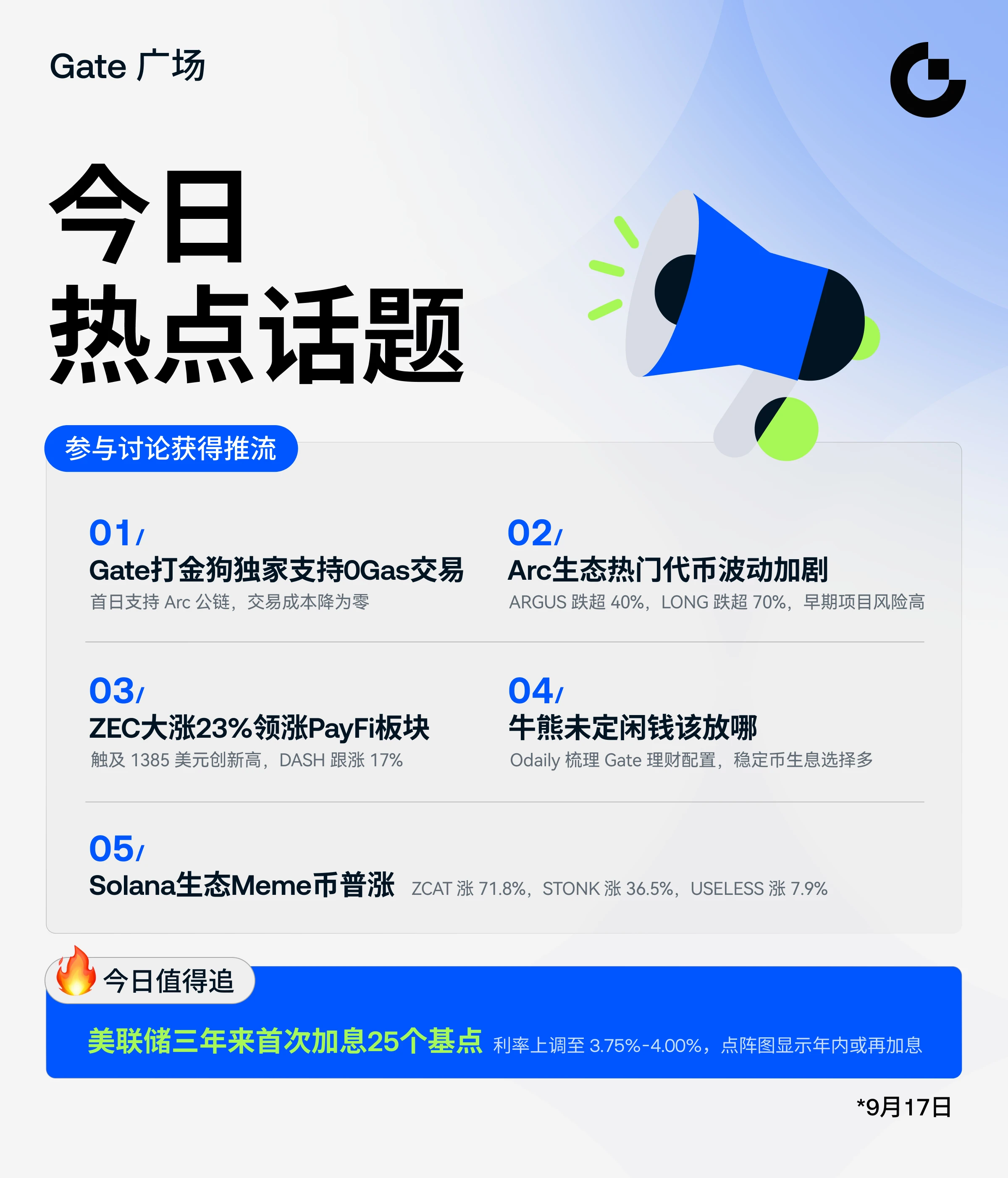
$ARC #Gate广场中秋团圆局 #Arc生态热门代币波动加剧 #ArcEcosystemHotTokensSeeIncreasedVolatility #GateSquareMidAutumnReunion