
The Financial Supervisory Commission (FSC) has revealed that Taiwanese businesses have already begun accepting and paying with stablecoins. Domestic banks are currently developing custody services to seize this business opportunity. After the passage of the "Virtual Asset Service Law," efforts will be made to connect fiat currency with stablecoins, and strict regulations on cold wallet ratios will be implemented to ensure asset security.
FSC: Taiwanese Businesses Have Started Accepting Stablecoins
According to reports from United Daily News and Commercial Times, FSC Vice Chairman Chuang Hsiao-yuan revealed yesterday (1/29) that although the "Virtual Asset Service Law," which involves stablecoin regulation, has not yet been passed by the Legislative Yuan, the increasing popularity of stablecoins in cross-border trading markets has led many import and export companies in Taiwan to start actual transactions with stablecoins.
She pointed out that as the amount of stablecoins held by traders gradually increases, these companies, based on their high trust in the traditional financial system, will inevitably seek to connect with traditional financial institutions to handle subsequent fund storage issues.
Taiwanese businesses mainly obtain funds from abroad in stablecoins anchored to the US dollar, so they will prioritize finding trustworthy financial institutions in Taiwan for storage. In response, banking industry players are also beginning to consider related business opportunities. Several banks are quietly preparing to offer custody services as the first step into the virtual asset market.
Chuang Hsiao-yuan believes that, in response to supply chain payment needs, there will also be domestic demand for TWD stablecoins in the future. She is optimistic that, after the special law is passed, financial institutions will be able to provide "seamless" services connecting fiat currency and stablecoins, helping cross-border operators improve efficiency.
Related reports:
Is TWD stablecoin coming? FSC: Let financial institutions issue first, future VASP operators may be allowed
Virtual Asset Service Law Pending Review, How Will Stablecoins Be Regulated?
Regarding the regulation direction of stablecoins, during the public hearing of the "Virtual Asset Service Law" held by the Legislative Yuan last year, there was in-depth discussion from various sectors, but disagreements remain on legislative details.
At that time, Xie Fengying, Director of the Central Bank's Business Department, emphasized that although stablecoins are currently mainly used as a medium for virtual market transactions, accounting for over 80% of trading volume, they are gradually entering the real economy to provide payment services.
As a payment tool, stablecoins should follow the principles of "same business, same risk, same regulation," and be regulated in accordance with the current Electronic Payment Institutions Management Act to prevent regulatory arbitrage and unfair competition.
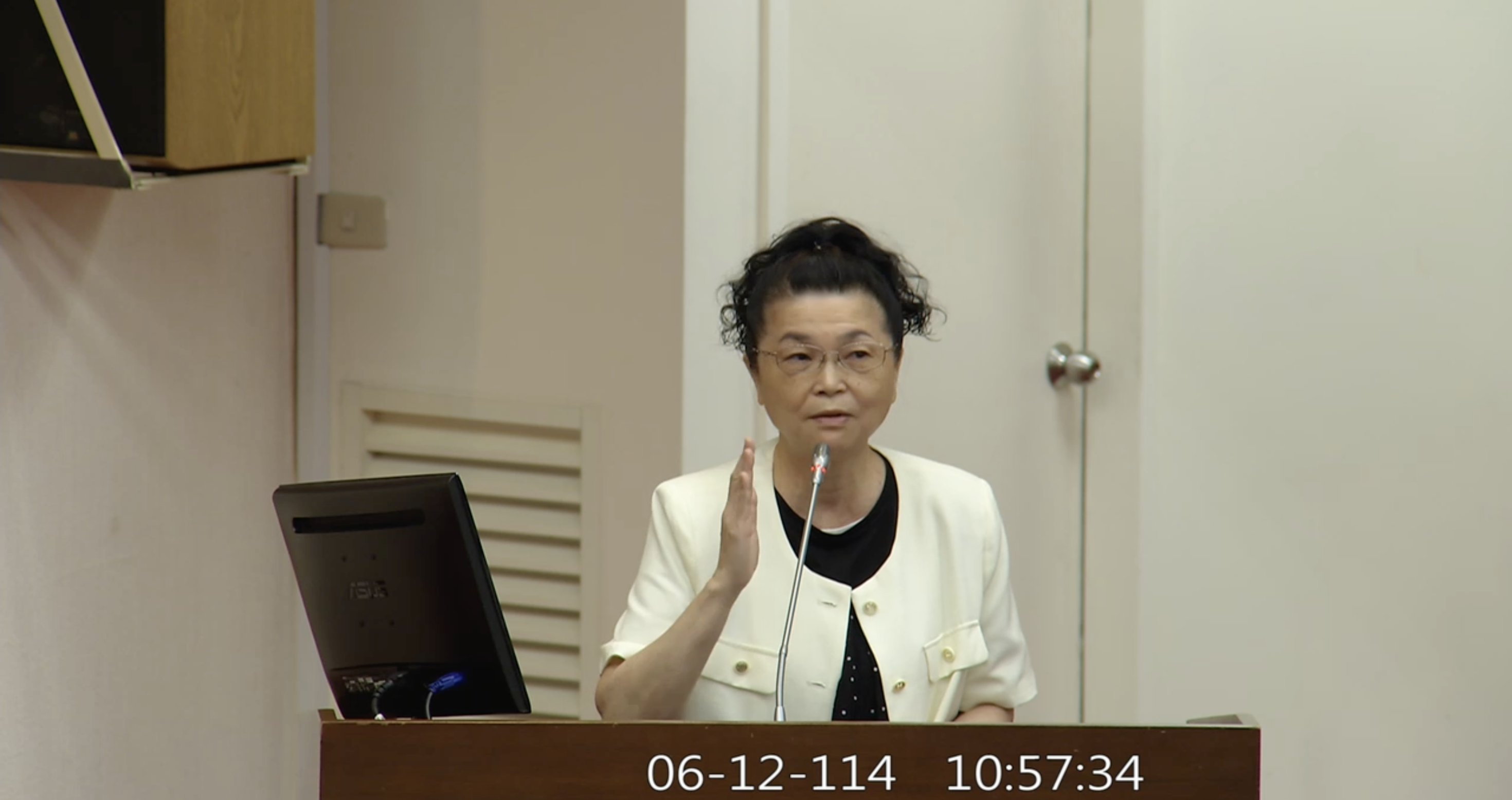
Image source: Legislative Yuan live broadcast, speech by Xie Fengying, Director of the Central Bank's Business Department, at the "Virtual Asset Service Law" public hearing
However, other industry, government, and academic figures have called for more detailed and flexible legislation. Lawyer Zheng Xuefeng, founder of Mu Zhang Guan Gu Consulting, suggested that regulatory authorities should clearly distinguish between stablecoins and commercial payment activities in their authorization regulations, and carefully differentiate business models to reduce industry compliance costs.
Cai Yuling, Honorary Chairman of the Taiwan FinTech Association, also stated that legislative design should adopt a framework of parent laws with subdivided subsidiary laws, balancing fraud prevention with industry development.
FSC Responds on Offshore Platforms and Asset Custody Issues
Yesterday, Gao Jingping, Director of the FSC Securities and Futures Bureau, further explained the regulation issues concerning offshore unlicensed cryptocurrency exchanges and virtual asset custody.
From the list of legally compliant virtual asset service providers (VASPs) in Taiwan compiled earlier (Hong Zhu has ceased operations since 1/30), there are no foreign exchanges like Binance or OKX that are commonly used by Taiwanese investors, raising concerns about regulatory gaps. In response, Gao Jingping emphasized that, according to current anti-money laundering regulations, both offshore and domestic platforms must obtain approval to operate relevant businesses in Taiwan.
Huang Zhonghao, Deputy Director of the FSC Securities and Futures Bureau, also stated that after the "Virtual Asset Service Law" is passed, operators must obtain permits to conduct business activities; unpermitted solicitation will be considered illegal.
Regarding asset custody, Gao Jingping pointed out that considering the higher risk of hacking hot wallets, the FSC has issued a letter requiring core systems to meet cybersecurity certifications, and that a certain proportion of customer virtual assets must be stored in cold wallets.
Principally, based on market value, the cold wallet ratio should not be less than 85%. If calculated by customer holdings, it should not be less than 75%, thereby strengthening asset security for investors. Recently, during an attack on the hot wallet of Taiwan exchange HOYA BIT, customers benefited from this regulation, and their assets remained unaffected.
Related reports:
HOYA BIT hot wallet attacked! Emphasizing user asset security, responding to 3 major community questions


