Real World Assets (RWA) are a digital model that maps real-world financial assets onto a blockchain network for management and circulation. As blockchain technology gradually enters traditional finance, RWA has become a critical infrastructure bridge linking on-chain ecosystems with the real economy. Figure has emerged as a key player driving RWA adoption through loan digitization, asset securitization, and on-chain capital market networks.
Traditional financial markets have long relied on centralized databases and complex intermediary systems to manage assets. Figure, by contrast, seeks to build a unified data layer and asset circulation network using blockchain. By leveraging Provenance Blockchain as its underlying infrastructure, Figure has established a comprehensive set of RWA use cases across loans, securitized products, and capital markets.
What Is RWA
Real World Assets (RWA) are assets originating from real economic activities that are digitized and recorded on a blockchain for management and trading.
The scope of RWA is broad, encompassing real estate, bonds, loans, private credit, government bonds, accounts receivable, and other financial instruments. Unlike native crypto assets, RWA typically correspond to real-world assets or cash flows.
Blockchain technology provides a unified ledger for data recording, ownership management, and asset transfer, increasing transparency and digitalization.
Figure's core strategy is not simply to issue tokenized assets but to build an infrastructure network that supports the digital management of real financial assets.
Figure focuses on loan assets, credit products, and securitization markets because these assets generate clear cash flows and are supported by established financial systems.
Through digitized processes and blockchain networks, Figure integrates asset creation, management, and circulation into a single environment.
This approach positions Figure not only as a fintech company but also as a key contributor to RWA infrastructure development.
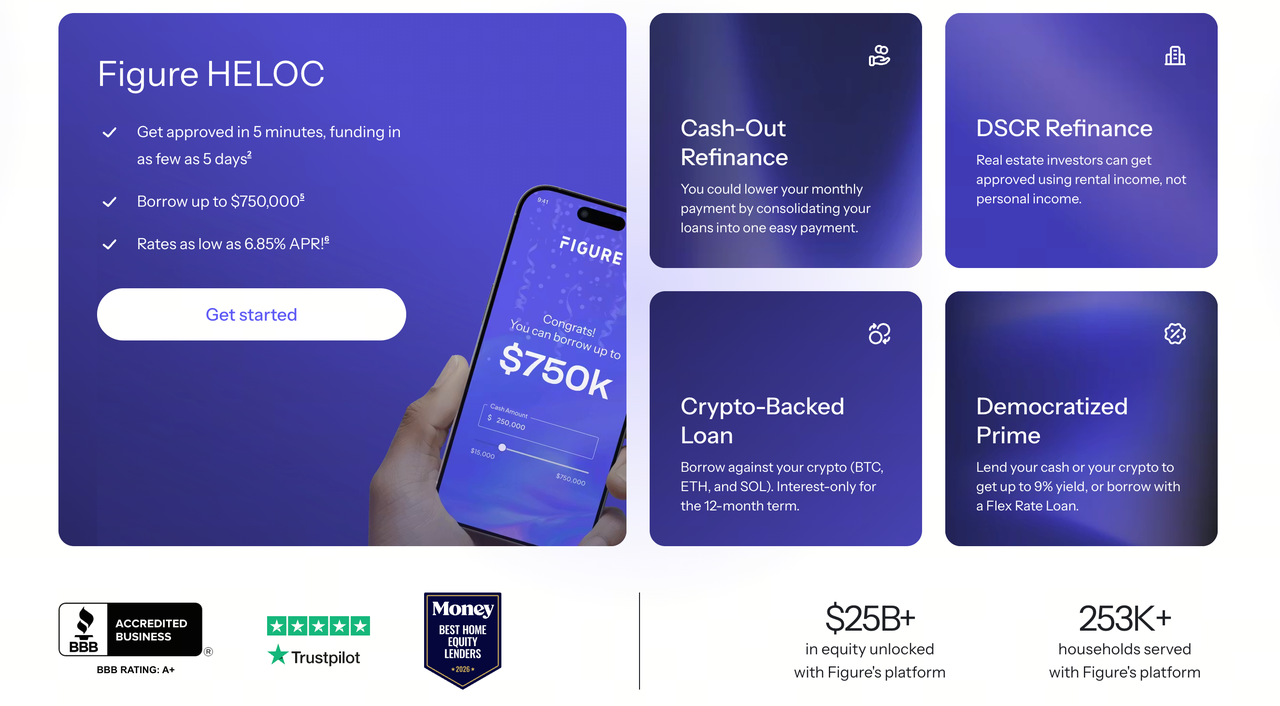
Loan assets are among Figure's most important RWA types.
Once a loan is approved and disbursed, relevant asset information can be recorded on the blockchain in digital form. Ownership status, transfer history, and related data all remain traceable.
Compared to traditional databases, on-chain records reduce data synchronization issues between different systems while improving asset transparency. Digitized loan assets can also participate in capital market financing and securitization activities.
How Provenance Blockchain Supports RWA
Provenance Blockchain is a critical infrastructure component of the Figure ecosystem and a core part of its RWA strategy.
Provenance Blockchain provides asset registration, ownership management, transaction recording, and smart contract execution, allowing real-world assets to undergo full lifecycle management on-chain.
For loans, credit products, and securitized assets, a unified data environment enhances operational efficiency and asset transparency. This makes Provenance Blockchain a vital bridge connecting traditional finance with blockchain networks.
Asset securitization is one of the most representative application scenarios in the RWA ecosystem.
Traditional securitization involves loan originators, custodians, rating agencies, and multiple capital market participants, often requiring extended timelines to complete asset flows.
Figure centralizes asset information into a unified network environment through on-chain records and digital management, reducing data processing and coordination costs. Digitizing asset securitization improves transparency and enables greater efficiency in subsequent asset trading and management.
Liquidity is a long-standing, critical challenge in the RWA market.
Real financial assets typically lack the high-frequency trading environment common to crypto assets, limiting their circulation efficiency.
Figure Connect, as an on-chain capital market network, provides a digital trading environment for loans and credit assets. Asset holders and investors can transfer and manage assets on a unified platform. A more efficient liquidity mechanism helps boost overall RWA market activity and capital allocation efficiency.
Figure's key differentiator is using blockchain to restructure asset management processes rather than changing the nature of the assets themselves.
| Dimension |
Figure RWA Model |
Traditional Asset Management Model |
| Data Recording |
On-chain unified ledger |
Multi-system decentralized management |
| Asset Transparency |
Real-time traceability |
Layered information management |
| Circulation Efficiency |
Automated process support |
Relies on manual coordination |
| Settlement Model |
Digital settlement |
Traditional clearing system |
| Data Sharing |
Unified data layer |
Independent databases |
Figure focuses on improving financial infrastructure efficiency rather than creating new asset classes.
Conclusion
Figure drives the development of Real World Assets (RWA) through Provenance Blockchain, Figure Connect, and a digital loan network, bringing loans, credit products, and securitized assets into a unified on-chain infrastructure system. Its core goal is to improve financial asset management efficiency, enhance asset transparency, and optimize asset flow processes in capital markets.
FAQs
What is the difference between RWA and cryptocurrency?
RWA correspond to real-world assets or cash flows, such as loans and bonds, while cryptocurrencies are typically native digital assets that may not have real-world backing.
What technology does Figure use to support RWA?
Figure primarily uses Provenance Blockchain for asset registration, transaction recording, and digital management, while also leveraging Figure Connect to support asset flows and capital market activities.
How do Figure's loan assets become RWA?
Loan assets are recorded on the blockchain after digitization and can be managed, transferred, and securitized through on-chain infrastructure, making them a typical RWA application case.
What role does Figure Connect play in RWA?
Figure Connect provides a digital trading environment for loans and credit assets, improves asset liquidity, and supports capital market participants in asset management and transfer.