As of the end of the third quarter of 2026, institutional holdings related to U.S. spot Bitcoin ETFs rebounded, with some wealth management platforms and major financial institutions becoming important participants in new allocations. At the same time, ETF flows weakened again after the start of the fourth quarter, indicating that there is no uniform pattern of institutional buying in the market. Different types of investors are participating in the Bitcoin market with different holding periods, risk budgets, and trading strategies.
This raises a question worth discussing: When the Bitcoin price declines significantly, why are some institutions still willing to maintain or even increase their allocations? The answer involves not only price expectations, but also portfolio management, ETF product structures, wealth management channels, and the long-term objectives of institutional investors. Understanding these factors can help distinguish short-term trading pressure from long-term allocation demand and reassess the impact of institutional participation on the Bitcoin market.
Why Do Some Institutions Maintain Long-Term Allocations Despite a Sharp Bitcoin Decline?
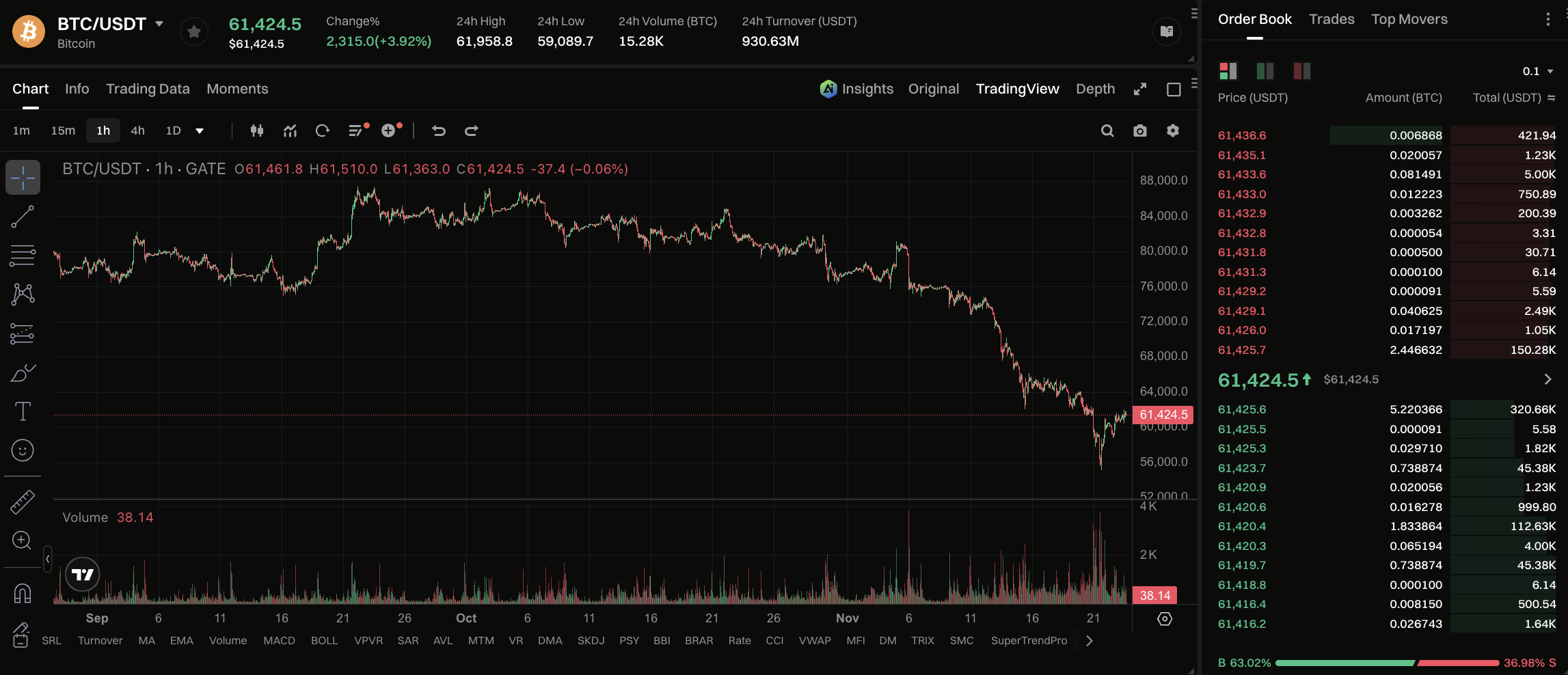
For retail investors, a rapid decline in the Bitcoin price often means short-term losses and increased market risk. However, for institutions using long-term asset allocation strategies, price movements are only one factor affecting investment decisions and do not necessarily mean they need to exit the market immediately.
Institutional investing typically centers on investment horizons, asset classes, target returns, and risk budgets. For example, an institution managing a multi-asset portfolio may view Bitcoin as a highly volatile alternative asset and allocate only a small proportion of its capital to it. Such an allocation may not depend on price appreciation over the coming weeks, but instead on the development of the digital asset market over the coming years, the maturity of investment channels, and Bitcoin's relationship with other assets.
In the third quarter of 2026, institutional holdings of U.S. spot Bitcoin ETFs rebounded. In a set of institutional holding statistics covering U.S. spot Bitcoin ETPs, reporting institutions increased their net exposure by the equivalent of approximately 49,200 BTC during the quarter, reversing the net reduction trend of the previous three consecutive quarters. Wealth management channels accounted for approximately half of this increase, indicating that some capital continues to participate in the Bitcoin market through traditional securities accounts.
However, these data reflect holdings as of the end of September and cannot prove that institutions continued buying during the sharp decline in November. ETF flows showed signs of weakening in the fourth quarter. Therefore, a more reasonable interpretation is that some institutions had previously expanded their long-term allocations, while the short-term market still faced clear capital outflow pressure.
This also shows that institutional investors are not a uniform group. Some capital may reduce risk exposure during market corrections, while other capital may continue holding assets according to predetermined allocation plans. A decline in the Bitcoin price and the long-term trend of institutional participation are not necessarily mutually exclusive.
Why Do Institutions Include Bitcoin in Traditional Portfolios?
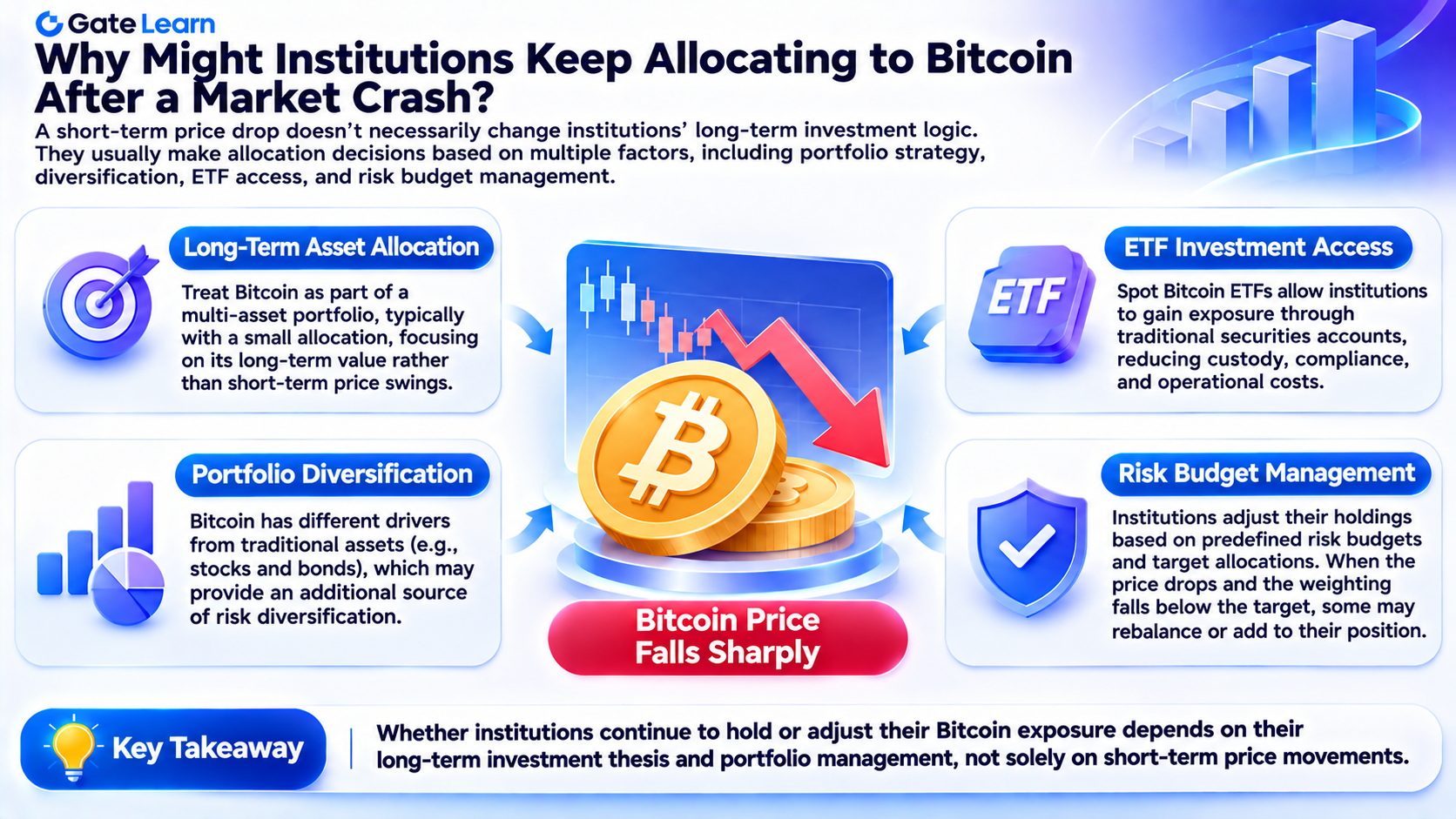
The logic behind institutional Bitcoin allocations typically differs from the behavior of short-term traders pursuing price increases. For traditional asset managers, the first question in deciding whether to hold Bitcoin is what role it serves in the overall portfolio.
Bitcoin has characteristics such as relatively clear supply rules, continuously operating global markets, and no reliance on the operating cash flow of a single company. These characteristics lead some investors to view it as a digital asset with independent economic attributes and attempt to include it in portfolios composed of stocks, bonds, gold, and other alternative assets.
However, Bitcoin does not have traditional cash flows such as bond interest or stock dividends. Its market value depends heavily on investor demand, liquidity, and risk appetite. Therefore, even if institutions recognize Bitcoin's long-term development potential, they typically need to limit the allocation size rather than treat it as a low-risk core asset.
From a portfolio management perspective, Bitcoin may provide asset exposure different from traditional securities, but this does not mean it can always diversify risk. In particular, when global liquidity tightens or risk assets broadly decline, Bitcoin and high-risk assets such as technology stocks may come under pressure at the same time, reducing its short-term diversification effect.
Therefore, whether institutions continue holding Bitcoin often depends on whether their original investment thesis has changed. If the rationale for long-term allocation remains valid, a short-term price correction may trigger position adjustments but does not necessarily lead directly to a complete exit.
Conversely, if there are material changes in market liquidity, the regulatory environment, asset correlations, or portfolio risk, institutions may also reassess the value of their Bitcoin allocations. Long-term holding does not mean unconditional holding.
How Do Bitcoin ETFs Change How Institutions Participate in the Crypto Market?
The launch of U.S. spot Bitcoin ETFs allows institutions to gain Bitcoin price exposure through traditional securities markets without directly managing on-chain wallets, private keys, or digital asset transfer processes. This change lowers the operational barriers for some traditional investors to participate in the Bitcoin market.
For wealth management institutions, ETFs can be incorporated into existing securities accounts, portfolio reports, and asset management processes. Investment advisors can research and manage related products within existing client service systems without fully establishing separate crypto asset trading and custody infrastructure.
The significance of this channel shift is not merely that more institutions can buy Bitcoin. It also brings Bitcoin progressively into discussions of traditional asset allocation. When an asset can be managed through standardized securities products, institutions can more easily establish internal evaluation processes around its risks, liquidity, holding proportions, and investment horizons.
In the third quarter of 2026, the number of 13F reporting institutions holding U.S. spot Bitcoin ETFs increased to 2,166, up by 191 from the previous quarter. Holdings associated with Wells Fargo also expanded significantly, with Bitcoin ETF exposure reaching the equivalent of approximately 30,600 BTC by the end of the third quarter.
These changes reflect increased participation in Bitcoin ETFs through wealth management channels, but they should not be interpreted simply as banks directly using proprietary capital to speculate on Bitcoin price increases. Relevant holdings may involve client asset management, investment advisory services, or other trading arrangements.
In addition, ETFs do not eliminate Bitcoin's inherent price risk. Funds provide an investment channel more aligned with traditional securities market practices, while their underlying assets remain affected by crypto market volatility. The broader adoption of ETFs changes how investors participate in Bitcoin, but it does not automatically change Bitcoin's supply and demand dynamics.
What Is the Difference Between Long-Term Allocation Capital and Short-Term Trading Capital?
Institutional capital in the Bitcoin market does not have a single investment objective. Although asset management companies, wealth management platforms, hedge funds, and quantitative trading institutions may all hold Bitcoin ETFs, their trading motivations and holding periods differ significantly.
Long-term allocation capital typically makes decisions based on portfolio objectives. These investors may adjust positions according to quarterly or annual asset allocation plans and focus more on Bitcoin's contribution to overall portfolio risk than on short-term price fluctuations.
Wealth management institutions may hold ETFs based on clients' investment horizons, risk tolerance, and asset allocation needs. Because the objectives of different clients are not the same, the same financial institution may simultaneously increase and reduce holdings internally.
In contrast, hedge funds and quantitative trading institutions may focus more on market spreads, funding costs, and trading efficiency. For example, some institutions establish hedging strategies by buying spot ETFs and selling Bitcoin futures in an attempt to capture price differences between spot and futures markets. Such trades can increase ETF holdings but do not necessarily mean that institutions hold a strongly bullish view of Bitcoin's future price.
Therefore, when the market reports growth in institutional holdings, it is necessary to distinguish whether new capital comes from long-term allocation demand or from short-term arbitrage and trading strategies. Both types of capital may increase ETF demand, but their stability and impact on market prices are not entirely the same.
Long-term capital is not always stable either. If clients redeem collectively, portfolio risk exceeds limits, or asset managers change their investment views, long-term allocation positions may also be reduced. Institutional status alone cannot guarantee that holdings will be sustained.
Why Might Some Institutions Rebalance Assets When Bitcoin Declines?
Asset rebalancing is an important mechanism for understanding institutional investment behavior. For portfolios that use fixed or target allocation proportions, a price decline does not always mean selling. It may instead trigger additional purchases to replenish a position.
For example, an institution plans to allocate 2% of its portfolio to Bitcoin. When the Bitcoin price rises significantly, its actual allocation may exceed the target, and the institution may sell part of its holdings to restore the original proportion. Conversely, when the Bitcoin price declines significantly, its allocation may fall below the target. If the risk budget allows, the institution may buy to restore the original allocation.
This approach does not require investors to accurately predict the market bottom. Instead, it follows preset portfolio rules. However, institutions may also use rebalancing bands, risk control thresholds, or dynamic asset allocation methods, so not every price decline will trigger buying.
More importantly, the direction of rebalancing depends on the institution's overall risk conditions. If a Bitcoin price decline is accompanied by a significant increase in market volatility, institutions may reduce holdings because of a tightening risk budget, even if Bitcoin's share of portfolio market value has already declined.
Therefore, institutional buying after a price decline may mean that some investors are executing long-term allocation plans, rather than indicating that they believe the market has bottomed. Similarly, institutions reducing positions do not necessarily mean they have completely rejected Bitcoin's long-term value.
Asset rebalancing shows that institutional buying and selling may sometimes result from portfolio management mechanisms rather than a single assessment of short-term price direction. This is why different institutions may take entirely opposite actions during the same market correction.
Why Does Bitcoin Remain Highly Volatile as Institutional Participation Continues to Increase?
Institutional participation is commonly viewed as helping expand market scale, improve trading channels, and increase an asset's acceptance in financial markets. However, this does not mean that the Bitcoin price will become consistently stable as institutionalization increases.
-
Institutional capital is also affected by the macroeconomic environment. When market expectations for interest rates, economic growth, or financial liquidity change, institutions may adjust positions in stocks, bonds, gold, and crypto assets at the same time. As a highly volatile asset, Bitcoin may still face substantial selling pressure when risk appetite declines.
-
ETFs make it easier for capital to enter the market, while also providing a standardized channel for capital to exit. When investors reduce Bitcoin exposure through ETFs, funds may experience net redemptions, affecting demand for underlying assets through their corresponding operating mechanisms. The growth in institutional holdings during the third quarter of 2026 contrasts sharply with weaker ETF flows in the fourth quarter. As of November 18, U.S. spot Bitcoin ETFs had recorded cumulative net outflows of approximately $2.9 billion for the month, showing that previous growth in institutional allocations did not prevent subsequent capital withdrawals.
-
The Bitcoin price is also jointly affected by spot trading, futures, and perpetual contract markets. When leveraged traders face margin pressure or forced liquidations, concentrated selling may occur. Even if some long-term investors are willing to continue holding, short-term trading pressure may still cause prices to decline rapidly.
Institutionalization may also tie Bitcoin more closely to traditional financial markets. As more capital participates in Bitcoin trading through securities accounts, allocation behavior may be affected by stock market performance, portfolio risk limits, and overall liquidity conditions.
Therefore, increased institutional participation is not inconsistent with Bitcoin maintaining its high-volatility characteristics. A more diverse range of market participants does not mean that all capital will provide buying support when prices decline.
Is Bitcoin Transitioning From a Trading Asset to a Long-Term Institutional Allocation Asset?
As spot ETFs gradually integrate into the traditional financial system, Bitcoin's investor base is changing. In the past, the crypto asset market primarily relied on native trading platforms, retail investors, and professional trading institutions. Today, wealth management platforms, investment advisors, and other traditional financial participants have more mature investment channels.
This change may help Bitcoin gradually develop from an asset that relies solely on short-term trading demand into an alternative investment tool in some multi-asset portfolios. However, a market structure transition does not happen overnight, nor does it mean that Bitcoin has already become a stable allocation asset similar to government bonds or mature stock indexes.
Assessing this trend requires attention to whether institutional participation is sustainable. If wealth management channels maintain allocations across multiple market cycles, the number of institutions continues to increase, and the holding structures of related products become more diverse, then the foundation for Bitcoin's use as a portfolio asset may expand further.
However, if institutional holdings are primarily concentrated in short-term arbitrage strategies or exit quickly when market volatility intensifies, their support for long-term allocation demand may be relatively limited.
Another important factor is whether investors can accept Bitcoin's substantial price volatility. For traditional institutions, long-term allocation depends not only on potential returns but also on whether the asset can meet risk budget, liquidity management, and client suitability requirements.
Therefore, a higher degree of Bitcoin institutionalization more accurately means that investment channels and participant structures are evolving, rather than that its price risk has fundamentally changed. Bitcoin may simultaneously have the dual characteristics of a long-term allocation asset and a highly volatile trading asset.
What Indicators Should Investors Watch to Determine Whether Institutional Demand Is Sustainable?
Determining whether institutional demand is sustainable cannot rely solely on ETF net inflows on a single day, nor can long-term trends be considered established based only on quarterly growth in institutional holdings.
-
Investors can monitor sustained fund flows into and out of U.S. spot Bitcoin ETFs. Net inflows over multiple consecutive trading days or weeks generally reflect changes in fund-level demand better than single-day data. However, fund flows are also affected by market prices, investor redemptions, and institutional trading strategies, so they need to be analyzed alongside other information.
-
Institutional holding structures are worth monitoring over the long term. Compared with simply tracking total holdings, the level of participation through wealth management channels, the number of reporting institutions, and holding changes among different types of investors can better help determine whether Bitcoin is entering traditional asset allocation systems.
-
The relationship between total ETF Bitcoin holdings and market prices should be observed. If funds' underlying BTC holdings continue increasing, it may indicate that related products are absorbing more Bitcoin supply. However, if prices still decline, further analysis of selling pressure through other market channels is needed.
-
Derivatives markets can provide short-term risk information. Futures open interest, funding rates, and liquidation data can help assess leverage levels and market sentiment, but these indicators cannot directly represent long-term institutional demand.
-
The macro-financial environment remains important. Interest rate expectations, U.S. dollar liquidity, stock market risk appetite, and overall financial conditions can all affect institutions' willingness to allocate to highly volatile assets such as Bitcoin.
These indicators need to be used together. Whether institutional demand is sustainable should not be determined by holding data from a single quarter, but gradually verified through capital behavior across different market cycles.
How Can You Use Gate to Monitor Changes in Bitcoin Market Capital and Trading?
As Bitcoin becomes increasingly connected with traditional financial markets, investors analyzing BTC market trends also need to monitor spot trading, derivatives markets, and changes in external institutional capital.
In Gate's relevant trading and market data scenarios, users can observe indicators such as BTC spot prices, trading volume, perpetual contract open interest, and funding rates based on actual product availability. These data can help investors understand short-term market trading structures and conduct cross-analysis with ETF flows and changes in institutional holdings.
For example, when the Bitcoin price declines rapidly, a simultaneous significant decrease in contract open interest may indicate that some leveraged positions are exiting the market. If a price decline is accompanied by changes in funding rates, investors can further observe funding costs and market sentiment between long and short positions.
However, short-term trading indicators cannot directly prove that institutions are buying or selling, nor can they replace research into ETF flows and long-term allocation trends. Different data reflect the behavior of different market participants, and they should not be simply attributed to a single type of capital.
For investors seeking a long-term understanding of the Bitcoin market, establishing a multidimensional analytical framework is more meaningful than relying solely on news of increased institutional holdings to assess price direction. At the same time, spot and derivatives markets have different risk characteristics, and leveraged trading can amplify profits and losses. Investors should evaluate them carefully based on their own risk tolerance.
Summary
The contrast between some institutions increasing Bitcoin ETF holdings in the third quarter of 2026 and the sharp market correction in November reflects that the Bitcoin market is simultaneously affected by long-term asset allocation demand and short-term trading pressure. Institutional investors are not a uniform group, and different capital may take different actions based on investment horizons, risk budgets, and trading strategies.
For some long-term allocation institutions, a decline in the Bitcoin price does not necessarily mean that the original investment rationale is no longer valid. The broader adoption of ETF products, participation through wealth management channels, and asset rebalancing mechanisms may all support institutions in maintaining a certain level of exposure during market volatility. However, these factors do not guarantee continued institutional buying or eliminate Bitcoin's inherent high-volatility risk.
The true significance of Bitcoin's institutionalization does not lie in whether institutions can prevent price declines. Rather, it lies in the fact that more traditional financial participants are beginning to evaluate and manage digital assets through standardized investment channels. Whether this trend can continue in the future will still depend on capital flows, investor structures, the macroeconomic environment, and Bitcoin's actual performance across different market cycles.
FAQ
Why Do Some Institutions Continue Holding BTC After a Sharp Bitcoin Decline?
Some institutions view Bitcoin as an alternative asset within a long-term portfolio. Their decisions may be based on asset allocation proportions, investment horizons, and risk budgets rather than being determined entirely by short-term price movements.
Does Increased Institutional Investment in Bitcoin ETFs Mean the Market Has Bottomed?
No. Changes in institutional holdings may result from long-term allocations, asset rebalancing, or hedging transactions, and cannot directly prove that the market has completed its bottoming process.
Why Do Some Institutions Increase Holdings When Bitcoin ETFs Experience Outflows?
Because ETF flows reflect changes in overall fund subscriptions and redemptions, while institutional holdings reflect the asset allocation of specific investors. Different investors may take opposite actions during the same period.
Why Do Bitcoin ETFs Attract Interest From Wealth Management Institutions?
ETFs allow investors to gain Bitcoin price exposure through traditional securities accounts and can connect with existing asset management, custody, and portfolio reporting systems, lowering operational barriers for some institutions.