Codex combines technological innovation and regulatory design to integrate traditional finance with blockchain technology. Its position rests on operational mechanisms, competitive advantages, potential risks, and future development potential.
Key Takeaways
- Codex is designed for stablecoin payments, settlement, treasury management, and DeFi.
- Codex Chain, Codex API, Codex FX, bridging, and custody form the enterprise integration layer.
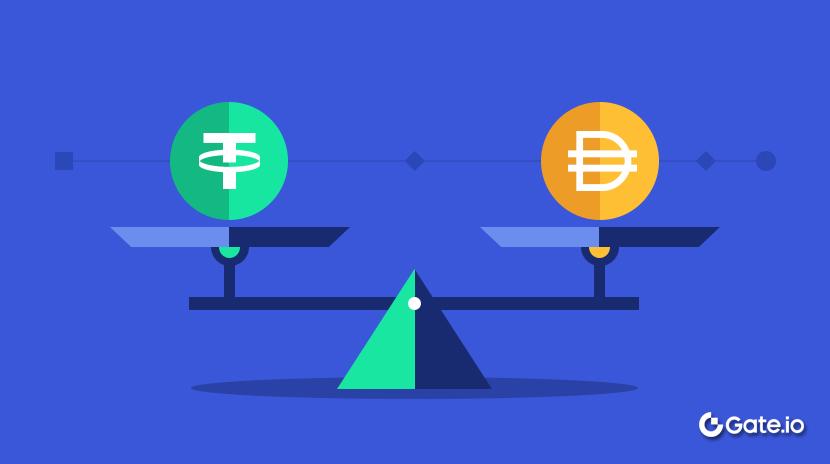
- In 2026, Codex FX settled more than $1 billion in monthly volume; Codex Par supports 1:1 USDT/USDC conversion, while Flagright AML controls and MiCA/MSB-aligned workflows strengthen institutional readiness.
- Core risks include regulation, competition, technical security, and enterprise adoption timelines.
What is Codex?
Codex is a blockchain company specializing in stablecoins, with a mission to develop a universal electronic cash system that promotes financial inclusion and innovation. Through its blockchain architecture specifically designed for stablecoins, Codex offers efficient, secure, and compliant solutions across payments, lending, and decentralized finance (DeFi).
Teams can use this infrastructure when running payments, lending, and DeFi services. A business can get started with an installed API key, build long-lived accounts, and track changes to the ledger while settlement models and copied balances stay aligned across systems. Those integration forms keep an order book, treasury book, and internal reporting connected to the same terminal of record.
Codex’s vision is to fulfill one of the oldest and most ambitious dreams in the crypto space: the creation of a universal electronic cash system. This system aims to make the use of stablecoins simple, reliable, and low-cost, empowering businesses to seamlessly integrate cryptocurrency into their financial operations, without concerns over volatility, high fees, complex wallets, or incompatible block explorers.
The product connects payment corridors, treasury operations, and cross-border settlement. A finance team can start with a supported stablecoin, settle a transfer in minutes rather than days, and monitor balances in real time. The same controls work across a month-end reporting cycle and provide a reliable audit trail.

Source: https://x.com/codex_pbc
Why is Codex built around stablecoins?
Stablecoins now serve as payment instruments, settlement assets, and on-chain treasury vehicles. Enterprises need practical answers for financial-system integration, payment confirmation, FX conversion, custody, and compliance.
Codex addresses those needs as infrastructure capabilities: Codex Chain handles high-frequency transactions, Codex API manages access and integration, Codex FX supports stablecoin conversion, and custody components support reliable operation. This design lets enterprises use stablecoins inside familiar finance workflows.
Who founded Codex and who invested in it?
Team Members
The team includes:
-
Haonan Li|Co-founder & CEO: Haonan Li is the Co-founder and Chief Executive Officer of Codex. Previously, he led token/airdrop design, protocol economics, and RPGF (Retroactive Public Goods Funding) at Optimism. Li holds a degree from the Wharton School of Business.
-
Victor Yaw|Co-founder: Victor Yaw is a Co-founder of Codex. He graduated from Washington University in St. Louis.
-
Momo Ong|Co-founder: Momo Ong is a Co-founder of Codex. He has prior experience at Sequoia Capital and Meta. Ong is a graduate of Princeton University.
Codex is also supported by talent from TikTok, Palantir, Coinbase, and Jane Street.
Funding
Funding history:
- On April 4, 2025, Codex completed a $15.8 million seed round.
- Investors in Codex include: Dragonfly Capital as the lead investor, with participation from Coinbase, Circle, Cumberland, Wintermute, and Selini Capital. Dragonfly contributed approximately $14 million in this round.
How does Codex work?
Examining Codex's project background and development reveals both the immense potential and significant challenges of stablecoins in enterprise applications. To drive widespread adoption of stablecoins in enterprise financial infrastructure, the Codex team analyzed business needs and developed innovative technologies to address them.

Source: https://docs.codex.xyz/core-concepts/identities.html
Codex Chain
Codex Chain is a blockchain specifically designed by Codex for stablecoin transactions, aiming to deliver an efficient, secure, and easily integrable stablecoin solution for businesses.
- Built on OP Stack: Codex Chain is built on the OP Stack, leveraging the scalability of Optimism and the security of Ethereum to ensure network stability and reliability.
- Modular Multi-Chain Architecture: Supports on-chain computation for AI, DePIN, and DeFi applications, offering a powerful infrastructure layer for enterprises.
- Chain Specifications: Specific parameters include Chain ID 81224, RPC endpoint https://rpc.codex.xyz, WebSocket address wss://rpc.codex.xyz, and block explorer at https://explorer.codex.xyz, providing access and interaction interfaces for enterprises and developers.
- Gas & Withdrawal Period: Gas limit is 30,000,000, withdrawal period is 604,800 seconds (standard 7-day withdrawal), ensuring transaction stability and predictability.
- Cross-Chain Bridging: Enables bridging of USDC from L1 to Codex Mainnet via Stargate, allowing users to easily convert USDC into USDC.e, further expanding stablecoin usability scenarios.
- Conduit Custody: Conduit serves as the custody infrastructure for Codex Chain, providing a reliable backend to ensure high availability and robust chain operation.
Codex API
The Codex API ensures secure and time-sensitive access through the use of JWT (JSON Web Token) authentication. Every request must include a fresh JWT token, with a strict validity period of just 15 seconds. This significantly mitigates risks of unauthorized access and potential security threats. Tokens must be signed using the ES256 algorithm and must include specific JWT claims such as iss (issuer) and kid (key ID), which are provided during user onboarding to ensure authentication accuracy and uniqueness.
Beyond its robust security, the Codex API provides a comprehensive suite of features that enable enterprises to seamlessly integrate stablecoins into their existing financial systems and automate operations. The API supports fiat-to-stablecoin conversions, streamlining cross-border payments and fund management for businesses. Additionally, it enables the automated transfer and settlement of stablecoins, simplifying corporate financial operations. The API also allows for the creation and management of virtual accounts, making it easier for businesses to receive and manage funds.
Deposit Channel Diagram:

Source: https://docs.codex.xyz/guides/on-ramp.html
Withdrawal Channel Diagram:

Source: https://docs.codex.xyz/guides/off-ramp.html
Codex FX
Codex FX is a global, wholesale stablecoin foreign exchange service offered by Codex, designed to facilitate stablecoin conversions and payments across international markets. In 2026, the service settled more than $1 billion in monthly volume, with transfers typically completing in under 30 minutes. This service enables enterprises to execute cross-border payments and manage global liquidity with greater efficiency and lower costs. The key strengths of Codex FX lie in its global reach and support for large-scale wholesale transactions, enabling businesses to access more favorable exchange rates, reduce operational expenses, and enhance the convenience of their financial processes.
How does Codex compare with other stablecoin infrastructure?
Codex's core technological features address pain points in stablecoin usage while providing enterprises with an efficient, secure, and easily integrated solution. Through its purpose-built Codex Chain, robust API, global stablecoin foreign exchange services (Codex FX), cross-chain bridging via Stargate, and reliable custody through Conduit, Codex has built a comprehensive ecosystem. These technologies boost both the efficiency and security of stablecoin usage, delivering significant competitive advantages for real-world enterprise applications.
Performance Advantages
Codex Chain is a blockchain designed explicitly for stablecoin transactions, offering distinct performance benefits compared to general-purpose blockchains. Its core design is centered around meeting enterprise demands for speed and reliability in stablecoin operations. By employing a modular multi-chain architecture, Codex Chain supports on-chain computation for AI, DePIN, and DeFi applications, ensuring both high efficiency and scalability. This architecture enables different types of transactions and applications to operate on independent chains, eliminating resource contention and performance bottlenecks.
- Modular Multi-Chain Architecture: Codex Chain employs a modular design that supports parallel transaction processing across multiple chains. This architecture not only boosts transaction throughput but also enhances system scalability, allowing the platform to handle high-volume scenarios with ease.
- Low Latency and High Throughput: Codex Chain is optimized for speed, achieving low latency and high transaction throughput. Its transactions per second (TPS) significantly exceed those of general-purpose blockchains, ensuring fast confirmation and execution, particularly critical for enterprise applications that require real-time settlement.
Cost Efficiency
Codex Chain is designed with both performance and cost-effectiveness in mind. Low transaction fees combined with high throughput provide Codex with a distinct cost advantage in stablecoin transactions, making it particularly suitable for high-frequency trading and large-scale fund management.
- Low Transaction Fees: Thanks to an optimized consensus mechanism and efficient resource allocation, Codex Chain can reduce transaction fees to as low as 0.0000001 ETH (less than 0.1 cent). In comparison, Algorand's fees typically fluctuate around 0.2 cents. This makes Codex especially advantageous for high-frequency and micro-payment use cases, where transaction fees can significantly impact overall cost.

Source: https://kimi.moonshot.cn/chat/cvuankpnu959jiql1mhg
- High Throughput for Large-Scale Fund Management: The high throughput capacity of Codex ensures the network can process a large volume of transactions without congestion. This guarantees efficiency and reliability for enterprise-scale fund operations, especially vital for companies managing large cross-border payments and liquidity flows.
Comparison with Similar Projects

In the field of stablecoin-focused blockchain projects, Codex demonstrates significant competitiveness through its modular multi-chain architecture, specifically tailored for stablecoins, and its suite of innovative technologies. Compared to similar projects, Codex excels in transaction speed and throughput, enabling the rapid processing of large volumes of transactions. This makes it particularly well-suited for high-frequency trading and large-scale fund management scenarios. Its low transaction fees further enhance its appeal for payment use cases and micropayments.
In terms of compliance, Codex performs exceptionally well, aligning with global regulatory standards and providing a solid foundation of trust for enterprise users. Its innovative technical architecture—including modular multi-chain design and support for cross-chain bridging—enables Codex to flexibly adapt to a wide range of application scenarios while maintaining efficiency and scalability.
Where is Codex expanding?
Roadmap
- Q1 2023: Project launch, core team formation, and initiation of Codex Chain's foundational architecture design and development.
- Q3 2023: Release of first Codex API beta version, beginning integration testing with partners, optimization of stablecoin conversion and payment functionalities.
- Q1 2024: Official mainnet launch of Codex Chain supporting enterprise-level applications, release of comprehensive API documentation to engage developer community.
- Q2 2024: Establishment of partnerships with multiple financial institutions and payment platforms, expanding market coverage, and enhancing user experience.
- Q4 2024: Full deployment of cross-chain bridging functionality, supporting multi-stablecoin conversions and enhancing platform interoperability.
- Q1 2025: Secured seed round funding from prominent investors, including Dragonfly Capital and Coinbase Ventures, accelerating market expansion and technical iteration.
- Q2 2025: Service expansion into Singapore, UK, Dubai, and Hong Kong, further extending global market presence.
- Q1 2026: Exploration of additional financial products and services, including stablecoin interest-bearing accounts and insurance services, further enriching the ecosystem.
- July 2026: Codex Par launched to support 1:1 USDT/USDC conversion, giving enterprises a direct route between the two dominant dollar stablecoins.
Ecosystem Partnerships
Codex is continually expanding its ecosystem by forming partnerships with financial institutions and enterprises worldwide, promoting the real-world adoption of stablecoins. These collaborations not only showcase Codex’s technical strengths in the stablecoin space but also reflect its commitment to financial inclusion and innovation. Below are some key examples and developments in Codex’s ecosystem partnerships:
- Southeast Asia Payment Platforms: Codex has partnered with payment platforms in Southeast Asia to help local SMEs address cross-border payment challenges. With Codex’s stablecoin solutions, businesses can perform cross-border transactions more efficiently, reducing both transaction costs and processing time.
- European Bank Collaborations: Codex has established partnerships with several European banks to offer stablecoin conversion and payment services. These partnerships enable banks to deliver faster and more secure cross-border payment solutions while maintaining regulatory compliance.
- Enterprise Fund Management: A large multinational corporation has integrated Codex’s API into its treasury management systems to utilize stablecoins for global fund operations. By leveraging Codex’s low fees and high throughput capabilities, the enterprise has optimized its international liquidity flow and financial management processes.
- Global Expansion: Codex has launched institutional-grade services in the Philippines and plans to expand into Singapore, the UK, Dubai, and Hong Kong. These strategic expansions aim to broaden Codex’s global market presence and meet the needs of businesses in different regions.
- Compliance Infrastructure: Flagright provides AML transaction screening and monitoring for Codex workflows. Codex also aligns its institutional operations with MiCA requirements in the EU and MSB obligations in the US, creating clearer controls for banks, payment providers, and enterprise treasuries.
- Developer Community Building: Codex is actively nurturing a developer community by providing comprehensive APIs and development tools. It has attracted a growing number of developers to contribute to its ecosystem. Through hosting hackathons and developer conferences, Codex continuously fosters technological innovation and ecosystem growth.
What risks should enterprises consider?
Technical Risks
As a blockchain designed explicitly for stablecoins, Codex Chain’s modular multi-chain architecture offers high efficiency and scalability, but also introduces increased system complexity. This complexity could lead to instability under high-concurrency or complex transaction scenarios, posing challenges for system maintenance and future upgrades.
Moreover, despite its advanced architecture and algorithms, Codex may still face undiscovered vulnerabilities or technical issues during real-world usage. These issues can impact system stability and security, particularly when processing large-scale transactions. The blockchain industry evolves rapidly, and Codex must continuously update and optimize its infrastructure to maintain competitiveness. Failure to keep pace with technological developments could result in performance degradation, reduced user satisfaction, and a decline in market position.
Market Risks
The stablecoin market has experienced rapid growth but remains highly competitive. Codex faces strong competition from other stablecoin projects and blockchain platforms, some of which may have advantages in technology, market penetration, or user base.
For instance, established players like USDC already enjoy high market acceptance and a broad user base.
Additionally, market demand can be unpredictable and may shift toward other types of stablecoins or blockchain solutions. In such cases, Codex would need to adapt its product strategy to align with changing market conditions. While stablecoins are designed to maintain price stability, their value can still be affected by macroeconomic trends or regulatory changes. These fluctuations may impact user trust and willingness to adopt stablecoins, thereby influencing Codex’s market performance.
Regulatory Risks
As an innovative project in the stablecoin sector, Codex faces regulatory challenges across various countries and jurisdictions. In the United States, the Securities and Exchange Commission (SEC) enforces stringent regulatory policies for stablecoin issuers, requiring compliance with a range of obligations, including disclosure requirements, anti-money laundering (AML), and counter-terrorism financing (CTF) measures. Similarly, the European Union’s Markets in Crypto-Assets Regulation (MiCA) imposes strict rules on stablecoin issuers, covering areas such as capital requirements, governance structures, risk management, disclosure, consumer protection, AML, and CTF compliance.
The SEC mandates that stablecoin issuers undergo regular audits to ensure transparency and the security of reserve assets. Among these standards, the SOC 2 Type II certification is a key benchmark. This certification involves a comprehensive evaluation of a service organization’s control environment, including criteria related to security, availability, processing integrity, confidentiality, and privacy. Achieving SOC 2 Type II compliance would not only enhance market trust in Codex but also strengthen its foundation for business expansion. Codex is currently in active preparation for such audits to ensure full alignment with SEC requirements.
Furthermore, MiCA imposes rigorous regulatory obligations on stablecoin issuers, particularly for asset-referenced tokens not backed by the euro. These include daily transaction limits of no more than 1 million transactions and a total daily transaction value cap of €200 million. For example, as of March 31, 2024, Binance delisted several non-compliant stablecoins—such as Tether (USDT), Dai (DAI), Frax Protocol (FRAX), Gemini Dollar (GUSD), Pax Dollar (USDP), and TrueUSD (TUSD)—in the EU/EEA markets. This case underscores the importance of Codex strictly adhering to MiCA requirements to prevent potential business restrictions or legal liabilities.
These regulatory frameworks significantly impact Codex by increasing compliance costs and operational complexity. To adapt, Codex must allocate additional resources to legal consultation, auditing, and reporting. Moreover, differences in regulatory policies across regions may present complex compliance challenges as Codex expands globally. Failure to keep up with evolving regulations could expose Codex to legal actions or financial penalties.
What is next for Codex?
Through continuous optimization of Codex Chain's performance and security, Codex aims to meet better enterprise demands for efficient, secure, and compliant stablecoin solutions. The 2026 rollout of Codex Par, the Flagright AML integration, and MiCA/MSB-aligned operations extend the platform from core payments into currency conversion and regulated enterprise workflows. Codex also plans to enhance its ecosystem by introducing new financial products and services, including interest-bearing stablecoin accounts and insurance offerings.
In terms of global expansion, Codex is preparing to launch service gateways in regions including Singapore, the United Kingdom, Dubai, and Hong Kong, addressing the needs of enterprises across diverse markets. Furthermore, Codex will deepen collaborations with global financial institutions and fintech companies, working to build a more open and inclusive stablecoin ecosystem.
Through these efforts, Codex is poised to play a greater role in the global stablecoin landscape, delivering an efficient, secure, and easily integrable solution for businesses and users worldwide.
Conclusion
Codex combines purpose-built infrastructure with enterprise integration tools for stablecoin payments, settlement, treasury management, and DeFi. Its 2026 progress across Codex FX volume, Codex Par, AML controls, and MiCA/MSB-aligned workflows strengthens the platform’s institutional direction. Long-term adoption will depend on regulatory compliance, technical security, and sustained enterprise demand.
FAQ
What is Codex?
Codex is a blockchain infrastructure project focused on stablecoins. It connects payment corridors, settlement, treasury operations, and DeFi applications through Codex Chain, Codex API, Codex FX, and custody components.
What problems does Codex solve for enterprises?
Codex reduces the complexity of integrating stablecoins into financial systems by supporting API access, automated settlement, virtual accounts, custody, and cross-border payment workflows.
How is Codex Chain different from general-purpose blockchains?
Codex Chain is built around stablecoin transactions and enterprise reliability. Its modular multi-chain architecture separates workloads to reduce contention and support payments, settlement, and DeFi use cases.
What risks should enterprises consider before adopting Codex?
Enterprises should assess regulatory requirements, competition in stablecoin infrastructure, smart-contract and cross-chain security, and the internal resources needed to integrate new payment workflows.