Gate Wiki

Gate Wiki empowers users with accessible crypto and blockchain knowledge, delivering trusted token research, industry analysis, trend forecasts, and market insights.
wiki-banner
CVD: What It Means and Why Traders Watch It Closely

CVD: What It Means and Why Traders Watch It Closely

Understanding CVD helps explain whether volume is supporting or contradicting a price trend, and can be a powerful tool in a trader’s toolkit.
Crypto glossary
2026-01-13 09:20:22
How to Analyze On-Chain Data: Active Addresses, Transaction Volume, and Whale Movements in 2026

How to Analyze On-Chain Data: Active Addresses, Transaction Volume, and Whale Movements in 2026

This comprehensive guide teaches cryptocurrency investors how to analyze on-chain data through three critical metrics: active addresses, transaction volume, and whale movements. Learn to assess blockchain ecosystem health by tracking unique wallet participation—Solv Protocol shows 0.42% monthly growth while Solana maintains 2.7M daily active users. Understand transaction volume dynamics, including DEX-to-CEX ratios and perpetual contract trading patterns that reveal institutional participation trends. Analyze whale concentration using metrics like Gini coefficients to identify ownership structure and price volatility risks. Discover how on-chain fees reflect genuine network adoption versus speculation. Explore free analysis tools and practical techniques to identify market bottoms and tops, enabling informed investment decisions through data-driven insights on Gate and other major platforms.
Blockchain
Crypto Insights
Crypto Trading
DeFi
Liquid Staking
2026-01-13 09:19:52
How does Federal Reserve policy impact AAVE price and crypto market correlation in 2025

How does Federal Reserve policy impact AAVE price and crypto market correlation in 2025

This article examines how Federal Reserve monetary policy directly shapes AAVE token valuations and crypto market dynamics in 2025. AAVE's 0.7 correlation with the S&P 500 signals institutional adoption of DeFi as a mainstream asset class. Fed rate cuts reduce borrowing costs, channeling capital toward DeFi protocols and driving AAVE appreciation, while rate hikes compress yields and trigger corrections. The piece analyzes transmission mechanisms linking policy shifts to stablecoin liquidity, funding rates, and protocol revenues. Additionally, it addresses governance disputes that triggered an 18% AAVE decline, demonstrating how internal protocol conflicts create valuation pressure independent of macroeconomic conditions. Comprehensive FAQs clarify Fed policy impacts on crypto correlations, DeFi ecosystem risks, and AAVE's sensitivity to USD strength during evolving monetary cycles.
DeFi
Macro Trends
Cryptocurrency market
Stablecoin
DAO
2026-01-13 09:17:25
How does CYS compare to other zero knowledge proof coins in market cap and performance?

How does CYS compare to other zero knowledge proof coins in market cap and performance?

This article provides a comprehensive analysis of CYS's market position within the zero-knowledge proof ecosystem. With a $71.88 million market cap and 108.86% year-to-date performance gains, CYS differentiates itself through hardware-accelerated ComputeFi infrastructure rather than competing on general-purpose scalability. The platform achieves up to 52x faster proof generation via proprietary C1 ASIC chips and GPU acceleration, while consuming 3.1-400x less energy than traditional CPU-based solutions. Despite lower market cap than ZKsync, CYS targets specialized infrastructure segments with superior throughput and reduced costs. The network demonstrates sustained adoption through 15% user base growth and expanded market share within the competitive ZK ecosystem. This analysis explores CYS's technical advantages, market trajectory, and investment considerations for Web3 stakeholders seeking verifiable compute solutions on Gate and other platforms.
Zero-Knowledge Proof
Altcoins
Layer 2
Blockchain
Crypto Insights
2026-01-13 09:14:54
How does ASTER crypto price correlate with Federal Reserve policy and macroeconomic trends in 2026?

How does ASTER crypto price correlate with Federal Reserve policy and macroeconomic trends in 2026?

This comprehensive analysis examines how ASTER cryptocurrency price movements correlate with Federal Reserve policy and macroeconomic trends throughout 2026. The article demonstrates ASTER's heightened sensitivity through three key mechanisms: its high beta nature amplifies price swings relative to broader market movements, particularly as institutional capital concentrates in Bitcoin and Ethereum through ETFs. Federal Reserve policy transmission directly impacts ASTER valuation via interest rate adjustments and inflation data signals, with PCE inflation pressures in September 2025 demonstrating this relationship. Interestingly, traditional equity indices show minimal correlation with ASTER, while gold prices emerge as meaningful leading indicators reflecting safe-haven demand during market uncertainty. The analysis explores how geopolitical tensions and monetary policy uncertainty drive simultaneous flows into gold and crypto volatility, positioning ASTER as a risk-on asset sensitive to macroeconomic stress
Macro Trends
Altcoins
DeFi
Crypto Trading
ETF
2026-01-13 09:12:04
How does Federal Reserve policy and inflation data impact crypto prices in 2026

How does Federal Reserve policy and inflation data impact crypto prices in 2026

This article examines how Federal Reserve policy decisions and inflation data fundamentally drive cryptocurrency valuations throughout 2026. The analysis reveals that Fed rate adjustments reshape crypto markets through USD strength dynamics and interest rate fluctuations affecting investor risk appetite. When the Fed cuts rates, weakened dollar conditions and reduced bond yields typically trigger crypto appreciation as institutions reallocate capital to alternative assets. Inflation data creates inverse correlations with bond yields, where rising real yields attract investors toward fixed income while negative yields drive capital into cryptocurrencies. The article explores how equity market volatility spillovers from the S&P 500 transmit to crypto prices, alongside gold's diverging safe-haven dynamics. Macroeconomic uncertainty and geopolitical tensions influence speculative flows, positioning Bitcoin increasingly as a structural macro hedge rather than cyclical speculation. Understanding these interconnecte
Bitcoin
Ethereum
Macro Trends
Crypto Insights
ETF
2026-01-13 09:09:06
What is driving Zerebro price volatility from $0.09 peak to $0.030 current price in 2025?

What is driving Zerebro price volatility from $0.09 peak to $0.030 current price in 2025?

This article examines Zerebro's dramatic price volatility throughout 2025, analyzing the factors driving its decline from an $0.7873 peak to current $0.0201 levels. The token's extreme fluctuations stem from the intersection of AI-sector sentiment swings and speculative meme culture dynamics operating on the Solana blockchain. Critical support levels at $0.02718 and $0.02411 create consolidation zones, while resistance near $0.060-$0.065 caps recovery attempts, defining the current technical framework. Exchange listings across 23 platforms including Gate amplify volatility through expanded liquidity and rapid profit-taking cycles. Technical analysis suggests near-term downside pressure toward $0.02575, with mixed indicators reflecting uncertain market sentiment. Understanding these volatility drivers—sector capital rotations, technical barriers, and exchange accessibility—proves essential for navigating Zerebro's high-risk trading environment.
Solana
AI
Altcoins
Memecoins
Crypto Trading
2026-01-13 09:06:44
What is Metal DAO (MTL) Token: Whitepaper Logic, Use Cases, and Roadmap Analysis

What is Metal DAO (MTL) Token: Whitepaper Logic, Use Cases, and Roadmap Analysis

Metal DAO (MTL) is a governance token powering a Layer 2 blockchain infrastructure that bridges traditional finance and decentralized finance through Metal L2. This comprehensive guide explores MTL's decentralized governance architecture, where token holders actively shape protocol evolution and ecosystem decisions. The article examines MTL's practical applications within DeFi, including its innovative Proof of Payment (PoPP) framework enabling users to earn up to 5% rewards per transaction through payment wallet integration. It details technical innovations, development milestones, and phased deployment strategies designed for sustainable advancement. Additionally, the guide covers the experienced leadership team's background, token economics, and use cases spanning governance participation, yield farming, and access to discounted services. Ideal for DeFi participants, cryptocurrency investors, and SMBs exploring decentralized financial infrastructure.
DeFi
DAO
Layer 2
Blockchain
Stablecoin
2026-01-13 09:06:10
Bitcoin Price Forecast 2026: Q4/25 Peak Analysis and Spot ETF Impact on Crypto Markets

Bitcoin Price Forecast 2026: Q4/25 Peak Analysis and Spot ETF Impact on Crypto Markets

This comprehensive analysis examines Bitcoin's dramatic 2025 performance, highlighting the October peak of $126,000 followed by a 22.54% Q4 decline. Spot Bitcoin ETFs emerged as the transformative force, channeling $26.9 billion in institutional capital and establishing structural price floors that prevented more severe corrections. Despite settling at $87,000-$88,000 by year-end, expert analysis reveals a shifting market paradigm where institutional adoption through platforms like Gate reshapes traditional halving cycles. The article explores how institutional treasury accumulation, government reserves, and regulatory clarity have fundamentally altered Bitcoin's price discovery mechanisms. For investors and analysts, this represents a critical transition point where macro policy cycles and asset allocation frameworks increasingly drive markets. The content provides actionable insights for understanding 2026 outlook and the evolution from speculative cycles to institutional base-layer demand.
Bitcoin
ETF
Investing In Crypto
Crypto Insights
Macro Trends
2026-01-13 08:59:52
What Is Cryptocurrency Compliance and Regulatory Risk: SEC Approval, Audit Transparency, and KYC/AML Policies Explained

What Is Cryptocurrency Compliance and Regulatory Risk: SEC Approval, Audit Transparency, and KYC/AML Policies Explained

This comprehensive guide explores cryptocurrency compliance and regulatory risk management across three critical pillars. First, it examines the SEC regulatory framework and how U.S. securities regulators establish compliance standards for digital assets, including recent shifts toward clearer guidance and away from aggressive enforcement. Second, it details audit transparency and financial disclosure requirements that cryptocurrency exchanges and custodians must meet, including segregated balance sheet presentation and fair value assessments. Third, it covers KYC/AML implementation protocols that reduce compliance violations by up to 80% through AI-driven monitoring and continuous risk assessment. The article addresses essential compliance questions regarding SEC approval standards, regulatory differences across jurisdictions, and audit requirements. Designed for crypto platforms, exchanges, and institutional investors, this guide provides actionable insights into navigating the complex regulatory landscape
Blockchain
Crypto Insights
Cryptocurrency market
Crypto Tutorial
Crypto Ecosystem
2026-01-13 08:56:46
Bitcoin Supercycle Analysis: Fidelity's Institutional Outlook and Market Cycle Forecast

Bitcoin Supercycle Analysis: Fidelity's Institutional Outlook and Market Cycle Forecast

This comprehensive analysis examines Bitcoin's transformation from retail-driven speculation to institutional-dominated markets through Fidelity's supercycle framework. The article traces Bitcoin's evolution from traditional four-year cycles toward S-curve adoption patterns, highlighting how institutional accumulation via spot ETFs and corporate reserves creates structural market changes. Key sections explore tokenization's reshaping effects in 2026, institutional capital's price-floor protection against bear markets, and strategic government Bitcoin reserves establishing new geopolitical dimensions. The analysis demonstrates how macro factors, regulatory developments, and governmental adoption now drive cycles rather than technical patterns. Corporate treasury adoption and central bank reserve positioning fundamentally alter supply dynamics and create sustained institutional demand exceeding available supply, defining modern supercycle characteristics distinct from previous retail-dominated periods.
Bitcoin
Macro Trends
Crypto Insights
ETF
Investing In Crypto
2026-01-13 08:55:57
UAE Cryptocurrency Regulation Guide: Privacy Tokens Ban and Stablecoin Rules in Dubai 2026

UAE Cryptocurrency Regulation Guide: Privacy Tokens Ban and Stablecoin Rules in Dubai 2026

This comprehensive guide navigates UAE cryptocurrency regulation in 2026, focusing on Dubai's evolving digital asset landscape. The United Arab Emirates operates a sophisticated multi-tiered regulatory structure through the DFSA, ADGM, and CBUAE, establishing clear compliance pathways for crypto businesses. The guide addresses three critical regulatory areas: First, the DFSA's multi-layer framework shifts responsibility to firms for token suitability assessment. Second, privacy tokens like Monero face complete prohibition due to AML and sanctions concerns, aligning with global FATF standards. Third, stablecoin regulations now distinguish between fiat-backed assets (permitted) and algorithmic stablecoins (banned), with enhanced reserve verification requirements. For crypto businesses operating in Dubai, comprehensive licensing and compliance obligations include KYC procedures, transaction monitoring, capital reserves, and regular audits. This framework reflects Dubai's commitment to blockchain innovation while
Stablecoin
Blockchain
Crypto Insights
Crypto Trading
Payments
2026-01-13 08:54:07
What Is the Best Crypto ETF in 2025: Top Performers and Beginner's Guide

What Is the Best Crypto ETF in 2025: Top Performers and Beginner's Guide

Discover the best crypto ETF options in 2025's thriving market. From top performing crypto ETFs to beginner-friendly choices, we compare blockchain ETF vs crypto ETF investments. Learn how to invest in cryptocurrency ETFs and explore the diverse landscape of digital asset funds reshaping the investment world.
Metaverse Crypto
Crypto Trading
ETF
2026-01-13 08:53:34
How to Use MACD, RSI, and KDJ Technical Indicators for JELLYJELLY Trading Signals in 2026

How to Use MACD, RSI, and KDJ Technical Indicators for JELLYJELLY Trading Signals in 2026

This comprehensive guide explores how to leverage MACD, RSI, and KDJ technical indicators for trading JELLYJELLY signals effectively. The article decodes JELLYJELLY's mixed technical setup, where MACD generates buy signals at 0.00023 while RSI and KDJ maintain neutral positioning, requiring careful trader interpretation. It analyzes moving average crossovers on H4 timeframe to identify trend reversals, examines volume-price divergence relative to the 46.48% daily surge, and provides practical FAQ guidance on optimal parameter settings, divergence analysis, and risk management strategies. Perfect for traders seeking multi-indicator confirmation techniques and signal validation methods to improve trading accuracy and reduce false signals when trading JELLYJELLY on Gate platform.
Crypto Trading
Altcoins
Spot Trading
Trading Bots
Crypto Insights
2026-01-13 08:50:42
What causes crypto price volatility: Understanding support, resistance, and market correlation in 2026

What causes crypto price volatility: Understanding support, resistance, and market correlation in 2026

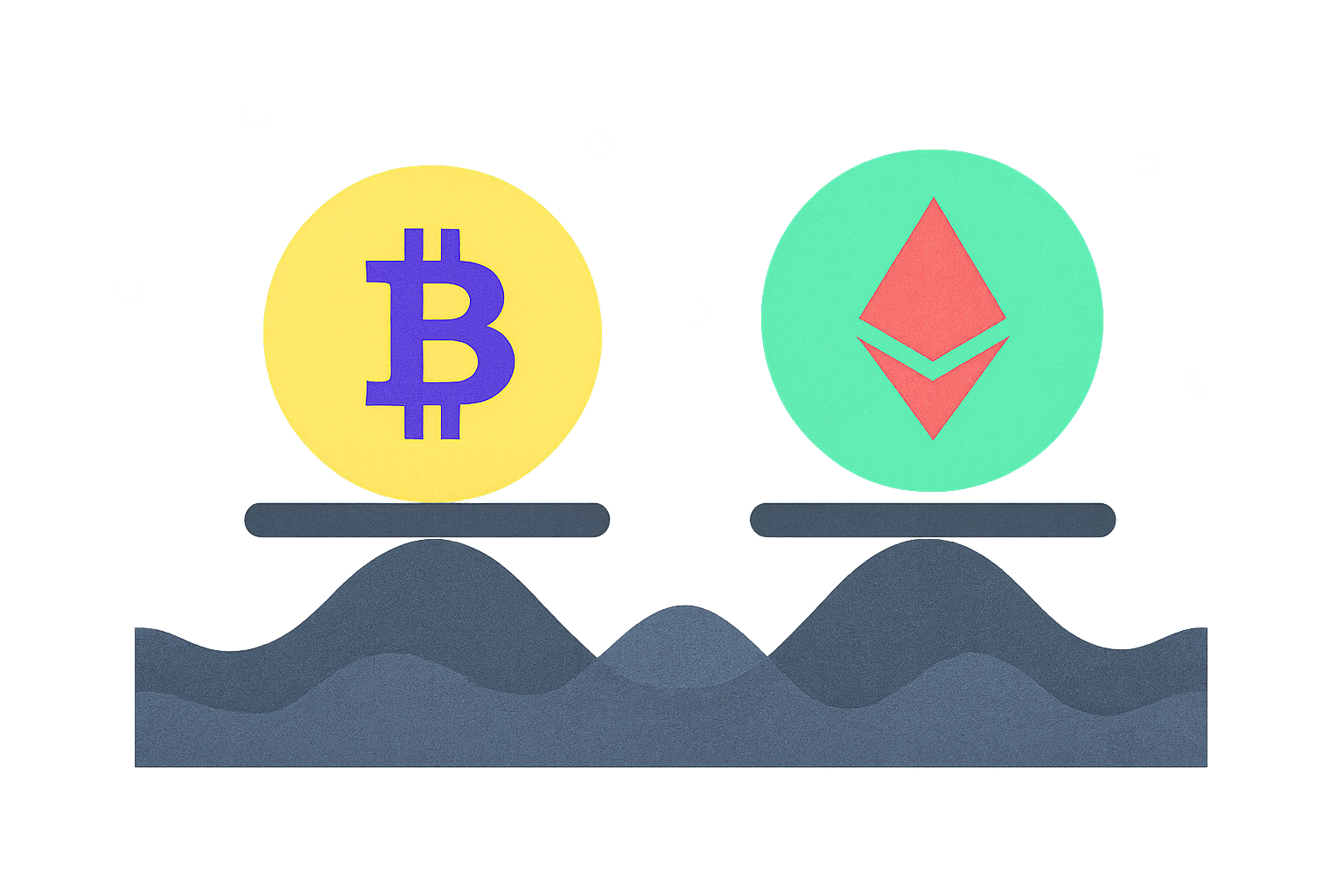
This comprehensive guide explores the core drivers of cryptocurrency price volatility in 2026, focusing on technical analysis and market dynamics. The article examines how support levels ($170-$175) and resistance levels ($182-$185) function as psychological barriers shaping price action, while analyzing volatility metrics such as beta coefficients (0.83) and daily fluctuations (15%). A critical component addresses market correlation patterns, particularly the 0.89 correlation between Bitcoin and Ethereum, demonstrating how institutional adoption and regulatory factors create synchronized or decoupled price movements. The piece provides practical insights for traders and investors seeking to understand price trajectories, anticipate volatility shifts, and develop effective risk management strategies. By integrating technical levels, correlation analysis, and macroeconomic factors, readers gain actionable knowledge for navigating crypto market turbulence and making informed trading decisions.
Bitcoin
Ethereum
Crypto Trading
Crypto Insights
Macro Trends
2026-01-13 08:48:39
Jumper to
Page