Gate Wiki

Gate Wiki empowers users with accessible crypto and blockchain knowledge, delivering trusted token research, industry analysis, trend forecasts, and market insights.
wiki-banner
How to Use MACD, RSI, and KDJ Indicators for Crypto Trading in 2026

How to Use MACD, RSI, and KDJ Indicators for Crypto Trading in 2026

This comprehensive guide explores MACD, RSI, and KDJ technical indicators for crypto trading in 2026, providing traders with actionable signals for identifying buy and sell opportunities. Learn how these oscillators work individually and collectively to confirm trend reversals and market momentum shifts. The article covers Golden Cross and Death Cross moving average patterns that guide entry and exit strategies, enhanced by volume-price divergence analysis for authentic confirmation. Discover practical applications including overbought/oversold detection, signal combination techniques, and risk management frameworks. Designed for both beginner and experienced traders using Gate trading platforms, this guide addresses common questions about indicator effectiveness in high-volatility crypto markets and demonstrates how multi-indicator strategies improve trading accuracy. Master these essential technical tools to navigate 2026's dynamic cryptocurrency landscape with confidence and precision.
Crypto Trading
Crypto Tutorial
Crypto Insights
Spot Trading
Futures Trading
2026-01-15 09:48:28
What are the key differences between cryptocurrency competitors in market share and user adoption?

What are the key differences between cryptocurrency competitors in market share and user adoption?

This article examines the competitive landscape of cryptocurrency markets through market share dominance and user adoption patterns. Bitcoin and Ethereum control over 70% combined market capitalization, establishing themselves as industry bellwethers, while emerging Layer-2 solutions demonstrate rapid active address growth despite different use cases. The analysis reveals stark disparities: Bitcoin leads in transaction volume and institutional adoption, whereas Layer-2 networks prioritize throughput and accessibility for frequent users. Regulatory clarity and technological upgrades are reshaping competitive positioning among top cryptocurrencies, with institutional-grade infrastructure consolidating market advantages around established leaders. Understanding these market share differences and adoption metrics proves essential for evaluating long-term competitive viability in cryptocurrency ecosystems. Regional adoption patterns vary significantly, influencing different cryptocurrency preferences globally.
Bitcoin
Ethereum
Layer 2
Altcoins
Cryptocurrency market
2026-01-15 09:46:24
What are the on-chain data metrics showing about WLFI whale distribution and active addresses in 2026?

What are the on-chain data metrics showing about WLFI whale distribution and active addresses in 2026?

This article examines WLFI's whale distribution and active address metrics throughout 2026, providing critical on-chain data analysis for understanding market structure. The Trump family's 22.5 billion token holdings (25% supply) established significant concentration, with locked founder allocations creating predictable distribution patterns. WLFI demonstrates robust market activity with daily trading volumes exceeding $139 million and approximately 88,100 active token holders, indicating sustained ecosystem engagement. The concentrated holder structure—exceeding 20% insider ownership—generates distinctive asymmetric whale movement and transaction clustering patterns that significantly influence price discovery. Approximately 3.3 million daily active addresses reflect consistent community participation in 2026. The article analyzes how whale transaction behavior, unlock schedules, and exchange-wallet movements correlate with price volatility (-1.98% 24-hour movement), offering traders and analysts essential o
DeFi
Blockchain
Crypto Insights
Crypto Trading
Altcoins
2026-01-15 09:41:23
Bitcoin Guide: How It Prevents Double Spending in Cryptocurrencies

Bitcoin Guide: How It Prevents Double Spending in Cryptocurrencies

Learn how Bitcoin prevents double spending using blockchain technology and proof of work. This comprehensive guide covers forks, attacks, and transaction security, tailored for traders and investors.
Bitcoin
Blockchain
Mining
PoW
Crypto Tutorial
2026-01-15 09:39:45
What are the main compliance and regulatory risks affecting cryptocurrency markets in 2026

What are the main compliance and regulatory risks affecting cryptocurrency markets in 2026

This comprehensive guide examines the critical compliance and regulatory landscape shaping cryptocurrency markets in 2026, addressing essential risks facing market participants, exchanges, and institutional investors. The article analyzes the SEC's enforcement pivot toward clarity and standardized compliance frameworks, including the CLARITY Act's definition of custody, registration, and disclosure obligations. Key topics include the global tightening of KYC/AML systems through coordinated regulatory bodies like FATF and iosco, the Travel Rule's operational impact on exchanges, and audit transparency requirements driving institutional trust. The framework explores regulatory risks across multiple jurisdictions—from EU's MiCA standards to Hong Kong's tiered licensing and China's stablecoin restrictions. Institutional investors, crypto exchanges, and DeFi protocols discover actionable compliance strategies to navigate multi-jurisdictional requirements. The article demonstrates how proactive compliance infrastru
Stablecoin
DeFi
Blockchain
Crypto Ecosystem
Cryptocurrency market
2026-01-15 09:36:42
Audiera: Complete Dance & Earn Guide

Audiera: Complete Dance & Earn Guide

This comprehensive guide explores Audiera's BEAT token and its innovative Web3 dance-to-earn ecosystem built on BNB Chain. Discover how BEAT powers a groundbreaking platform that combines rhythm gaming, AI-powered virtual idols, and decentralized rewards, attracting the massive 600-million-user Audition community into blockchain gaming. Learn BEAT's utility mechanisms, including gameplay rewards conversion, governance participation, and cross-platform integration across mobile and Telegram. Explore the project's structured tokenomics with 1 billion fixed supply, competitive advantages over traditional cryptocurrencies, and technological innovations featuring Bluetooth dance mat hardware integration. Evaluate investment considerations including massive user acquisition potential, execution risks, and market volatility while understanding community perspectives and practical FAQs for getting started with the Dance and Earn model on Gate exchange.
GameFi
Web 3.0
Gaming
SocialFi
P2E
2026-01-15 09:34:51
What is CRCLON market overview: price, market cap, trading volume and liquidity

What is CRCLON market overview: price, market cap, trading volume and liquidity

This comprehensive overview examines CRCLON's market positioning, highlighting its $17.46 million market capitalization ranking at #1237 with 219.02K circulating supply and current price of $84.26. CRCLON demonstrates solid market fundamentals with 24-hour trading volume of $3.52M and 509 active token holders, reflecting meaningful investor adoption. The token exhibits substantial volatility, ranging from a historical low of $64.73 to an all-time high of $159.24, positioning current prices in the lower-middle range with recovery potential. CRCLON maintains robust multi-exchange liquidity across Gate, Bybit, and Coinbase, ensuring efficient price discovery and minimal execution slippage for traders. The article analyzes trading dynamics, supply mechanics, and platform availability to help investors understand CRCLON's market structure and liquidity characteristics within the tokenized finance ecosystem.
Altcoins
Crypto Trading
Cryptocurrency market
Spot Trading
RWA
2026-01-15 09:34:44
How does Axelar compare to LayerZero and Wormhole in cross-chain interoperability performance and market share?

How does Axelar compare to LayerZero and Wormhole in cross-chain interoperability performance and market share?

This comprehensive analysis examines how Axelar, LayerZero, and Wormhole compete in cross-chain interoperability, each employing distinct validation architectures: Axelar's Delegated Proof-of-Stake with 75+ validators, LayerZero's modular oracle-relayer design, and Wormhole's guardian network model. Axelar demonstrates strong market growth with $1.23 billion market cap and 65 connected chains, emphasizing decentralization and institutional-grade security. The article evaluates transaction performance, cost structures, and ecosystem adoption patterns while highlighting Axelar's unique advantages through Cosmos integration, General Message Passing, and Interchain Token Service. Comparative metrics reveal LayerZero's speed efficiency and Wormhole's balanced approach, providing readers with clear differentiation factors for protocol selection based on security requirements, transaction latency, and specific blockchain ecosystem needs.
Blockchain
DeFi
Layer 2
Cosmos
Crypto Ecosystem
2026-01-15 09:25:15
How does Federal Reserve policy impact crypto prices in 2026: analyzing macroeconomic interconnectivity and inflation transmission effects

How does Federal Reserve policy impact crypto prices in 2026: analyzing macroeconomic interconnectivity and inflation transmission effects

This comprehensive analysis examines how Federal Reserve monetary policy decisions in 2026 directly influence cryptocurrency valuations through interconnected macroeconomic channels. The article reveals that the Fed's constrained rate-cut framework and moderate balance sheet expansion create limited easing conditions, reducing traditional stimulus-driven crypto rallies while establishing a stable foundation for digital asset price discovery. Inflation dynamics anchored at 2.8% CPI targets diminish cryptocurrency volatility spillover from equity and credit markets by establishing predictable cyclical patterns that enable systematic hedging rather than reactive selling. The analysis emphasizes critical transmission mechanisms: equity market resilience generates positive spillovers into digital assets, narrowing credit spreads signal improved risk appetite for cryptocurrencies, and U.S. dollar weakness positions Bitcoin and Ethereum as compelling inflation hedges. The interconnected framework demonstrates how in
Bitcoin
Ethereum
Macro Trends
Cryptocurrency market
Crypto Insights
2026-01-15 09:21:43
Using CVD (Cumulative Volume Delta) for Cryptocurrency Trading and Profit Generation

Using CVD (Cumulative Volume Delta) for Cryptocurrency Trading and Profit Generation

Mastering Cumulative Delta Volume (CVD) empowers cryptocurrency traders with precision insights into market dynamics that price action alone cannot reveal. This comprehensive guide explores how CVD measures the net difference between buy and sell volumes, exposing true buyer-seller dominance and momentum strength. Traders leverage CVD to confirm trend continuation, identify divergence warning signals at critical price levels, and execute profitable entries on volume breakouts. The guide covers practical trading applications including trend confirmation strategies, divergence-based reversals, and position management techniques across multiple timeframes. Essential limitations are addressed, such as data quality issues and low-liquidity market challenges, emphasizing CVD's role as a complementary tool rather than standalone indicator. By integrating CVD with technical analysis on platforms like Gate, traders gain a significant competitive edge in timing entries and exits with superior risk-reward ratios.
Crypto Trading
Trading Bots
Spot Trading
Crypto Tutorial
Altcoins
2026-01-15 09:19:22
What is token economics model: how do token distribution, inflation mechanisms, and governance optimize crypto projects?

What is token economics model: how do token distribution, inflation mechanisms, and governance optimize crypto projects?

This article explores token economics models through ZEC's framework, demonstrating how structured tokenomics optimize cryptocurrency projects. It covers three essential components: token distribution strategies that balance stakeholders (40% community, 30% investors, 30% development team), inflation control mechanisms via programmed halving cycles maintaining predictable scarcity, and decentralized governance empowering community participation. The analysis illustrates how transparent supply schedules, algorithmic monetary policy, and community-driven upgrades create sustainable value alignment. Through practical examples of ZEC's 78.5% circulating supply, shielded address adoption, and Dev Fund mechanisms, the article demonstrates how effective token economics design prevents concentration risks, builds ecosystem trust, and incentivizes long-term project development while maintaining institutional confidence through mechanisms like Gate exchange listings.
Blockchain
Crypto Insights
DAO
Mining
Bitcoin Halving
2026-01-15 09:17:25
What is Sidekick? Complete Guide to LiveFi Token

What is Sidekick? Complete Guide to LiveFi Token

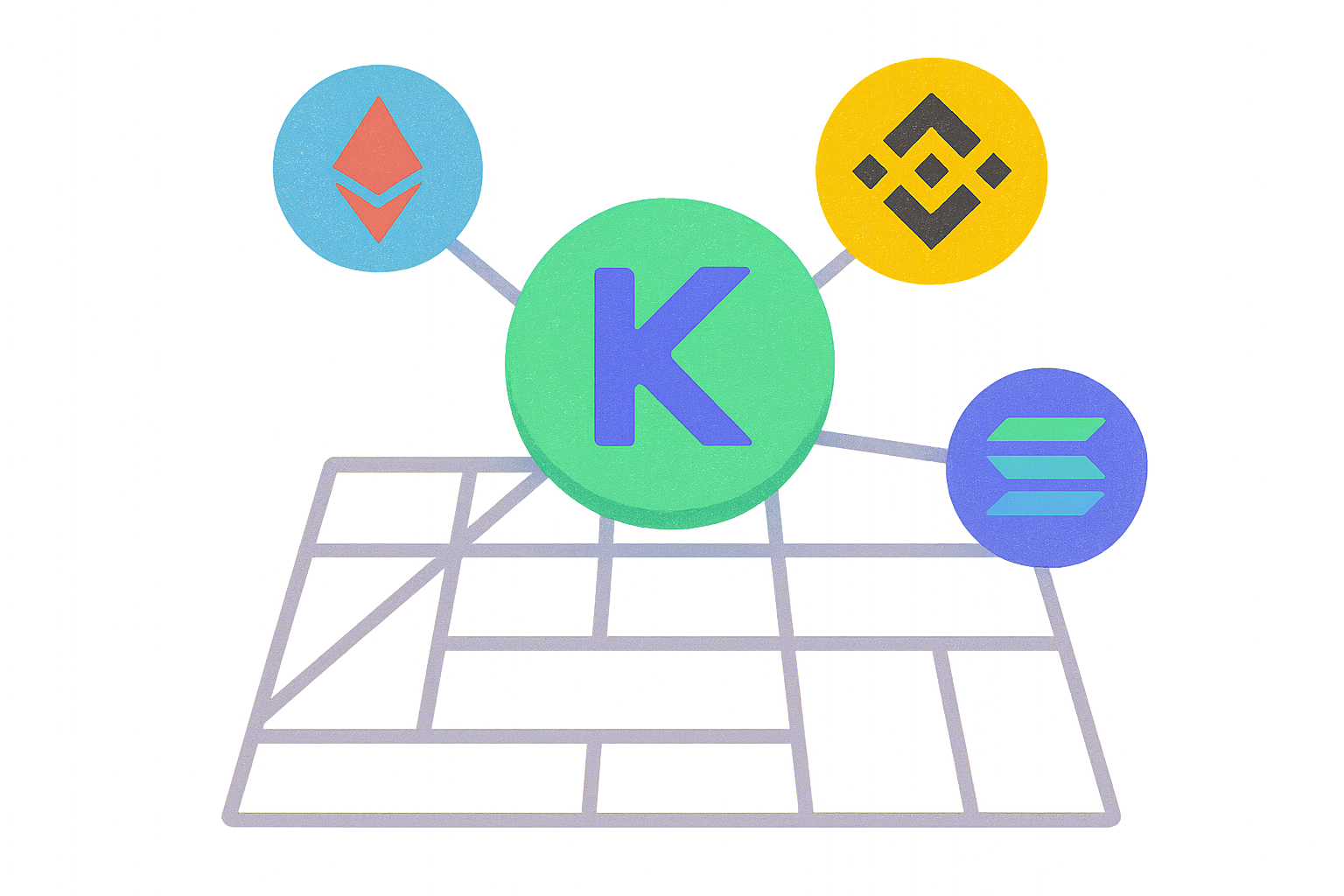
Sidekick introduces LiveFi, a revolutionary Web3 live streaming platform that merges content creation with blockchain technology. The native K token powers the ecosystem, enabling real-time tipping, premium access, staking, creator monetization, and decentralized governance across Ethereum, BNB Chain, and Solana. With 1 billion maximum supply and over 1 million on-chain transactions, K token serves as the backbone for interactive streaming experiences. The platform addresses Web3's engagement gap by combining Web2-style content with Web3 infrastructure, offering creators true ownership and direct monetization without intermediaries. Backed by prestigious investors and available on Gate trading platform, Sidekick represents a unique investment opportunity in the emerging LiveFi category, though success depends on adoption rates and regulatory environment.
Web 3.0
DeFi
SocialFi
Ethereum
Solana
2026-01-15 09:16:38
What is Zcash (ZEC) fundamentals: analyzing whitepaper logic, use cases, technology innovation, and roadmap progress in 2026

What is Zcash (ZEC) fundamentals: analyzing whitepaper logic, use cases, technology innovation, and roadmap progress in 2026

Zcash (ZEC) pioneers privacy-preserving cryptocurrency through zk-SNARKs technology, enabling transaction verification without revealing sender, receiver, or amount. The dual address system (t-address and z-address) provides optional privacy, achieving 23% shielded balance adoption by 2025 while maintaining institutional flexibility. With a fixed 21-million coin supply mirroring Bitcoin's scarcity model, Zcash's November 2024 halving reduced annual inflation from 12.5% to 4.2%, creating deflationary mechanics aligned with sound monetary policy. The ecosystem operates under Zcash Foundation governance with continued institutional backing from Grayscale and enterprise adoption across privacy-focused sectors. This analysis explores zk-SNARKs innovations, privacy architecture advantages, tokenomics fundamentals, and 2026 roadmap developments including Zashi Wallet 2.0, positioning Zcash as a pragmatic evolution in blockchain privacy solutions for regulated financial infrastructure.
Zero-Knowledge Proof
Bitcoin
Blockchain
Crypto Insights
Mining
2026-01-15 09:15:43
Open Position & Close Position: What It Means In Crypto Trading

Open Position & Close Position: What It Means In Crypto Trading

This comprehensive guide explains open and close positions in cryptocurrency trading on Gate, essential concepts for successful market participation. An open position represents an active buy or sell order initiating a trading commitment with predetermined exit strategies, distinct from passive long-term investment buying. The article covers position mechanics, including long and short strategies, hedging techniques, and the critical differences between opening trades and simple purchases. It details how closed positions finalize profits or losses through automated platform calculations and deposits. The guide addresses forced liquidations in leverage trading, explaining how excessive leverage creates liquidation risk when positions move against traders. Key sections cover practical examples, risk management parameters including stop-loss and take-profit orders, and distinctions between spot and futures trading. The FAQ section answers critical questions about timing strategies, decision-making frameworks, an
Crypto Trading
Futures Trading
Spot Trading
Crypto Tutorial
2026-01-15 09:14:14
What does on-chain data analysis reveal about whale movements and active addresses in crypto markets

What does on-chain data analysis reveal about whale movements and active addresses in crypto markets

This comprehensive guide reveals how on-chain data analysis uncovers whale movements and active address patterns in cryptocurrency markets. The article explores critical connections between rising active addresses and whale accumulation strategies, demonstrating how institutional positioning precedes significant price movements. It analyzes transaction volume flows, large holder distribution shifts during volatility events, and on-chain fee dynamics as key indicators of whale activity intensity. By examining blockchain metrics across major crypto venues, traders gain transparent insights into genuine market participation versus speculative noise. The guide includes practical FAQ sections addressing on-chain analysis fundamentals, whale behavior interpretation, and leading analysis tools for predicting market trends through data-driven approaches.
Crypto Insights
Blockchain
Crypto Trading
DeFi
Macro Trends
2026-01-15 09:12:52
Jumper to
Page