How Does Token Economic Model Balance Community, Team, and Investor Interests Through Deflationary Mechanisms?

How Does Token Economic Model Balance Community, Team, and Investor Interests Through Deflationary Mechanisms?

This article explores how token economic models balance stakeholder interests through strategic allocation and deflationary mechanisms. The framework divides tokens into three segments: 33.89% for public participation ensuring community democratization, 30% for co-founders with vesting protection, and 36.11% for ecosystem development. The deflationary strategy redirects 100% of protocol treasury fees into token buybacks and burns on Gate, permanently contracting supply and increasing scarcity for remaining holders. WLFI implements governance-only utility with a 5% voting cap per wallet, preventing whale concentration while non-transferable tokens eliminate speculation. Extended lock-up periods align all stakeholder incentives toward long-term protocol success, creating sustainable value creation that benefits community members, development teams, and investors through transparent, verifiable on-chain mechanisms.
DeFi
DAO
Blockchain
Crypto Ecosystem
Web 3.0
2026-02-04 09:32:31
How does macroeconomic policy uncertainty affect UNI crypto price in 2026: Fed policy, inflation data, and stock market correlation analysis

How does macroeconomic policy uncertainty affect UNI crypto price in 2026: Fed policy, inflation data, and stock market correlation analysis

This article examines how macroeconomic policy uncertainty shapes UNI cryptocurrency valuations in 2026 through three interconnected mechanisms. First, Federal Reserve interest rate decisions transmit to UNI price volatility via equity market channels, with UNI exhibiting 0.8 beta correlation to Bitcoin. Second, inflation data creates paradoxical effects—despite rate cuts supporting risk assets, UNI experienced sharp declines in October 2025, revealing protocol-specific fundamentals matter alongside macro policy. Third, UNI-S&P 500 correlation exceeds 70% during economic uncertainty, indicating UNI now behaves as a risk asset synchronized with traditional markets. The 2026 outlook projects UNI trading within $4.08-$5.23 under baseline conditions, with potential $100+ breakthrough only under favorable macroeconomic catalysts including dovish Fed policy and declining inflation. Understanding these policy transmission channels proves essential for navigating UNI's macroeconomic sensitivity.
DeFi
Macro Trends
Altcoins
Crypto Insights
DAO
2026-02-04 09:25:29
What is token economics model and how does inflation, burning mechanism, and governance work?

What is token economics model and how does inflation, burning mechanism, and governance work?

This comprehensive guide explores token economics fundamentals, examining how the 50-30-20 distribution model allocates tokens among community, team, and investors. Learn how Polkadot transitioned from unlimited supply to a 2.1 billion token cap, systematically reducing inflation from double-digit rates toward sub-one-percent levels through dynamic issuance mechanisms and burning strategies. Discover how multiple revenue streams—treasury allocations and gas fees—synergistically offset token issuance while maintaining validator incentives through liquid staking integration. Understand governance integration through DOT staking, where token holders exercise voting power via OpenGov, conviction voting, and a multi-layered governance structure comprising community, Council, and technical committees. This tokenomics framework demonstrates how sustainable token economics align network security, inflation control, scarcity principles, and decentralized decision-making for long-term project viability.
Blockchain
DeFi
Crypto Insights
DAO
Liquid Staking
2026-02-04 09:19:33
What are the SEC compliance and regulatory risks for ATOM crypto in 2026?

What are the SEC compliance and regulatory risks for ATOM crypto in 2026?

This article examines critical SEC compliance and regulatory risks facing ATOM cryptocurrency in 2026, focusing on classification under the Howey Test framework and its implications for token holders and exchanges. The analysis covers ATOM's utility token position within the Cosmos ecosystem, where staking, governance, and transaction fee functions demonstrate practical network utility beyond investment returns. Cross-chain interoperability creates distinct compliance complexities across fragmented regulatory environments, requiring adherence to frameworks like MiCA and the GENIUS Act. The article emphasizes audit transparency through published security reports and comprehensive IBC protocol assessments, alongside mandatory KYC/AML requirements for platforms listing ATOM on Gate and other exchanges. Cosmos governance, demonstrated through Proposal 952, reinforces ecosystem-wide compliance standards and financial accountability. The content provides actionable guidance for ATOM holders and exchanges implementi
Cosmos
Crypto Ecosystem
DAO
Crypto staking
Blockchain
2026-02-04 09:05:14
How active is ARC crypto community with 45,226 holders in 2025?

How active is ARC crypto community with 45,226 holders in 2025?

This article examines ARC cryptocurrency community vitality through its 45,226 holder base in 2025, demonstrating substantial ecosystem adoption and market confidence. The analysis reveals how ARC holders actively participate across Discord, Telegram, and Twitter, creating integrated engagement channels that strengthen community bonds and information flow. ArcFlow Finance's governance system incentivizes participation through token rewards and cross-chain staking, transforming passive holders into active ecosystem contributors while implementing deflationary mechanics supporting long-term value. The platform's AI-blockchain integration attracts developer interest, with 30 million ARC tokens allocated to reward pools that scale DApp ecosystem participation. Key health indicators include active user counts, discussion frequency, transaction volume, and governance participation rates across community channels. ARC's mid-tier holder positioning reflects genuine utility-driven adoption, distinguishing it from spec
Solana
AI
Altcoins
Blockchain
DAO
2026-02-04 08:42:47
How does ENSO face SEC regulatory risks and compliance challenges in 2025?

How does ENSO face SEC regulatory risks and compliance challenges in 2025?

This article examines ENSO's critical SEC regulatory risks and compliance challenges in 2025. The analysis covers four core areas: securities classification uncertainty under the Howey Test framework, jurisdictional fragmentation across US, Singapore, and China, significant audit transparency and KYC/AML policy gaps reflecting the $6.6 billion global AML penalty surge, and unclear cross-chain protocol legal status. The piece explores how ENSO's dual utility—functioning as both governance infrastructure and potential investment contract—creates substantial regulatory ambiguity. With enforcement actions intensifying and automated compliance verification becoming mandatory, ENSO must establish comprehensive compliance infrastructure to address evolving SEC expectations, multi-jurisdictional requirements on Gate and other platforms, and real-time transaction monitoring capabilities to mitigate enforcement risks.
Blockchain
DeFi
DAO
Web 3.0
Crypto Ecosystem
2026-02-04 08:31:14
What is tokenomics: token allocation, inflation design, and burning mechanisms explained

What is tokenomics: token allocation, inflation design, and burning mechanisms explained

This comprehensive guide decodes tokenomics fundamentals through the SENT token ecosystem, examining how strategic token allocation—dedicating 65.55% to community builders with locked team vesting—establishes sustainable growth foundations. The article explores dual-phase inflation and deflation mechanisms that balance early-stage subsidies with long-term value preservation through gas fee economics. It reveals how storage fund designs create gradual deflationary pressure without market disruption, while systematically reducing circulating supply from 21% of max supply. Finally, the guide details governance utility through token-weighted consensus, enabling democratic decision-making across protocol upgrades and treasury allocation. Perfect for investors, developers, and ecosystem participants seeking to understand how modern blockchain projects align incentives, manage tokenomics on platforms like Gate, and create sustainable economic models that reward early contributors while protecting long-term holders.
DAO
Crypto Ecosystem
Web 3.0
Airdrop
2026-02-04 08:17:17
Comprehensive Guide to Camelot DEX

Comprehensive Guide to Camelot DEX

This comprehensive guide explores Camelot DEX, a community-focused decentralized exchange built on Arbitrum, and its native GRAIL token ecosystem. Designed for protocols and liquidity providers seeking advanced infrastructure, Camelot introduces innovative features including dual-liquidity AMM models, dynamic directional fees, staked position NFTs (spNFTs), and Nitro pools that optimize capital efficiency across volatile and stable asset pairs. The platform's xGRAIL governance token empowers community members to participate in protocol decisions through a gasless voting mechanism. With GRAIL available on Gate and multiple Arbitrum venues, this guide details tokenomics, emission schedules, token allocation strategies, and practical guidance for trading and liquidity mining. Camelot positions itself as a foundational infrastructure layer supporting both established projects and new launches on Arbitrum through composability-first architecture and customizable liquidity solutions.
DeFi
Layer 2
Web 3.0
DAO
Crypto Ecosystem
2026-02-04 07:25:27
Who Is Vitalik Buterin? An In-Depth Look at the Co-Founder of Ethereum

Who Is Vitalik Buterin? An In-Depth Look at the Co-Founder of Ethereum

Explore the remarkable intelligence and cognitive skills of Vitalik Buterin, co-founder of Ethereum. Learn about his educational background, key accomplishments, and his groundbreaking influence on blockchain technology and the Web3 ecosystem.
Ethereum
Blockchain
Web 3.0
DAO
DeFi
2026-02-04 05:09:08
DAO: Everything About Decentralized Autonomous Organizations

DAO: Everything About Decentralized Autonomous Organizations

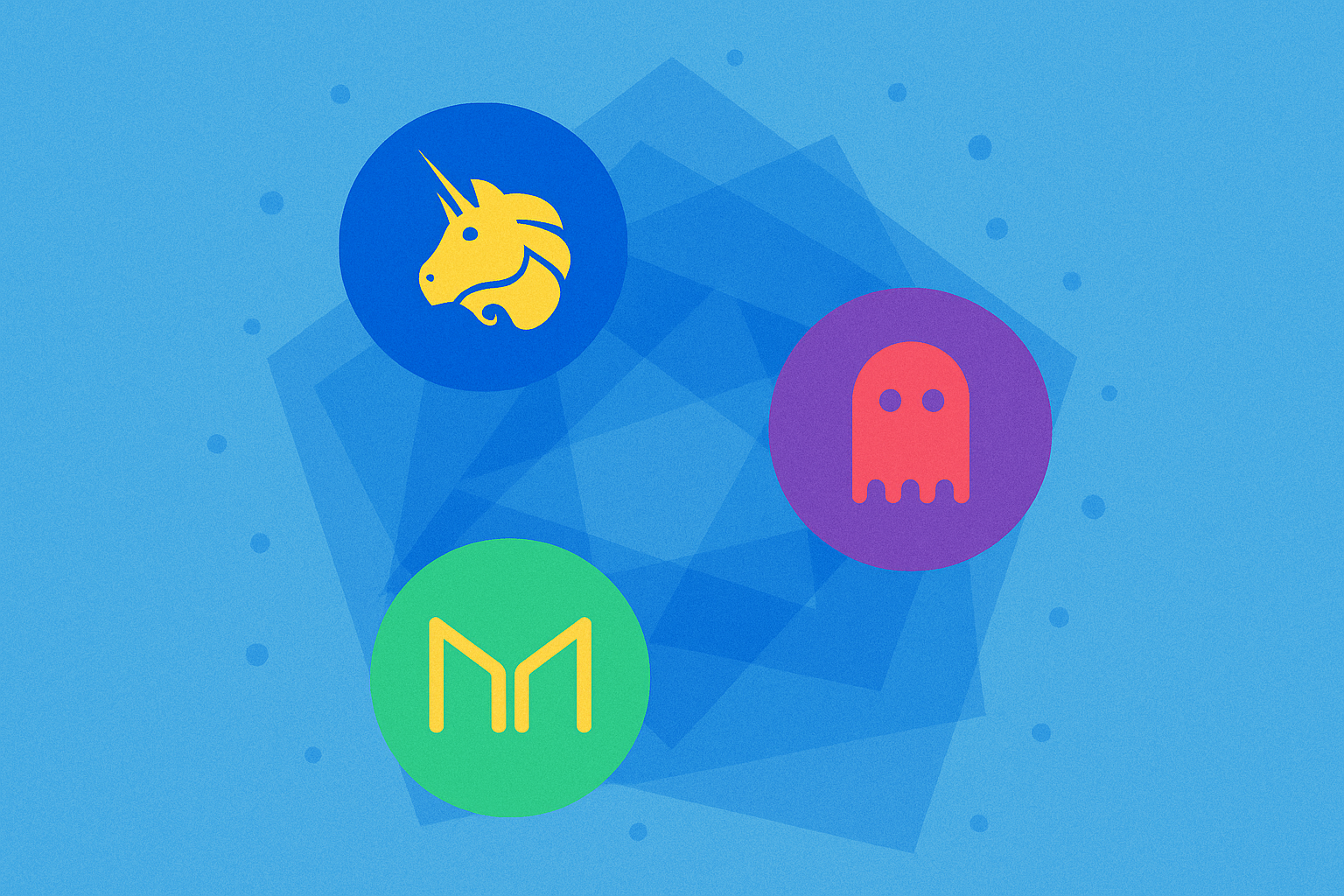
This comprehensive guide explores Decentralized Autonomous Organizations (DAOs) and governance coins, addressing the principal-agent problem through blockchain transparency. The article examines how DAOs function via smart contracts and token-based voting, detailing their historical evolution from The DAO security incident through modern implementations. It provides practical comparisons of major protocols including Uniswap, MakerDAO, and Aave on Gate, highlighting how different governance rules shape decentralization outcomes. The guide discusses DAO operating principles, token economics, and real-world applications across industries. Finally, it evaluates both advantages and limitations of DAOs, revealing that while theoretically decentralized, practical implementations often reflect token concentration challenges. This resource equips readers to understand governance mechanisms, evaluate DAO projects, and assess participation risks in decentralized organizations.
DAO
DeFi
Blockchain
Web 3.0
Crypto Ecosystem
2026-02-04 02:00:35
What is a retrodrop and how can you profit from it

What is a retrodrop and how can you profit from it

Discover the concept of retrodrops in cryptocurrency and how beginners can qualify for airdrops. This complete guide covers retrodrop participation, showcases successful projects, outlines eligibility criteria, and details strategies for earning through crypto token distributions.
Airdrop
DeFi
Web 3.0
Crypto Tutorial
DAO
2026-02-03 23:21:11
A Guide to the Top 5 Leading DAOs (Decentralized Autonomous Organizations) in China

A Guide to the Top 5 Leading DAOs (Decentralized Autonomous Organizations) in China

A comprehensive guide to five DAOs attracting attention in Japan. Explore the unique characteristics and activities of Ninja DAO, Kunimitsu DAO, Wagumi DAO, SUPER SAPIENSS, and MZ DAO. Gain insights into the possibilities and future of decentralized autonomous organizations powered by blockchain technology in the Web3.0 era.
DAO
Web 3.0
NFTs
Blockchain
Crypto Ecosystem
2026-02-03 23:04:49
What is TREAT: A Comprehensive Guide to Understanding the Revolutionary Therapeutic Framework

What is TREAT: A Comprehensive Guide to Understanding the Revolutionary Therapeutic Framework

Shiba Inu Treat (TREAT) is a comprehensive governance and utility token launched in 2025 as the final token of the Shiba Inu Ecosystem. This guide explores TREAT's revolutionary role in addressing ecosystem utility gaps and governance participation within meme coin projects. Discover how TREAT integrates over 30 advanced technologies, enabling DeFi innovations, AI capabilities, and metaverse experiences on the Shiba Network State infrastructure. Learn about its decentralized blockchain architecture, market performance metrics, and strategic positioning with 4,085+ token holders. The article covers technical foundations, on-chain metrics, ecosystem applications, community dynamics, and participation methods on Gate and other platforms. Whether you're new to crypto or experienced, understand TREAT's unique value proposition in transforming meme tokens into functional governance and utility instruments within an established ecosystem.
Shiba Inu
Ethereum
DeFi
Memecoins
DAO
2026-02-03 22:43:23
6 Leading Decentralized Social Networking Apps

6 Leading Decentralized Social Networking Apps

Step into the future of decentralized social networking platforms. Harnessing blockchain technology, these platforms offer robust privacy safeguards and strong data security. We provide an in-depth comparison of six major services—Bluesky, Mastodon, Phaver, and more. Whether you're just starting with Web3 or have extensive experience, discover secure and unrestricted spaces for communication.
Web 3.0
SocialFi
DAO
Blockchain
Crypto Ecosystem
2026-02-03 21:56:13
What Are Nodes?

What Are Nodes?

This comprehensive guide demystifies blockchain nodes for cryptocurrency beginners, explaining how these essential network components maintain decentralization and security. The article covers node fundamentals—their roles in validating transactions and maintaining blockchain integrity—followed by detailed classifications including full nodes, light nodes, mining nodes, and masternodes. Readers discover why running a node strengthens network resilience while enabling governance participation. The guide provides practical setup requirements (computer, stable internet, disk space) and explores node-as-a-service alternatives for those seeking convenience. Whether motivated by earning rewards or supporting decentralization, understanding nodes empowers users to participate meaningfully in blockchain ecosystems. Through FAQs addressing common concerns about safety, resource consumption, and operational differences, this resource equips beginners with essential knowledge to make informed decisions about node partic
Blockchain
Web 3.0
Crypto Tutorial
Mining
DAO
2026-02-03 20:59:51
Jumper to
Page