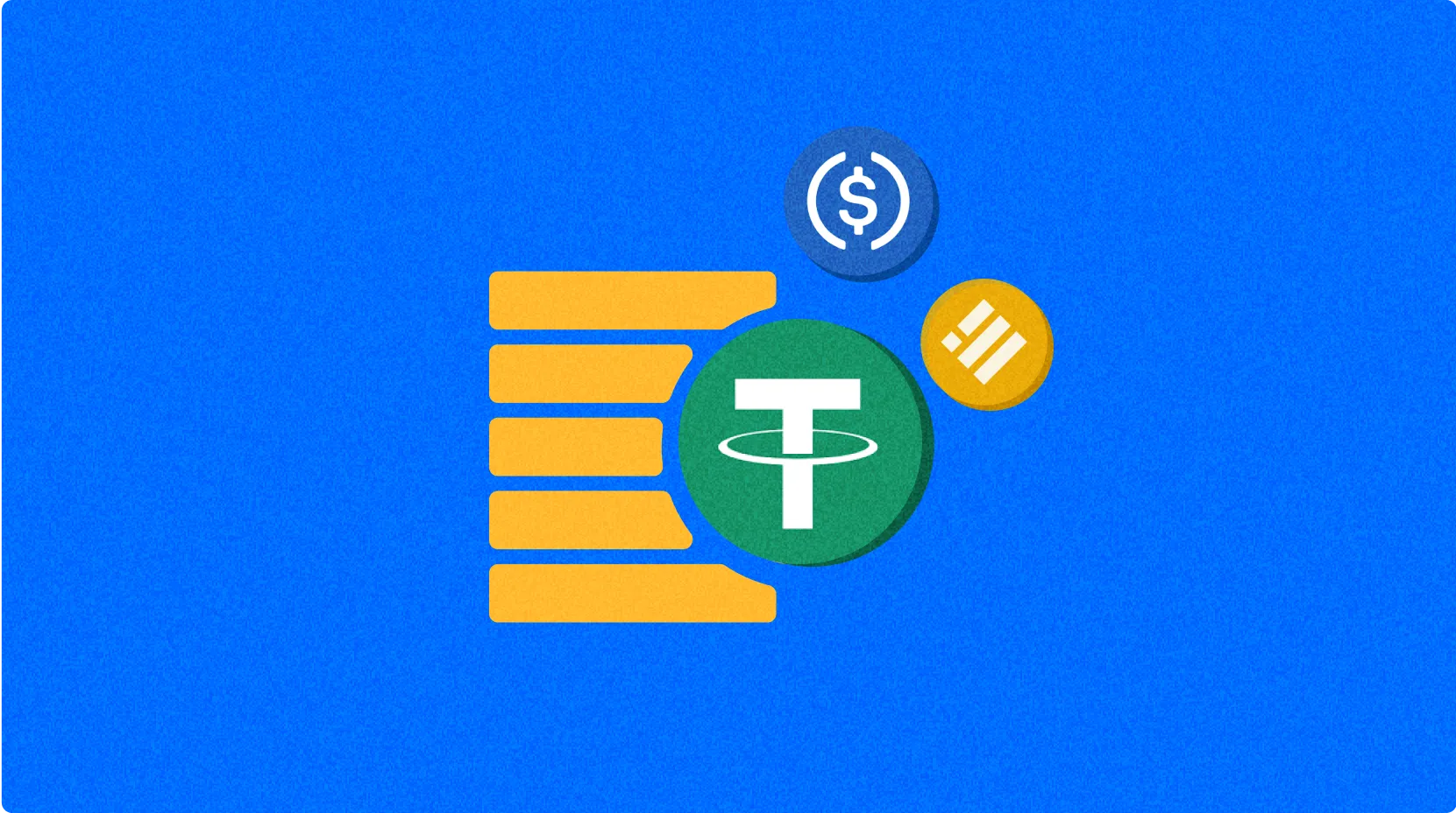
Tether Meaning Explained: The Story of USDT and Its Controversies

2025-09-04 06:28:29
Bitcoin
Spot Trading
USDC
Article Rating : 3.2
0 ratings
When people search for Tether meaning, they often expect a simple answer: USDT is a stablecoin pegged to the US dollar. But the real story goes far deeper. Born in 2014, Tether promised stability in a volatile crypto market — a token always worth one dollar. It became a backbone of global trading, with billions in circulation. Yet along the way, USDT has been dogged by scandals, questions about its reserves, and accusations of manipulating Bitcoin’s price. To understand Tether is to understand one of the most powerful — and polarizing — forces in the crypto world.
Tether Meaning Explained: The Story of USDT and Its Controversies

Literal Meaning of Tether

The word “tether” literally means to tie or secure something to a fixed point. In the context of cryptocurrency, this reflects the design of Tether (USDT) — a digital token that is “tied” to the value of a traditional fiat currency, usually the US dollar.
The concept is simple: while Bitcoin and Ethereum fluctuate, Tether is supposed to remain stable, always worth $1 USD per token.


The Birth of Tether (USDT)

Tether was launched in 2014, originally under the name Realcoin, before rebranding to Tether later that year. Its purpose was to create a stablecoin — a cryptocurrency pegged to the US dollar, giving traders a way to move money quickly across exchanges without relying on traditional banks.
By backing every issued token with reserves of USD (at least in theory), Tether promised price stability in a volatile market.


Why USDT Became So Important

  • Liquidity: USDT quickly became the go-to stablecoin for crypto trading pairs.
  • Speed: Transactions were faster than traditional bank wires.
  • Access: Traders in regions with limited banking could use USDT as a substitute for real dollars.
  • Dominance: Today, Tether’s market cap sits above $100 billion, making it the largest stablecoin in the world.

The Controversies Surrounding Tether

Despite its success, Tether has faced constant scrutiny and legal battles:

  1. Reserve Backing Questions
    For years, critics argued that Tether did not actually hold 1:1 reserves of US dollars. Investigations later revealed that part of Tether’s reserves included commercial paper, loans, and other assets — not just cash.

  2. Role of Bitfinex
    Tether is closely tied to the crypto exchange Bitfinex. In 2019, the New York Attorney General accused Bitfinex of using Tether reserves to cover an $850 million hole in its finances. The case ended with an $18.5 million settlement, and Tether agreed to provide more transparency.

  3. Market Manipulation Allegations
    Some academics and regulators have claimed Tether issuance was used to manipulate Bitcoin’s price during previous bull runs. While never proven in court, the theory persists.

  4. Regulatory Scrutiny
    Tether continues to operate in a gray zone. US regulators demand more oversight, and rival stablecoins like USDC emphasize their transparency to compete.


Tether Today

Despite controversies, Tether remains the backbone of crypto trading. Billions of dollars worth of USDT change hands daily across exchanges worldwide.
The company behind Tether now publishes attestation reports to show its reserves and has begun diversifying, backing tokens with cash, Treasury bills, and other liquid assets.


Price Outlook for USDT

Unlike other cryptos, USDT is designed to always stay at $1 USD. In AUD terms, the price fluctuates only based on the AUD/USD exchange rate. Traders don’t buy USDT hoping it will “moon” — they buy it for stability, liquidity, and quick access to the broader crypto ecosystem.


Conclusion

The meaning of Tether is both literal and symbolic: it ties crypto to fiat. While its journey has been marred by questions of transparency and regulatory battles, it remains one of the most powerful players in the digital asset world. For traders, USDT is less about speculation and more about stability — a way to move in and out of markets with ease.


FAQs

  1. What does Tether mean?
    It literally means to tie something, and in crypto it refers to USDT being tied to the value of the US dollar.

  2. When was Tether created?
    It launched in 2014 under the name Realcoin before rebranding as Tether.

  3. Is every USDT backed by a real dollar?
    Not exactly. Tether holds reserves, but these include cash, Treasury bills, and other assets.

  4. Why is Tether controversial?
    Concerns about reserve transparency, links to Bitfinex, and market manipulation allegations have followed it for years.

  5. Why do people still use Tether?
    Because it remains the most liquid and widely accepted stablecoin for trading and moving money in crypto.

* The information is not intended to be and does not constitute financial advice or any other recommendation of any sort offered or endorsed by Gate.
Related Articles
TerraClassicUSD (USTC) – Origin, Collapse, and Will It Repeg ?

TerraClassicUSD (USTC) – Origin, Collapse, and Will It Repeg ?

TerraClassicUSD (USTC), once hailed as an innovative algorithmic stablecoin, suffered one of the most dramatic collapses in crypto history. Originally pegged to the US dollar through a mint-and-burn mechanism involving LUNA, USTC lost its peg in May 2022, triggering a systemic crash that shook the entire market. This article explores the rise and fall of USTC, its current state on the Terra Classic blockchain, community-led revival efforts, and realistic price predictions through 2030. Can USTC be resurrected, or is it a cautionary tale of unbacked stablecoins?
2025-08-14 05:18:12
USDC stablecoin 2025 Latest Analysis: Principles, Advantages, and Web3 Eco-Applications

USDC stablecoin 2025 Latest Analysis: Principles, Advantages, and Web3 Eco-Applications

In 2025, USDC stablecoin dominates the cryptocurrency market with a market cap exceeding 60 billion USD. As a bridge connecting traditional finance and the digital economy, how does USDC operate? What advantages does it have compared to other stablecoins? In the Web3 ecosystem, how extensive is the application of USDC? This article will delve into the current status, advantages, and key role of USDC in the future of digital finance.

2025-08-14 05:10:31
what is usdc on Gate.com?

what is usdc on Gate.com?

USD Coin (USDC) is a type of stablecoin, which is a cryptocurrency designed to maintain a stable value. Here is a detailed introduction:
2025-08-14 05:20:25
What is USDC Crypto?

What is USDC Crypto?

USDC (USD Coin) is a stablecoin that aims to provide a digital representation of the U.S. dollar, offering stability and reliability in the volatile world of cryptocurrencies. It is designed to maintain a 1:1 peg with the U.S. dollar, making it a popular choice for traders and investors seeking to mitigate volatility.
2025-08-14 05:01:25
DAI Stablecoin: DeFi’s Decentralized Dollar Explained

DAI Stablecoin: DeFi’s Decentralized Dollar Explained

DAI is a decentralized stablecoin built on Ethereum by MakerDAO. Unlike centralized stablecoins like USDT, DAI maintains its dollar peg through over-collateralized crypto assets and transparent smart contracts. In this article, we explore DAI’s design, use cases in DeFi, comparison with USDT, and why it matters for the future of decentralized finance.
2025-08-14 04:50:38
How to Buy USDC in 2025: A Complete Guide for Newbie Investors

How to Buy USDC in 2025: A Complete Guide for Newbie Investors

This article provides a complete guide for newbie investors to purchase USDC in 2025. It thoroughly introduces the features of USDC, compares top trading platforms, outlines the purchasing steps, discusses secure storage methods, and details related fees. It is suitable for beginners who wish to understand USDC investment. The content covers an introduction to USDC, exchange selection, purchasing process, wallet comparison, and fee analysis, helping readers gain a comprehensive understanding of USDC investment knowledge to make informed decisions.
2025-08-14 05:11:38
Recommended for You
Dollar Liquidity and Bitcoin: Why Funding Conditions Matter

Dollar Liquidity and Bitcoin: Why Funding Conditions Matter

Dollar liquidity reflects the availability and cost of U.S. dollar funding across global markets. This reference explains how Fed liquidity, global credit, money supply and dollar strength can affect Bitcoin.
2026-09-18 12:13:04
Institutional Bitcoin Buying: How Fund Purchases Affect BTC

Institutional Bitcoin Buying: How Fund Purchases Affect BTC

Institutional investors can influence Bitcoin through ETF flows, corporate treasury purchases, block trades and long-term accumulation. This reference explains how institutional demand affects BTC liquidity, supply, volatility, price and long-term value, while also considering blockchain technology, market transparency, regulatory concerns and Bitcoin’s role within the wider digital assets industry.
2026-09-18 08:31:05
Reverse Repo and Bitcoin: How Fed Liquidity Affects Crypto

Reverse Repo and Bitcoin: How Fed Liquidity Affects Crypto

Reverse repo operations absorb excess cash from financial institutions. This reference explains how Federal Reserve RRP balances interact with bank reserves, interest rates, net liquidity and Bitcoin.
2026-09-18 08:30:01
Treasury General Account and Bitcoin: Why TGA Matters

Treasury General Account and Bitcoin: Why TGA Matters

The Treasury General Account (TGA) is the U.S. government's main operating account at the Federal Reserve Bank and an important part of managing government finances. Changes in the TGA cash balance can affect bank reserves, the effective money supply, interest rates and broader market liquidity, indirectly influencing Bitcoin and other financial instruments. This Treasury General Account Bitcoin relationship is most relevant to crypto traders, macro investors and analysts tracking how U.S. fiscal operations can affect risk assets.
2026-09-18 08:28:58
U.S. Government Shutdown and Bitcoin: Market Effects

U.S. Government Shutdown and Bitcoin: Market Effects

A U.S. government shutdown does not stop Bitcoin, but it can affect crypto markets through delayed inflation data, reduced federal activity, liquidity conditions, regulation and changing investor sentiment.
2026-09-18 08:27:15
U.S. Debt Ceiling and Bitcoin: How Fiscal Stress Hits Crypto

U.S. Debt Ceiling and Bitcoin: How Fiscal Stress Hits Crypto

U.S. debt ceiling disputes can affect Bitcoin through Treasury Department borrowing, market liquidity, interest rates and investor confidence. Rising debt, U.S. debt levels and Congressional Budget Office projections can influence the U.S. economy, global economy and traditional markets, shaping how institutions and people investing in Bitcoin assess fiscal risk and the country's full faith and credit across the four-year cycle.
2026-09-18 08:26:37