This article offers an in-depth comparative analysis of Fasttoken (FTN) and Internet Computer (ICP) in the context of high-performance computing investments. It begins with an overview of their market position, historical price trends, and current market status as of 2025, offering price predictions up to 2030. Key factors such as supply mechanisms, institutional adoption, and macroeconomic influences are examined. The piece concludes with investment strategy advice, risk comparisons, and addresses FAQs to help both novice and experienced investors make informed decisions. Read more for strategic insights on Gate.
Introduction: Investment Comparison of FTN vs ICP
In the cryptocurrency market, the comparison between Fasttoken (FTN) vs Internet Computer (ICP) has always been a topic that investors can't avoid. The two not only have significant differences in market cap ranking, application scenarios, and price performance, but also represent different positions in crypto assets.
Fasttoken (FTN): Since its launch, it has gained market recognition for its role in the Fastex ecosystem and as the native token of the Bahamut blockchain.
Internet Computer (ICP): Since its inception in 2021, it has been hailed as a "World Computer," aiming to revolutionize the way decentralized applications are built and run.
This article will comprehensively analyze the investment value comparison between FTN and ICP, focusing on historical price trends, supply mechanisms, institutional adoption, technological ecosystems, and future predictions, attempting to answer the question investors care about most:
"Which is the better buy right now?"
I. Price History Comparison and Current Market Status
FTN and ICP Historical Price Trends
- 2023: FTN launched and experienced significant price volatility in its initial trading period.
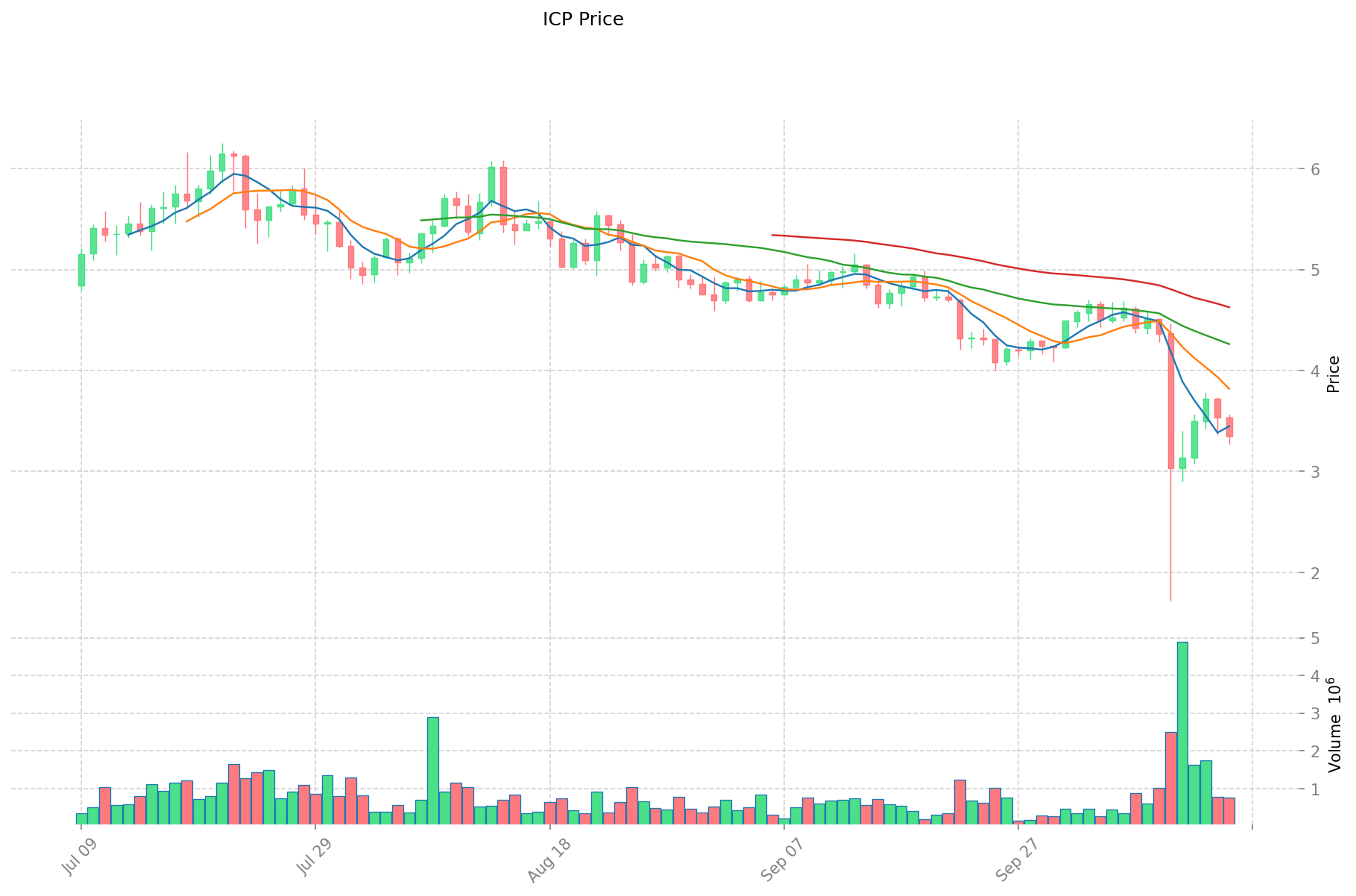
- 2021: ICP reached its all-time high of $700.65 shortly after launch, followed by a sharp decline.
- Comparative analysis: During the 2021-2025 market cycle, ICP fell from its peak of $700.65 to a low of $2.23, while FTN has shown more stability since its later launch.
Current Market Situation (2025-10-16)
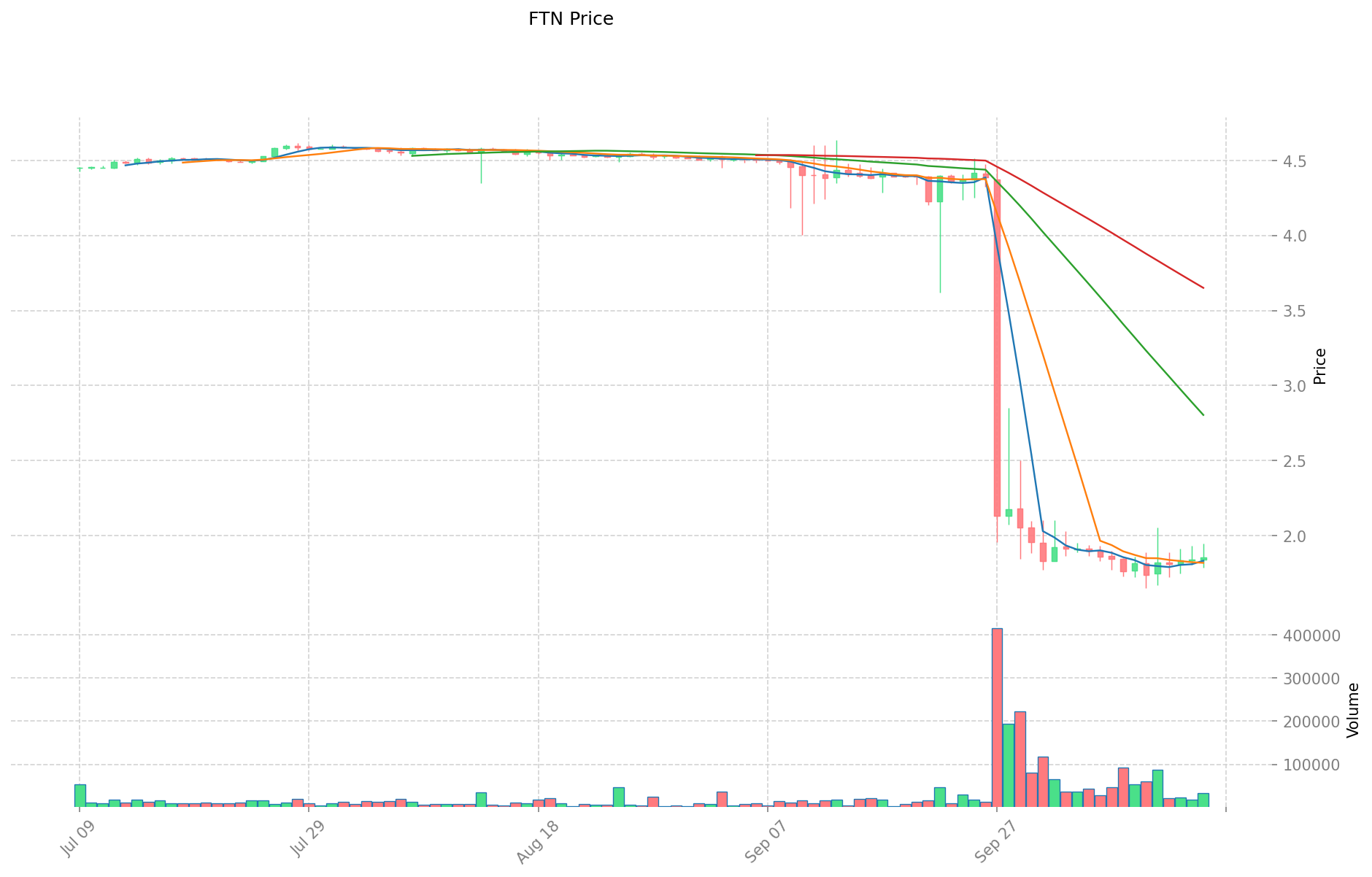
- FTN current price: $1.856
- ICP current price: $3.324
- 24-hour trading volume: FTN $62,302.94 vs ICP $2,545,710.30
- Market Sentiment Index (Fear & Greed Index): 28 (Fear)
Click to view real-time prices:
II. Key Factors Influencing FTN vs ICP Investment Value
Supply Mechanism Comparison (Tokenomics)
- FTN: Token unlock schedule with 20 million FTN (2.04% of circulation) unlocking on October 18, 2025, valued at approximately $39.6 million
- ICP: Limited information available in the reference materials
- 📌 Historical pattern: Token unlocks typically create temporary selling pressure that can impact short-term price action
Institutional Adoption and Market Applications
- Institutional holdings: Insufficient data in the provided materials
- Enterprise adoption: Insufficient data in the provided materials
- National policies: Regulatory approaches vary by jurisdiction, with some countries developing comprehensive frameworks like EU's MiCA
Technology Development and Ecosystem Building
- FTN technology upgrades: Insufficient data in the provided materials
- ICP technology development: Insufficient data in the provided materials
- Ecosystem comparison: Insufficient data on DeFi, NFT, payment, or smart contract implementations
Macroeconomic Factors and Market Cycles
- Performance in inflationary environments: Insufficient data in the provided materials
- Macroeconomic monetary policy: Interest rates and USD index impact both assets, but specific correlation data not available
- Geopolitical factors: Cross-border transaction demands affected by international situations, but specific impacts not detailed in the materials
III. 2025-2030 Price Prediction: FTN vs ICP
Short-term Prediction (2025)
- FTN: Conservative $1.44 - $1.85 | Optimistic $1.85 - $1.96
- ICP: Conservative $2.96 - $3.32 | Optimistic $3.32 - $3.99
Mid-term Prediction (2027)
- FTN may enter a growth phase, with expected prices $1.57 - $3.21
- ICP may enter a bullish market, with expected prices $3.62 - $5.54
- Key drivers: Institutional capital inflow, ETF, ecosystem development
Long-term Prediction (2030)
- FTN: Base scenario $2.14 - $3.64 | Optimistic scenario $3.64 - $4.33
- ICP: Base scenario $5.93 - $6.18 | Optimistic scenario $6.18 - $8.28
View detailed price predictions for FTN and ICP
Disclaimer
FTN:
| 年份 |
预测最高价 |
预测平均价格 |
预测最低价 |
涨跌幅 |
| 2025 |
1.96842 |
1.857 |
1.44846 |
0 |
| 2026 |
2.8499379 |
1.91271 |
1.3197699 |
3 |
| 2027 |
3.2147873325 |
2.38132395 |
1.571673807 |
28 |
| 2028 |
3.2737251002625 |
2.79805564125 |
2.57421118995 |
50 |
| 2029 |
4.25024651905875 |
3.03589037075625 |
2.641224622557937 |
63 |
| 2030 |
4.335251449439925 |
3.6430684449075 |
2.149410382495425 |
96 |
ICP:
| 年份 |
预测最高价 |
预测平均价格 |
预测最低价 |
涨跌幅 |
| 2025 |
3.9948 |
3.329 |
2.96281 |
0 |
| 2026 |
4.870327 |
3.6619 |
2.270378 |
10 |
| 2027 |
5.54594755 |
4.2661135 |
3.626196475 |
28 |
| 2028 |
5.3966335775 |
4.906030525 |
2.8454977045 |
47 |
| 2029 |
7.21186487175 |
5.15133205125 |
3.50290579485 |
54 |
| 2030 |
8.28334193841 |
6.1815984615 |
5.93433452304 |
85 |
IV. Investment Strategy Comparison: FTN vs ICP
Long-term vs Short-term Investment Strategies
- FTN: Suitable for investors focused on ecosystem potential and payment scenarios
- ICP: Suitable for investors seeking technological innovation and decentralized computing solutions
Risk Management and Asset Allocation
- Conservative investors: FTN: 30% vs ICP: 70%
- Aggressive investors: FTN: 60% vs ICP: 40%
- Hedging tools: Stablecoin allocation, options, cross-currency combinations
V. Potential Risk Comparison
Market Risk
- FTN: Relatively new token with potential for high volatility
- ICP: Historical price volatility and significant decline from all-time high
Technical Risk
- FTN: Scalability, network stability
- ICP: Computing power concentration, potential security vulnerabilities
Regulatory Risk
- Global regulatory policies may have differing impacts on both tokens
VI. Conclusion: Which Is the Better Buy?
📌 Investment Value Summary:
- FTN advantages: Newer project with potential for growth, role in Fastex ecosystem
- ICP advantages: Established project, ambitious "World Computer" vision, larger market presence
✅ Investment Advice:
- New investors: Consider a balanced approach with a slight preference for ICP due to its more established market presence
- Experienced investors: Explore a diversified portfolio including both FTN and ICP, with allocations based on risk tolerance
- Institutional investors: Conduct thorough due diligence on both projects, considering ICP for its larger market cap and FTN for potential growth opportunities
⚠️ Risk Warning: The cryptocurrency market is highly volatile. This article does not constitute investment advice.
None
VII. FAQ
Q1: What are the key differences between FTN and ICP?
A: FTN is the native token of the Bahamut blockchain and part of the Fastex ecosystem, while ICP aims to be a "World Computer" for decentralized applications. FTN is newer with a lower market cap, while ICP has been around since 2021 with a larger market presence.
Q2: How do the current prices of FTN and ICP compare?
A: As of 2025-10-16, FTN's price is $1.856, while ICP's price is $3.324. ICP has a higher price and larger 24-hour trading volume ($2,545,710.30) compared to FTN ($62,302.94).
Q3: What are the price predictions for FTN and ICP by 2030?
A: For FTN, the base scenario predicts $2.14 - $3.64, with an optimistic scenario of $3.64 - $4.33. For ICP, the base scenario predicts $5.93 - $6.18, with an optimistic scenario of $6.18 - $8.28.
Q4: How do the supply mechanisms of FTN and ICP differ?
A: FTN has a scheduled token unlock of 20 million FTN (2.04% of circulation) on October 18, 2025. Limited information is available about ICP's supply mechanism in the provided materials.
Q5: What are the main risks associated with investing in FTN and ICP?
A: Both face market risks, with FTN being relatively new and potentially volatile, while ICP has shown significant historical price volatility. Technical risks include scalability for FTN and potential security vulnerabilities for ICP. Both are subject to varying regulatory risks globally.
Q6: How should investors allocate their assets between FTN and ICP?
A: Conservative investors might consider 30% FTN and 70% ICP, while aggressive investors might opt for 60% FTN and 40% ICP. However, individual allocations should be based on personal risk tolerance and investment goals.
* The information is not intended to be and does not constitute financial advice or any other recommendation of any sort offered or endorsed by Gate.