This article dives into the investment comparison between DEFI and GRT, two significant players in the cryptocurrency arena. It outlines their price performance and market status, focusing on historical trends and current figures. Readers will gain insights into key factors such as tokenomics, institutional adoption, technical developments, and macroeconomic influences affecting the investment value. The piece concludes by analyzing possible investment strategies, potential risks, and offering a balanced view on which asset might be a better buy. It caters to both new and experienced investors searching for crypto opportunities.
Introduction: DEFI vs GRT Investment Comparison
In the cryptocurrency market, the comparison between DEFI vs GRT has been an unavoidable topic for investors. The two not only show significant differences in market cap ranking, application scenarios, and price performance but also represent different cryptocurrency asset positions.
De.Fi (DEFI): Since its launch, it has gained market recognition for its position as a Web3 SocialFi & Antivirus solution.
The Graph (GRT): Introduced in 2020, it has been hailed as a decentralized protocol for indexing and querying blockchain data, particularly applied to Ethereum.
This article will comprehensively analyze the investment value comparison between DEFI vs GRT, focusing on historical price trends, supply mechanisms, institutional adoption, technological ecosystems, and future predictions, attempting to answer the question investors care about most:
"Which is the better buy right now?"
Here is the requested report in English using the provided template:
I. Price History Comparison and Current Market Status
DEFI (Coin A) and GRT (Coin B) Historical Price Trends
- 2024: DEFI reached its all-time high of $1.09 due to increased adoption of DeFi protocols.
- 2023: GRT experienced significant growth following the launch of new indexing features.
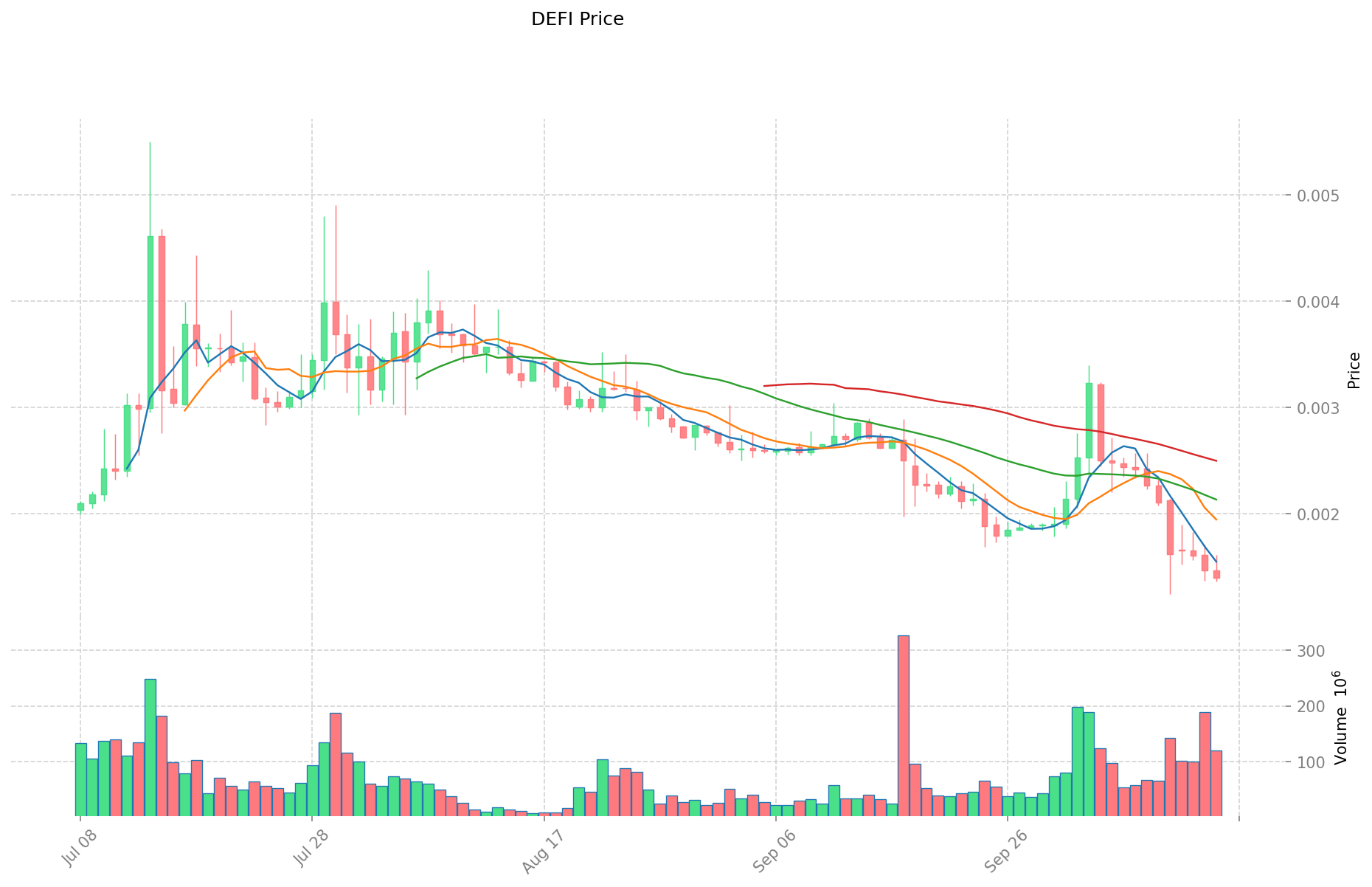
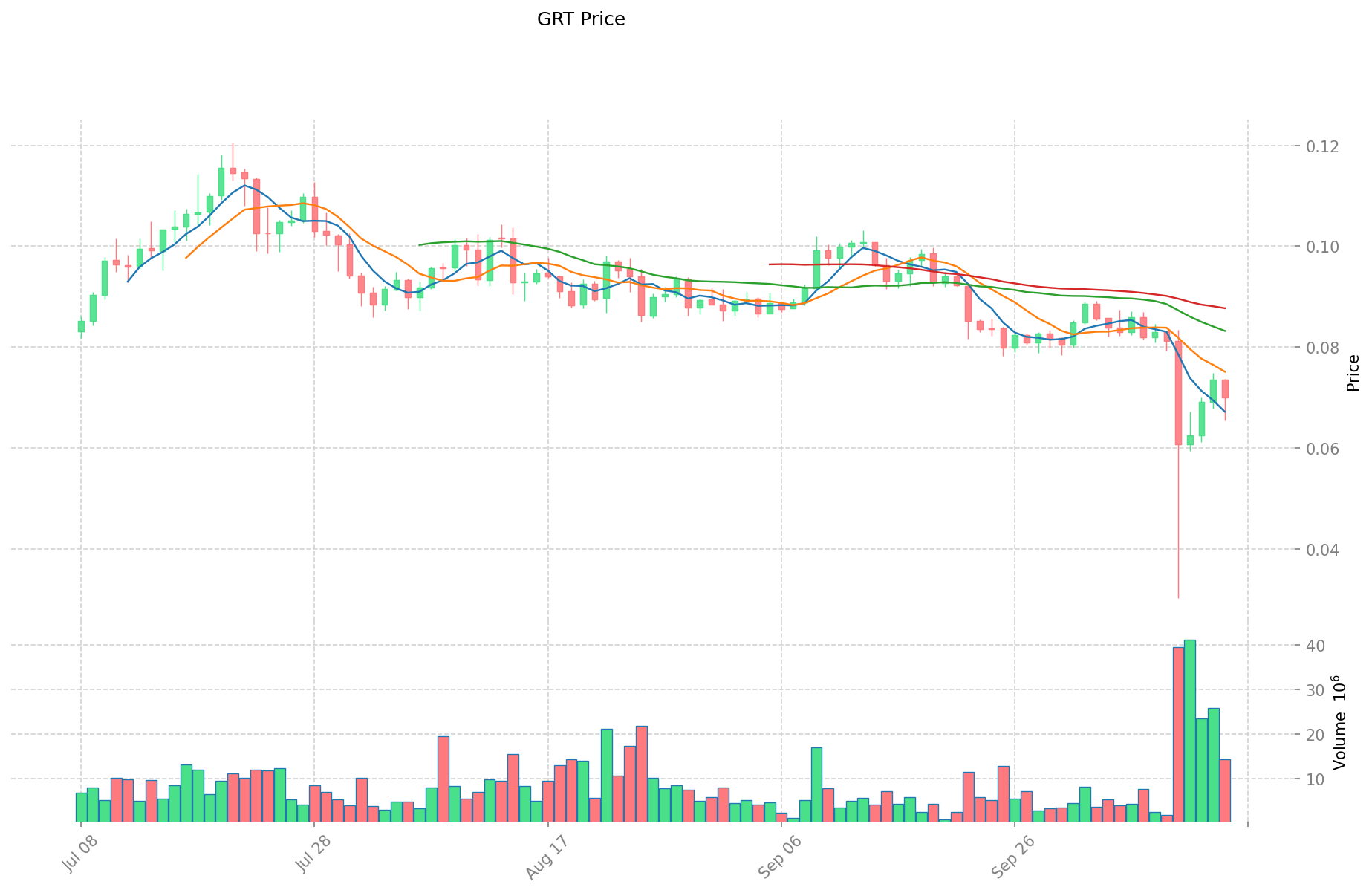
- Comparative analysis: During the recent bear market, DEFI dropped from $1.09 to $0.001395, while GRT declined from $2.84 to $0.06998.
Current Market Situation (2025-10-15)
- DEFI current price: $0.001395
- GRT current price: $0.06998
- 24-hour trading volume: $178,299 (DEFI) vs $980,897 (GRT)
- Market Sentiment Index (Fear & Greed Index): 38 (Fear)
Click to view real-time prices:
Investment Value Analysis: DeFi and GRT
I. Core Factors Influencing DeFi vs GRT Investment Value
Supply Mechanisms (Tokenomics)
- DeFi: Varies by protocol, with many implementing governance tokens that have programmed distribution schedules and staking mechanisms
- GRT: Implemented with a gradual token release schedule, with tokens allocated for indexers, curators, and network participants
- 📌 Historical Pattern: Token supply mechanisms in both sectors have shown to influence price action during expansion and contraction cycles of the broader crypto market
Institutional Adoption and Market Applications
- Institutional Holdings: Traditional financial institutions have shown increasing interest in DeFi protocols for their yield potential, while GRT attracts data-oriented investors
- Enterprise Adoption: DeFi has seen integration with payment systems and lending platforms, while GRT is primarily used by dApps requiring efficient data querying services
- Regulatory Stance: Most jurisdictions are still developing frameworks for DeFi, while GRT's utility token status may position it differently in regulatory considerations
Technical Development and Ecosystem Building
- DeFi Technical Progress: Continuous innovation in automated market makers, cross-chain bridges, and scalable lending protocols
- GRT Development: Enhanced indexing capabilities and query performance improvements positioning it as the essential infrastructure for Web3 data accessibility
- Ecosystem Comparison: DeFi encompasses a broader financial ecosystem including lending, trading, and derivatives, while GRT focuses specifically on decentralized data indexing and querying
Macroeconomic Factors and Market Cycles
- Performance During Inflation: DeFi protocols with stablecoin integration offer inflation hedging options, while GRT's value is tied to network usage rather than monetary policy
- Monetary Policy Impact: Interest rate changes affect yield-generating DeFi protocols more directly than GRT, which responds more to Web3 adoption rates
- Geopolitical Factors: Increased demand for decentralized finance solutions during banking crises benefits DeFi adoption, while global data sovereignty concerns drive GRT usage
III. 2025-2030 Price Prediction: DEFI vs GRT
Short-term Prediction (2025)
- DEFI: Conservative $0.00078232 - $0.001397 | Optimistic $0.001397 - $0.00206756
- GRT: Conservative $0.0462198 - $0.07003 | Optimistic $0.07003 - $0.0833357
Mid-term Prediction (2027)
- DEFI may enter a growth phase, with expected prices ranging from $0.001720673724 to $0.002340916578
- GRT may enter a bullish market, with expected prices ranging from $0.0539808922575 to $0.1278494816625
- Key drivers: Institutional capital inflow, ETF, ecosystem development
Long-term Prediction (2030)
- DEFI: Base scenario $0.002225889719621 - $0.002928802262659 | Optimistic scenario $0.002928802262659 - $0.003543850737817
- GRT: Base scenario $0.118564587666006 - $0.139487750195302 | Optimistic scenario $0.139487750195302 - $0.160410912724597
View detailed price predictions for DEFI and GRT
Disclaimer: The above predictions are based on historical data and market analysis. Cryptocurrency markets are highly volatile and subject to rapid changes. These projections should not be considered as financial advice. Always conduct your own research before making investment decisions.
DEFI:
| 年份 |
预测最高价 |
预测平均价格 |
预测最低价 |
涨跌幅 |
| 2025 |
0.00206756 |
0.001397 |
0.00078232 |
0 |
| 2026 |
0.0022692868 |
0.00173228 |
0.001559052 |
24 |
| 2027 |
0.002340916578 |
0.0020007834 |
0.001720673724 |
43 |
| 2028 |
0.00308260698438 |
0.002170849989 |
0.00162813749175 |
55 |
| 2029 |
0.003230876038628 |
0.00262672848669 |
0.001733640801215 |
88 |
| 2030 |
0.003543850737817 |
0.002928802262659 |
0.002225889719621 |
109 |
GRT:
| 年份 |
预测最高价 |
预测平均价格 |
预测最低价 |
涨跌幅 |
| 2025 |
0.0833357 |
0.07003 |
0.0462198 |
0 |
| 2026 |
0.1127237895 |
0.07668285 |
0.041408739 |
9 |
| 2027 |
0.1278494816625 |
0.09470331975 |
0.0539808922575 |
35 |
| 2028 |
0.114614692727437 |
0.11127640070625 |
0.0623147843955 |
59 |
| 2029 |
0.16602995367376 |
0.112945546716843 |
0.07906188270179 |
61 |
| 2030 |
0.160410912724597 |
0.139487750195302 |
0.118564587666006 |
99 |
IV. Investment Strategy Comparison: DEFI vs GRT
Long-term vs Short-term Investment Strategies
- DEFI: Suitable for investors focused on Web3 SocialFi and security solutions
- GRT: Suitable for investors interested in blockchain data indexing and querying infrastructure
Risk Management and Asset Allocation
- Conservative investors: DEFI: 30% vs GRT: 70%
- Aggressive investors: DEFI: 60% vs GRT: 40%
- Hedging tools: Stablecoin allocation, options, cross-currency portfolios
V. Potential Risk Comparison
Market Risks
- DEFI: Higher volatility due to smaller market cap and newer project status
- GRT: Susceptible to overall Web3 adoption rates and competition from centralized data solutions
Technical Risks
- DEFI: Scalability, network stability
- GRT: Indexing performance, potential centralization of node operators
Regulatory Risks
- Global regulatory policies may have differing impacts on DEFI as a Web3 solution and GRT as a utility token for data indexing
VI. Conclusion: Which Is the Better Buy?
📌 Investment Value Summary:
- DEFI advantages: Potential for growth in Web3 SocialFi and antivirus solutions
- GRT advantages: Established position in blockchain data indexing and querying, critical for dApp development
✅ Investment Advice:
- New investors: Consider a balanced approach with a slight preference for GRT due to its more established ecosystem
- Experienced investors: Explore a higher allocation to DEFI for potentially higher returns, while maintaining a significant GRT position
- Institutional investors: Evaluate both for different portfolio needs - DEFI for exposure to emerging Web3 technologies, GRT for blockchain infrastructure investment
⚠️ Risk Warning: Cryptocurrency markets are highly volatile. This article does not constitute investment advice.
None
VII. FAQ
Q1: What are the key differences between DEFI and GRT?
A: DEFI is a Web3 SocialFi & Antivirus solution, while GRT is a decentralized protocol for indexing and querying blockchain data. DEFI has a smaller market cap and is newer, while GRT has a more established ecosystem in the blockchain infrastructure space.
Q2: Which coin has shown better price performance historically?
A: GRT has shown better historical price performance, reaching an all-time high of $2.84 compared to DEFI's $1.09. However, both have experienced significant drops during the recent bear market.
Q3: How do the supply mechanisms differ between DEFI and GRT?
A: DEFI's supply mechanism varies by specific protocol, often involving governance tokens with programmed distribution schedules. GRT has a gradual token release schedule with allocations for indexers, curators, and network participants.
Q4: What are the main factors influencing the future price of DEFI and GRT?
A: Key factors include institutional adoption, technical development, regulatory stance, macroeconomic conditions, and overall growth of the Web3 and DeFi ecosystems.
Q5: How should investors allocate their portfolio between DEFI and GRT?
A: Conservative investors might consider 30% DEFI and 70% GRT, while aggressive investors could opt for 60% DEFI and 40% GRT. The allocation should be based on individual risk tolerance and investment goals.
Q6: What are the primary risks associated with investing in DEFI and GRT?
A: Risks include market volatility, technical challenges (scalability for DEFI, indexing performance for GRT), and regulatory uncertainties. DEFI may face higher volatility due to its smaller market cap.
Q7: Which coin is considered a better long-term investment?
A: Both coins have potential for long-term growth. GRT may be considered more stable due to its established position in blockchain infrastructure, while DEFI offers higher growth potential in the emerging Web3 SocialFi space. The better investment depends on individual risk appetite and belief in the respective technologies.
* The information is not intended to be and does not constitute financial advice or any other recommendation of any sort offered or endorsed by Gate.