
Фьючерсы
Доступ к сотням фьючерсов
TradFi
Золото
Одна платформа мировых активов
Опционы
Hot
Торги опционами Vanilla в европейском стиле
Единый счет
Увеличьте эффективность вашего капитала
Демо-торговля
Введение в торговлю фьючерсами
Подготовьтесь к торговле фьючерсами
Фьючерсные события
Получайте награды в событиях
Демо-торговля
Используйте виртуальные средства для торговли без риска
Запуск
CandyDrop
Собирайте конфеты, чтобы заработать аирдропы
Launchpool
Быстрый стейкинг, заработайте потенциальные новые токены
HODLer Airdrop
Удерживайте GT и получайте огромные аирдропы бесплатно
Launchpad
Будьте готовы к следующему крупному токен-проекту
Alpha Points
Торгуйте и получайте аирдропы
Фьючерсные баллы
Зарабатывайте баллы и получайте награды аирдропа
Инвестиции
Simple Earn
Зарабатывайте проценты с помощью неиспользуемых токенов
Автоинвест.
Автоинвестиции на регулярной основе.
Бивалютные инвестиции
Доход от волатильности рынка
Мягкий стейкинг
Получайте вознаграждения с помощью гибкого стейкинга
Криптозаймы
0 Fees
Заложите одну криптовалюту, чтобы занять другую
Центр кредитования
Единый центр кредитования


Еще





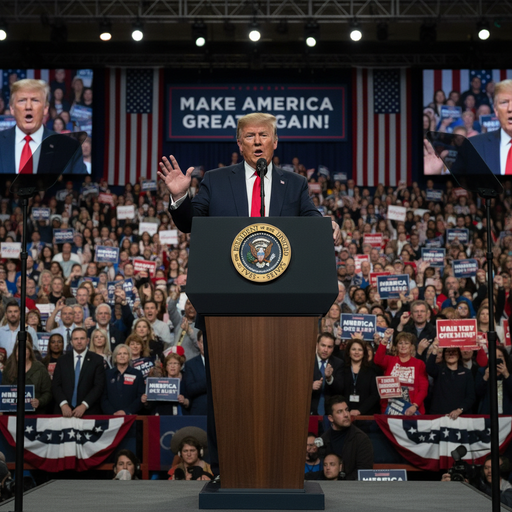
Трамп заявил о «победе» в своей речи, президент Ирана направил письмо «американскому народу», США заявляют, что цель по Ирану «близка к завершению»
【The Global Times’ Correspondent in the United States, Special Reporter: Xiao Da Wang Yi】Local time on April 1 evening, U.S. President Trump delivered a nationwide televised address from the White House on the issue of Iran. This was his first important nationwide address on this conflict since the U.S.-Iran war broke out at the end of February this year. In the speech, he unilaterally claimed that the core strategic objectives of the U.S. war against Iran were “nearly completed,” but also threatened that if Iran did not reach an agreement, the U.S. would “very forcefully strike every power plant of theirs within the next two to three weeks,” as well as oil facilities. In response, on April 2, the spokesperson of the Iranian Hatem Anbia Central Command said they would take “more destructive, broader-ranging, and more powerful actions to counter U.S.-Israeli aggression,” and vowed to continue fighting until the other side “permanently, thoroughly, and finally surrenders.” On April 2, Chinese Foreign Ministry spokesperson Mao Ning said at a press conference that the root cause of the disruption to navigation through the Strait of Hormuz is U.S. and Israel’s illegal military actions against Iran. Only by halting the fighting and ending the war, and achieving peace and stability in the Gulf region, can we fundamentally maintain the safety and smooth passage of international sea lanes. All parties should work together to cool down the situation and prevent further turmoil in the region from causing greater impacts on the global economy and energy security.
After the speech ended, oil prices surged immediately
“Same old song and dance.” The U.S. Cable News Network (CNN) said that in his first nationwide televised address on U.S.-Israeli-Iran war on April 1, Trump used familiar talking points, telling American people that “the war is about to end,” and that the core strategic objective was “nearly completed.” At the start of the speech, Trump claimed on his own that the U.S.-Iranian military actions had achieved “quick, decisive, overwhelming victory,” that Iran’s navy had been “completely destroyed,” and that the ability to launch missiles and drones had also been “greatly weakened,” with weapon factories and rocket launch facilities now “scarcely left.”
Multiple media outlets said Trump’s speech was full of contradictions. On the one hand, he said that a regime change in Iran was not the goal of the United States, but at the same time he said that “regime change in Iran has already taken place.” He also threatened that if Iran did not reach an agreement within the next two to three weeks, the U.S. forces would target Iran’s key objectives, “very forcefully striking every power plant of theirs and the oil facilities.”
CNN said that in the speech, Trump tried to downplay U.S. dependence on the Strait of Hormuz. He said the United States “almost doesn’t need to import oil through the Strait of Hormuz,” “we don’t need it.” He also pushed the issue of keeping the Strait open onto other countries. He said, “Those countries that need to obtain oil through the Strait of Hormuz must take responsibility for maintaining that passage themselves.” Trump also encouraged these countries “either buy oil from the United States or muster courage and directly go to the Strait of Hormuz to obtain oil.” He said that when the war with Iran ends, the strait “will naturally become open,” and “gasoline prices will quickly fall.”
The New York Times commented that in Trump’s total 19-minute address, he did not make any major announcements: he neither provided any details about the negotiations he claimed he was conducting with Iran, nor gave a detailed plan and a clear timeline for ending the war. The report said that, as he demonstrated throughout the war, Trump did not propose a clear exit strategy, but instead issued vague, inconsistent statements. He described Iran’s military actions as an “overwhelming victory,” while also threatening to “bomb Iran back to the Stone Age.”
CNN said that although White House officials claimed Trump’s speech promoted “the successes of military operations to date,” they were satisfied with it, but many Democratic members harshly criticized the speech as “rambling” and “illogical,” and it also failed to answer “the most basic questions the American people want to know.” Senate Democratic leader Chuck Schumer accused Trump’s speech of “scattered content and confused logic,” failing to clearly explain the objectives of the military actions against Iran, alienating allies, and ignoring the day-to-day issues that Americans are directly facing. “What he is doing to Iran will be seen as one of the most serious policy failures in U.S. history.” Democratic U.S. Representative Ansari condemned his remarks threatening to “bomb Iran back to the Stone Age” as “shameful, horrifying, and evil.” Democratic Senator Van Hollen said, “He’s been lying to us all the time. More than two weeks ago he claimed ‘we’ve won,’ but why are we still stuck there? What happens next? The only thing we can expect is more lies.”
The market quickly reacted to this speech by Trump. Before the speech began, international oil prices had once fallen because Trump the previous day hinted at “withdrawing from Iran within two to three weeks.” But after his speech ended, Brent crude prices surged immediately by more than 4%, to $105.38 per barrel. At the same time, U.S. Dow Jones, S&P 500, and Nasdaq index futures fell sharply. CNBC in the United States cited a Fidelity International investment manager as saying that Trump’s speech “doused people’s hopes that the conflict would be de-escalated.”
Iran responds firmly to U.S. threats
The New York Times said that although Trump insisted on April 1 that negotiations with Iran were still ongoing, multiple U.S. intelligence agencies recently assessed that the Iranian government believes it is in a strong position in the war and does not need to comply with U.S. diplomatic demands.
Before Trump delivered his speech, on April 1 Iranian President Pezeshkian published an open letter to the American people. According to Iran’s state news television, Pezeshkian said in the letter that Iran has no hostility toward ordinary Americans; he urged American people to clear away the fog of war propaganda and refuse “fabricated threats.” He questioned whether the United States truly practices “America First,” or is merely acting as “Israel’s proxy.”
After Trump delivered his speech, according to Iran’s Tasnim News Agency, a statement was issued on April 2 by the spokesperson of the Hatem Anbia Central Headquarters of Iran’s armed forces. The statement said that although U.S.-Israeli forces believe they have destroyed Iran’s missile production centers, drones, air-defense systems, and other military targets, in fact they “know nothing about Iran’s immense strategic capabilities.” He said that the Iranian facilities targeted so far were “irrelevant,” and that “our strategic military-industrial production is carried out in locations you don’t know about, and that you will never be able to reach.”
Regarding Trump’s threat to “bomb Iran back to the Stone Age,” on April 2 the commander of the Islamic Revolutionary Guard Corps Aerospace Force, Musaavi, posted a response on a social media platform saying: “It’s you who sent your soldiers to the grave, not Iran being sent back to the ‘Stone Age.’ Your Hollywood-style fantasy has polluted your thinking so much that you dare threaten a country with more than 6000 years of civilization with just a brief 250-year history.”
Iran’s top leader’s foreign affairs adviser Velayati posted a message on social media on April 2 saying: “The Strait of Hormuz is open to the world, but it will forever be closed to Iran’s enemies and their bases in the Middle East.” He said how the war ends will be determined by “Iran’s strategy and strength,” not by “the invaders’ arrogance and fantasies.”
On April 2, the Islamic Revolutionary Guard Corps issued a statement saying that during Wave 90 of the “True Promise-4” operation, strikes were carried out against industrial and military targets of the U.S. and Israel in the region, and major parts were destroyed. The attack resulted in dozens of U.S. military personnel being killed or injured. The statement emphasized that this operation had a “warning nature.” If similar attacks against Iranian industrial facilities occur again, the Iranian side will carry out a more severe response.
Ceasefire and stop fighting are a shared call from the international community
U.S.-Israeli continued attacks on Iran have drawn increasing criticism from the international community. According to Brazil’s “Folha de S. Paulo” report, Brazilian President Lula said on April 1: “The United States has launched an unnecessary war against Iran, claiming the country is trying to develop nuclear weapons—this is a lie.” He emphasized that the war has directly affected Brazil, leading to rising fuel prices and putting pressure on economies around the world.
According to France’s “Le Monde” on April 1, during a visit to Japan that day, French President Macron delivered remarks criticizing “some countries that hurt you without even notifying you.” The report said this was clearly aimed at hinting at the United States. Regarding the war, Macron said: “We stand on the side of international law, and we stand on the side of negotiations, supporting the return of diplomacy.”
On April 2, a member of the Political Bureau of the CPC Central Committee and Foreign Minister Wang Yi held a phone call with the current rotational chair of the Gulf Cooperation Council, Bahraini Foreign Minister Zayeni, by appointment. Wang Yi set out China’s position of opposing aggression and advocating peace. He said that halting the fighting and ending the war is a shared call from the international community. China and Pakistan have recently issued a five-point initiative to restore peace and stability in the Gulf and the Middle East, which includes calls to stop attacks on civilians and non-military targets, ensure the safety of the Strait of Hormuz, and restore normal navigation.
“Trump’s fatal choice.” U.S. “The Atlantic” magazine website said on April 1 that multiple insiders revealed that as more U.S. reinforcement troops arrive in the Middle East, the U.S. military is planning a high-risk ground offensive against Iran: one plan targets Halk Island, the center of Iran’s energy industry, and another plan aims to seize Iran’s enriched uranium. At present, these plans only need Trump’s approval. However, reports cited analyses by multiple experts stating that these ground operations cannot guarantee that the war ends within a few weeks as Trump said, nor can they reopen the Strait of Hormuz. Trump claimed that the ground offensive is intended to pressure Iran’s regime and force it to seek reconciliation. However, these actions are more likely to lead to escalation and prolong the conflict rather than facilitate negotiations.
A huge amount of information and precise interpretation—only on the Sina Finance APP