




Square
Following
Hot
News
Notifications
Profile
Share your thoughts
placeholder
Article
Bitcoin is down 4%, and altcoins are all buckling! Who exactly is quietly pulling capital out this time?

BTC is down 4%, ETH is down 5.5%, and SOL and XRP haven't been spared either. The bulls who once brimmed with confidence may now have to work up the courage just to open their trading apps.
On the surface, global risk assets are weakening in tandem, investors' risk appetite is falling, and capital is starting to move away from high-volatility assets. But what's even more concerning is the leverage pressure within crypto. If spot buying is insufficient while the futures market has built up
AMD+11.55%
  • 35
Tech stocks are brutal on the way down! The AI hype is starting to cool—how much longer can Nvidia and its peers hold up?

Once upon a time, AI was Wall Street’s favorite story. If a company had anything to do with artificial intelligence, its stock seemed to have a reason to rise.
But now, the market is getting more realistic: stories can sound great, but ultimately it comes down to profits.
Tech stocks are under pressure, and investors are starting to reassess valuations across the AI industry. Chips, cloud computing, data centers, and software companies could all be affected by shifts in ma
AMD+11.55%
  • 32
Trenches
ZIG
Z
bade
b
ZIG
0x8c...1145
Market Cap
$.
Change
.
24h Vol
$.
Holders
.
BTC
B
bade
b
BTC
C5xp...pump
Market Cap
$.
Change
.
24h Vol
$.
Holders
.
GM
G
bade
b
GM
0x13...7777
Market Cap
$.
Change
.
24h Vol
$.
Holders
.
Diamond
D
bade
b
Diamond
5VCE...pump
Market Cap
$.
Change
.
24h Vol
$.
Holders
.
coin
c
bade
b
coin
GdY4...pump
Market Cap
$.
Change
.
24h Vol
$.
Holders
.
BTC and ETH pull back in tandem! Bottom-fishers, sellers, or sideline-sitters—who will have the last laugh?

The crypto market has recently seen a major clash between three camps!
BTC and ETH have fallen alongside broader risk assets, putting clear pressure on market sentiment.
Investors are now roughly divided into three groups:
First: the bottom-fishers. When they see prices fall, their eyes light up instantly, thinking the sale season has finally arrived! But remember, a market sale doesn't mean prices can't drop further.
Second: the risk managers. They check their positions first, then ass
AMD+11.55%
  • 14
Gold is smiling, while US stocks are crying? A wave of safe-haven buying is intensifying, and global markets are being reshuffled!

When the stock market experiences significant volatility, investors often look to other assets to diversify risk. Gold, the US dollar, and US Treasuries have therefore become focal points for the market.
But safe-haven trading is not simply a matter of moving money from one place to another.
Gold may benefit from safe-haven demand and falling real interest rates, but if the dollar strengthens and bond yields rise, gold may also come under pressure.
The dollar’s pe
NVDA+2.80%
  • 17
Boarding now~
Might as well snap a pic that X users will like.
post-image
What is the smartest move right now? After BTC falls, perhaps doing nothing is also a move!

When BTC and ETH fall together and the entire crypto market comes under pressure, what is the easiest mistake for investors to make?
It’s not buying too early, and not necessarily selling too late—it’s letting the market lead them by the nose!
They panic as soon as prices drop, then chase the rally when they see a rebound. The result? The market hasn’t made any money yet, but trading fees have already hit their performance targets!😂
In the current market, investors generally have three approaches.
Fir
MU+4.71%
  • 40
The U.S. crypto industry may have missed its best opportunity to advance regulatory legislation.

On November 7, former U.S. House Financial Services Committee Chair Patrick McHenry admitted that the crypto industry had botched its best chance to advance market structure legislation, and that he too should bear some of the blame.

The CLARITY Act’s stalled progress reflects not only political divisions, but also a lack of sufficient compromise between crypto companies and lawmakers.

The bigger wild card lies ahead: if Democrats take control of Congress in January, the bill could face new obst
post-image
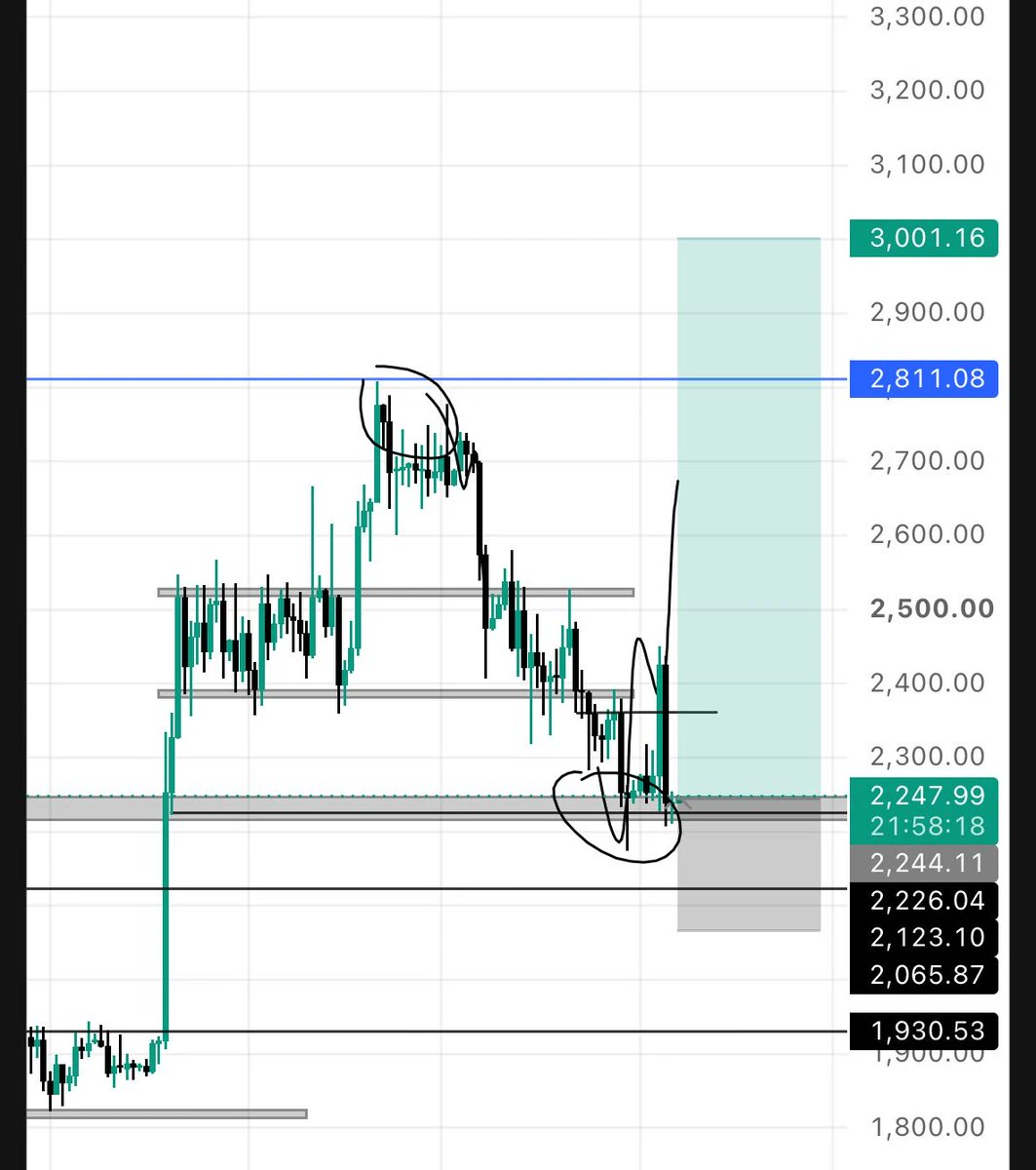
Added more to this eth kings
Clean but still messy tbh
ethereum:native
post-image
ETH-1.26%
Chip Stocks Are Falling,
live-cover
LIVE506
What Wall Street fears most isn’t a weak payrolls report, but a U.S. economy that’s too resilient! Is the rate-cut dream in jeopardy again?

What are investors most focused on lately? The answer may not be which company beats earnings expectations, but when the Fed will cut rates.
But the U.S. October nonfarm payrolls data seems to have poured cold water on the market.
The economy added 165,000 jobs, far more than expected; the unemployment rate fell to 4.1%; and employment figures for the previous two months were revised up by 84,000.
This shows that the U.S. labor market isn’t as weak as the
  • 16
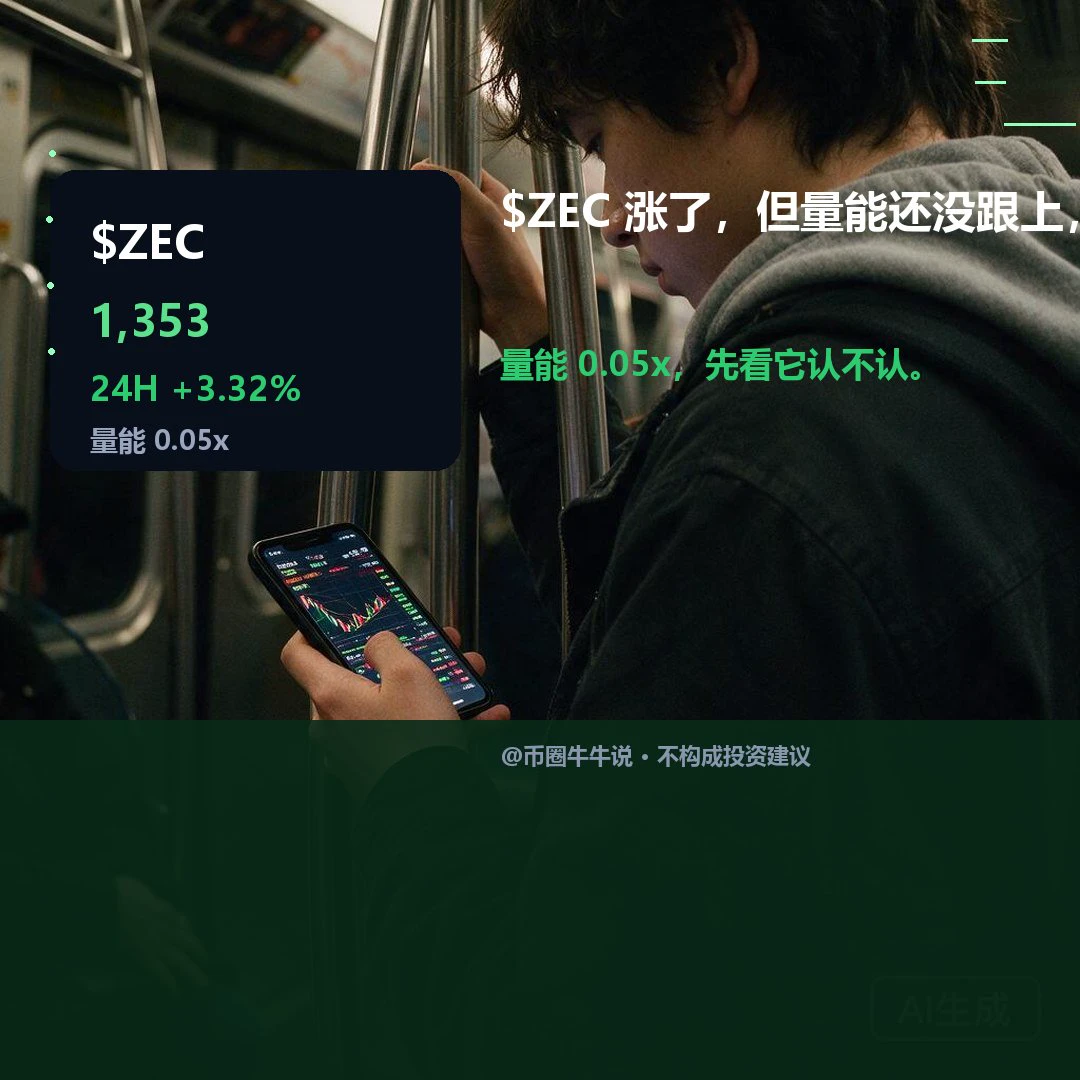
$ZEC Currently at 1352.66, up 3.32% over 24H, with a range of 1247.89–1387.89 and turnover of 90.2049 million. 1H is bullish (RSI 62.40, price above EMA20 at 1327.06); 4H is bullish (RSI 61.59, price above EMA20 at 1291.44). Volume ratio: 0.05. Holding above resistance at 1387.89 could signal continuation; a break below support at 1247.89 would weaken the short-term outlook. Review and confirm that 1387.89 holds and 1247.89 is reclaimed. Volume is only 0.05x, so a single break needs confirmation from market participation; failure to reclaim invalidates the setup. The market is volatile; for ob
post-image
ZEC+1.16%
The crypto market is testing human nature again! BTC is falling—do you dare catch the falling knife?

The recent crypto market has been like riding a roller coaster with no seat belts!
BTC and ETH have fallen along with broader risk assets, and investors are starting to split into two camps: one thinks an opportunity has arrived, while the other thinks the danger isn’t over yet.
The funniest thing is, when prices rise, everyone says they want to add to their positions; when prices actually fall, they start pondering the philosophy of life!😂
But the market’s favorite thing to do is test invest
MU+4.71%
  • 23
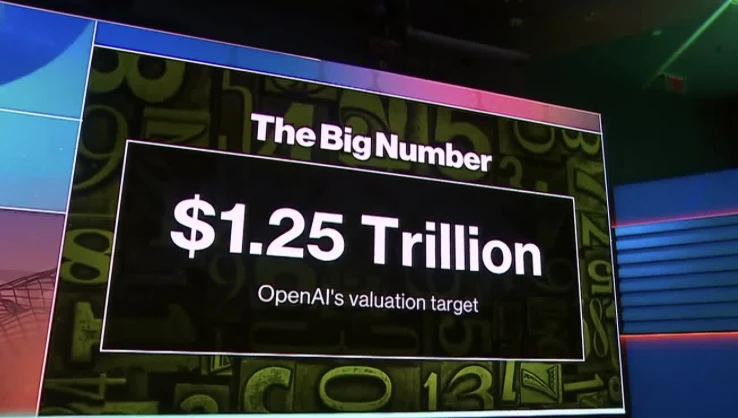
🚨 JUST IN: OPENAI RAISES $11 BILLION AT A MASSIVE $1.25 TRILLION VALUATION! 🤖🔥
The AI investment boom continues to accelerate.
Are we witnessing the biggest technology revolution in history, or the largest AI bubble ever? 👀
post-image
Nonfarm payrolls are out, but markets still haven't settled down! These 3 signals could determine the next move in U.S. stocks

The nonfarm payrolls data is out, but the real test for markets may only just be beginning.
The U.S. added 165k nonfarm jobs in October, and the unemployment rate fell to 4.1%, far exceeding market expectations.
The report has markets reconsidering one question: Is the U.S. economy heading for a soft landing, or is it strong enough to force the Federal Reserve to keep monetary policy tight?
Three signals are worth watching closely next.
First, inflation data. Strong e
AMD+11.55%
  • 18
The market falls—does bull market conviction still hold? BTC and ETH are putting investors to the test!

In a bull market, everyone is a long-term investor; when the market pulls back, suddenly everyone in your feed becomes a risk management expert! 🤣
Recently, BTC and ETH have weakened alongside broader risk assets, putting considerable pressure on the cryptocurrency market.
This is also a reminder that digital assets are not isolated from the macro environment. When overall risk appetite declines, market liquidity and investor sentiment may both be affected.
In this situation, should you bu
AMD+11.55%
  • 20
Chip Stocks Are Falling,
live-cover
LIVE784
What is the crypto world most afraid of? Not a market crash, but a platform that only knows how to say “Don’t worry”!

#Gate Pioneers Proof of Fund Security
There’s a saying in crypto: When prices rise, you think you’re an investing genius; when they fall, you question your life choices. 🤣
But what concerns people more than market volatility is the security of funds on the platform.
If a platform says “Don’t worry, we’re completely safe” every day, users can only reply: Where’s the proof? You can’t expect me to deposit based on faith!
That’s why Gate’s pioneering proof of fund security is def
AMD+11.55%
  • 20
#GateLaunchesPoSECProofOfSecurity
🔐 Gate.io Pioneers Proof of Security (PoSEC): A New Era of Absolute Asset Transparency

The global digital asset industry is currently witnessing a massive, structural shift in how platform safety, custodial integrity, and consumer protection are measured. Following the official launch of the Proof of Security (PoSEC) standard, the crypto ecosystem has received its very first quantifiable, real-time framework tracking asset storage structures and extreme-risk coverage capabilities. True transparency is no longer just about proving that user funds exist on th
Falcon_Official
#Gate推出行业首个资金安全证明
Reserves Tell You How Much. PoSEC Asks Where It Sits.
For years, the standard question about an exchange was simple: does it hold enough assets to cover what users are owed? Proof of reserves answered that question, and it still matters. But a reserve ratio says nothing about how those assets are stored. Two exchanges can show identical reserve numbers while keeping very different shares in cold storage, hot wallets or third-party custody. That gap is what Gate is now trying to close.

What Gate announced

Gate has launched what it describes as the industry's first PoSEC, or proof of fund security, system. Where PoR confirms that assets exist and cover liabilities, PoSEC focuses on the storage structure behind those assets and on the coverage available to protect them. Gate's announcement reports cold storage coverage of 104.58% and says 88.26% of stored assets sit in cold storage. It also says an independent third-party audit mechanism has been introduced and that verification is underway.

Those are Gate's own figures. I could not confirm them from an independent source, and the audit is still in progress, so the results should be read as a company disclosure until the audit concludes.

Why cold storage share matters

Hot wallets are connected to the internet and are needed for daily withdrawals. Cold storage keeps keys offline and is far harder to drain through a remote attack. A higher cold-storage share generally means less of user money is exposed to a single compromise. The question for any exchange is not only whether it has the funds, but how many of those funds would be exposed if a hot wallet were breached.

What "coverage above 100%" can and cannot mean

Cold storage coverage above 100% suggests that cold-stored assets exceed the stated liability base that the system measures against. That can be reassuring, but it depends on how the liability base is defined, how often it is updated, and whether it includes every product. A figure is only as useful as its definition, so the methodology matters as much as the headline.

The audit gap is the real test

Any security claim is only as strong as its verification. Gate says an independent third-party audit mechanism is in place and that verification is underway. The key question is what the auditor will examine: wallet control, key management, custody procedures, and the reconciliation between reported and on-chain balances. Users should look for the scope, the auditor's name, the period covered, and whether findings are published in full.

What users should ask any exchange

Reserve ratios are the start of the conversation. Users should also ask for the share of assets in cold storage, the custody arrangements for each asset, how often balances are reconciled, whether an independent auditor has reviewed key management, what happens to user funds in a security incident, and how any insurance or compensation is funded and capped.

The bottom line

PoSEC is a step beyond proof of reserves, because it addresses where assets are kept and how they are protected. Gate's disclosed figures are encouraging, but they are company-reported, and the audit is still in progress. A good exchange should make its security data verifiable, specific and regularly updated, not just impressive at launch.

repost-content-media
The Biggest De-Grossing Wave in Over a Decade Hits, and Wall Street Hedge Funds Can’t Take the Strain

One of the most brutal sell-offs in U.S. stock market history is pushing the hedge fund industry into a rare systemic stress test.

According to a Morgan Stanley client report, October saw the largest monthly reduction in equity hedge funds’ positions in more than a decade, with their market exposure down about 9% since June. The Nasdaq 100 recently plunged 6.4% in a single day, wiping out about $2.3 trillion in market value, while the VIX “fear index” surged 70%, further intensifying the ind
MS-0.59%
SPYX+0.01%
NAS100-0.07%
Load More

Join 40 M users in our growing community

⚡️ Join 40 M users in the crypto craze discussion

💬 Engage with your favorite top creators

👍 See what interests you

Trending Topics

USStocksFaceHistoricSelloff

12.4k Views3.88k Discussing

U.S. stocks suffered a sharp selloff on Thursday, with the Nasdaq closing down more than 5% and the Philadelphia Semiconductor Index falling over 12%. AI and chip stocks including $NVDA and $AMD were hit especially hard. Markets are reassessing AI valuations, data-center spending and future returns. Is this just short-term deleveraging, or the start of a deeper correction in the AI trade? Which sectors are you watching next?

USNonfarmPayrolls

20.06k Views4.2k Discussing

StakeOnLaunchpoolToShare450KVLX

84 Views732 Discussing

View More