Introduction

(Image source: irys_xyz)
Irys introduces a different approach to blockchain infrastructure by focusing on data as an active component rather than passive storage. Instead of operating purely as a storage network or a standard EVM-compatible chain, Irys is designed as a programmable datachain—an environment where on-chain data can be directly accessed, modified, and utilized by smart contracts.
By merging storage and computation into a unified system, Irys enables developers to build applications where data is not just stored permanently, but also becomes an integral part of execution logic.
Rethinking Data as an Active Layer
In traditional blockchain architectures, data is often treated as static information that applications reference externally. Irys challenges this model by embedding data directly into the execution environment.
Within its system, smart contracts can interact with stored data in real time, allowing for dynamic operations such as querying, updating, and triggering logic based on large datasets. This shift opens new possibilities for applications that rely heavily on data, including AI tools, media platforms, and analytics-driven services.
Architecture Designed for Scalability and Reliability
At the core of Irys is a multi-ledger architecture that separates temporary validation processes from permanent storage. This structure improves efficiency while maintaining reliability, ensuring that data can move seamlessly from short-term processing to long-term preservation.
The design also balances several key factors. It aims to reduce long-term storage costs, maintain strong data integrity through validator incentives, and provide flexibility for applications that require continuous data interaction. This makes the network particularly suitable for use cases such as AI training datasets, multimedia storage, indexing systems, and permanent record services.
A Dual-Layer Consensus Approach
To secure its network, Irys combines elements of Proof of Work and Proof of Stake into a hybrid model. This structure ensures that participants contribute both computational resources and economic stake.
By requiring validators to commit capital while also performing work, the system increases the cost of malicious behavior and strengthens overall network security. At the same time, staking tied to specific data segments enhances transparency and accountability, making it easier to verify the integrity of stored information over time.
IrysVM and Data-Centric Smart Contracts
IrysVM, derived from the Ethereum Virtual Machine, extends beyond standard EVM functionality by enabling native interaction with the network’s storage layer. This allows developers to build contracts that operate directly on large datasets without relying on external systems.
The concept of programmable data becomes particularly relevant here. Smart contracts can execute logic based on stored information, perform real-time analysis, and interact with persistent datasets. This capability expands the design space for decentralized applications, enabling new forms of AI integration, on-chain social platforms, and data-driven financial tools.
Funding and Strategic Positioning
Irys has attracted early support from established investment firms, signaling confidence in its focus on data infrastructure. Its funding rounds include backing from organizations such as CoinFund, Framework, and Lemniscap, positioning the project within a growing sector that emphasizes scalable and programmable data solutions.
This backing reflects a broader recognition that data infrastructure will play a critical role in the next phase of Web3 development.
Token Model and Network Dynamics
The IRYS token serves as the core mechanism that powers the network. It is used for executing smart contracts, storing data, and maintaining system security through staking.
The economic design incorporates both incentives and deflationary elements. Validators earn rewards for honest participation, while penalties are applied to malicious behavior. At the same time, a portion of network fees is permanently removed from circulation, gradually reducing supply as usage increases.
Token distribution is structured to support long-term ecosystem growth, with allocations dedicated to development, community incentives, partnerships, and contributors. Vesting schedules for team members and investors further emphasize a gradual and sustainable expansion strategy.
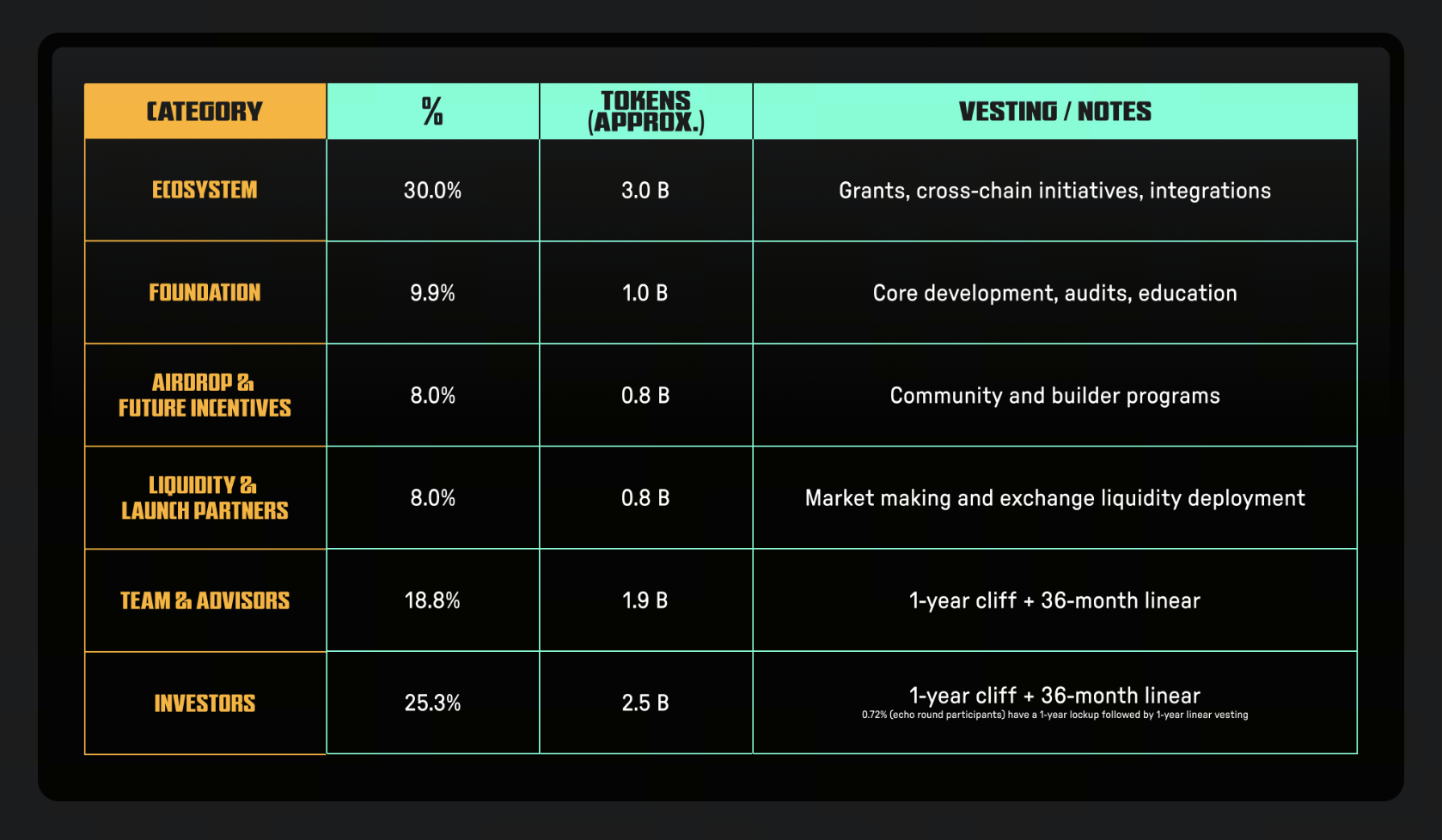
(Image source: irys/blog)
Conclusion
Irys represents a shift in how blockchain systems treat data. By elevating data from a passive component to an active layer within smart contract execution, it introduces a new paradigm for building decentralized applications.
Through its integrated approach to storage, computation, and programmability, Irys is positioning itself as a foundational layer for data-intensive use cases in Web3. As the ecosystem evolves, its model could play a key role in enabling more scalable, efficient, and data-driven applications across the blockchain landscape.