Tria Project Explained: Community Fundraising Launching Soon on LEGION
What Is Tria?
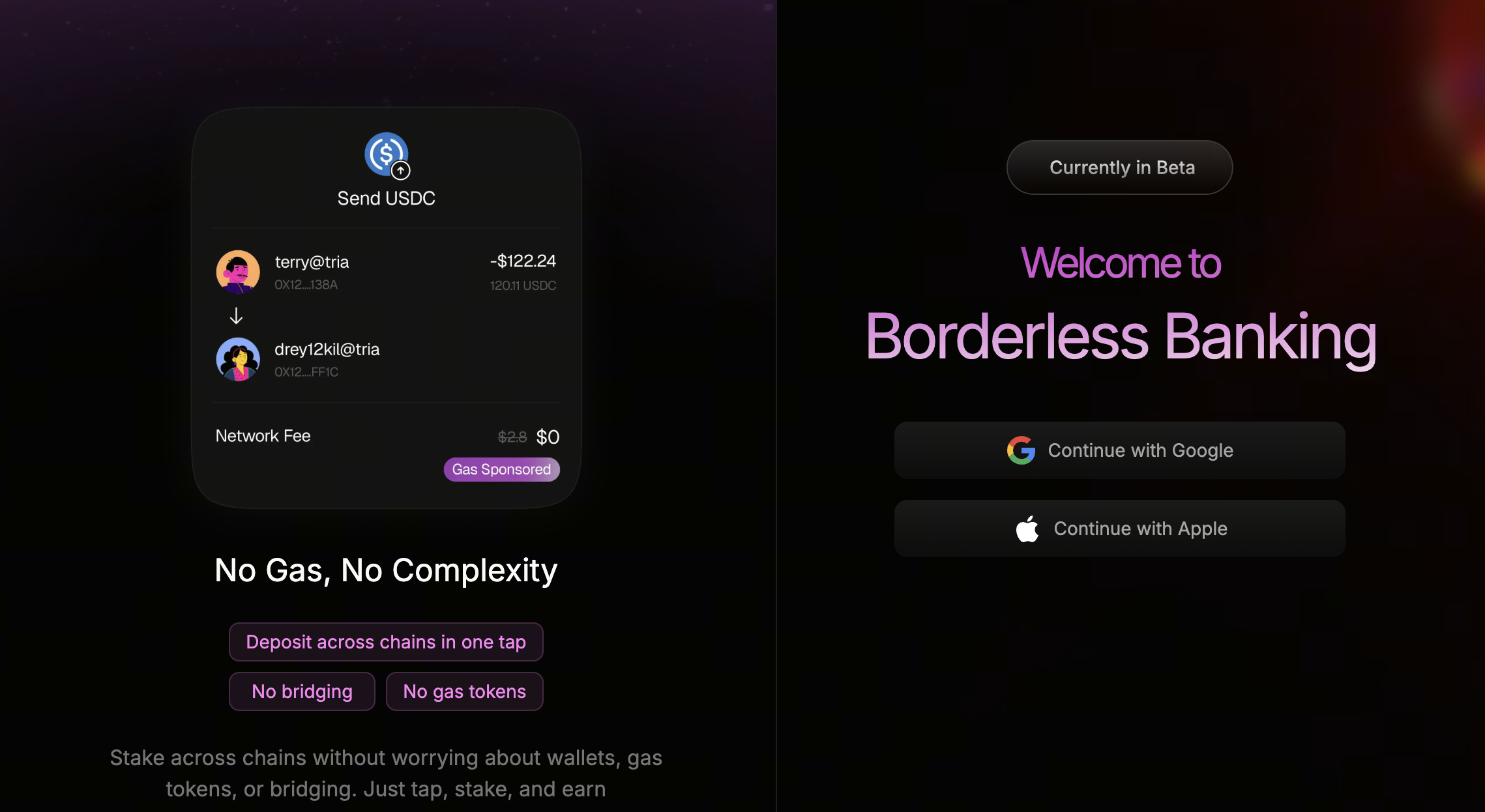
Tria is positioning itself as a self-custodial neobank — a next-generation digital banking infrastructure that combines Web3, AI, and global payments. The goal is to allow users to hold, spend, and earn crypto assets without relying on centralized intermediaries.
According to project sources, Tria aims to serve both human users and AI agents, enabling seamless, automated financial operations across multiple chains. Think of it as a Web3 version of a “bank,” where you retain control of your assets while still accessing payment cards, transfers, and on-chain yields.
Tria’s approach aligns with the next wave of blockchain adoption — bringing utility to crypto beyond speculation. Its upcoming community fundraising event on LEGION is drawing attention as an early chance to join a promising ecosystem.
The $12 Million Funding Round: A Signal of Confidence
In October 2025, Tria announced it had raised $12 million in Pre-Seed and strategic funding, with investors including P2 Ventures, Aptos, Polygon Labs advisors, Ethereum Foundation members, and Wintermute.
The funding aims to accelerate product rollout and build a robust payment and banking infrastructure on-chain. This strong institutional participation signals market confidence in Tria’s direction — especially its vision to remove friction points like gas fees, cross-chain bridges, and wallet complexity.
For new investors and users, this financing round represents both validation and opportunity: validation that the concept has serious backing, and opportunity to participate in the next stage through LEGION’s community round.
Community Fundraising on LEGION: What to Expect
Tria has officially announced that it will launch its community fundraising round on the LEGION platform, a Web3-native fundraising venue focused on early-stage crypto projects.
While the exact dates and allocation details are still emerging, reports from ChainCatcher suggest that this round will allow community members to acquire Tria tokens directly before public listings.
Here’s what potential participants should keep in mind:
Eligibility: Check whether your region is supported by LEGION.
Token Allocation: Some rounds require registration or whitelisting; details should be verified on the official LEGION and Tria channels.
Lock-Up Periods: Early participants may face vesting schedules — a common practice to protect long-term holders.
Due Diligence: Always review official announcements and avoid unofficial links or fake airdrops.
If done right, community rounds offer a fairer entry point — but they also carry early-stage risks.
Core Features and Advantages of Tria
Tria’s appeal lies in its blend of financial usability and blockchain sovereignty. Below are its standout features:
Self-Custody First: Users maintain control over private keys and assets, removing the need to trust centralized platforms.
Gas-Free and Bridge-Free Experience: The platform aims to abstract away blockchain complexities, allowing seamless cross-chain operations without manual bridging or gas management.
Multi-Chain Payment Support: Tria reportedly supports over 1,000 tokens and global payment scenarios across 150+ countries — including Visa card integrations.
AI-Native Financial Infrastructure: A unique element is Tria’s focus on serving AI agents — autonomous entities that could perform on-chain payments and manage digital assets without human intervention.
Early Ecosystem Participation: The upcoming LEGION round gives users the chance to be part of Tria’s community before major listings or token unlocks.
Collectively, these features position Tria as a strong contender in the “next-gen Web3 banking” category, merging decentralized asset control with real-world usability.
Key Risks and Things to Know Before Joining
Even though Tria’s concept is compelling, early-stage participation always involves risk. Here’s what beginners should consider:
Project Stage: Tria is still in its early development phase. While the funding round adds credibility, the product’s real-world adoption is yet to be proven.
Market Volatility: Like any crypto asset, the eventual Tria token (if tradable) will likely face significant price fluctuations.
Regulatory Uncertainty: Web3 banking and payment infrastructure are heavily regulated in most countries; future compliance hurdles could affect operations.
Participation Risks:
Community fundraising rounds can be competitive and may involve token lockups or regional restrictions. Read the fine print carefully before committing funds.
Beginner Tip:Treat this opportunity as a learning experience rather than a guaranteed profit venture. Start small, monitor official communications (via Tria’s Twitter, Discord, and LEGION channels), and never invest more than you can afford to lose.
Why the Market Is Watching Tria
Several macro trends make Tria’s emergence timely:
The rise of AI-driven finance — where autonomous agents need direct access to blockchain-based payment rails.
Increasing frustration with legacy data systems and centralized banking friction.
The growing demand for cross-chain, low-cost consumer applications that make crypto truly usable.
Tria’s ability to bridge these gaps could determine its long-term success. If it executes on its promises — seamless UX, strong compliance, and active community engagement — it could become one of the defining infrastructures for Web3 payments.
Final Thoughts
The Tria project stands at an interesting intersection between DeFi, fintech, and AI. With a $12 million seed round and a community fundraising event set to launch on LEGION, it’s gaining serious traction.
For newcomers, this is an opportunity to explore how self-custodial banking and on-chain payments are evolving. Yet, it’s equally important to stay cautious, research deeply, and avoid rushing into early token sales without understanding the terms.
As the crypto market matures, projects like Tria could become the backbone of digital finance — connecting human and AI users through decentralized, intelligent banking infrastructure.
Disclaimer:
This is not investment advice. This information is provided for informational purposes only and should not be construed as a recommendation to buy, sell, or hold any asset. Cryptocurrency trading involves a risk of loss. Gate US services may be restricted in certain jurisdictions. For more information, please see our legal disclosures: https://us.gate.com/legal/disclosures
Share
Content


Related Articles

Bitcoin Halving Chart: Key Dates, Trends, and Future Predictions

Bitcoin Halving Chart:Understanding the Changes in Bitcoin Supply and Price Trends

US December Rate Cut Forecast: Will the Federal Reserve Finally Pivot?

Midnight Network Ignites Cardano’s Next Chapter with NIGHT Token Mining and Privacy Innovation

Federal Reserve Ends Quantitative Tightening — How the End of QT Could Reshape Global Markets in 2025