The Institutional Shift: How Privacy is Becoming the Foundation of Blockchain Finance
The Institutional Shift Toward Blockchain Privacy
In the volatile world of cryptocurrencies, privacy tokens have remained remarkably resilient. While early blockchain privacy solutions centered on user anonymity, today’s conversation has moved to a larger scale—how banks and financial entities can protect internal data while maintaining regulatory transparency.
Matter Labs CEO Alex Gluchowski distinguishes two privacy levels: user-level (focused on individual data protection) and system-level (aimed at institutional data segregation and internal visibility). For financial entities, the challenge lies in ensuring transparency for regulators without revealing sensitive internal operations.
Why Institutions Need Verifiable Privacy
According to CoinGecko, over 140 corporations collectively hold around $137 billion in digital assets. Yet, large-scale adoption in settlement and clearing remains limited due to privacy gaps.
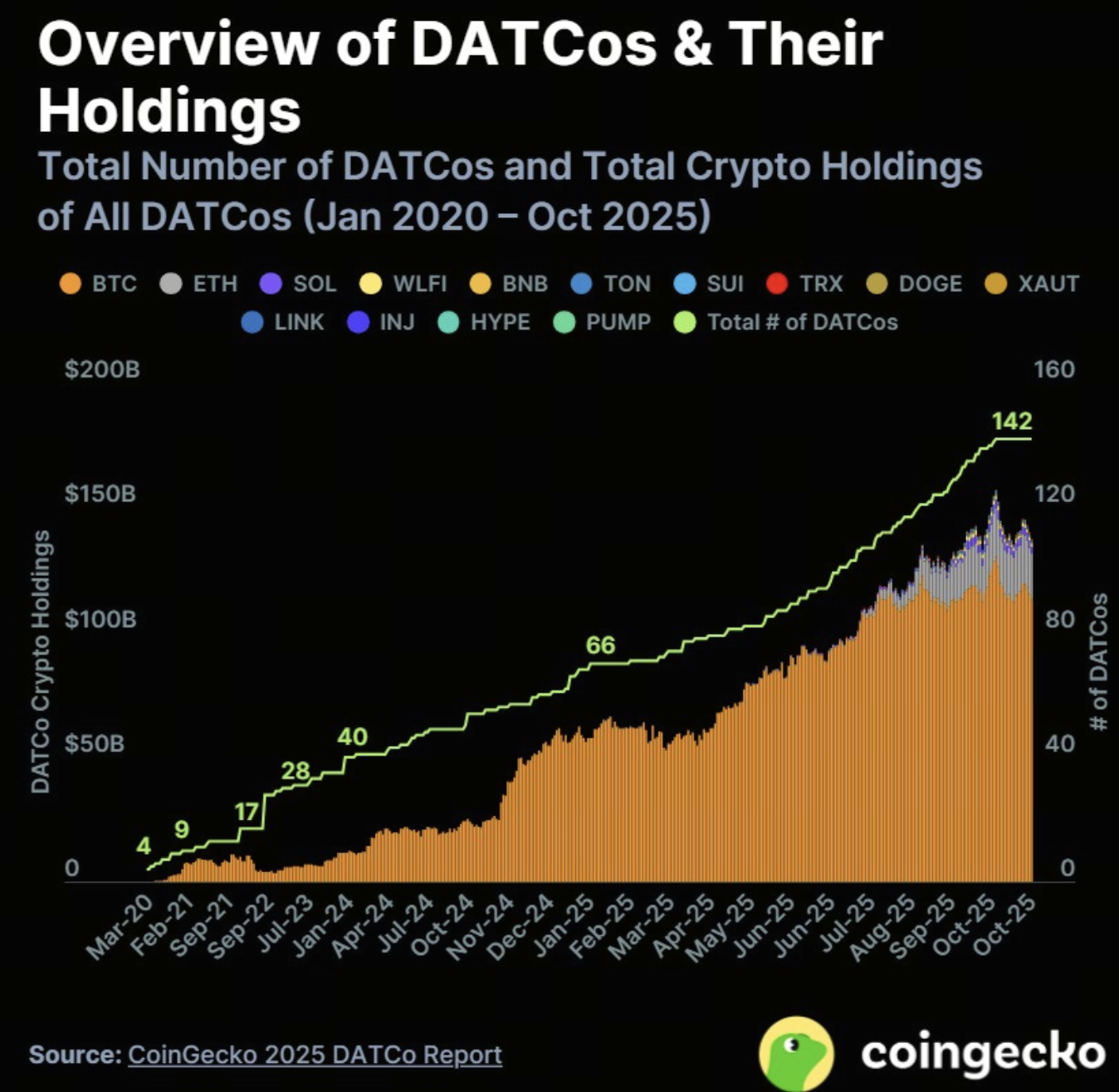
(Image source: CoinGecko)
ZK technology provides an elegant solution: it enables transaction validation without revealing the underlying details, striking a delicate balance between compliance and confidentiality.
Privacy Becomes a Financial Infrastructure Layer
Unlike previous bull markets dominated by hype—from meme coins to NFTs—the next cycle is being driven by real-world utility. Privacy is emerging as a core infrastructure feature rather than an ideological ideal.
Governments are also adapting. Regulatory agencies are beginning to differentiate between privacy as a technology and its misuse for illicit activity. The gradual lifting of sanctions on Tornado Cash signals a shift: regulators now recognize the legitimacy of privacy tools in enabling secure and auditable systems.
In this new phase, privacy isn’t about concealment—it’s a functional requirement for institutional-grade finance.
ZKsync and Ethereum’s Privacy Evolution
ZKsync, developed by Matter Labs, exemplifies this transformation. The project aims to build a provable private computation layer within Ethereum, enabling institutions to perform internal transactions with cryptographic confidentiality.
Traditional private-chain models like Hyperledger Fabric or Corda ensure privacy but lack interoperability and liquidity. In contrast, ZKsync’s approach blends both worlds: private institutional transactions occur on isolated chains, with ZK proofs syncing verified states to the public Ethereum network.
Even Vitalik Buterin has acknowledged this model’s potential, calling it a breakthrough that enhances shared liquidity across the Ethereum Layer 2 ecosystem.
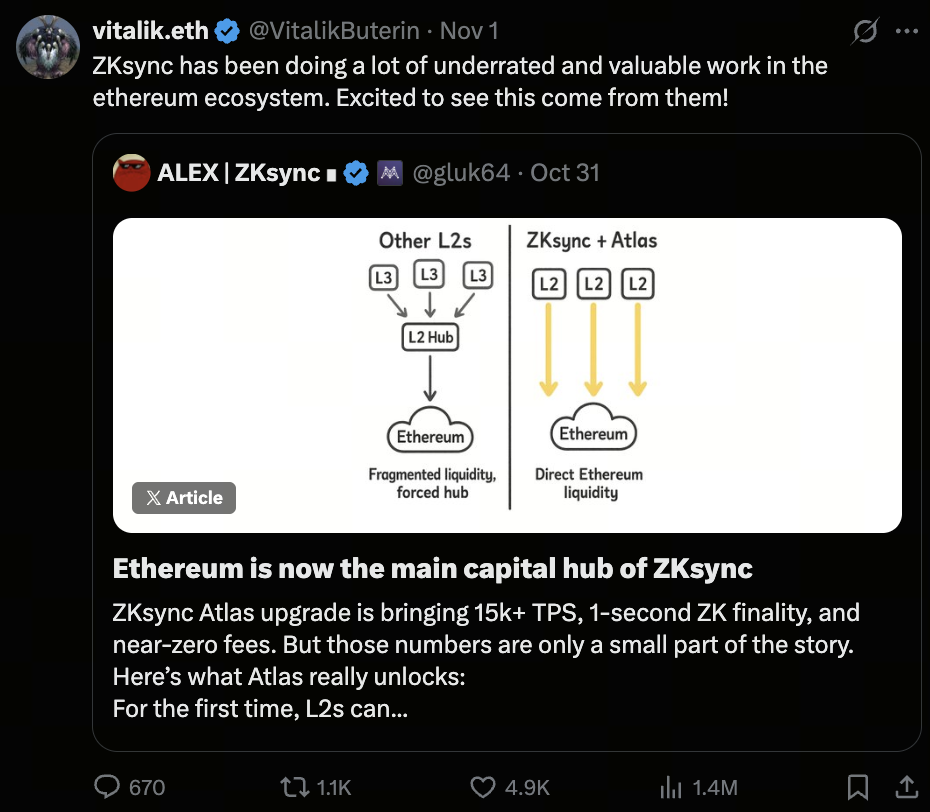
(Image source: Vitalik Buterin)
The Emerging Institutional Privacy Layer
Recent Nansen data shows that ZKsync leads all major chains in fee growth rate—a sign not of retail speculation, but of institutional testing and participation. Following ZKsync’s new tokenomics and staking proposal, network activity surged significantly, reflecting deeper ecosystem engagement.
As Gluchowski noted, the new ZK token economy has encouraged a wave of experimentation, positioning ZKsync as a multi-chain ecosystem rather than a single rollup.
Financial institutions can now deploy dedicated chains within controlled environments while maintaining synchronization with public networks. Pilot programs are already underway, with the first institutional deployments expected by year-end—a milestone toward blockchain’s integration into the core of financial infrastructure.
Conclusion
As the crypto industry matures, privacy is becoming synonymous with trust. ZK technology has transformed from a niche innovation into a foundational layer of decentralized finance, enabling transparent yet confidential operations.
ZKsync’s progress represents more than just a technical leap—it signals the institutionalization of DeFi, where decentralized systems evolve from retail speculation to structured financial frameworks.
The next race in blockchain will not be about market price, but about who can build the most trustworthy infrastructure—where privacy and transparency finally coexist in harmony.
Disclaimer:
This is not investment advice. This information is provided for informational purposes only and should not be construed as a recommendation to buy, sell, or hold any asset. Cryptocurrency trading involves a risk of loss. Gate US services may be restricted in certain jurisdictions. For more information, please see our legal disclosures: https://us.gate.com/legal/disclosures
Share
Content


Related Articles

Bitcoin Halving Chart: Key Dates, Trends, and Future Predictions

Bitcoin Halving Chart:Understanding the Changes in Bitcoin Supply and Price Trends

US December Rate Cut Forecast: Will the Federal Reserve Finally Pivot?

Federal Reserve Ends Quantitative Tightening — How the End of QT Could Reshape Global Markets in 2025

Midnight Network Ignites Cardano’s Next Chapter with NIGHT Token Mining and Privacy Innovation