Tether’s Move into the Mining Infrastructure Layer
(Image source: tether)
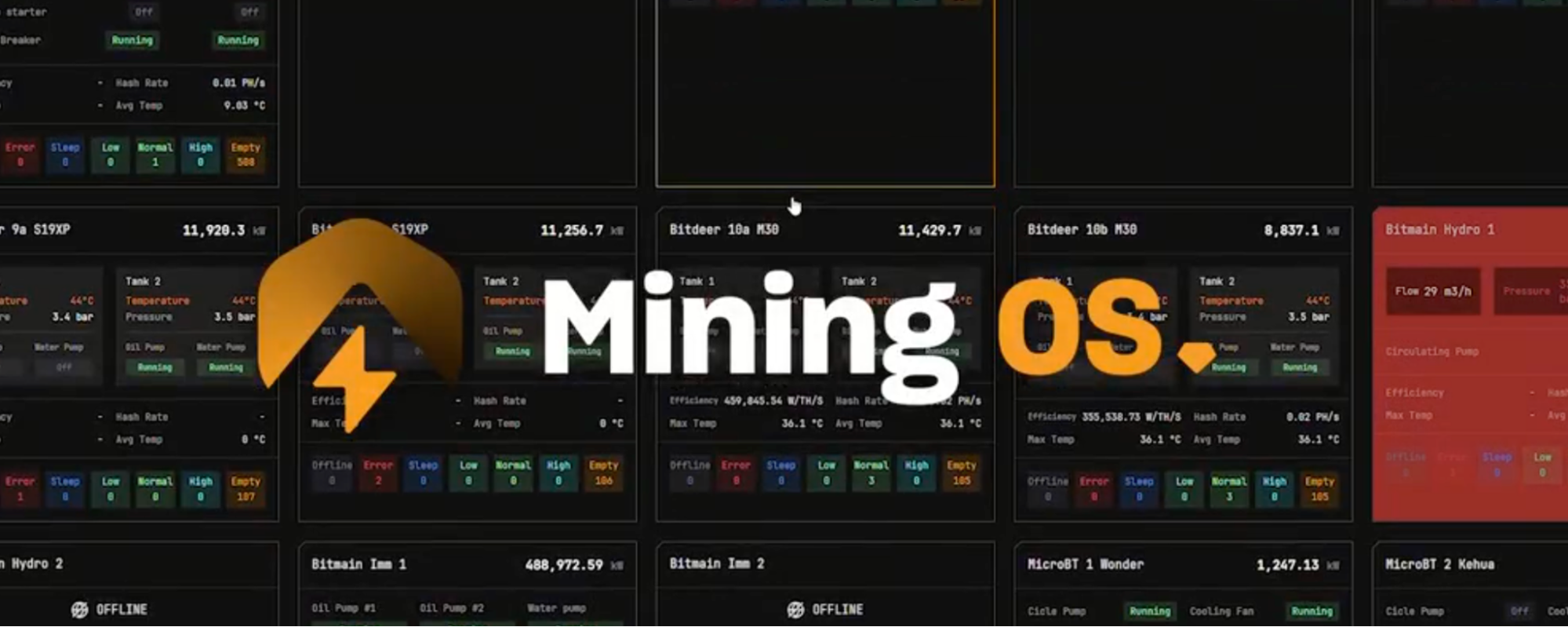
Tether has officially announced the release of Mining OS by Tether, commonly referred to as MOS. Rather than being just another mining management tool, MOS is positioned as a full infrastructure operating system built around open-source principles.
Its primary objective is to simplify mining operations by bringing together three critical layers—energy management, hardware control, and operational data—into a single, cohesive platform.
Alongside the launch, Tether has published complete technical documentation and opened the project to the developer community, encouraging engineers and miners worldwide to participate in its development.
Designed for Both Small and Large Mining Operations
Mining OS is not limited to industrial-scale mining farms. Its architecture is built to support a wide range of users, including:
- Individual home miners
- Medium-sized mining facilities
- Large, geographically distributed mining operations
The system follows a modular design, allowing miners to activate or expand specific components based on real operational needs. As a mining operation grows, MOS can scale with it—without requiring a complete system overhaul.
Challenging the Industry’s Closed-Source Norm
For years, Bitcoin mining has relied heavily on proprietary software and closed platforms. This has created an environment where miners often lack visibility into how systems function and remain locked into specific vendors.
Mining OS directly challenges this structure. Tether aims to replace opaque tools with a model based on open protocols and community collaboration, giving miners direct control over their infrastructure rather than forcing them to depend on black-box solutions.
Fully Open-Source with No Licensing Barriers
Mining OS is released under the Apache 2.0 License, which allows anyone to:
- Use the software freely
- Modify and customize the system
- Build commercial or non-commercial derivatives
No licensing fees or usage restrictions apply.
At the technical level, MOS is built on Holepunch’s peer-to-peer protocol, eliminating reliance on centralized services. There are no hidden backdoors or third-party dependencies, making the system structurally aligned with decentralization principles.
A Sovereignty-Oriented Mining Framework
A core concept behind Mining OS is what Tether describes as “mining sovereignty.” The system is designed to operate entirely on local infrastructure, without requiring cloud platforms or centralized control layers.
This means:
- Mining operations can continue even if external services fail
- No single platform has authority over system functionality
- Peer-to-peer networking ensures resilience even when nodes drop offline
From Tether’s perspective, Mining OS is not merely a utility—it is intended to function as a foundational operating system for Bitcoin mining itself.
Conclusion
Mining OS represents more than Tether’s entry into the Bitcoin mining sector—it reflects a broader attempt to redefine how mining infrastructure should be built. Through open-source licensing, modular architecture, and decentralized networking, MOS shifts miners from passive software users to active infrastructure participants.
As Bitcoin continues to evolve toward greater decentralization and operational independence, Mining OS introduces a new paradigm: one where mining systems are not controlled by closed platforms, but openly owned, verifiable, and shaped by the community that runs them.