Introduction

(Image source: monad)
Monad is a next-generation Layer 1 blockchain designed to push the limits of performance while maintaining full compatibility with the Ethereum Virtual Machine (EVM). Its core objective is to address the long-standing trade-offs between speed, decentralization, and security by introducing a highly optimized architecture that significantly improves throughput and execution efficiency.
A New Approach to Blockchain Performance
Unlike traditional blockchains that process transactions sequentially, Monad rethinks how execution and consensus interact. By restructuring how tasks are handled across the network, it achieves a throughput of around 10,000 transactions per second, with block times of approximately 0.4 seconds and near-instant finality at 0.8 seconds.
This performance is not achieved at the expense of compatibility. Developers can still deploy Ethereum-based applications without needing to modify their code, making Monad an accessible upgrade path for existing ecosystems.
Key Technical Innovations
Monad’s performance improvements stem from a combination of architectural changes that optimize execution, storage, and consensus.
At the execution level, the network introduces optimistic parallel processing. Instead of handling transactions one by one, multiple non-conflicting transactions are processed simultaneously. The system assumes transactions will not interfere with each other, only reprocessing them when conflicts are detected. This significantly increases throughput while preserving correctness.
Another major shift comes from separating consensus from execution. In traditional systems, transactions must be executed before consensus is reached, creating bottlenecks. Monad reverses this flow by ordering transactions first and executing them afterward, allowing the network to process more operations in parallel and reduce latency.
On the storage side, MonadDB provides a more efficient way to manage blockchain state. By leveraging SSD-based storage instead of relying heavily on memory, it reduces hardware requirements and makes node operation more accessible. This design choice lowers barriers to participation and supports broader decentralization.
Consensus and data propagation are also optimized. The MonadBFT mechanism improves block stability, while technologies like RaptorCast accelerate data transmission across nodes. Combined with pipeline processing and just-in-time compilation, these enhancements contribute to a more responsive and scalable system.
Why Monad Matters
Monad’s design is not solely about maximizing speed. It aims to balance performance with accessibility and decentralization. By reducing hardware requirements and maintaining EVM compatibility, it enables a wider range of participants—from individual node operators to developers—to engage with the network.
This combination of scalability and compatibility positions Monad as a practical infrastructure layer for expanding Web3 applications without requiring significant migration costs.
Token Economics and Distribution
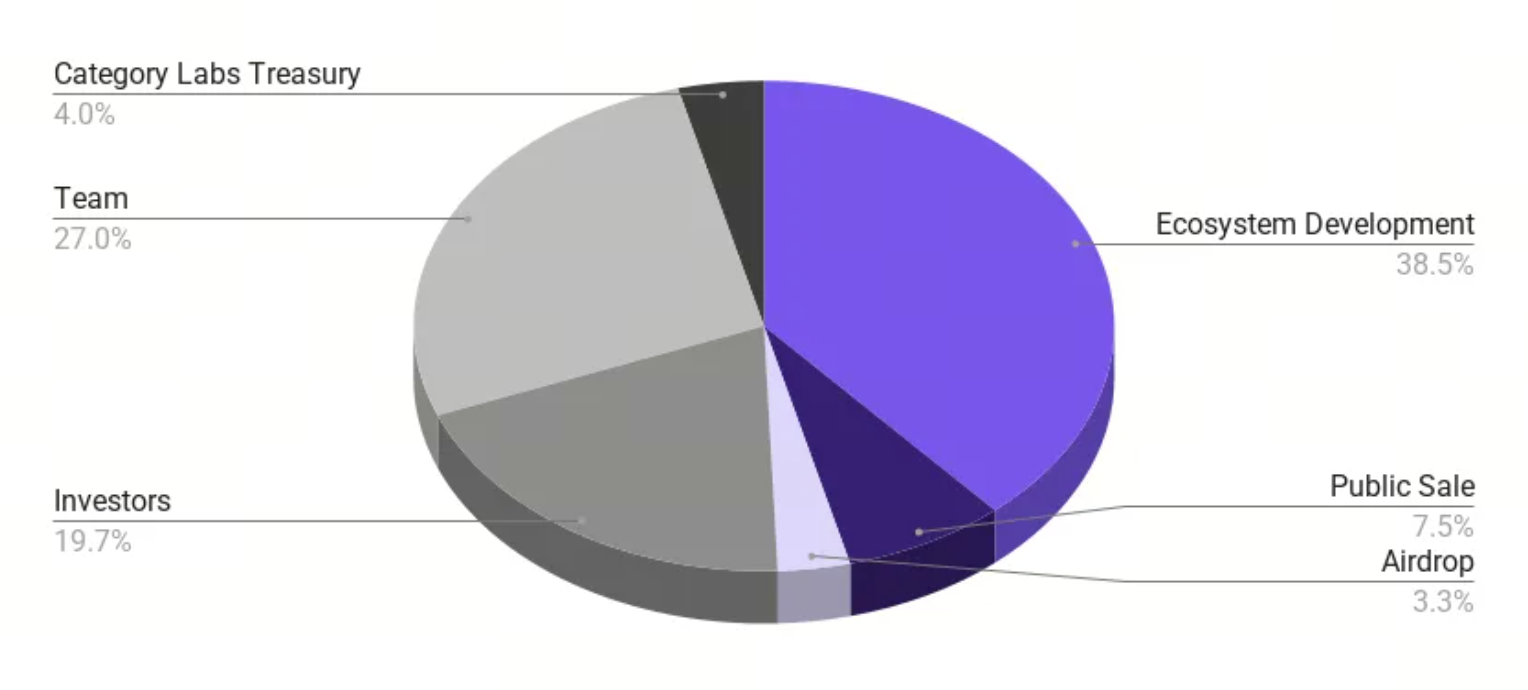
The MON token is structured around long-term sustainability and decentralization, with a fixed total supply of 100 billion tokens and no private sale or pre-mining.
A portion of the supply is allocated to public sale and community distribution, ensuring early circulation. A significant share is reserved for ecosystem development, managed by the foundation to support validators, incentives, and application growth over time. Team and investor allocations follow structured vesting schedules, with initial lock-up periods and gradual release to prevent early concentration.
To maintain balance in supply dynamics, the protocol introduces moderate inflation through block rewards, while simultaneously burning base gas fees. This creates a system where issuance and deflation mechanisms coexist, helping stabilize long-term token economics.
Additionally, restrictions on locked tokens—such as preventing them from being staked—are designed to avoid early dominance by insiders and promote fair participation.
(Image source: monad)
Differences from Ethereum
While Monad remains EVM-compatible, its execution model and transaction mechanics differ in several ways. For instance, transaction fees are calculated based on gas limits rather than actual consumption, which helps mitigate risks associated with asynchronous execution.
The network also introduces adjustments to contract size limits and opcode costs, as well as support for additional cryptographic standards. At the same time, certain Ethereum features—such as blob transactions or a global mempool—are not included, reflecting Monad’s distinct architectural priorities.
Due to its high throughput, the network does not aim to store unlimited historical state data, focusing instead on efficiency and performance.
Conclusion
Monad represents a significant evolution in Layer 1 blockchain design. By combining parallel execution, asynchronous processing, optimized storage, and refined consensus mechanisms, it sets a new benchmark for high-performance infrastructure.
More importantly, it demonstrates that scalability does not have to come at the cost of decentralization or developer accessibility. As the Web3 ecosystem continues to grow, Monad offers a compelling foundation for applications that demand both speed and reliability.