State-Level Licensing and the US Digital Asset Market
The regulatory environment for digital asset services in the United States is shaped by multiple layers of oversight. Federal requirements, state money transmission laws, and jurisdiction-specific consumer protection standards can all influence how a platform operates. For companies serving customers across the country, this creates a compliance structure that must account for differences between individual states rather than relying on a single nationwide authorization.
Money transmission licensing is one important part of this structure. Depending on the jurisdiction and the activities involved, businesses that receive, hold, transfer, or facilitate the movement of customer funds may be required to obtain authorization from state regulators. These requirements can involve financial standards, operational procedures, reporting obligations, and ongoing regulatory supervision.
For digital asset platforms, the distinction matters because services involving fiat currency, stablecoins, and customer account balances may intersect with different regulatory categories. A platform’s licensing position therefore provides insight into the jurisdictions in which it is authorized to conduct covered activities. It does not, by itself, establish that every product or service is subject to the same authorization or regulatory treatment.
What the Massachusetts Money Transmitter License Represents
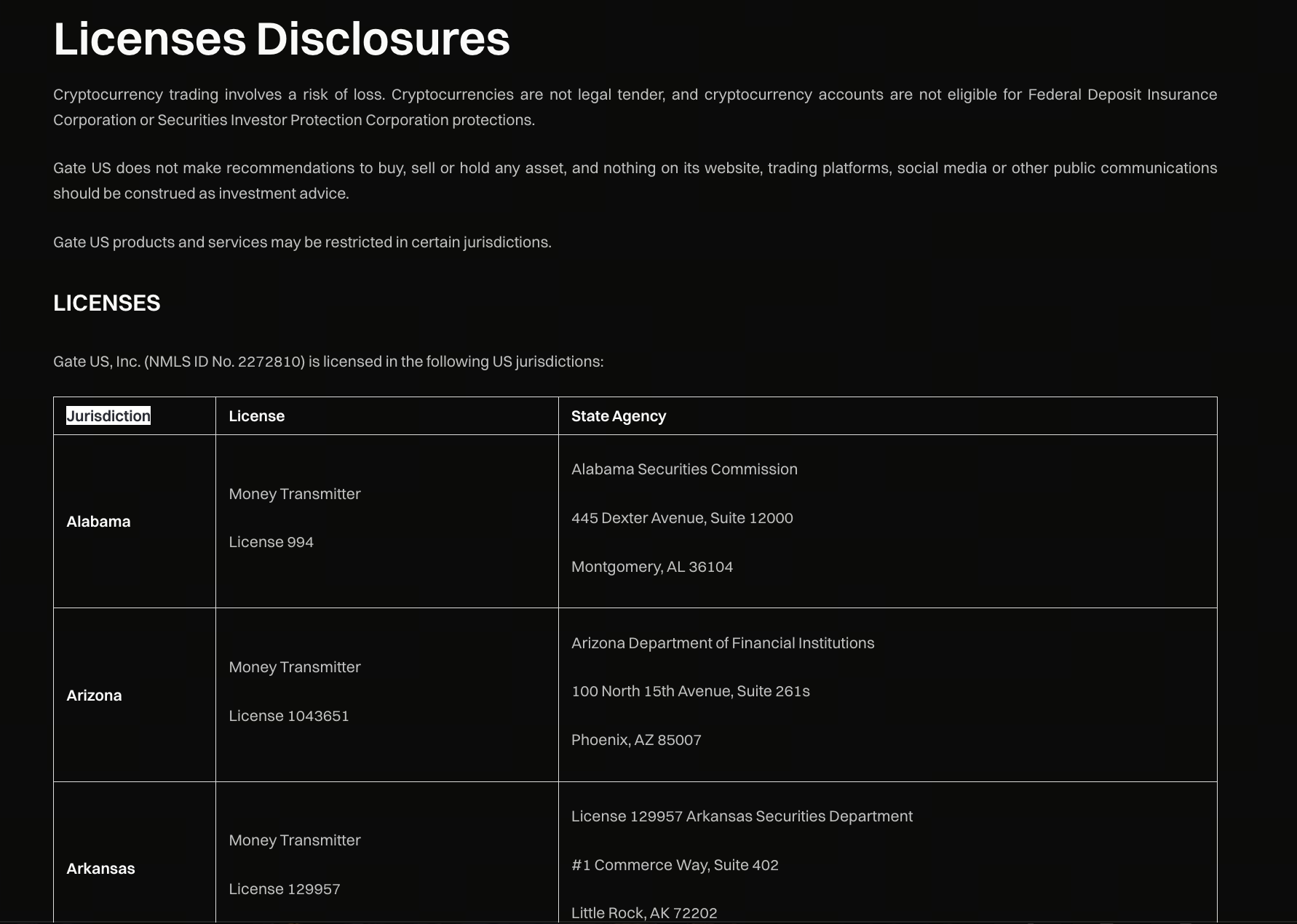
Gate US’s Massachusetts Money Transmitter License, announced in September 2026, forms part of its broader state-level regulatory footprint. Massachusetts is among the states that maintain their own money transmission licensing requirements, with oversight administered by the Massachusetts Division of Banks.
A state money transmitter license generally establishes that a company has met the applicable requirements to conduct covered money transmission activities in that jurisdiction. Depending on the regulatory framework, these requirements may address financial condition, permissible business activities, compliance policies, recordkeeping, and consumer-related obligations.
The significance of the Massachusetts license is therefore not simply the addition of another state to a list. It reflects the need for a digital asset business to operate within a defined regulatory framework and maintain processes that address state-specific obligations. Such authorization is one component of a company’s compliance infrastructure, alongside other legal, financial, and operational controls.
The license should also be understood within its proper scope. A money transmission license is not equivalent to a banking charter, nor does it automatically mean that all digital assets or investment products offered through a platform receive the same regulatory treatment. Users should consider the specific service involved and the applicable terms and disclosures.
Building a Broader Regulatory Framework Across the United States
Gate US has stated that it holds 37 state-level Money Transmitter Licenses and is licensed or otherwise authorized to operate in 47 US states and jurisdictions, where permitted by applicable law. This footprint illustrates the geographic complexity of operating a financial services platform in the United States.
The distinction between the two figures is important. The number of Money Transmitter Licenses refers specifically to state-level licensing, while the broader authorization figure may include other forms of regulatory permission or applicable operating arrangements. They should not be treated as interchangeable measures.
Maintaining authorization across multiple jurisdictions also involves ongoing responsibilities. A license is not simply a one-time approval. Depending on the relevant state requirements, a licensed business may need to maintain minimum financial standards, submit regulatory filings, retain transaction records, respond to supervisory requests, and update its compliance procedures as laws and business activities change.
For a platform operating across state boundaries, these responsibilities can require a coordinated compliance system. Policies must be designed to address common operational risks while remaining responsive to individual state requirements. This includes monitoring regulatory developments, reviewing product availability by jurisdiction, and ensuring that customer-facing disclosures reflect applicable restrictions.
A broad licensing footprint can indicate that a company has invested in meeting requirements across multiple jurisdictions. However, the number of licenses alone does not measure the effectiveness of every internal control or eliminate the risks associated with digital asset services.
How Regulatory Compliance Connects to Platform Security
Regulatory authorization and platform security address different but related aspects of financial services. Licensing establishes the legal conditions under which certain activities may be conducted. Security controls focus on protecting accounts, transaction processes, systems, and customer information from operational failures and malicious activity.
A comprehensive compliance framework may include customer identification and verification procedures, transaction monitoring, suspicious activity controls, recordkeeping, and internal compliance reviews. These processes help a platform identify activity that may present financial crime or regulatory risks. They also create operational records that can support internal reviews and regulatory examinations.
Platform security requires additional technical and organizational measures. These may include access controls, authentication procedures, withdrawal safeguards, infrastructure monitoring, incident response planning, and regular reviews of system vulnerabilities. The effectiveness of these measures depends on how they are implemented, tested, and maintained over time.
The relationship between compliance and security is particularly relevant for digital asset platforms because transactions can involve both traditional financial infrastructure and blockchain networks. A failure in account security, transaction authorization, or operational monitoring can create risks that are not resolved simply by holding a regulatory license. Conversely, technical safeguards do not replace the legal and compliance obligations associated with operating a financial services business.
For this reason, regulatory authorization should be viewed as one element of a wider risk management structure rather than a standalone guarantee of platform security.
What Users Should Understand About Asset Protection
When evaluating a digital asset platform, users may consider its regulatory status alongside its security practices, product terms, and asset custody arrangements. These factors answer different questions and should not be treated as substitutes for one another.
A state money transmission license indicates authorization for specified activities under the relevant jurisdiction’s legal framework. It does not mean that digital assets held on a platform are equivalent to bank deposits. It also does not guarantee that users will avoid losses caused by market volatility, operational incidents, cyberattacks, or other risks.
In particular, Gate US is not a bank, and digital assets are not insured by the Federal Deposit Insurance Corporation (FDIC) or protected by the Securities Investor Protection Corporation (SIPC) merely because a platform holds money transmission licenses. Users should review the applicable account agreements, risk disclosures, custody arrangements, and product-specific terms to understand how their assets are handled.
A practical assessment should therefore consider several dimensions:
- Regulatory status: Confirm whether the platform is authorized to provide the specific service in the user’s state.
- Operational safeguards: Review available information about account protection, transaction controls, and security procedures.
- Asset and product risks: Understand custody arrangements, withdrawal conditions, market exposure, and the limits of any applicable protection.
Regulatory licensing provides an important foundation for lawful operations, but users still need to understand the risks and protections associated with each service they use.
Conclusion
Gate US’s regulatory footprint, including its Massachusetts Money Transmitter License announced in September 2026, illustrates the importance of state-level authorization in the US digital asset market. With 37 state-level Money Transmitter Licenses and authorization to operate in 47 states and jurisdictions where permitted by law, its compliance framework reflects the need to address a fragmented regulatory environment.
The broader significance of this framework lies in the ongoing work required to maintain regulatory compliance across jurisdictions. Licensing, internal controls, transaction monitoring, and technical security measures serve complementary purposes. For users, understanding these distinctions provides a more balanced basis for evaluating a platform than treating the number of licenses as a direct measure of asset safety.