Beeple and the Crypto Art Revolution: How One Artist Redefined Digital Ownership
Who Is Beeple?
Beeple — whose real name is Mike Winkelmann — is an American digital artist who started creating a new artwork every single day back in 2007. His “Everydays” project, now spanning thousands of unique pieces, demonstrates an extraordinary combination of discipline, creativity, and consistency. Over time, his work evolved from simple sketches to complex 3D visuals reflecting global culture, politics, and technology.
Beeple’s style mixes dystopian imagery, internet memes, and surreal humor — often depicting the chaos of modern digital life. But beyond style, it’s his use of NFT technology that made him a pioneer of the digital art renaissance.
From “Everydays” to $69 Million: A Digital Milestone
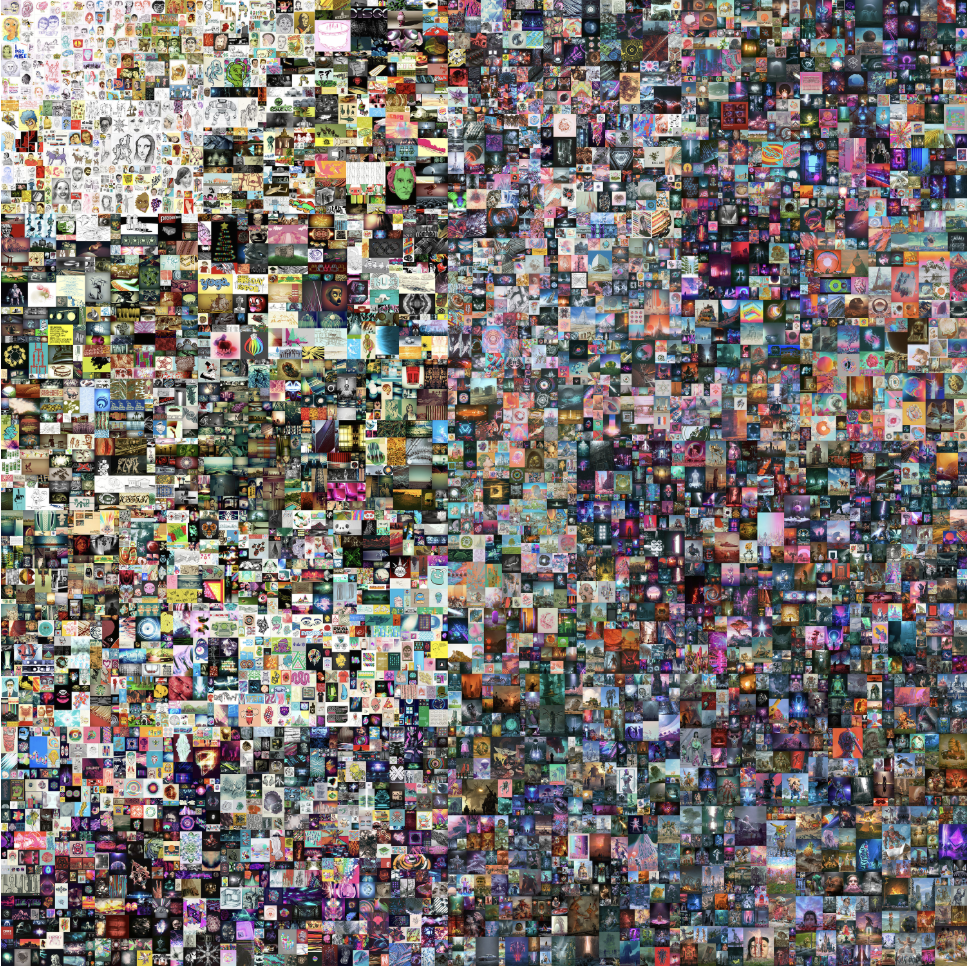
In March 2021, Beeple’s NFT collage Everydays: The First 5000 Days was sold by Christie’s for $69.3 million — the first purely digital artwork ever sold by a major auction house.That sale turned heads not just in art circles but across the entire tech and crypto industry.
For the first time, a digital file — something that can be infinitely copied — had verifiable ownership and scarcity thanks to blockchain technology. It marked the birth of a new era where digital art \= ownable art.
The sale also placed Beeple among the top three most valuable living artists, alongside Jeff Koons and David Hockney. It was a moment that changed how the world perceived digital creation.
NFTs and Blockchain: Turning Art Into Assets
To understand Beeple’s impact, one must first grasp what NFTs are.An NFT (Non-Fungible Token) is a unique cryptographic record stored on a blockchain that verifies the authenticity and ownership of a digital asset.
For decades, digital art suffered from a core problem — how to prove who owns it. Anyone could copy a JPEG file, making it impossible to assign value. Beeple and other early NFT artists solved this by minting their works on blockchain networks like Ethereum, where each piece has a traceable history and a verifiable owner.
This innovation bridged the gap between digital creativity and financial value — a shift that brought millions of new participants into the crypto art space.
As Beeple put it in an interview, “Blockchain did for digital artists what the gallery system did for painters centuries ago — it gave us ownership and a market.”
Beeple’s Impact on the Crypto Art Ecosystem
Beeple’s influence extends far beyond a record-breaking sale. His success sparked an entire movement that transformed how artists, collectors, and investors engage with art.
1.Mainstream Legitimization of NFT Art
Before Beeple, NFT art was a niche phenomenon within crypto communities. After Christie’s sale, mainstream media, galleries, and auction houses started recognizing NFTs as legitimate art forms.
2.Empowering Independent Creators
Beeple proved that digital artists don’t need traditional gatekeepers. Through NFT platforms like OpenSea and SuperRare, artists can mint and sell directly to collectors, retaining royalties on secondary sales.
3.Bridging Crypto and Culture
Beeple’s work often references Bitcoin, Elon Musk, and tech culture, making his art a visual bridge between crypto and pop culture. This helped expand the crypto art audience beyond developers and traders to include mainstream creatives and collectors.
4.Driving the “Metaverse Aesthetic”
Beeple helped shape the visual language of Web3 — colorful, chaotic, and immersive. His recent work involves 3D spaces and interactive installations that align with Metaverse concepts.
Lessons for New Artists and Collectors
For Artists:
Consistency matters. Beeple’s success was built on 14 years of daily practice, not overnight luck.
Embrace technology. Learn how NFTs, smart contracts, and wallets work — they’re tools to protect and monetize your art.
Build community. The NFT world thrives on engagement; sharing your process and joining digital art communities can multiply your visibility.
For Collectors:
Research before buying. Not all NFTs have lasting value — look for creators with authentic stories and consistent output.
Verify provenance. Always check the token contract and metadata to confirm ownership.
Think long-term. NFT markets are volatile; collect for the art and vision, not just for speculative profit.
The Future of Crypto Art
While the NFT market has faced ups and downs since 2021, the foundation laid by Beeple remains strong. His recent projects involve physical NFT galleries and interactive installations that merge digital and physical experiences.
In 2025, Beeple continues to experiment with AI tools and Web3 infrastructure, proving that the intersection of art and technology is still evolving. The focus has shifted from speculation to utility — where NFTs represent membership, access, and identity in digital spaces.
As a result, Beeple is not just an artist but a cultural architect of the crypto era — one whose legacy will inspire creators to think beyond mediums and markets.
Summary
Beeple’s story is a reminder that the digital age is as much about ownership as it is about creation. By merging art and blockchain, he redefined what it means to “own” something in a world of infinite copies.His journey from daily artist to NFT icon is a blueprint for how technology can empower creativity — not replace it.
For beginners exploring the crypto art space, Beeple’s path shows that the real value of NFTs isn’t in hype, but in authenticity, consistency, and vision.
Disclaimer:
This is not investment advice. This information is provided for informational purposes only and should not be construed as a recommendation to buy, sell, or hold any asset. Cryptocurrency trading involves a risk of loss. Gate US services may be restricted in certain jurisdictions. For more information, please see our legal disclosures: https://us.gate.com/legal/disclosures
Share
Content


Related Articles

Bitcoin Halving Chart: Key Dates, Trends, and Future Predictions

Bitcoin Halving Chart:Understanding the Changes in Bitcoin Supply and Price Trends

US December Rate Cut Forecast: Will the Federal Reserve Finally Pivot?

Midnight Network Ignites Cardano’s Next Chapter with NIGHT Token Mining and Privacy Innovation

DeFi TVL Hits $237 Billion: What the 2025 Surge Means for Crypto Investor