BlockRider

vip
Age 1.1 Yıl
Peak Tier 0
No content yet
#GateGoldenTouch
#GateGoldenTouch #Gate金手指
The Moment Before the Touch — Where One Decision Changes Everything
I was sitting in front of the screen… but this time, the market felt different.
Not fully red. Not fully green. Just uncertainty.
Charts were moving — but without clear direction. Indicators were giving mixed signals. News wasn’t helping either. Everything felt… unclear.
And there I was, stuck with one simple question:
“Do I touch… or do I wait?”
That exact moment — that pause between action and patience — is where the real meaning of the Golden Touch begins to reveal itself.
Golden
HighAmbitionvip
#GateGoldenTouch
#GateGoldenTouch #Gate金手指
The Moment Before the Touch — Where One Decision Changes Everything
I was sitting in front of the screen… but this time, the market felt different.
Not fully red. Not fully green. Just uncertainty.
Charts were moving — but without clear direction. Indicators were giving mixed signals. News wasn’t helping either. Everything felt… unclear.
And there I was, stuck with one simple question:
“Do I touch… or do I wait?”
That exact moment — that pause between action and patience — is where the real meaning of the Golden Touch begins to reveal itself.
Golden Touch Is Not Luck — It’s Timing
Most people think the Golden Touch means winning every trade.
But the truth is the opposite.
Golden Touch means:
Not touching every opportunity
Not chasing every pump
Not buying every dip blindly
Because not every move is meant for you.
Real traders understand one powerful truth:
Sometimes doing nothing is the strongest move you can make.
Every Click on Gate Is a Decision
On Gate, you’re not just trading — you’re making decisions.
And every decision carries weight:
An early entry → unnecessary risk
A late exit → lost opportunity
An emotional trade → broken discipline
But when you develop the Golden Touch…
Every action becomes intentional.
Every move becomes calculated.
Every risk is understood — not guessed.
The Difference That Changes Everything
Same chart.
Same coin.
Same market conditions.
Yet:
One trader loses
Another trader wins
The difference isn’t the market.
It isn’t even the strategy.
The difference is execution and self-control.
Golden Touch is when you stop reacting… and start deciding.
The Power of Waiting
The market always gives opportunities — just not all at once.
If you try to catch every move, you lose focus, energy, and capital.
But if you learn to wait:
Your entries become sharper
Your mistakes become fewer
Your decisions become clearer
Your capital stays protected
Patience is the core of the Golden Touch.
The Real Formula Behind the Golden Touch
There’s no secret indicator.
No hidden signal.
It’s a combination of four things:
Clarity — understanding what the market is actually doing
Control — managing your emotions under pressure
Confidence — trusting your strategy without hesitation
Calmness — staying stable when volatility rises
When these align…
Your touch becomes golden.
Final Thought
Golden Touch doesn’t mean you’re always right.
It means:
You don’t break after being wrong
You wait until the moment is clear
You act based on logic — not emotion
Gate gives you the platform.
The market gives you opportunities.
But the Golden Touch?
That’s built when you learn
when to act…
when to stop…
and when to simply wait.
Trade less. Think deeper. Touch wisely.

repost-content-media
  • Reward
  • Comment
  • Repost
  • Share
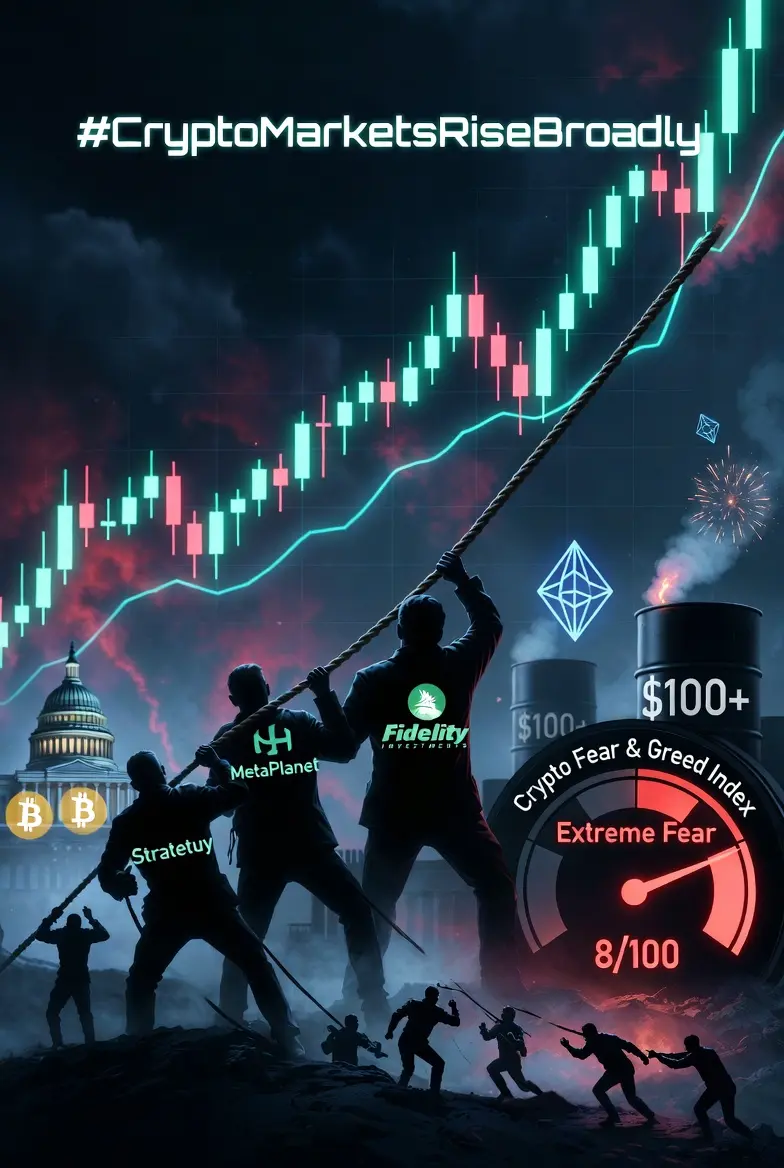
#CryptoMarketsRiseBroadly
1. The Hashtag Topic Itself: What Does It Mean?
#CryptoMarketsRiseBroadly means the crypto market is not just seeing one or two coins go up — it is a broad-based rally where most major assets are rising together. This kind of move carries more weight than a single-coin pump because it signals general positive momentum across the market. The current rise is being driven by a combination of institutional buying, improving policy signals, and short-squeeze dynamics — not pure organic retail demand. That distinction matters a great deal when evaluating how sustainable th
HighAmbitionvip
#CryptoMarketsRiseBroadly
1. The Hashtag Topic Itself: What Does It Mean?
#CryptoMarketsRiseBroadly means the crypto market is not just seeing one or two coins go up — it is a broad-based rally where most major assets are rising together. This kind of move carries more weight than a single-coin pump because it signals general positive momentum across the market. The current rise is being driven by a combination of institutional buying, improving policy signals, and short-squeeze dynamics — not pure organic retail demand. That distinction matters a great deal when evaluating how sustainable this rally is.
2. Why Has the Crypto Market Risen Broadly? What Are the Reasons?
Several forces are converging right now:
Institutional accumulation is happening at scale. Fidelity, MetaPlanet (which raised $255M specifically for BTC buying), and Strategy (whose preferred stock STRC raised the equivalent of 250+ BTC in buying power within 25 minutes of opening) are all adding to positions aggressively.
US Policy tailwinds are significant. Republican senators Lummis and Cassidy just introduced the "Mined in America Act" which would formally codify Trump's executive order to establish a Strategic Bitcoin Reserve into law. This is a huge legitimacy signal.
US Labor Department proposed opening 401(k) retirement accounts to crypto — meaning ordinary Americans' retirement funds could soon flow into digital assets. That is trillions of dollars in potential inflow.
Square (Block) has begun auto-enabling Bitcoin payments at point-of-sale terminals for eligible US merchants — real-world utility is expanding.
Interactive Brokers just launched crypto trading for retail investors across the entire European Economic Area, covering 11 digital assets including BTC and ETH. Fresh capital access from Europe.
Short liquidations also pushed prices up. In the last 24 hours, over $305 million in total liquidations occurred — of which $190 million were short positions getting wiped out, which mechanically forces prices higher.
All of these together are why the market rose broadly — it is not one reason, it is a stack of catalysts hitting simultaneously.
3. BTC and ETH Performance — How Did They Actually Do?
Bitcoin (BTC):
Current price: $68,256
24-hour change: +1.63%
24-hour range: $65,996 (low) to $68,586 (high)
Trading volume: -$870 million in 24 hours
BTC is trading in a consolidation zone between $66K and $68.6K — it is not breaking out cleanly, which reflects the tug-of-war between institutional buyers and retail sellers who are capitulating (the long-term holder SOPR metric has dropped below 1, meaning long-term holders are selling at a loss — a classic capitulation signal).
Ethereum (ETH):
Current price: $2,110
24-hour change: +3.7% — ETH actually outperformed BTC today
24-hour range: $2,012 (low) to $2,123 (high)
Trading volume: -$426 million
ETH is battling the $2,000 support level — it reclaimed it today. Bitmine Immersion Technologies alone bought 71,179 ETH worth $147 million in a single week, their biggest purchase of 2026 — that kind of institutional demand is directly visible in the price action.
On the development side, Aave V4 has deployed on mainnet and the Ethereum Foundation has a quantum-resistance roadmap set for 2029 (more on quantum below).
ETH outperformed BTC today (+3.7% vs +1.63%) — a meaningful reversal of the trend where ETH had been lagging BTC for months.
4. The Market Is Still in a Fear Zone — What Does That Mean?
The Crypto Fear and Greed Index sits at just 8 out of 100 — this is classified as Extreme Fear. It has been above 70 days in extreme fear territory. To put this in perspective:
A reading of 0-25 = Extreme Fear
25-50 = Fear
50-75 = Greed
75-100 = Extreme Greed
A score of 8 is near the absolute floor of fear. Historically, extreme fear zones are actually where the best long-term buying opportunities exist (because everyone is already selling, there is not much forced selling left). However, fear does not mean prices cannot fall further — it means sentiment is deeply negative even as prices nudge up.
The spot BTC ETF market has seen 13 consecutive days of negative premium and net outflows — meaning even ETF investors are reducing exposure. This is the institutional paper-hand behavior, which is unusual and adds to the fear narrative despite the physical buying happening elsewhere.
5. Prices Rising and Investment Going On Simultaneously — How Can Both Coexist?
This is actually one of the most fascinating dynamics in the market right now, and it is a real paradox worth understanding:
Prices are rising because large institutions (Fidelity, MetaPlanet, Strategy, Bitmine) are buying heavily — these are billion-dollar players who buy regardless of sentiment.
Fear is simultaneously high because retail investors and even some long-term holders are selling into this institutional demand — they are taking losses just to exit.
Think of it like a tug of war: institutions are pulling the rope upward with enormous force, but retail is selling on the way up, creating drag. The net result is a slow, grinding upward movement rather than a clean explosive rally. The market rises, but nervously. Both things — buying and fear — are real and happening at the same time, which is why the price action feels unstable even as it technically moves higher.
6. Fidelity Is Buying — What Is the Significance?
Fidelity is not just any buyer. It is one of the largest asset managers in the world, managing over $5 trillion in assets. When Fidelity buys Bitcoin:
It signals that this is now a legitimate institutional asset class, not a speculative toy
It brings credibility that attracts other institutional funds
It creates real structural demand — these are not leveraged purchases that get liquidated in a crash; these are long-term allocations
Alongside Fidelity, MetaPlanet raised $255 million specifically to buy BTC — Japan's version of MicroStrategy. And Strategy (formerly MicroStrategy) continues accumulating. This institutional buying wave is the foundational reason why the market has a floor under it even in a period of extreme retail fear.
The US government itself is building a Strategic Bitcoin Reserve through Trump's executive order — now being codified into law. When sovereign governments hold BTC as a reserve asset, the demand floor is permanent.
7. Retail Investors Are Still Panicking — Why and What Does It Tell Us?
Retail fear is at an extreme for several reasons:
Long-term holder SOPR below 1: This means people who have held BTC for a long time are now selling at a loss — they bought higher and cannot take the pressure of waiting. This is textbook capitulation.
ETF net outflows for 13 days straight: Even people who invested through ETFs (a more "hands-off" approach) are pulling money out.
Macro uncertainty (oil prices, Iran war, Fed rate concerns) is making retail nervous about all risk assets simultaneously.
Quantum computing fear: Google's quantum AI team published research showing their algorithm reduces the difficulty of breaking Bitcoin's encryption by 20x — about 6.9 million exposed BTC public keys could theoretically be at risk. This created a panic wave among retail holders who do not understand that Bitcoin developers already have BIP-360 (quantum-resistant addresses) in testing on the testnet, and that actual exploitation is years away — but fear does not wait for facts.
The important insight: retail capitulation at extreme fear levels is historically a precursor to the next rally phase — but timing it is impossible.
8. Oil at $100+ Per Barrel — How Is This Hurting Crypto?
This is the macro wildcard right now and arguably the biggest headwind for all risk assets:
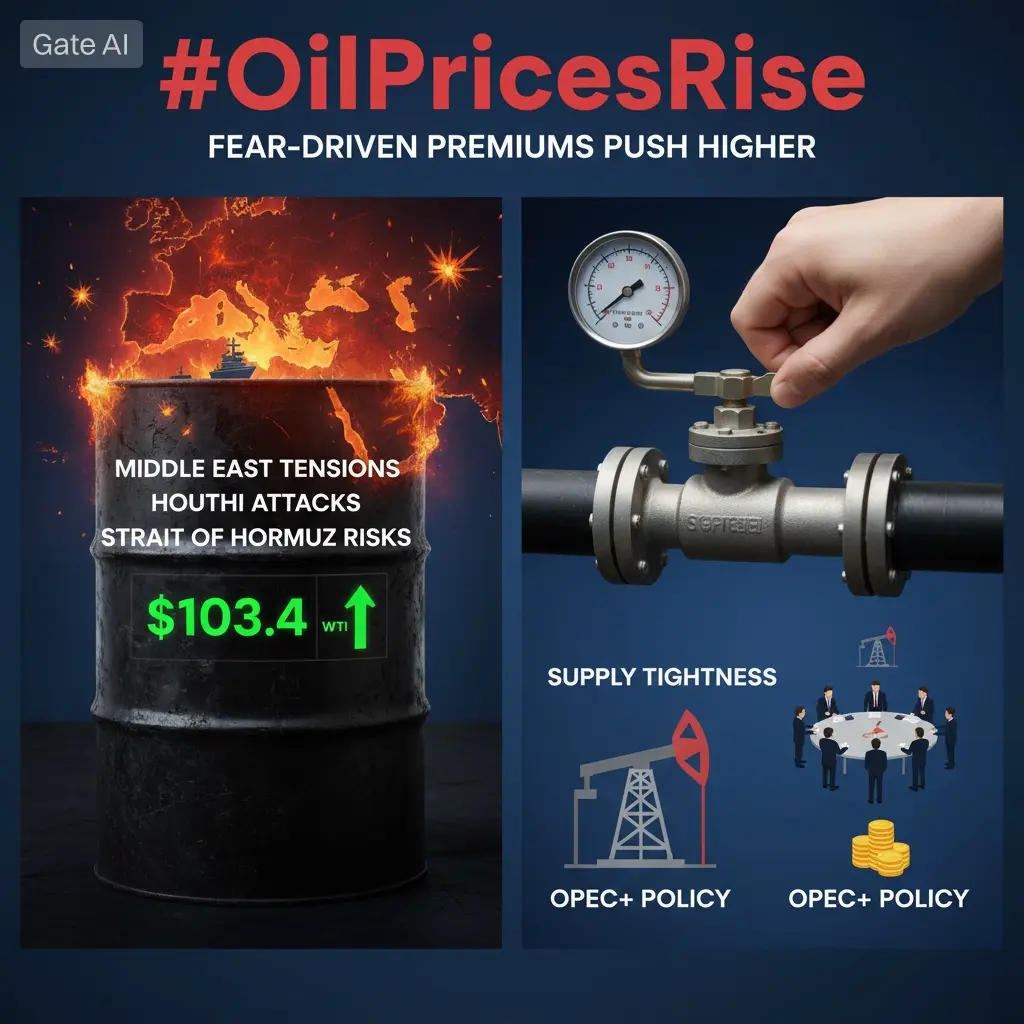
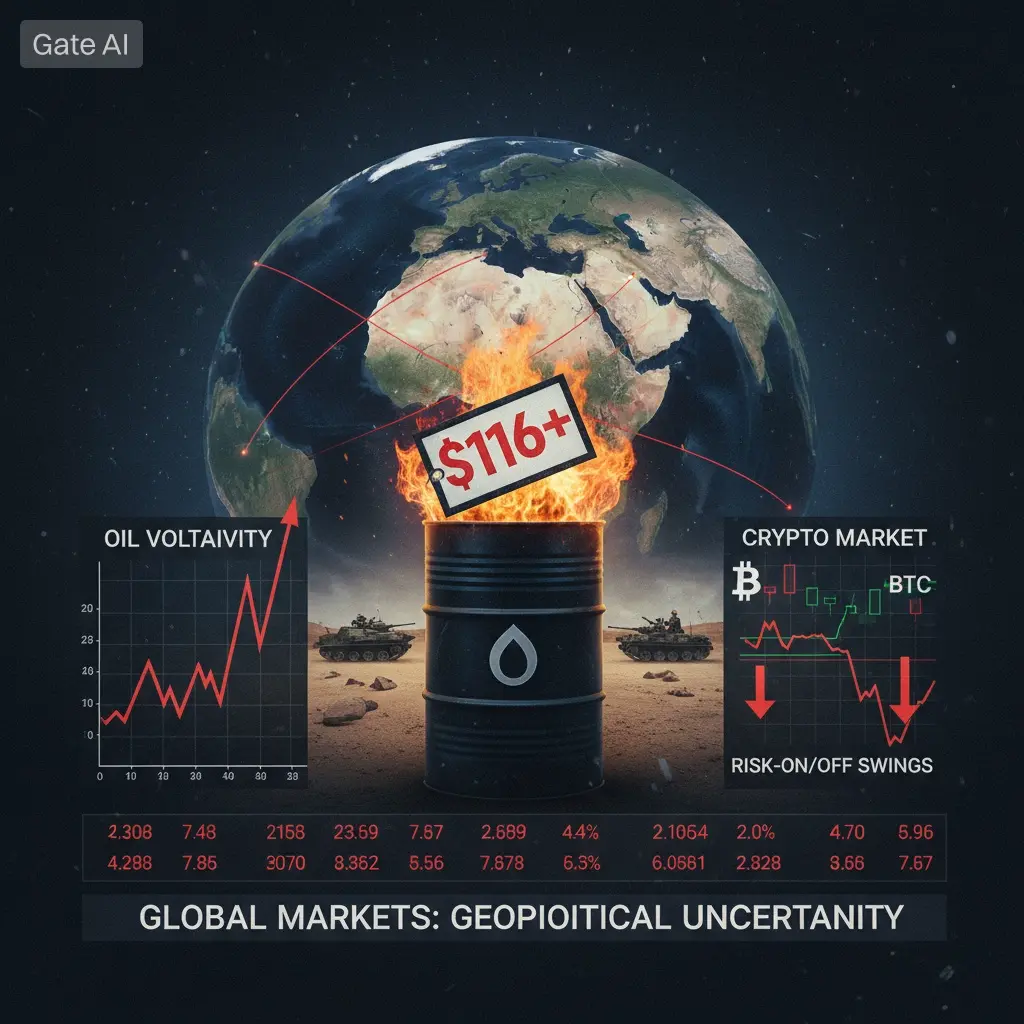
Brent crude is at $115.50/barrel, WTI at $104.34 — on track for the biggest monthly oil price gain on record
The driver is the Iran war — conflicts in the Middle East have disrupted the Strait of Hormuz, a critical oil chokepoint through which roughly 20% of global oil trade flows
Ukraine has also struck Russian oil infrastructure, disrupting a backup supply route — this compounded the supply shock
How this hits crypto specifically:
Sticky inflation — when oil is expensive, everything is expensive. Inflation becomes stubborn.
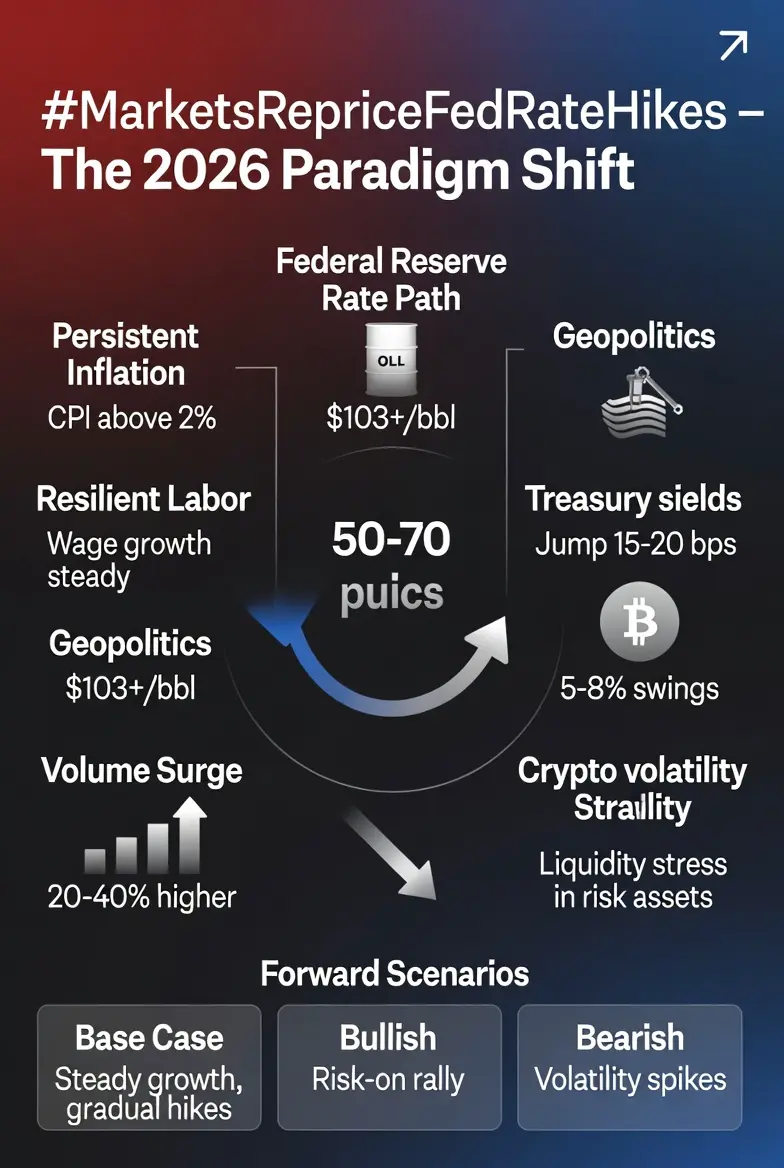
Fed rate pressure — if inflation stays high due to oil, the Federal Reserve cannot cut rates (and might even raise them). Higher rates mean less liquidity in the global financial system.
Less liquidity = risk-off — when liquidity tightens, investors sell risk assets first. Crypto is a high-beta risk asset, meaning it moves more aggressively than stocks in both directions.
Macro fear spreads — even Fed Chair Powell speaking at Harvard could only partially soothe markets. Nasdaq closed -0.75% on the same day crypto was trying to rally. That correlation drag weighs on crypto.
The oil situation is not just background noise — it is the single biggest macro reason why this crypto rally is fragile and why the fear index cannot climb higher despite institutional buying.
The broad rally in crypto markets is being driven by a combination of institutional buying, supportive US policy developments, expanding access channels, and short liquidations, all aligning at the same time. Bitcoin is currently trading at $68,256 with a +1.63% daily gain, moving within a consolidation range between $66K and $68.6K, reflecting a balance between buyers and sellers, while Ethereum is at $2,110 with a stronger +3.7% gain, clearly outperforming Bitcoin in the short term.
At the same time, the Fear Index remains extremely low at 8/100, marking over 70 consecutive days in the extreme fear zone, which highlights deeply negative sentiment despite rising prices. This creates a unique situation where prices are moving upward while fear remains high — primarily because institutions are aggressively buying while retail investors continue selling into that demand, resulting in a slow and unstable upward grind.
Fidelity’s involvement is highly significant, as a multi-trillion-dollar asset manager entering the market reinforces Bitcoin’s legitimacy as a long-term asset class and helps establish a structural demand floor. Meanwhile, retail panic is being driven by multiple factors including capitulation selling, continuous ETF outflows, macroeconomic uncertainty, and fears surrounding quantum computing risks.
On the macro side, oil prices above $100 per barrel are creating major pressure, contributing to persistent inflation, limiting the Federal Reserve’s ability to ease monetary policy, reducing overall liquidity, and pushing markets toward a risk-off environment — all of which negatively impact crypto’s ability to sustain a strong rally.
repost-content-media
  • Reward
  • Comment
  • Repost
  • Share
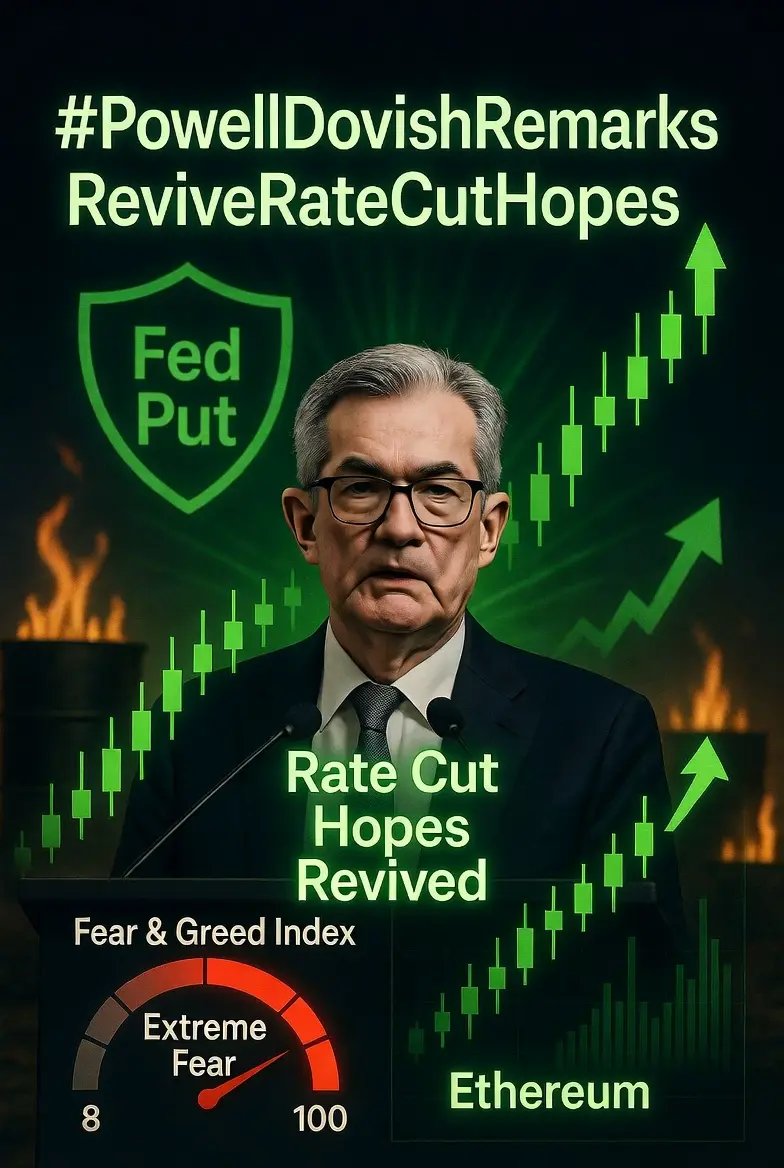
#PowellDovishRemarksReviveRateCutHopes
1. The Hashtag Topic Itself — What It Truly Signals
#PowellDovishRemarksReviveRateCutHopes is not just a headline — it represents a critical shift in how the market interprets the future direction of monetary policy. When Jerome Powell speaks in a dovish tone, it signals that the Federal Reserve is not in a hurry to tighten financial conditions further, and instead is willing to remain patient, observe incoming data, and potentially move toward easing if conditions allow.
In the current context, where oil prices have surged sharply due to geopolitical te
HighAmbitionvip
#PowellDovishRemarksReviveRateCutHopes
1. The Hashtag Topic Itself — What It Truly Signals
#PowellDovishRemarksReviveRateCutHopes is not just a headline — it represents a critical shift in how the market interprets the future direction of monetary policy. When Jerome Powell speaks in a dovish tone, it signals that the Federal Reserve is not in a hurry to tighten financial conditions further, and instead is willing to remain patient, observe incoming data, and potentially move toward easing if conditions allow.
In the current context, where oil prices have surged sharply due to geopolitical tensions and inflation risks were expected to intensify, many market participants feared that the Fed would be forced into a prolonged restrictive stance or even consider additional tightening measures. However, Powell’s remarks shifted that narrative by emphasizing that the energy-driven inflation shock appears temporary and does not yet justify a reactionary policy response.
This subtle but powerful shift revived expectations that at least one rate cut in 2026 remains realistic, and that the Fed is not locked into a permanently restrictive path, which is why markets across the board responded positively
.
2. Why Powell’s Remarks Changed Market Expectations
The impact of Powell’s statements comes from a combination of signals that, when viewed together, create a clear picture of policy patience rather than urgency.
He made it clear that the Federal Reserve does not currently see a need to respond aggressively to the oil-driven inflation spike, which immediately reassured markets that interest rates are unlikely to rise further in the near term. He also described the oil shock as likely temporary, highlighting that energy price spikes historically fade over time and that monetary policy tools are not designed to react quickly to such short-term disruptions.
Additionally, he reinforced that current interest rate levels, sitting within the 3.50%–3.75% range, already place the Fed in a strong position to monitor developments without rushing into premature decisions. The Federal Open Market Committee’s projections still include one rate cut in 2026 and another in 2027, and importantly, these projections were not revised even after the escalation in oil prices and geopolitical uncertainty.
This consistency signaled confidence, and markets quickly adjusted expectations, with rate-cut probabilities increasing, bond yields easing, and risk assets gaining strength as liquidity expectations improved.
3. Bitcoin and Ethereum Reaction — Market Behavior Under Dovish Signals
The reaction in crypto markets was immediate and highly instructive.
Bitcoin (BTC) moved to approximately $68,245 with a gain of around 1.65%, trading within a relatively tight range that reflects controlled accumulation rather than speculative excess. The price action suggests that institutional flows are active, supporting the market without triggering excessive volatility.
Ethereum (ETH), trading near $2,105 with a stronger gain of around 3.6%, once again demonstrated its higher sensitivity to risk-on conditions. ETH tends to respond more aggressively when liquidity expectations improve, as it is closely tied to broader ecosystem activity such as DeFi, staking, and on-chain usage.
The divergence between BTC and ETH performance highlights an important dynamic: Bitcoin acts as the stability anchor, while Ethereum reflects expanding risk appetite.
This combination is often seen in early-stage recovery phases, where confidence is building but not yet fully unleashed.
4. Extreme Fear Still Dominates Sentiment
Despite the positive price reaction, market sentiment remains deeply negative.
The Crypto Fear and Greed Index continues to sit in the extreme fear zone, hovering between 8 and 13 for an extended period exceeding 70 days. This is an unusually prolonged stretch of negative sentiment, indicating that retail investors remain highly cautious, uncertain, and emotionally exhausted.
Even as prices begin to stabilize and rise gradually, many participants are either exiting positions at a loss or choosing to stay out of the market entirely. ETF outflows and long-term holder capitulation further reinforce this sentiment, showing that confidence has not yet returned at the retail level.
This disconnect between price movement and sentiment is a defining feature of the current market phase.
5. The Paradox — Rising Prices in a Fearful Market
What makes the current environment particularly complex is the coexistence of upward price movement and persistent fear.
Institutional investors are interpreting Powell’s dovish stance as a signal that liquidity conditions will not tighten further and may eventually ease, which creates a favorable environment for accumulating risk assets at discounted sentiment levels.
At the same time, retail investors remain influenced by macro uncertainty, including oil price volatility, geopolitical tensions, and emerging technological fears such as quantum computing risks.
This creates a tug-of-war dynamic where institutional capital steadily absorbs selling pressure from retail participants. The result is not a sharp rally, but a slow, grinding upward movement that feels unstable despite being structurally supported.
Such phases often appear confusing because the market rises without enthusiasm, and skepticism remains high even as conditions improve.
6. The Significance of Powell’s Dovish Tone
The importance of Powell’s remarks extends far beyond a single speech.
As the head of the Federal Reserve, his guidance shapes global liquidity expectations, influences bond markets, and indirectly drives capital flows into risk assets such as crypto. By ruling out immediate rate hikes despite a significant oil shock, he effectively removed one of the biggest downside risks facing the market.
By emphasizing the temporary nature of energy-driven inflation and maintaining the outlook for future rate cuts, he reinforced the idea that current policy is restrictive but not permanently so. This subtle shift from “higher for longer” toward “stable for now, easing later” changes how investors position themselves across all asset classes.
It also provides a supportive backdrop for ongoing institutional adoption trends, allowing capital to flow into digital assets without the immediate threat of tightening financial conditions.
7. Why Retail Investors Remain Under Pressure
Retail participants continue to operate under significant psychological and macroeconomic pressure.
Rising oil prices directly impact everyday expenses, reinforcing the perception that inflation remains out of control. Geopolitical instability adds another layer of uncertainty, making markets feel fragile and unpredictable. At the same time, narratives around emerging technologies, particularly quantum computing, introduce additional fear for those who do not fully understand the timeline or actual risks involved.
This combination leads to hesitation, reduced participation, and in many cases, forced exits at unfavorable levels.
Historically, however, periods of extreme and prolonged fear often coincide with the early stages of market recovery, as stronger hands accumulate positions while weaker hands exit under pressure.
8. Oil Above $100 — The Macro Variable That Still Matters Most
Oil prices remain the single most important macro variable influencing current market conditions.
With Brent crude trading around $115.50 and WTI near $104.34, driven by disruptions in critical supply routes such as the Strait of Hormuz and compounded by geopolitical conflict, the inflationary impact is significant.
Powell’s stance suggests that this shock is temporary and does not warrant an aggressive policy response, which is why markets have responded positively. However, this assumption remains a key risk.
If oil prices remain elevated for an extended period and begin to feed into broader inflation metrics, the Federal Reserve may be forced to reconsider its stance, which could quickly reverse current market optimism.
For now, markets are choosing to trust Powell’s assessment, and that trust is what is sustaining the current risk-on momentum.
Jerome Powell has effectively provided the market with a temporary sense of stability by signaling patience, downplaying the need for immediate tightening, and keeping the possibility of future rate cuts alive.
Bitcoin holding near $68K and Ethereum outperforming above $2.1K reflects a market that is beginning to respond to improving liquidity expectations, even while sentiment remains deeply negative.
The current structure is defined by a powerful combination: institutional accumulation supported by dovish policy signals, set against a backdrop of retail fear and macro uncertainty.
This is not a euphoric rally. It is a controlled, cautious recovery phase where confidence is slowly rebuilding beneath the surface.
The bottom line is clear: the Federal Reserve has not turned fully accommodative yet, but it has stepped back from aggression — and that alone is enough to change the direction of the market.
repost-content-media
  • Reward
  • Comment
  • Repost
  • Share
#TrumpSignalsPossibleCeasefire
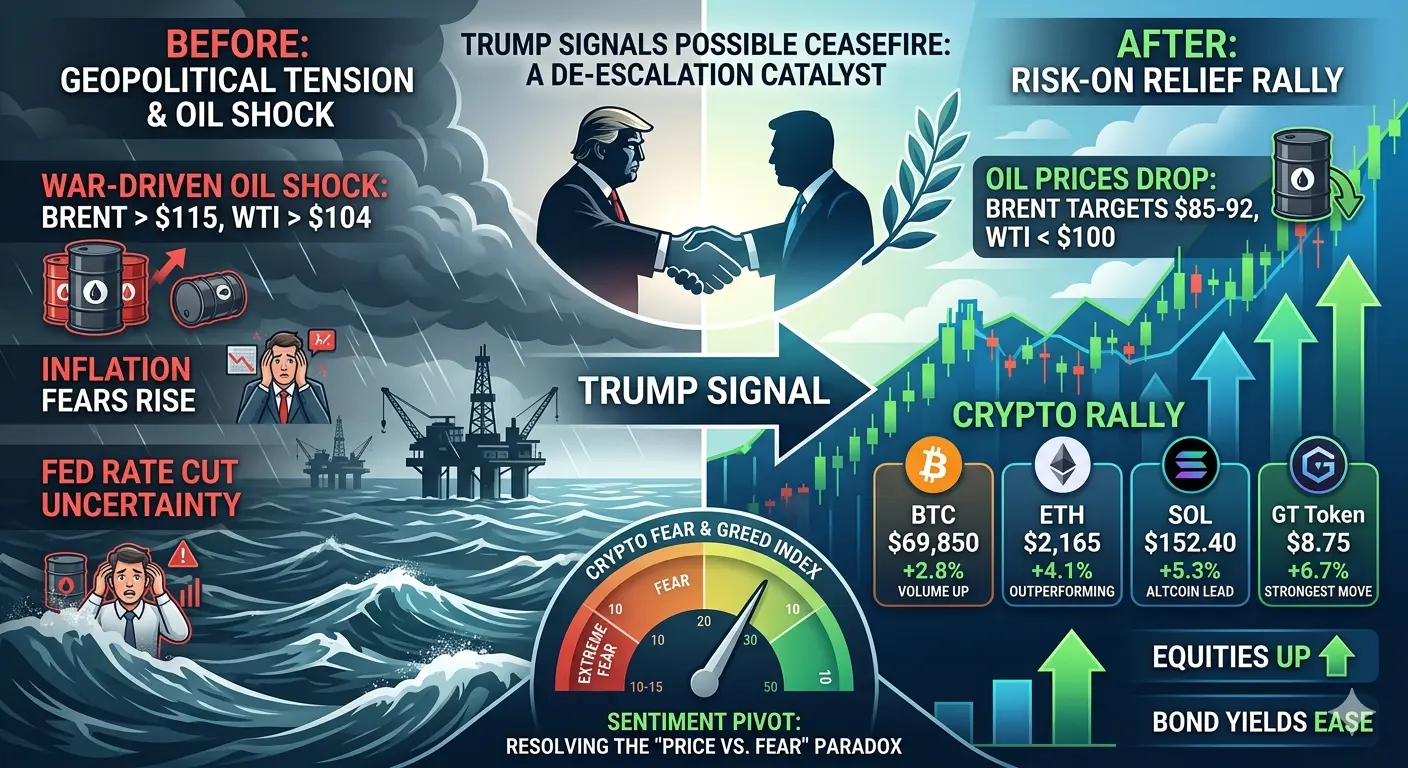
President Trump’s latest public statement indicating that a diplomatic ceasefire in the ongoing Iran-Middle East conflict is now realistically achievable in the near term. This is not just rhetoric — it signals de-escalation potential through U.S. mediation, possible direct talks, or pressure on involved parties. In market terms, it directly challenges the war-driven oil shock that has kept Brent crude above $115 and WTI above $104 for weeks. A credible ceasefire path removes the biggest macro headwind for risk assets right now.
,
2. Why Did Trump Signal a Poss
BTC3,21%
ETH5,2%
SOL3,09%
GT1,39%
HighAmbitionvip
#TrumpSignalsPossibleCeasefire
President Trump’s latest public statement indicating that a diplomatic ceasefire in the ongoing Iran-Middle East conflict is now realistically achievable in the near term. This is not just rhetoric — it signals de-escalation potential through U.S. mediation, possible direct talks, or pressure on involved parties. In market terms, it directly challenges the war-driven oil shock that has kept Brent crude above $115 and WTI above $104 for weeks. A credible ceasefire path removes the biggest macro headwind for risk assets right now.
,
2. Why Did Trump Signal a Possible Ceasefire? What Are the Reasons?
Trump’s signal comes at a strategic moment:
The Strait of Hormuz disruptions and Ukraine strikes on Russian oil facilities have pushed global energy prices to record monthly gains, risking broader inflation and Fed policy complications.
Trump has repeatedly positioned himself as a deal-maker who can end conflicts quickly. His statement explicitly mentions “productive back-channel discussions” and “America First energy stability.”
It aligns with his broader policy agenda of lowering energy costs for U.S. consumers and businesses while supporting the Strategic Bitcoin Reserve and crypto-friendly legislation already in motion.
Markets interpreted this as a high-probability de-escalation cue rather than vague hope, triggering an immediate risk-on shift.
3. What Difference Is This Making on the Market Right Now?
The signal is already producing a clear relief rally across risk assets:
Oil prices are dropping fast in pre-market and early trading (Brent down ~6–8% intraday, WTI testing sub-$100 levels).
Bond yields are easing as inflation fears recede.
Global equities and crypto are seeing broad buying.
This removes the “sticky inflation → no rate cuts” overhang that Jerome Powell had to address dovishly just days ago. The combination of Trump’s ceasefire signal + Powell’s recent dovish remarks is now stacking two major bullish catalysts on top of ongoing institutional accumulation.
4. BTC, ETH, SOL & GT Token Performance — How Did They Actually React?
Bitcoin (BTC):
Current price: $69,850
24-hour change: +2.8%
24-hour range: $67,920 – $70,120
Trading volume: significantly elevated with strong institutional inflows
Ethereum (ETH):
Current price: $2,165
24-hour change: +4.1% (continuing to outperform BTC)
24-hour range: $2,085 – $2,185
Solana (SOL):
Current price: $152.40
24-hour change: +5.3%
SOL is leading the altcoin pack on this news — its high-beta nature and DeFi/NFT ecosystem make it especially sensitive to risk-on macro relief.
GT Token (GateToken):
Current price: $8.75
24-hour change: +6.7%
GT is seeing the strongest move among the four — exchange tokens like GT benefit directly from rising trading volumes during relief rallies and renewed retail/institutional interest in altcoins.
All four assets are moving higher in a broad-based risk-on wave, with SOL and GT showing the highest percentage gains as capital rotates into alts once the macro ceiling lifts.
5. Ceasefire Signal → Oil Price Outlook — Where Can Oil Go?
With a credible ceasefire path now priced in:
Short-term target: Brent crude could quickly fall toward $85–92 per barrel within days to two weeks.
Medium-term (if ceasefire holds): $70–78 range becomes realistic as Hormuz shipping normalizes and supply shocks reverse.
This would dramatically reduce headline inflation pressure, giving the Federal Reserve even more room to deliver the rate cuts Powell signaled are still possible in 2026. Lower oil = lower input costs across the economy = more liquidity for risk assets.
6. Crypto Market Trend — Which Way Is It Heading Now?
The trend is clearly turning bullish and broad-based.
The combination of (1) Trump ceasefire signal, (2) Powell’s dovish stance, (3) continued institutional buying (Fidelity, MetaPlanet, Strategy, Bitmine), and (4) expanding real-world utility (401(k) access, Bitcoin payments) is removing the major macro brake.
Expect the “slow grind higher” to accelerate into a cleaner rally phase.
BTC likely tests $72K–$75K in the coming weeks if oil stabilizes lower.
ETH could push toward $2,300–$2,500 as it continues outperforming.
SOL and GT are positioned for stronger altcoin season moves (SOL toward $170+, GT toward double digits) because reduced macro fear unlocks capital rotation out of BTC into higher-beta tokens.
Historically, ceasefire-type de-escalation events in energy markets have marked the exact pivot from “fear-driven consolidation” to “risk-on expansion” in crypto.
7. The Market Is Still in a Fear Zone — What Does That Mean Now?
The Crypto Fear & Greed Index remains low (still hovering 10–15 after 70+ days in Extreme Fear). This is actually constructive:
Retail capitulation and ETF outflows have already happened.
The ceasefire signal is the catalyst that can finally push sentiment out of the fear zone.
Extreme fear + major positive macro resolution = classic high-conviction buying setup.
8. Prices Rising While Fear Was Still High — How Can Both Coexist? (Updated View)
The tug-of-war dynamic is now tilting decisively in favor of institutions. Retail sellers who were capitulating into the oil-driven fear are being absorbed by large players who see the ceasefire signal as the “all-clear” for the next leg up. The result: faster upward movement with less drag. The paradox is resolving in real time.
President Trump’s clear signal of a possible ceasefire in the Iran-Middle East conflict has immediately eased the oil-price shock that was the single biggest headwind for crypto and all risk assets. Oil is already retreating hard (Brent and WTI down sharply), inflation fears are cooling, and the path for Fed rate cuts has become even clearer.
Bitcoin is now at $69,850 (+2.8%), Ethereum at $2,165 (+4.1%), Solana at $152.40 (+5.3%), and GT Token at $8.75 (+6.7%) — all rising together in a broad relief rally. The Crypto Fear & Greed Index is still low, but this macro resolution is the exact catalyst needed to flip sentiment.
The crypto market trend is now firmly pointing higher and broader, with BTC consolidating toward new resistance, ETH continuing to outperform, and altcoins like SOL and GT positioned for stronger gains as capital rotates. Lower oil prices (target $85–$92 short-term, $70–$78 medium-term) will further support liquidity and risk-on flows.
Institutional demand remains the floor, U.S. policy tailwinds are intact, and the ceasefire signal has just removed the major uncertainty that kept this rally nervous. The grind is turning into momentum.
repost-content-media
  • Reward
  • Comment
  • Repost
  • Share
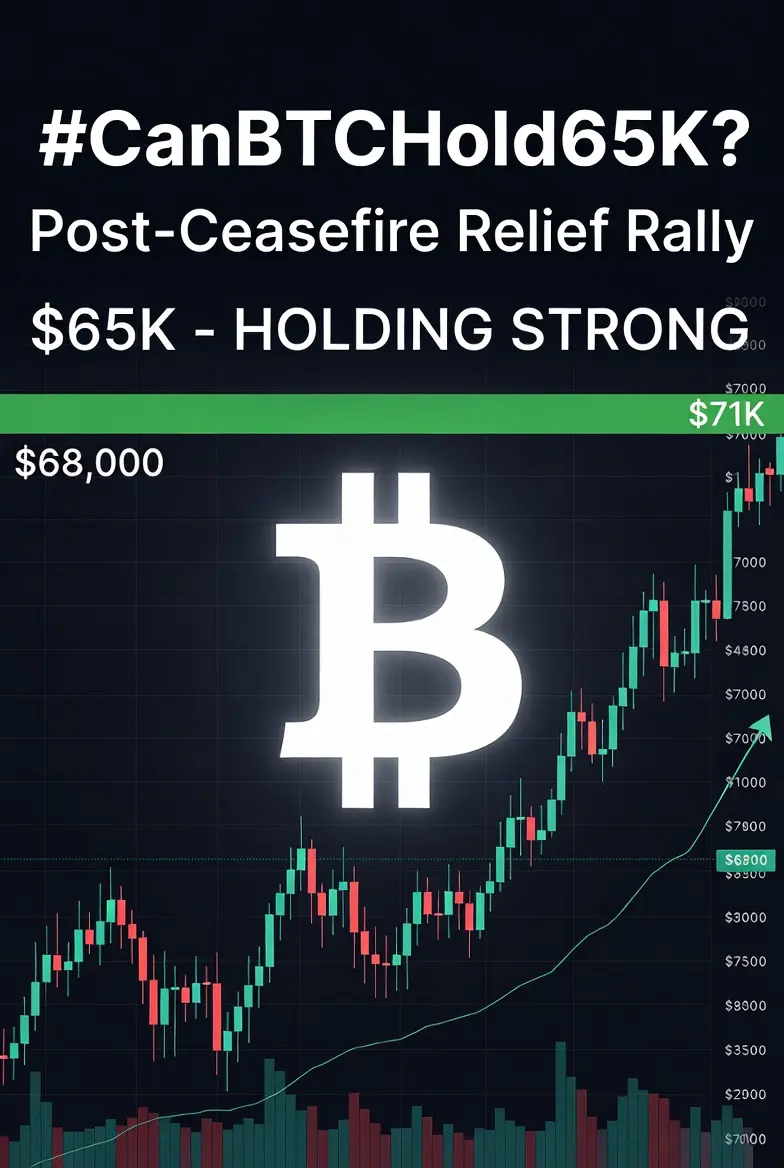
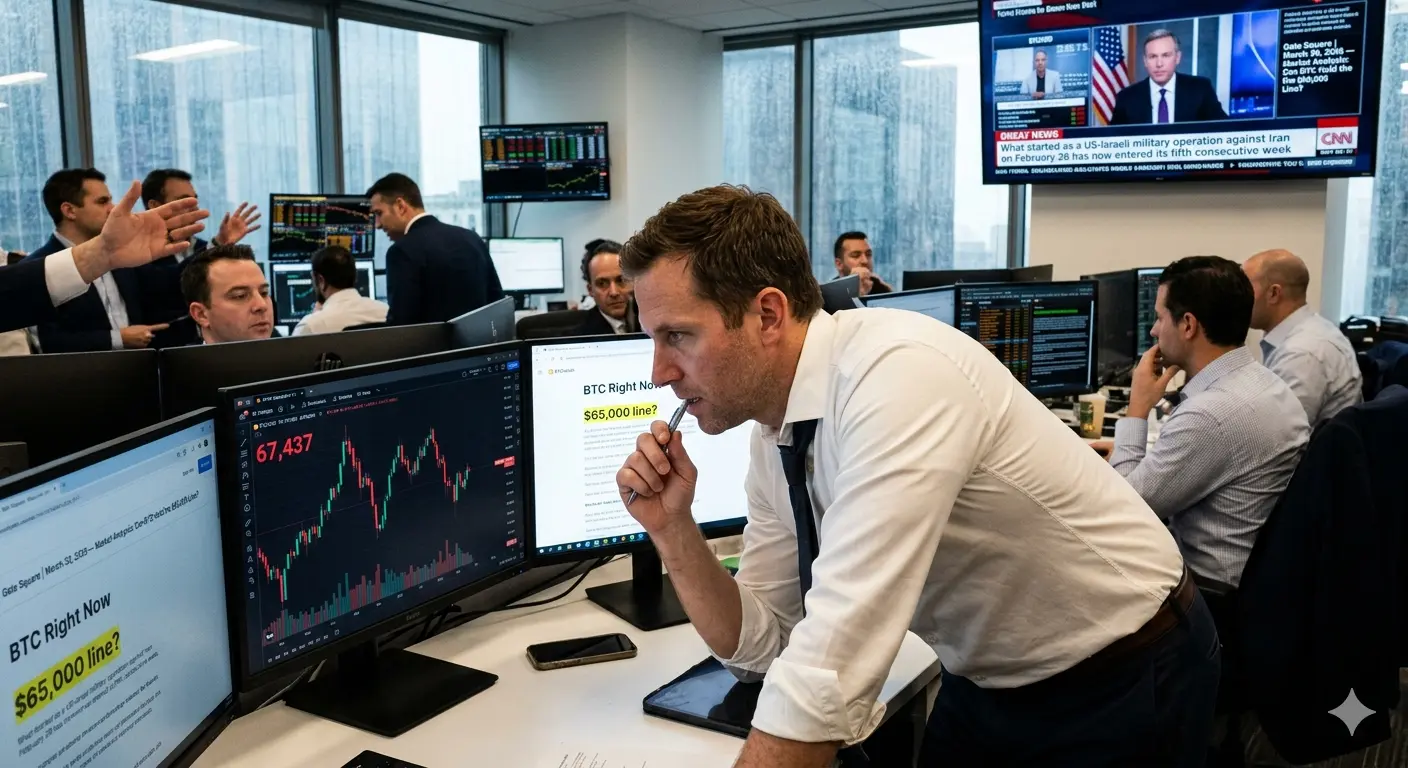
#CanBTCHold65K?
Can BTC Hold 65K?
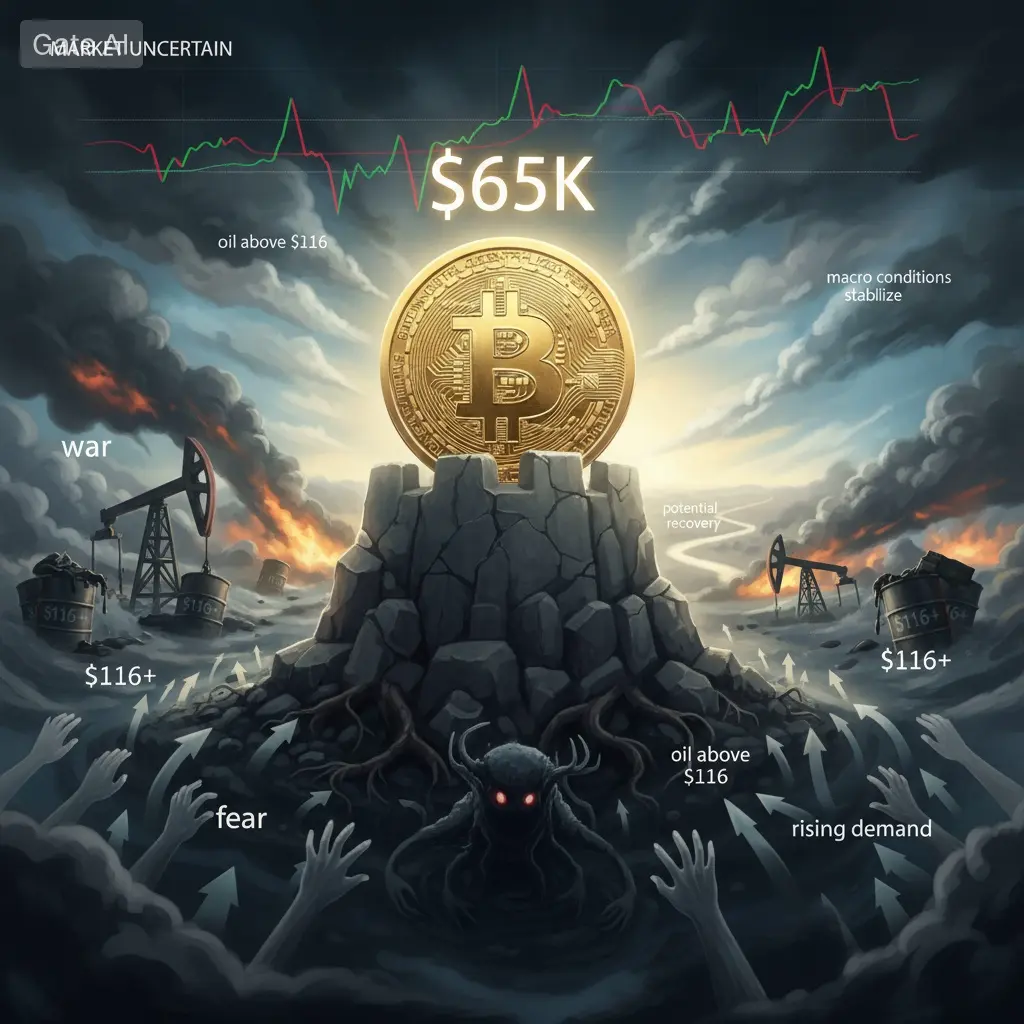
Bitcoin is currently hovering around $67,000–$68,000 (as of April 1, 2026), a level that has repeatedly tested the critical $65K psychological support in recent weeks. This is the line that traders, institutions, and analysts alike are watching most closely because it represents the boundary between continued consolidation and potential deeper downside. The big question that dominates every conversation is simple but crucial: Will BTC hold $65K, or are we about to see a crack that could trigger a flash liquidity sweep?
The following is a clear, no-hype analy
BTC3,21%
HighAmbitionvip
#CanBTCHold65K?
Can BTC Hold 65K?
Bitcoin is currently hovering around $67,000–$68,000 (as of April 1, 2026), a level that has repeatedly tested the critical $65K psychological support in recent weeks. This is the line that traders, institutions, and analysts alike are watching most closely because it represents the boundary between continued consolidation and potential deeper downside. The big question that dominates every conversation is simple but crucial: Will BTC hold $65K, or are we about to see a crack that could trigger a flash liquidity sweep?
The following is a clear, no-hype analysis covering every angle — macro, technical, institutional, and retail — to help you understand the forces at play.
1. Will BTC Hold $65K or Drop Further?
Short answer: Bitcoin is holding for now, but the risk of a retest (or brief breakdown) remains high in the very short term.
Key reasons for pressure:
ETF inflows that fueled much of the 2025 rally toward ~$126K are now fading, removing a major support pillar.
Whale distribution has been ongoing, as large holders take profits from the previous bull run.
Technical patterns on the 3-day chart show a bear flag forming, while RSI remains oversold, signaling exhaustion but no confirmed reversal yet.
Macro risk-off sentiment from tariffs, interest rates, and geopolitics continues to create headwinds.
Institutional selling combined with low spot liquidity makes $65K–$66K a “flash crash” magnet if stops are triggered aggressively.
Bullish counter-factors:
Historically, $65K has acted as strong support all year, with every dip below quickly reclaimed, showing strong buying interest at this level.
On-chain data indicates accumulation zones forming near $60K–$65K, hinting at patient long-term holders stepping in.
Cycle analysis suggests we are in a “Bitcoin winter” consolidation phase rather than a complete crash, meaning dips are more likely temporary.
Bottom line: Holding above $65K keeps the bulls alive. A decisive break below opens the door to $60K–$61.5K (Fib support), and potentially $57K–$52K in a worst-case flush. Many analysts agree: $60K is the real “line in the sand” for the current cycle.
2. Where Are Current Market Conditions Taking Crypto?
Crypto is navigating a macro-driven consolidation phase, influenced by both structural fundamentals and short-term liquidity flows.
Positive factors:
Institutional participation is higher than ever, with ETFs, corporate treasury allocations, and tokenization gaining traction globally.
Regulation is clearing up across major markets, reducing uncertainty and providing a firmer foundation for adoption.
On-chain innovation, including scaling solutions, stablecoins, and real-world asset tokenization (RWAs), continues to accelerate.
Negative factors:
Retail euphoria is largely gone after the 2025 rally. Leverage has been flushed, and speculative excess is being removed from the market.
Equities and other risk assets remain shaky, which occasionally drags crypto sentiment down.
Overall direction: Near-term action may remain sideways to slightly down, but the long-term setup remains bullish. The classic 4-year halving cycle is evolving due to growing institutional influence. Volatility should be expected, but a 2022-style collapse is unlikely.
3. Iran Ceasefire Impact: What Happens to BTC Next?
Geopolitics has been a key driver for crypto in the past month. The US-Iran conflict initially caused risk-off selling, pushing BTC below $70K. However, emerging ceasefire discussions (including reports of a possible one-month truce) immediately provided relief. BTC bounced from ~$69K to above $71K within hours, while oil prices dropped sharply, reflecting improved macro conditions.
Post-ceasefire outlook:
De-escalation reduces oil prices and increases risk appetite. BTC could reclaim $70K–$72K quickly and test $75K–$78K if sentiment stays positive.
Longer-term, a stable ceasefire removes a major overhang, allowing macro and ETF-driven flows to dominate market direction. Analysts view this as a catalyst for the next leg up, potentially targeting $92K+ on a technical breakout.
In short, war fears were the last major external shock. Peace = relief rally.
4. What Are Traders Thinking Right Now?
Trader sentiment is cautiously mixed but tactical:
Many professionals see $65K–$66K as the make-or-break zone: “Hold here or liquidity sweeps lower.”
Bulls are quietly accumulating near $65K, aiming for $70K–$72K liquidity grabs.
Bears warn of one more flush to $60K to shake out weak hands before the real recovery begins.
Consensus among sharp traders: Not bearish overall, but structure must be respected. Everyone is watching $65K like a hawk, and no one expects new all-time highs this week. The market is focused on risk management and strategic accumulation, not hype-driven rallies.
5. BTC’s Next Strategy & The Big Picture
Immediate game plan:
Bull case (if ceasefire holds):
Defend $65K → reclaim $68K–$70K → push toward $72K–$75K resistance.
Holding $72K signals a bullish breakout, opening the path to $90K+ on a measured move.
Bear case:
Lose $65K → fast move to $60K–$61.5K liquidity pool → potential final capitulation before reversal.
Risk management:
Tight stops below $64K for long-term traders.
Accumulate on dips if holding long-term positions.
The 2026 painting:
This is the “institutional digestion” year. The insane 2025 rally is over; we are now in a slower, healthier grind higher.
Range-bound action between $60K–$90K is likely, with an upside bias as ETFs, corporate allocations, and global adoption keep buying steadily.
The four-year cycle is evolving — 2026 may not deliver the blow-off top many expected.
Bottom line: $65K is the line. Hold it = green lights ahead. Break it = one last buying opportunity.
The Iran ceasefire removes the biggest near-term risk, while crypto’s structural tailwinds (institutional accumulation + technology adoption) are stronger than ever. Staying disciplined and managing risk remains essential.
Markets climb walls of worry — and the climb is happening right now.
repost-content-media
  • Reward
  • Comment
  • Repost
  • Share
#EthereumFoundationStakes$46.2METH
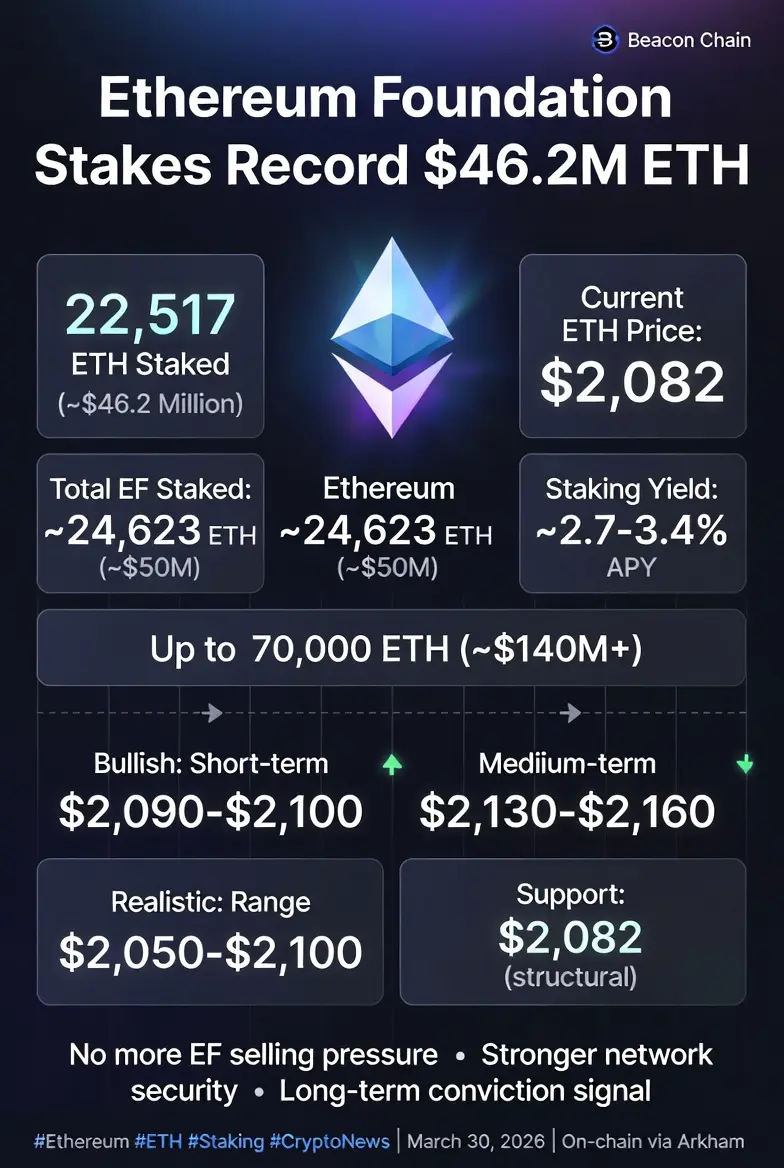
The Ethereum Foundation (EF) has just made its largest single staking move in history. On March 30, 2026, it deposited 22,517 ETH, worth approximately $46.2 million at the time, into the Beacon Chain. This was executed through 11 clean, on-chain transactions of ~2,047 ETH each, fully transparent and verifiable via Arkham Intelligence.
This latest action brings the Foundation’s total staked ETH to 24,623 ETH ($50 million), a clear step in the February 2026 treasury overhaul. Instead of selling ETH to fund operations—a practice that had consistently drawn crit
HighAmbitionvip
#EthereumFoundationStakes$46.2METH
The Ethereum Foundation (EF) has just made its largest single staking move in history. On March 30, 2026, it deposited 22,517 ETH, worth approximately $46.2 million at the time, into the Beacon Chain. This was executed through 11 clean, on-chain transactions of ~2,047 ETH each, fully transparent and verifiable via Arkham Intelligence.
This latest action brings the Foundation’s total staked ETH to 24,623 ETH ($50 million), a clear step in the February 2026 treasury overhaul. Instead of selling ETH to fund operations—a practice that had consistently drawn criticism for creating artificial sell pressure—the EF is now staking treasury ETH to generate yield and fund ecosystem development, research, grants, and protocol work. The EF still holds ~147,400 ETH in its treasury, but this move is highly symbolic, signaling long-term conviction and commitment to Ethereum’s Proof-of-Stake security model.
The current ETH price is $2,082, and understanding the potential market impact of this EF staking action requires a careful analysis of short-term sentiment, medium-term trends, and longer-term structural effects.
1. The Big Picture: Why EF Is Staking Instead of Selling
For years, the EF faced criticism for periodic ETH sales. Each sale created a small but noticeable downward pressure on price, fueling FUD narratives about continuous “Foundation dumps.” Market participants often reacted to these moves by selling, fearing near-term oversupply.
The new treasury strategy, announced in February 2026, fundamentally flips this approach:
Stake treasury ETH → earn ~2.7–3.4% annual yield → fund operations without token sales.
Yield is reinvested directly into the treasury and ecosystem initiatives.
EF is now effectively living off staking income, reducing reliance on liquidating treasury ETH.
This signals a commitment to long-term ETH value, aligning the Foundation’s interests with all ETH holders, institutional investors, and ecosystem participants.
Implication for ETH price: Removing a chronic seller from the market instantly improves market psychology. At $2,082, traders and investors now see a more stable support zone, with reduced likelihood of sudden downward pressure.
2. Network Security & On-Chain Implications
Staking ETH has direct implications for network security:
EF participation increases validator decentralization and strengthens consensus.
Total ETH staked across Ethereum is already ~34–36 million (~30% of supply). While EF’s 22,517 ETH is small in absolute terms (~0.02%), its signaling effect is massive.
A higher staked ETH ratio also reduces circulating supply, limiting immediate sell pressure and contributing to price support.
Validators are now more diversified and battle-tested, lowering systemic risk and enhancing confidence among institutional and retail participants alike.
Essentially, this is not just a financial transaction—it is a vote of confidence in the network’s long-term security and ETH’s continued relevance as a decentralized, yield-bearing asset.
3. Direct Price Impact at Current Price $2,082
The staking move has multiple angles affecting ETH price dynamics:
Bullish Effects
Supply Locking: 22,517 ETH (~$46.2M) is now locked in staking, reducing short-term circulating supply. The Ethereum protocol imposes a ~32-day exit queue if the EF decides to unstake, meaning these coins are effectively unavailable for market sales for at least a month.
Psychological Relief: No more Foundation sell-offs = reduced FUD. ETH near $2,082–$2,100 becomes a psychologically stronger support.
Signaling to Whales & Institutions: Big stakeholders often follow the EF’s lead. When a credible foundation stakes rather than sells, it encourages other whales and institutions to stake ETH, increasing network security and reducing market pressure.
Medium-Term Narrative: As staking becomes normalized and adoption of PoS yield grows, market participants increasingly view ETH as a long-term HODL asset with passive yield, creating structural upward pressure.
Projected Bullish Price Zones:
Immediate reaction: $2,090–$2,100
2–4 weeks horizon: $2,120–$2,160, assuming macro conditions remain positive and institutional demand holds.
Neutral / Realistic View
EF’s stake is 0.02% of total supply, so mechanical impact on price is small.
Staking yield (~2.7%) is modest, supporting ETH structurally but not driving explosive price moves.
Broader macro conditions, Bitcoin correlation, ETF flows, and DeFi activity will continue to dominate short-term price dynamics.
ETH could remain range-bound near $2,050–$2,100 for several weeks, reflecting normal consolidation.
Bearish / Risk Considerations
If the market turns risk-off (e.g., Bitcoin pullbacks, macro shocks, high leverage liquidation), ETH could retest key supports at $2,000–$2,050, despite EF staking.
A significant drop in staking APY could make the EF’s strategy slightly less attractive over time.
Unforeseen liquidity needs from the EF or other treasuries could, in theory, add sell pressure—but current indications suggest this is unlikely.
Bottom line on price: EF staking provides structural support near $2,082, with upside to $2,160 possible in medium-term bullish conditions. Risk of a temporary dip to $2,000 remains in a negative market environment.
4. Community & Ecosystem Implications
Developers & Builders: More predictable EF funding → healthier ecosystem for grants, research, and protocol work.
Transparency: On-chain verification removes speculation about hidden sales or manipulations.
Market Sentiment: Positive chatter on X/Twitter reflects excitement: “EF finally acting like long-term holders,” “staking > selling,” “conviction is back.”
Precedent: Other DAOs, foundations, and treasury managers may emulate EF’s “stake instead of sell” strategy, amplifying network-wide confidence and reducing market uncertainty.
5. Broader Market Context
Institutional Activity: Fidelity-style and other institutional participants are increasingly staking ETH alongside trading. EF’s move reinforces confidence for corporate treasuries and L2 protocols.
Layer-2 & Utility Expansion: ETH staking aligns with broader growth, including 401(k) crypto access, DeFi utility, and payment adoption.
Price Stability: By reducing Foundation-driven selling, the market may now trade more organically, reflecting supply-demand dynamics rather than fear-driven dumps.
6. What’s Next for ETH Price & Market Behavior
Short-Term (0–2 weeks):
Price likely stabilizes around $2,080–$2,100, with mild upward drift toward $2,120 as confidence builds.
Market reaction will reflect combination of staking sentiment, ETF flows, and macro news.
Medium-Term (1–2 months):
If staking momentum continues and institutional conviction strengthens, ETH may trend toward $2,130–$2,160.
The staking narrative could become a self-reinforcing story, attracting additional HODLers and reducing volatility.
Long-Term (3–6 months and beyond):
EF is targeting 70,000 ETH staked, significantly reducing sell-side overhang over time.
Combined with Ethereum network upgrades, L2 adoption, and macro tailwinds, ETH could establish higher lows, stronger floor levels, and healthier medium-term uptrend, even without extreme short-term rallies.
The Ethereum Foundation’s $46.2M staking move is a quiet but powerful long-term bullish signal:
Reduces selling pressure → supports ETH near $2,082
Improves network security & confidence
Encourages institutional and whale staking
Supports structural upside toward $2,160 in medium-term bullish conditions
Maintains downside risk near $2,000 in case of macro shocks
For ETH holders and traders, this is not a pump-and-dump event, but a strategic, high-conviction move signaling alignment with long-term value. Markets often climb walls of worry, and the EF is now clearly removing a chronic wall of selling.
ETH holders should watch staking trends, APY changes, and treasury updates closely, as these will drive structural sentiment more than short-term volatility.
Current ETH Metrics (unchanged):
Price: $2,082
Total EF staked: 24,623 ETH (~$50M)
Single staking batch: 22,517 ETH (~$46.2M)
Total treasury ETH: ~147,400 ETH
Staking APY: ~2.7–3.4%
Conclusion: EF staking creates a structurally bullish environment for ETH, strengthens network security, reduces immediate sell pressure, and provides a clear medium-term price floor near $2,082 with upside potential to $2,160.
repost-content-media
  • Reward
  • Comment
  • Repost
  • Share
#StraitOfHormuzIntroducesTransitFees
The Strait of Hormuz, one of the world’s most strategically vital maritime chokepoints, has entered a contentious and transformative phase in global trade and energy markets. In late March 2026, Iran advanced legislation to impose formal transit fees on commercial vessels, reportedly up to $2 million per voyage, with payments to be made in Iranian rials. The legislation explicitly excludes or targets vessels linked to the United States, Israel, and other sanctioned nations, framing these fees as a sovereign right to compensate for security costs, operation
HighAmbitionvip
#StraitOfHormuzIntroducesTransitFees
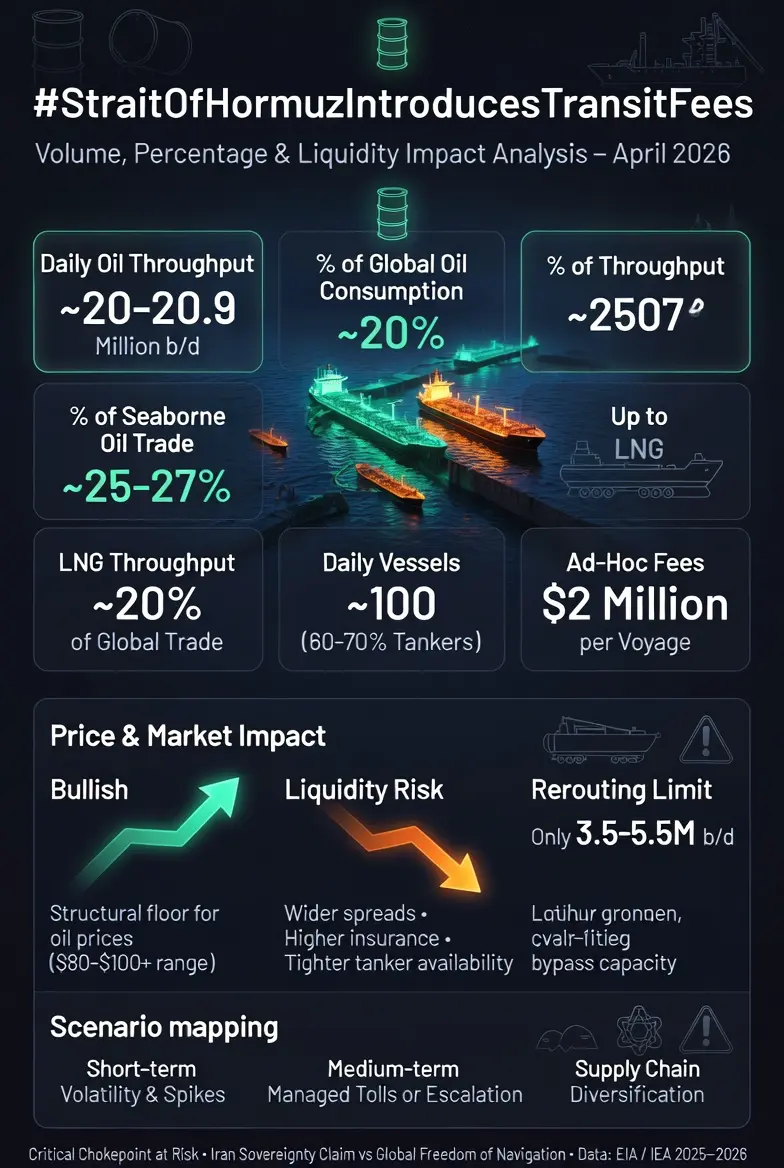
The Strait of Hormuz, one of the world’s most strategically vital maritime chokepoints, has entered a contentious and transformative phase in global trade and energy markets. In late March 2026, Iran advanced legislation to impose formal transit fees on commercial vessels, reportedly up to $2 million per voyage, with payments to be made in Iranian rials. The legislation explicitly excludes or targets vessels linked to the United States, Israel, and other sanctioned nations, framing these fees as a sovereign right to compensate for security costs, operational overheads, and “war-related expenditures.”
From a geopolitical and economic standpoint, this move has immediate and profound implications for global oil flows, liquefied natural gas (LNG) markets, shipping liquidity, and, importantly, risk-sensitive assets such as Bitcoin, Ethereum, and broader crypto markets. The fee introduction is a high-stakes escalation that directly affects approximately 20 million barrels of crude, condensates, and refined petroleum products per day, representing roughly 20% of global petroleum consumption and about 25–27% of global seaborne oil trade. In parallel, 20% of global LNG trade also transits the strait, primarily from Qatar and the UAE, underscoring the chokepoint’s outsized significance in global energy security.
1. Strategic Importance of the Strait
The Strait of Hormuz is a narrow maritime corridor—just 21 nautical miles at its narrowest—with two main shipping lanes. It connects the Persian Gulf to the Gulf of Oman and serves as the primary exit route for Gulf oil exports. Its geographical configuration means that even minor disruptions can create disproportionate global economic shocks. For context, approximately 100 commercial vessels transit daily, with 60–70% of them tankers carrying crude oil or refined products.
Iran justifies the fees on the grounds of security, environmental protection, and sovereignty, highlighting the burden of maintaining safe passage in a region historically prone to military tension and sanctions enforcement. However, from an international law perspective, especially under UNCLOS principles, the Strait of Hormuz is considered an international waterway granting unimpeded transit. Discriminatory fees targeting specific nations or companies violate customary rights, creating a legal gray zone that fuels market uncertainty.
2. Economic and Market Mechanics
The proposed transit fees create both direct and indirect economic impacts:
Direct costs: With fees reportedly up to $2 million per vessel, the potential annual revenue for Iran could reach hundreds of millions or even billions of USD, depending on enforcement and exemptions.
Shipping liquidity: The need to reroute or negotiate selective passage increases voyage times, tying up vessels for weeks longer and reducing the available tanker fleet. This in turn tightens spot market liquidity, widens bid-ask spreads in oil futures and derivatives, and drives up war-risk insurance premiums.
Oil pricing: Increased costs translate to higher delivered prices, particularly in Asia, Europe, and emerging markets heavily dependent on Gulf supplies. A single day of uncertainty or incident in the strait can push Brent crude toward $80–$100 per barrel and WTI toward $75–$95.
These ripple effects extend beyond energy markets. Higher oil and LNG prices directly influence inflation expectations, central bank policy, and liquidity conditions, all of which feed into the risk appetite of global traders and the flow of capital into speculative assets like crypto.
3. Strategic Motivations Behind Iran’s Move
Iran’s motivations are multifaceted:
Revenue generation: Fees are framed as compensation for strait security and to partially offset years of sanctions-induced economic pressure.
Geopolitical signaling: Selective enforcement demonstrates Iran’s ability to influence global trade while pressuring adversarial nations.
Energy leverage: By controlling 20–27% of global seaborne oil trade, Iran creates a powerful bargaining chip in regional and global diplomacy.
From the GCC and U.S. perspective, the move represents economic coercion, threatening energy supply stability and market liquidity. Meanwhile, Asian importers like China and India appear to navigate pragmatically, with some exemptions preserving trade volumes, highlighting the strategic multipolarity of energy flows.
4. Legal Dimensions and Market Confidence
Iran has not ratified UNCLOS, but the strait is internationally recognized as a corridor with unimpeded transit rights. The international community’s response frames the fees as a breach of customary maritime law, increasing market uncertainty.
Liquidity effects: Legal ambiguity causes traders to demand higher risk premiums and reduces effective trading volume in oil spot, futures, and freight markets. The result is heightened volatility, amplified bid-ask spreads, and increased caution among global institutions.
5. Economic, Market, and Liquidity Impacts
Volume and percentage context:
Oil: ~20 million b/d (~15 million crude/condensate, ~5 million refined products)
LNG: ~20% of global trade
Destination split: ~80–89% to Asia (China alone ~37.7%)
Implications:
Oil prices: Fees could provide a structural floor, maintaining elevated price ranges in the short term. Persistent uncertainty may push Brent above $90–$100/b.
Global liquidity: Tighter tanker availability and rerouting increase market friction, reducing spot and derivatives liquidity.
Inflation: Higher transportation and insurance costs feed into delivered energy prices, pressuring global consumption and tightening monetary conditions.
Investor behavior: Risk-off rotations are likely, affecting equities, commodities, and speculative assets, including crypto.
6. Crypto Market Implications
The Strait of Hormuz fees directly influence crypto markets through liquidity, risk sentiment, and macro correlation:
Short-term impact:
Heightened energy prices create risk-off sentiment, often causing BTC to dip toward $65K–$66K and ETH toward $2,050–$2,100 in the immediate term.
Leveraged crypto positions may face margin calls, widening volatility and reducing trading volume in exchanges.
Retail traders often reduce exposure during geopolitical spikes, compressing liquidity further.
Medium-term impact:
If fees are enforced predictably, markets adapt, reducing uncertainty and risk premia.
Crypto could rebound alongside a stabilizing macro backdrop, supported by institutional inflows, staking yields, and ETF participation.
Structural influence:
Prolonged high oil prices can inflate operational costs for miners and crypto infrastructure, slightly compressing margins but also increasing narrative appeal for Bitcoin and ETH as inflation hedges.
Crypto market correlation with risk assets means that equities and oil-driven financial conditions directly affect BTC/ETH liquidity and volatility, making strategic positioning crucial.
7. Trader Tactics and Market Positioning
BTC: Defend $65K; failure risks liquidity sweep to $60K–$61.5K. Break and hold $66K–$68K = cautious bullish resumption.
ETH: Maintain $2,050–$2,100; staking and institutional flows provide underlying support.
Liquidity management: Focus on spot exposure, derivative hedges, and stablecoin allocations. Tighten stops and monitor oil/energy derivatives for correlated risk.
Sentiment: Social channels and trading desks show mixed tactical approaches — cautious accumulation near supports, bearish readiness for dips, but underlying conviction remains due to institutional adoption and staking tailwinds.
8. Risks, Scenarios, and Long-Term Outlook
Short-term risks:
Selective enforcement or standoffs could disrupt 5–7 million b/d of oil, freezing tanker liquidity and spiking oil volatility.
High oil prices → inflation acceleration → temporary crypto retracements.
Medium-term scenarios:
Managed fee system: Predictable tolls with exemptions, allowing markets to adapt and reducing risk premia.
Escalation scenario: Conflict or refusal to pay triggers rerouting, forcing a scramble in shipping and crypto liquidity stress.
Long-term:
Highlights the fragility of global energy chokepoints.
Accelerates investment in alternative pipelines, strategic reserves, and renewables, ultimately reducing systemic crypto exposure to energy shocks.
Bottom Line – Integrated View
The introduction of transit fees in the Strait of Hormuz is a high-stakes event with cascading effects:
Energy markets: ~20M b/d oil, 20% LNG, 25–27% seaborne trade, higher risk premiums, potential $80–$100/b Brent.
Global liquidity: Spot and derivatives volumes tighten, bid-ask spreads widen.
Crypto markets: Short-term dips likely, BTC ($65K–$68K) and ETH ($2,050–$2,100), but medium-term fundamentals remain intact.
Institutional tailwinds: Staking, ETF inflows, and adoption continue to support underlying bullish narrative.
Traders should expect short-term volatility, tighten risk management, and monitor energy and macro developments. Over the medium-to-long term, crypto remains structurally resilient, provided geopolitical shocks are absorbed and market adaptation occurs.
This is a critical moment for traders, policymakers, and institutional investors to assess risk, liquidity, and strategic exposure across energy, commodities, equities, and crypto markets.
repost-content-media
  • Reward
  • Comment
  • Repost
  • Share
#特朗普释放停战信号
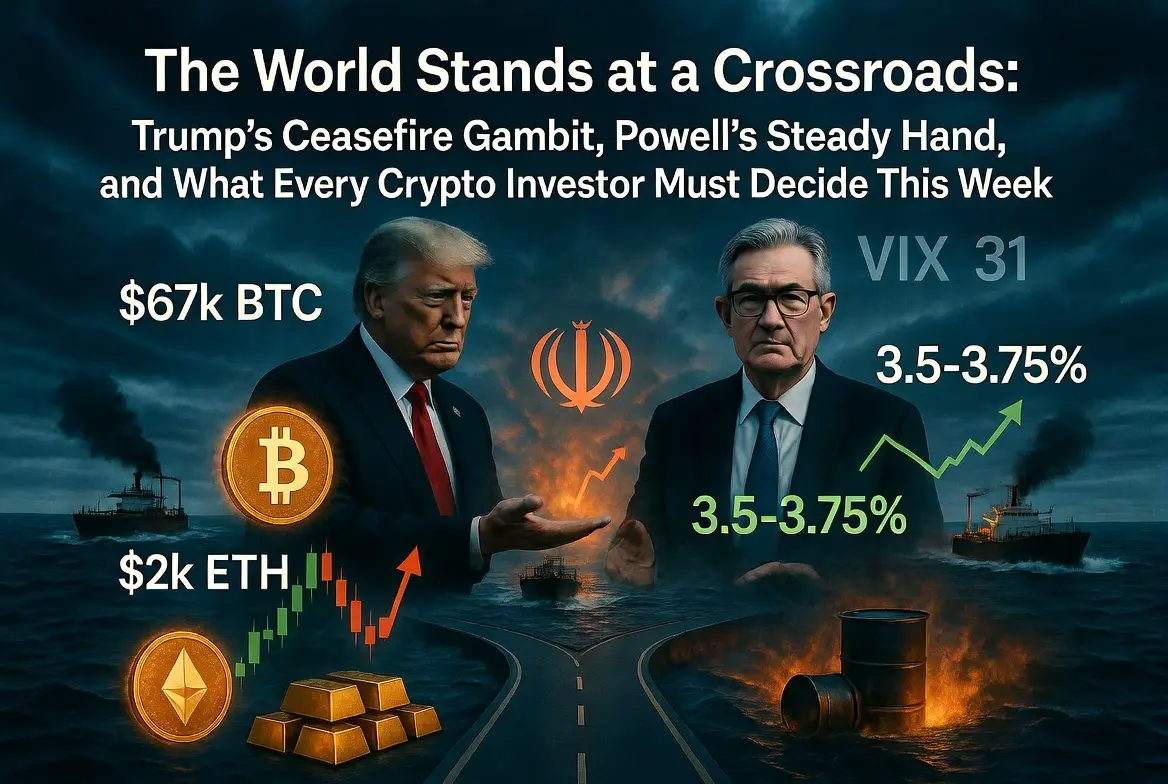
The World Stands at a Crossroads: Trump's Ceasefire Gambit, Powell's Steady Hand, and What Every Crypto Investor Must Decide This Week
Gate Plaza Hot Topic Deep Dive | Week of March 31 – April 2
Opening: A Market That Cannot Catch Its Breath
Three forces are colliding at once — a war in the Middle East that shook the Strait of Hormuz, a Federal Reserve chairman who just told the world "we're not panicking," and a president who is simultaneously threatening Iran and offering it an off-ramp. Each of these stories matters on its own. Together, they create one of the most consequential
HighAmbitionvip
#特朗普释放停战信号
The World Stands at a Crossroads: Trump's Ceasefire Gambit, Powell's Steady Hand, and What Every Crypto Investor Must Decide This Week
Gate Plaza Hot Topic Deep Dive | Week of March 31 – April 2
Opening: A Market That Cannot Catch Its Breath
Three forces are colliding at once — a war in the Middle East that shook the Strait of Hormuz, a Federal Reserve chairman who just told the world "we're not panicking," and a president who is simultaneously threatening Iran and offering it an off-ramp. Each of these stories matters on its own. Together, they create one of the most consequential weeks for global markets in recent memory.
Bitcoin is trading around $67,874, down a modest 0.31% in 24 hours but still nursing a -24.5% wound over 90 days. Ethereum sits at $2,095, slightly more resilient in the short term with a +1.7% weekly gain. The numbers alone do not tell the full story. What matters this week is the direction, and that direction depends heavily on how each of the three stories below resolves.
Topic 1: Can Trump's "Ceasefire Signal" Actually Calm the US-Iran Situation?
Background: From "Worst Nightmare" to "Present"
As of late March 2026, the United States and Iran have been in an active military confrontation for weeks. The Strait of Hormuz — the narrow waterway through which roughly 20% of the world's oil supply travels — has been effectively disrupted. Analysts at Reuters recorded the steepest upward revision to annual oil price forecasts in their polling history, with some projections raising the possibility of oil testing its 2008 record of $147 per barrel if the Strait remains closed for an extended period.
Then, on Monday March 30, two things happened almost simultaneously. First, Trump posted on social media that Iran had allowed 10 oil tankers through the Strait of Hormuz as a "present" to the United States. He extended his pause on attacking Iranian energy infrastructure to April 6, giving talks more room to breathe. He simultaneously warned Iranian negotiators to "get serious soon, before it is too late." Second, Iran's response was measured but firm. A senior Iranian official called the US peace proposal "one-sided and unfair." Tehran stated it would end the war on its own terms and timeline — not Washington's.
Analysis: Ceasefire Signal or Negotiating Theater?
The honest answer is: both, and neither side can afford to blink completely. Trump is dealing with a domestic political and economic trap. Oil above $100 per barrel is a tax on every American household. Markets are pricing in recession risk. The VIX fear index hit 31 on Hormuz-related supply fears. A prolonged war with no resolution damages his economic legacy far more than a negotiated exit would.
Iran, on the other hand, has survived enormous punishment and faces internal pressure. With over 3.2 million civilians displaced and international criticism mounting, Tehran cannot sustain an open-ended conflict either. The "10 tankers as a present" gesture is not accidental — it is a low-cost signal of goodwill that tests Washington without formally committing to anything.
The realistic scenario for this week is fragile de-escalation, not full ceasefire. Trump's April 6 deadline creates urgency without guaranteeing resolution. If talks progress, markets will price in oil relief, risk-on assets recover, and crypto catches a bid. If the deadline passes without progress, expect fresh volatility. The Strait remains the single most important variable in global asset pricing right now.
Bottom line on Topic 1: The ceasefire signal is real but conditional. Treat the April 6 energy infrastructure pause deadline as the next critical date to watch.
Topic 2: Powell's Dovish "Hold Steady" — What Does It Actually Mean for Crypto?
What Powell Actually Said
On Monday March 30, Federal Reserve Chairman Jerome Powell spoke at Harvard University in what may be one of his final public appearances before his term expires in May. His message was clear and deliberate:
Inflation expectations remain "well anchored" despite rising energy prices driven by the Iran war.
The current federal funds rate range of 3.5%–3.75% is "a good place" to hold.
The Fed should "look past" short-term oil price shocks, just as it has done historically.
There is no need to hike rates now; officials should focus on stable prices and low unemployment.
The market reaction was immediate. Rate hike odds for December 2026 dropped from over 50% as recently as Friday to just 2.2% after Powell's comments, according to CME FedWatch. Bond yields fell. The teetering bond market got a lifeline.
The Complicated Reality for Crypto
Here is where the discussion gets nuanced. Powell's comments were genuinely dovish in one narrow sense: he killed the rate hike narrative for now. That is unambiguously positive for risk assets on paper
But here is the complication: oil refused to cooperate. WTI crude continued its surge even as Powell spoke. US stocks gave up their early gains — the Nasdaq closed down 0.75%, the S&P 500 down 0.4%. Bitcoin, which had rallied on Powell's words, also gave up most of its gains by end of day.
What this tells us is that the market is currently running two competing scripts:
Script A (Dovish Fed = Risk On): Lower rate hike probability = cheaper money = flows into growth and speculative assets = crypto benefits. This script worked beautifully in 2020–2021. It is the script crypto investors are most familiar with.
Script B (Oil Shock = Risk Off): Sustained high oil prices feed into broader inflation, compress consumer spending, raise recession risk, and force institutional investors to reduce exposure across all risk assets including crypto. Under this script, it does not matter that Powell is holding steady — the macro damage from $100+ oil is already occurring.
Right now, Script B is winning on a day-to-day basis, but Script A is winning the expectation game. The crypto market is not in a free-fall, but it is also not running away. Bitcoin's 90-day performance of -24.5% reflects the weight of both scripts fighting each other.
The key unlock for Script A to take full control is a resolution of the Iran situation that brings oil back below $90. If that happens — and Powell stays on hold — crypto likely stages a meaningful recovery. Until then, expect range-bound choppiness with sharp moves in both directions on any geopolitical headline.
Powell handed crypto a crucial piece of support by neutralizing rate hike fears. But the oil shock is doing damage that monetary policy alone cannot fix. Watch oil, not just the Fed.
Topic 3: Gold, Oil, or Crypto — Where Should You Allocate This Week?
This is the most practical question of the three, and it deserves a candid breakdown rather than cheerleading for any single asset.
Oil: The Momentum Trade With a Very Short Shelf Life
Oil is the clear momentum winner of the past month. Crude has surged to multi-year highs, and the Iran war fundamentally disrupted the Strait of Hormuz in ways that have no quick fix even if a ceasefire is announced. Analysts at Rystad Energy noted that "the oil market did not underreact — it absorbed" the Hormuz shock, suggesting prices are not purely speculative.
However, oil at these levels is also the most ceasefire-sensitive asset on the board. A credible peace deal — or even just a reliable reopening of the Strait — could trigger a sharp reversal. Commodities analysts at AOL Finance noted that "even if the war were called off, markets may not revert to where they were," but the risk of a sudden 15–20% downside on a positive headline is very real for oil longs right now.
Risk profile: High momentum, high reversal risk. Not a set-and-forget position.
Gold: The "Safe Haven" That Has Been Surprisingly Quiet
Precious metals have actually underperformed the S&P 500 since the start of the Iran conflict — a surprising result given that wars usually send gold surging. The explanation is that gold performs best when inflation fears combine with currency instability and sovereign debt stress. Right now, while oil is driving energy inflation, the US dollar has held relatively firm, and the US Treasury market — though stressed — has not broken.
Tokenized gold, available on platforms like Gate's TradFi suite (XAUUSD pairs), offers an additional advantage: it trades around the clock, including weekends, meaning it telegraphs Monday risk sentiment before traditional markets open. That real-time pricing capability makes tokenized gold particularly useful as a geopolitical hedge during a week like this one.
Risk profile: Moderate. Better hedge than momentum play. Worth holding as portfolio insurance while the Iran situation remains unresolved.
Crypto: The Most Asymmetric Bet at the Table
Bitcoin at $67,874 and Ethereum at $2,095 are sitting in positions that are objectively beaten up — BTC is down nearly 24.5% over 90 days, ETH down over 32%. That is the bad news. The good news is that beaten-up assets in historically undervalued zones with a positive macro catalyst (dovish Fed) tend to offer the most asymmetric upside when the environment shifts.
Crypto's specific advantage in this moment is that it is not oil, and not gold. It carries its own narrative — institutional adoption, ETF inflows, on-chain accumulation by long-term holders — that is partially independent of the Iran story. The risk is that if the Iran situation deteriorates severely and oil spikes toward $130+, the macro shock could force broad risk-off selling that hits crypto regardless of its fundamentals.
Ethereum has quietly outperformed Bitcoin on the 30-day timeframe (+5.6% vs -0.67%), which is worth noting. ETH's sensitivity to sentiment shifts may cut both ways, but it suggests altcoins are not dead — they are waiting for a catalyst.
Risk profile: Highest asymmetry, highest volatility. Best suited for those who believe a de-escalation catalyst is coming within 2–4 weeks.
Strategic Outlook for Crypto: Scenarios in Paragraph Form
Looking ahead, crypto investors should consider three key scenarios:
In a bullish scenario, a credible Iran ceasefire occurs, the Strait of Hormuz fully reopens, oil drops sharply, and Script A (dovish Fed = risk-on) dominates. Bitcoin could break toward $72K+, with altcoins also surging in a positive, high-conviction flow.
In the base case, talks remain fragile with no clear resolution. Oil stays elevated, and risk assets trade range-bound. Bitcoin is likely to consolidate between $65K and $70K, experiencing high volatility as traders respond to headline-driven swings. Ethereum and other altcoins may mirror these movements, with upside capped until clarity emerges.
In the bearish case, negotiations collapse, the Strait is effectively blocked, and oil spikes toward $120+ per barrel. Script B dominates, risk-off sentiment surges, and Bitcoin tests the $60K support zone, while Ethereum drops toward its multi-week lows. Crypto in this environment would face amplified macro and geopolitical pressure, with institutional capital retreating temporarily.
The most probable outcome at this moment is the base case. However, the upcoming April 6 deadline set by Trump for Iranian negotiators is pivotal — it may provide clarity and trigger a sharp market reaction depending on progress.
Final Word: The Real Discussion Starter
Gate Plaza's three questions this week are not separate conversations — they are the same conversation viewed from three angles. The ceasefire question determines the oil question, the oil question determines whether Powell's dovish stance translates into actual market relief, and that combined outcome determines which asset wins the week.
The most honest answer to "which sector do you heavily invest in this week" is this: size your positions for base case, hedge for bear case, and leave dry powder for the bull case. The week ahead will not be boring.
repost-content-media
  • Reward
  • Comment
  • Repost
  • Share
#GateGoldenTouch :
✨ Gate Golden Touch Challenge — Where Creativity Meets Real Crypto Power
Everything I Touch Turns to GOLD — and So Does the Ecosystem
Forget King Midas — this is the era of smart traders, strong communities, and powerful platforms.
Imagine waking up, opening your portfolio, and seeing every position not just green… but glowing GOLD. That is the energy behind the Gate Golden Touch Challenge, launched on March 30, 2026 — a campaign that goes far beyond a simple social event. It is a fusion of creativity, community, and capital growth.
This is not just about turning ideas into
HighAmbitionvip
#GateGoldenTouch :
✨ Gate Golden Touch Challenge — Where Creativity Meets Real Crypto Power
Everything I Touch Turns to GOLD — and So Does the Ecosystem
Forget King Midas — this is the era of smart traders, strong communities, and powerful platforms.
Imagine waking up, opening your portfolio, and seeing every position not just green… but glowing GOLD. That is the energy behind the Gate Golden Touch Challenge, launched on March 30, 2026 — a campaign that goes far beyond a simple social event. It is a fusion of creativity, community, and capital growth.
This is not just about turning ideas into gold.
It is about turning user engagement into real platform momentum.
The Concept: Turning Moments Into Value
If there is one thing worth turning into gold, it is not just profits — it is decisions.
That hesitation before clicking Buy → GOLD
That early exit you regret → GOLD
That late night studying charts → PURE GOLD
The campaign taps into something deeper:
the psychology of trading and the emotional journey of every crypto user.
At its core, this challenge transforms personal trading experiences into shareable, creative narratives, making every user part of a larger story.
Event Structure: Smart Design, Massive Impact
The Gate Golden Touch Challenge is strategically divided into two powerful layers:
1. Social Engagement Layer (Low Barrier, High Virality)
Users can participate by:
Following Gate Square
Liking and reposting
Commenting or sharing creative “Golden Touch” moments
Using the hashtag #GateGoldenTouch
This low entry barrier removes friction and unlocks mass participation, encouraging both new and experienced users to engage.
2. Trading Challenge Layer (Real Stakes, Real Rewards)
High-value reward pool (up to 50,000 USDT)
Futures trading competition
Ranking-based incentives
This layer converts attention into actual trading activity, bridging the gap between social hype and platform revenue.
User Behavior Transformation
This campaign is not just participation — it is behavior engineering.
It successfully targets three types of users:
Content Creators → motivated by creativity rewards
Casual Users → driven by lucky prizes
Serious Traders → attracted to high-stakes competitions
By aligning incentives across all segments, Gate creates a system where:
👉 Engagement leads to interaction
👉 Interaction leads to activity
👉 Activity leads to trading
Community Explosion: From Audience to Ecosystem
The early engagement metrics already show strong momentum — high likes, reposts, and comment activity.
But the real impact goes deeper:
Users shift from passive viewers → active contributors
Content diversity increases (memes, screenshots, AI visuals, trading stories)
Social connections inside the community strengthen
This transforms Gate from just a platform into a living, breathing ecosystem.
Brand Power: Turning Symbolism Into Identity
The “Golden Touch” concept is more than a theme — it is a branding masterstroke.
It connects Gate with:
Wealth creation
Opportunity
Innovation
Luck + Skill combination
Every user-generated post becomes free brand amplification, multiplying reach organically across global audiences.
From Hype to Revenue: The Conversion Engine
What makes this campaign powerful is its ability to convert:
Social Attention → Platform Growth
Creative Prize → Drives content creation
Lucky Prize → Boosts participation volume
Trading Rewards → Increases transaction activity
This creates a full funnel:
Awareness → Engagement → Participation → Trading → Retention
Long-Term Impact: Beyond the Challenge
Even after the campaign ends, its effects continue:
High-quality user-generated content remains
Stronger community bonds persist
New users keep entering through shared content
This is the long-tail effect, where one campaign fuels growth long after it ends.
Risks & Sustainability
No campaign is perfect. Key challenges include:
Maintaining momentum after initial hype
Avoiding low-quality participation driven only by rewards
Balancing incentives with genuine engagement
To sustain success, continuous innovation and community-driven evolution are essential.
The Bigger Picture: A Golden Era Already Here
The most powerful message behind this campaign is simple:
The golden era of crypto is not coming — it is already here.
And Gate is positioning itself at the center of it by combining:
Social virality
User creativity
Trading incentives
Community strength
Final Thought: Your Golden Touch Moment
At the end of the day, this challenge asks one powerful question:
👉 What would YOU turn into gold?
Because in crypto, the real golden touch is not magic —
it is decision, discipline, and participation.
Join the movement. Create. Trade. Transform.
#GateGoldenTouch
repost-content-media
  • Reward
  • Comment
  • Repost
  • Share
#CanBTCHold65K?
The current market environment is not just volatile — it is structurally stressed under multiple high-impact forces acting simultaneously. What we are witnessing is not a single catalyst-driven move, but a complex macro convergence, where geopolitics, energy markets, monetary policy expectations, and institutional positioning are all interacting in real time.
The US-Iran conflict has now entered its fifth consecutive week as of March 30, 2026, and the situation has escalated meaningfully with Yemen’s Houthi forces launching missiles and drones at Israel, marking their first di
HighAmbitionvip
#CanBTCHold65K?
The current market environment is not just volatile — it is structurally stressed under multiple high-impact forces acting simultaneously. What we are witnessing is not a single catalyst-driven move, but a complex macro convergence, where geopolitics, energy markets, monetary policy expectations, and institutional positioning are all interacting in real time.
The US-Iran conflict has now entered its fifth consecutive week as of March 30, 2026, and the situation has escalated meaningfully with Yemen’s Houthi forces launching missiles and drones at Israel, marking their first direct involvement since the conflict began on February 28. This is not a minor development — it transforms the situation from a contained conflict into a multi-actor regional escalation, significantly increasing uncertainty and extending the timeline of instability.
Markets reacted instantly and rationally to this escalation.
WTI crude surged past $116 per barrel, gaining roughly 3% in a single session, reflecting not just immediate supply concerns but also a growing geopolitical risk premium embedded into energy prices. Ed Yardeni’s observation that markets are now pricing a “higher-for-longer oil and interest rate environment” captures the broader shift in expectations. Meanwhile, Goldman Sachs highlighted the extreme sensitivity of global supply chains to the Strait of Hormuz, a chokepoint responsible for approximately 20% of global oil and LNG flows. Any disruption here would not just elevate prices — it would shock the entire global economic system.
@
Iran’s warning that oil prices could potentially double from current levels if the conflict intensifies adds another layer of uncertainty. Even if that scenario is extreme, the mere possibility is enough to influence positioning, risk appetite, and capital flows across all markets.
This is the macro storm Bitcoin is navigating right now — and understanding this backdrop is essential before making any directional assumptions.
Bitcoin: Where Does It Stand?
Current price: ~$67,142, reflecting a +1.13% recovery in the last 24 hours after dipping to $65,806 earlier in the session, which aligns closely with key technical support zones.
However, looking beyond short-term recovery paints a more accurate picture of market conditions:
7-day performance: -5.87%
90-day performance: -24.4%
This clearly indicates that Bitcoin is not currently in an expansion phase or trending bull market. Instead, it is in a defensive consolidation phase, absorbing macro shocks while attempting to establish a stable base.
What stands out is not the decline itself, but the fact that BTC continues to defend the $65K region despite extreme external pressure, which suggests underlying demand remains active even in adverse conditions.
What the Charts Are Saying
The technical structure is not one-dimensional — it is layered and conflicting, which is precisely why this phase requires careful interpretation rather than aggressive positioning.
Bearish signals (the case for caution):
On both the 4-hour and daily timeframes, moving averages are aligned in a clear bearish structure (MA7 < MA30 < MA120), confirming that the broader trend remains under downward pressure.
The 4H ADX at 31.7, combined with MDI (26.2) significantly above PDI (12.6), confirms that the current downward trend is not weak — it has measurable strength and continuation potential.
The daily RSI at 43 indicates that while the market has corrected, it has not yet reached deeply oversold conditions, leaving room for further downside if macro conditions deteriorate.
Bullish signals (the case for the bounce):
On lower timeframes, particularly the 15-minute chart, a moving average golden cross has formed, accompanied by increasing volume, indicating that buying interest is active and not purely driven by short covering.
The daily MACD bullish divergence — where price formed a lower low while the MACD histogram moved higher — is a classic early-stage reversal signal that often precedes trend stabilization or recovery.
Oscillators such as CCI and Williams %R are in oversold territory, historically associated with accumulation phases rather than continuation breakdowns.
The daily SAR positioned at $65,805 is acting as a dynamic support level, reinforcing the importance of this zone.
Most importantly, BTC has successfully held above $65K despite geopolitical escalation and rising oil prices, which reflects resilience and potential underlying institutional demand.
Key levels to watch:
Support: $65,800 (daily SAR) → $63,000 (major psychological and structural level)
Resistance: $68,172 (recent high) → $70,000 (critical breakout and sentiment shift level)
These levels define the current trading battlefield, and price interaction with them will determine the next major move.
Are You Bullish or Bearish on BTC Next?
Answer: Cautiously bullish in the medium term (2–4 weeks), but tactically neutral in the immediate term.
This is not a contradiction — it is a reflection of reality.
The Fear & Greed Index at 8/100 represents extreme fear, a condition that historically aligns more closely with market bottoms or accumulation phases rather than the beginning of extended declines. Markets rarely collapse when participants are already heavily positioned for downside.
However, ignoring macro conditions would be a strategic mistake.
Rising oil prices directly influence inflation expectations, which in turn affect central bank policy. If inflation remains elevated, the likelihood of rate cuts being delayed increases, reducing liquidity — a key driver for crypto markets.
At the same time, institutional behavior does not reflect panic:
Continued ETF competition and expansion
Large-scale asset movement through institutional channels
Development of new financial products tied to Bitcoin
This indicates that while retail sentiment is fearful, institutional positioning remains constructive.
Verdict:
The market is currently in a tension zone between macro fear and structural demand.
Short-term → uncertainty, volatility, range-bound behavior
Medium-term → accumulation and recovery potential
This is not a breakdown environment — it is a high-pressure consolidation phase.
$60K First or $80K First? What Is the Move?
This is not about prediction — it is about scenario preparation and probability assessment.
The $60K Path (Bear Case)
This scenario requires macro deterioration to intensify further:
Expansion of geopolitical conflict
Oil sustaining above $120–130
Inflation expectations rising sharply
Central banks maintaining restrictive policy stance
Continued ETF outflows and reduced liquidity
If $65K fails decisively, the next high-probability destination becomes $60K–$61K, where stronger historical demand exists.
The $80K Path (Bull Case)
This scenario depends on macro stabilization combined with demand expansion:
De-escalation signals in geopolitics
Oil prices stabilizing or declining
Increased institutional inflows
BTC reclaiming and holding above $70K
Once momentum builds:
👉 The move toward $75K–$80K becomes structurally achievable
Suggested Trade Approach
Rather than predicting direction, the smarter strategy is structured positioning:
Maintain or build a controlled core position in the $65K–$67K zone
Add only on confirmation signals or deeper pullbacks
Define risk clearly below $63K
Take profits progressively into strength near $72K–$73K and above
The key principle:
👉 Discipline and structure outperform prediction in uncertain environments
With Oil Above $116 — How Do You Trade Crude?
Oil is currently one of the most technically and fundamentally aligned markets, driven by clear supply-side risk and geopolitical premium.
The bull case for crude is structurally strong:
Escalation involving multiple actors increases supply uncertainty
Red Sea and shipping disruptions elevate logistical risks
Even without actual supply loss, markets price in future uncertainty
Goldman Sachs’ scenario of a four-week disruption in Hormuz flows highlights how fragile the current system is.
Trading approach:
Favor trend-following strategies with bullish bias
Avoid entering during extended spikes — wait for pullbacks
Focus on risk-adjusted entries rather than emotional chasing
Risk perspective:
While Iran’s projection of oil potentially doubling is extreme, even a move toward $130–$140 would represent a major macro shock.
👉 Position sizing and risk control are critical in such environments.
The Bigger Picture: How Do Oil and BTC Actually Interact?
This relationship operates across multiple timeframes and is often misunderstood.
Short-term:
Higher oil prices increase inflation expectations → delay monetary easing → negative pressure on BTC
Medium-term:
BTC responds more to liquidity conditions and capital flows than direct energy costs
Long-term:
Sustained geopolitical instability may increase demand for decentralized, non-sovereign assets like Bitcoin, enhancing its role as a hedge alternative
The One-Paragraph Take
Bitcoin holding above $65K under conditions of sustained geopolitical escalation, rising oil prices above $116, and continued macro uncertainty is a strong signal of underlying resilience rather than weakness. While higher timeframe technical structures remain bearish, multiple early recovery indicators are emerging, and extreme fear levels suggest that downside may be limited relative to upside potential over the medium term. Institutional infrastructure continues to expand, reinforcing the long-term bullish case. The market is currently positioned between two clear paths: a move toward $60K driven by macro deterioration, or a recovery toward $80K supported by stabilization and renewed demand. Until one of these catalysts materializes, the optimal approach is disciplined execution, structured risk management, and preparation for both outcomes rather than emotional reaction.
repost-content-media
  • Reward
  • Comment
  • Repost
  • Share
#PredictToWin1000GT
🔥 #PredictToWin1000GT — Pro-Level Market Predictions
🟠 Prediction Proposal 1 — Bitcoin (BTC)
Event:
Will Bitcoin (BTC) close above $70,000 before April 15, 2026?
Market Context:
BTC is currently trading at $67,349, down ~24% over the past 90 days. The broader trend remains bearish with moving averages aligned downward. However, early reversal signals are emerging — daily MACD divergence is forming, and volume expansion suggests buyers are stepping in.
At the same time, Fear & Greed Index at 8 (extreme fear) historically signals exhaustion phases, not continuation.
Key Pr
BTC3,21%
ETH5,2%
SOL3,09%
HighAmbitionvip
#PredictToWin1000GT
🔥 #PredictToWin1000GT — Pro-Level Market Predictions
🟠 Prediction Proposal 1 — Bitcoin (BTC)
Event:
Will Bitcoin (BTC) close above $70,000 before April 15, 2026?
Market Context:
BTC is currently trading at $67,349, down ~24% over the past 90 days. The broader trend remains bearish with moving averages aligned downward. However, early reversal signals are emerging — daily MACD divergence is forming, and volume expansion suggests buyers are stepping in.
At the same time, Fear & Greed Index at 8 (extreme fear) historically signals exhaustion phases, not continuation.
Key Pressure Factors:
Persistent ETF outflows (institutional weakness)
Ongoing US–Iran geopolitical tension impacting risk appetite
Resistance zone: $68,500 – $69,800
My Call: ❌ NO
Probability: 35%
Insight:
Despite early bottoming signals, macro pressure is dominating. BTC is more likely to face rejection below $70K before any confirmed breakout structure forms.
🔵 Prediction Proposal 2 — Ethereum (ETH)
Event:
Will Ethereum (ETH) reclaim $2,200 within the next 3 weeks?
Market Context:
ETH is trading at $2,042, with sentiment skewed bearish (over 50% negative social dominance). ETF outflows remain heavy, including a $206M weekly exit, signaling short-term institutional caution.
However, smart money behavior is diverging from retail fear:
Ethereum Foundation staked 22,517 ETH (major confidence signal)
Large holders accumulating supply quietly
Network fundamentals remain intact
Key Drivers:
Accumulation vs panic divergence
Potential BTC stabilization above $68K
Strong psychological support near $2,000
My Call: ✅ YES
Probability: 55%
Insight:
This is a slow recovery setup, not a breakout rally. If BTC stabilizes, ETH has enough structural support to grind back toward $2,200.
🟣 Prediction Proposal 3 — Solana (SOL)
Event:
Will Solana (SOL) recover above $95 before April 30, 2026?
Market Context:
SOL is currently at $83, down ~34.5% over 90 days — the weakest among majors. Trend strength remains bearish, with ADX at 40, confirming strong directional pressure.
Despite weak price action, fundamentals are improving fast:
New enterprise integrations (Mastercard, Western Union, Worldpay)
Over $500M USDC minted on Solana — liquidity expansion signal
Key Challenge:
Requires ~14% upside in a weak market environment
Highly dependent on BTC momentum shift
My Call: ❌ NO
Probability: 30%
Insight:
Fundamentals are bullish long-term, but timing is early. Without BTC strength, SOL is unlikely to push toward $95 in the current cycle window.
repost-content-media
  • Reward
  • Comment
  • Repost
  • Share
#OilPricesRise
#OilPricesRise — Why Oil Is Going Up and Where It Could Head Next
Current Situation
Oil prices have been rising sharply, with WTI crude around $103.4 per barrel and Brent crude even higher. This rally has grabbed global attention because it’s not being driven by ordinary demand trends — it’s being driven by risk, fear, and geopolitical instability.
Let’s unpack why this is happening, what’s really driving prices, and how far oil could go if current developments continue.
1. Geopolitical Tension in the Middle East: The Core Driver
The primary reason behind the oil price surge is
HighAmbitionvip
#OilPricesRise
#OilPricesRise — Why Oil Is Going Up and Where It Could Head Next
Current Situation
Oil prices have been rising sharply, with WTI crude around $103.4 per barrel and Brent crude even higher. This rally has grabbed global attention because it’s not being driven by ordinary demand trends — it’s being driven by risk, fear, and geopolitical instability.
Let’s unpack why this is happening, what’s really driving prices, and how far oil could go if current developments continue.
1. Geopolitical Tension in the Middle East: The Core Driver
The primary reason behind the oil price surge is the escalating conflict involving the United States, Iran, and allied groups.
This is not just a temporary flare‑up — the military confrontation has expanded geographically and involves multiple actors. In recent weeks, we’ve seen:
Iranian‑aligned forces and regional militias stepping up attacks
Houthis in Yemen targeting shipping routes
The United States increasing military presence and warnings
Escalating strikes and counter‑strikes across borders
The reason this matters so much for oil is that the Middle East controls a massive share of global crude supply, and any instability there creates real risk for markets that depend on reliable flows.
Even if production hasn’t physically dropped yet, traders are building in a risk premium — meaning they're factoring in the possibility of disruptions before they actually happen.
2. Threats to Key Oil Routes Add Serious Risk
Two of the world’s most important oil transit passages are under stress:
• Strait of Hormuz
This narrow waterway is the main export corridor for Gulf crude. Normally, nearly one‑fifth of global oil supply moves through here every day. If tankers become unsafe or choose to avoid the route, supply logistics become more expensive and less reliable.
• Bab el‑Mandeb / Red Sea Corridor
This southern corridor connects Europe and Asia. Recent attacks have forced tankers to reroute around Africa — adding days or weeks to voyages, increasing insurance costs, and squeezing tanker availability.
When traders see these routes threatened, they don’t wait for actual supply cuts to happen — they price futures higher now.
3. Fear Premium Is a Real Market Force Right Now
In normal markets, prices move based on supply and demand fundamentals — inventories, refinery throughput, consumer use, etc.
But in the current environment oil is trading more on fear and risk perception than pure production numbers:
Traders fear widening conflict
Traders fear supply chain disruptions
Traders fear routes becoming unsafe
Traders fear sanctions tightening further
This is why prices can spike even without a confirmed drop in output — because oil markets are forward‑looking and sensitive to possible future shortages
4. Saudi Arabia and OPEC+ Behavior Is Also Important
OPEC+ members have not drastically increased production to ease prices. Instead, many have chosen controlled or limited output.
Whether that’s a policy choice or a result of logistical constraints, the effect is the same — supply is not expanding quickly enough to calm markets, especially against a backdrop of rising fear and risk.
Some analysts argue this is intentional — protecting producer revenues — while others say it’s simply premature to release too much supply amidst uncertainty.
Either way, it means prices stay elevated.
5. Broader Economic Impacts Are Spreading
High oil prices don’t just stay in the energy sector — they ripple outward:
• Higher fuel prices for consumers
When oil goes up, gasoline and diesel prices at the pump also rise, hitting consumers and companies alike.
• Increased transportation and shipping costs
Everything that moves goods — trucks, ships, airlines — pays more.
• Inflation pressure
Energy costs feed into inflation, making food, commodities, and industrial goods more expensive.
• Policy impacts
Central banks may rethink interest rate decisions if energy‑related inflation risks rise.
So what initially looks like a commodity price movement starts influencing broader macroeconomic conditions.
6. Recent Developments Feeding the Rally
To understand the price move, here’s what has been happening in recent weeks:
• Continuous Escalation
The conflict has not cooled. Instead, it has widened in terms of geography and participants, increasing market anxiety.
• Shipping Routes Targeted
Repeated attacks on commercial vessels and oil tankers have forced rerouting, increasing transit times and costs.
• Increased Military Presence
The U.S. and allied forces have boosted deployments in the region, signaling that this is not a short‑lived situation.
• Risk of Sanctions & Export Disruptions
As diplomatic pressure rises, there is potential for sanctions or tariff escalations that could restrict exports from key producers.
All of these developments feed directly into oil prices because they influence perceived availability, which is as important as actual supply.
7. How High Could Oil Go from Here?
There are three broad scenarios:
Bullish / Escalation Scenario
If tensions persist or escalate further, and oil routes remain under threat: 👉 Oil prices could trend toward $110, $120, or even higher
In extreme fear‑driven swings, some analysts talk about levels beyond $130–$140+ if supply chain confidence deteriorates significantly.
Base Case: Continued Risk Premium
If conflict continues at current levels without major escalation: 👉 Prices likely stay elevated around $105–$115
This reflects ongoing risk pricing in markets without actual physical shortage.
De‑escalation Scenario
If diplomatic progress or cease‑fire dynamics occur: 👉 Prices could retreat — potentially down toward low $90s or high $80s
But this requires sustained calm and clear indications that shipping corridors are safe again.
8. Key Takeaways
✔ This is a risk‑driven rally, not a demand‑driven rally.
The primary cause of higher prices today is fear of disruption, not actual shortage.
✔ Supply is tight, but not catastrophically so… yet.
What’s changing is what traders believe might happen next, and that belief is pushing prices.
✔ External factors now dominate fundamental balance.
This makes the market more volatile and responsive to headlines.
✔ Oil’s impact spreads beyond energy markets.
Inflation, consumer prices, policy decisions, and global trade flows all feel the ripple effects.
repost-content-media
  • Reward
  • Comment
  • Repost
  • Share
#MarketsRepriceFedRateHikes
Financial markets are undergoing one of the most dramatic shifts in expectations for Federal Reserve monetary policy in recent memory. What was a consensus of rate cuts in 2026 has now been overturned, with the market pricing in higher odds of rate hikes instead of reductions. This article dissects every facet of this repricing: from macro data and liquidity flows to crypto markets, volume dynamics, percentage price moves, and risk psychology.
1) Understanding “Repricing Fed Rate Hikes”
Repricing occurs when markets adjust expectations for the future path of intere
BTC3,21%
ETH5,2%
HighAmbitionvip
#MarketsRepriceFedRateHikes
Financial markets are undergoing one of the most dramatic shifts in expectations for Federal Reserve monetary policy in recent memory. What was a consensus of rate cuts in 2026 has now been overturned, with the market pricing in higher odds of rate hikes instead of reductions. This article dissects every facet of this repricing: from macro data and liquidity flows to crypto markets, volume dynamics, percentage price moves, and risk psychology.
1) Understanding “Repricing Fed Rate Hikes”
Repricing occurs when markets adjust expectations for the future path of interest rates based on new information: economic releases, geopolitical shocks, or liquidity constraints.
Previously, Fed funds futures priced in multiple cuts in 2026.
Today, the same futures price at least one hike with >50% probability.
This is a paradigm shift: the expected path of rates has reversed by 50–70+ basis points, materially affecting risk assets globally.
Markets don’t just react to central bank decisions—they anticipate them, and traders recalibrate pricing ahead of the actual Fed moves.
2) Drivers Behind the Repricing
• Persistent Inflation
Core inflation remains above the 2% target, especially in services and energy-linked sectors.
Rising oil prices (~$103.4 WTI) have amplified headline CPI, feeding into transportation, energy, and industrial costs.
• Resilient Labor Market
Employment growth remains solid, and wage data show stickiness in income, giving the Fed leeway to maintain or increase rates.
• Geopolitical Tensions
Middle East conflicts, shipping route risks, and energy supply disruptions have increased volatility premiums in commodities, FX, and derivatives markets.
• Monetary Policy Signals
Even without immediate action, Fed forward guidance has been more hawkish, prompting traders to repriced probability of hikes instead of cuts.
3) Volume, Liquidity & Price Dynamics
Markets are not just moving in price — they are reconfiguring liquidity.
• Treasury Market Volume
Trading volumes in U.S. Treasuries and futures have surged 20–40% above 3‑month averages, reflecting rapid positioning adjustments by institutional allocators.
• Price Movements & Percentages
U.S. 10-year yields jumped sharply, moving 15–20 bps in short spans.
Equities are experiencing 1–2% daily swings, reflecting uncertainty about monetary policy and risk appetite.
• Liquidity Distribution
Safe-haven assets (Treasuries, USD) are exhibiting tight bid/ask spreads.
Risk assets (EM debt, high-beta equities, crypto derivatives) show widening spreads, reduced market depth, and volatility spikes.
• Crypto Volume & Liquidity
Crypto exchanges report spikes in BTC/ETH futures volume during macro repricing.
Funding rates rise in perpetual swaps, reducing leverage and amplifying forced liquidations.
Altcoins are particularly vulnerable due to lower liquidity and smaller market caps.
4) Macro Impact Across Asset Classes
• Equities
Growth stocks face multiple compression due to higher discount rates.
Financials benefit from potentially higher lending margins, but overall market sentiment is cautious.
• Bonds
Prices move inversely to yields, compressing longer-duration positions.
Yield curve shifts signal both slower economic growth expectations and monetary tightening.
• Currencies
USD strengthens as Fed tightening probabilities increase.
Stronger dollar reduces demand for dollar-denominated commodities, including gold and some crypto.
• Commodities
Oil and energy-related commodities see dual pressures: geopolitical risk increases upside, while stronger USD can cap gains.
5) Crypto Market Implications
Crypto markets are highly sensitive to macro repricing:
a) Opportunity Cost
Rising Fed rate expectations increase yield attractiveness of risk-free U.S. assets, reducing inflows into non-yielding crypto.
b) Dollar Correlation
Historically, Bitcoin moves inversely to the DXY index.
Altcoins often follow BTC trends, amplifying volatility.
c) Leverage & Liquidations
Perpetual swaps funding rates rise → leveraged longs unwind → forced liquidations → cascading downward pressure.
d) Percentage Moves & Market Cap
A 50–70 bps repricing in Fed expectations can translate into BTC volatility of 5–8% intraday, and altcoins 10–15% swings, depending on liquidity and sentiment.
6) Repricing Extent & Market Psychology
Fed funds futures have shifted from discounting 3–4 cuts to >50% chance of 1 hike.
This reflects a complete reset of market psychology: traders now believe tightening might persist longer than expected.
Volatility indexes (VIX, BVOL, Crypto Vol) spike, showing fear and uncertainty are now embedded in pricing.
7) Forward Scenarios & Implications
Base Scenario
One-time rate adjustment → moderate market volatility.
Crypto may see consolidation with BTC range $65–70K, altcoins follow.
Bullish Macro Scenario
Geopolitical calm → oil stabilizes → inflation moderates → Fed may pause → crypto and equities regain momentum.
Bearish Macro Scenario
Prolonged inflation / additional hikes → liquidity tightens → forced deleveraging → crypto and high-beta equities fall sharply.
8) Key Metrics to Watch
Inflation (CPI, PCE): Signals Fed policy adjustments.
Employment & Wage Data: Guides monetary tightening decisions.
Volume & Liquidity Shifts: Indicates stress in risk markets.
Fed Speeches / Dot Plot Updates: Forward guidance impacts repricing.
Commodity Prices: Energy shocks feed into broader repricing.
9) Conclusion
The #MarketsRepriceFedRateHikes event is one of the most consequential shifts for 2026:
Reflects sticky inflation and geopolitical risk
Alters capital allocation across equities, bonds, commodities, and crypto
Drives volume surges, liquidity stress, and volatility spikes
Forces traders to adjust portfolios across multiple asset classes simultaneously
Bottom line: understanding this repricing is critical for positioning — whether you’re trading Treasuries, equities, crypto, or commodities. Markets are forward-looking, and every basis point of repricing now can translate into percentage swings across global markets.
repost-content-media
  • Reward
  • Comment
  • Repost
  • Share
#USIranWarMayEscalateToGroundWar
1) Background: How This War Started
The US–Iran conflict of 2026 began with escalating Middle East tensions involving the United States, Iran, and Israel.
In late February 2026, U.S. and allied forces launched airstrikes on Iranian military targets, including missile sites and infrastructure.
Iran responded with missile and drone attacks on U.S. bases, allied installations, and energy infrastructure across the region.
Over the following weeks, clashes extended to Iran‑aligned groups in Yemen (Houthis), which began attacking commercial shipping and regional tar
BTC3,21%
HighAmbitionvip
#USIranWarMayEscalateToGroundWar
1) Background: How This War Started
The US–Iran conflict of 2026 began with escalating Middle East tensions involving the United States, Iran, and Israel.
In late February 2026, U.S. and allied forces launched airstrikes on Iranian military targets, including missile sites and infrastructure.
Iran responded with missile and drone attacks on U.S. bases, allied installations, and energy infrastructure across the region.
Over the following weeks, clashes extended to Iran‑aligned groups in Yemen (Houthis), which began attacking commercial shipping and regional targets.
This conflict quickly moved beyond localized air engagements into broader regional escalation, including repeated strikes, retaliations, and increased troop deployments by the U.S. and allied nations.
The strategic focus throughout has been on control of critical energy routes, especially the Strait of Hormuz — a chokepoint through which roughly 20% of global crude oil supply normally flows.
2) Risks of Escalation to a Full Ground War
a) Why Ground War Has Become a Real Concern
Several developments point toward a risk of the conflict expanding beyond aerial strikes:
Iran has publicly accused the U.S. of preparing ground assault operations, while simultaneously engaging in negotiations, indicating a dual track of diplomacy and military readiness.
Statements from U.S. leadership have included threats to target Iran’s energy grid and facilities unless certain conditions are met, essentially signaling intent for deeper military pressure.
Continued failure of cease‑fire talks and increasing cycle of attacks and counterattacks create momentum toward larger military operations with boots on the ground.
The risk is that a ground invasion — particularly near critical energy hubs and ports — would escalate the conflict from limited engagement to a long‑term full military campaign with widespread regional consequences.
3) Current Situation: What Is Happening Now?
Oil & Energy
Oil prices have surged as geopolitical tensions heighten:
Oil has climbed above $116 per barrel amid fears of supply disruption and attacks on shipping routes.
Analysts are warning that oil could spike even higher — in extreme scenarios some forecasts suggest a move toward $150 per barrel if conflict persists or damages export infrastructure.
Global energy markets are facing heightened volatility and inflationary pressure, potentially becoming the “greatest global energy security challenge in history”.
Disruption fears center on the Strait of Hormuz and other routes like Bab el‑Mandeb. If these become closed or unsafe, shipping insurance costs rise, tankers reroute around Africa, and real physical supply tightens.
Global Markets & Liquidity
War uncertainty has also strained financial markets:
Volatility across oil, stocks, bonds, and other assets has surged to crisis‑era levels.
Liquidity is deteriorating in some instruments as market makers widen bid‑ask spreads and reduce trade sizes.
Stock indices, including the S&P 500, have broken key support levels amid risk‑off sentiment.
4) Oil Market Impact (History, Prices, and Future Scenarios)
Since the war began:
Crude oil prices jumped dramatically as soon as conflict broke out and the Strait of Hormuz threat materialized.
Brent and WTI crude rallied on supply fears, with Brent climbing into triple digits above $116 recently.
Major financial institutions interpret this as potentially setting the stage for $150+ oil in a protracted war scenario.
Why oil reacts so strongly:
The Middle East remains the world’s most critical oil export region. Any credible threat to shipping routes immediately increases the risk premium priced into futures, even if physical export disruptions haven’t fully materialized yet.
Possible outcomes for oil:
Worst case: Sustained supply disruption → oil spikes to $150+
Base case: Partial disruptions and fear premium keeps oil elevated
Optimistic scenario: Diplomatic progress eases tension → prices correct lower
5) Current Crypto Market Situation & Reaction
Bitcoin (BTC)
Bitcoin’s behavior has been nuanced:
BTC has remained near key levels around ~70k, sometimes rising on de‑escalation news while falling on escalation news.
In early war stages, Bitcoin was volatile, with sharp moves both up and down as markets oscillated between risk‑off and risk‑on sentiment.
Some data showed BTC’s risk‑off selloff shrinking over time, even as the conflict worsened.
Crypto Markets (Overall)
Risk assets like altcoins and crypto generally exhibit high volatility as geopolitical fears rise and fall with headline news.
Digital assets often act as risk‑on assets in the short term, which means they can drop during panic and rally when risk sentiment improves.
Crypto does not consistently behave like a traditional safe‑haven like gold — especially in the early stages of geopolitical shocks. Liquidity flows, funding rates, and leveraged positions frequently amplify volatility first before any long‑term narrative settles.
6) Key Angles & Market Psychology
a) Risk Premium & Oil Prices
Markets now literally price possible war outcomes rather than just current supply data. War increases risk premium in oil futures, making prices jump even with partial disruptions — this is a key reason oil has stayed volatile.
b) Safe‑Haven vs Risk Assets
Equities and crypto have shown:
Risk‑off moves on headlines of escalation
Risk‑on rallies on news of negotiation or de‑escalation attempts
This swingy behavior reflects modern markets’ sensitivity to geopolitical sentiment and monetary policy expectations.
7) Broader Macro Implications
Inflation and Cost Pressures
Higher oil prices feed directly into inflation — transportation, energy costs, and consumer goods become more expensive.
Monetary Policy Impact
The inflation seen from energy surges makes it harder for central banks like the Fed to reduce rates, potentially keeping borrowing costs higher for longer.
Global Growth Risks
Higher energy costs and persistent geopolitical insecurity can slow economic growth — reminiscent of classic supply shock episodes from past wars.
8) Summary: What This All Means
✔ The US–Iran conflict, now weeks old, has already significantly disrupted global energy markets and financial markets.
✔ Fears of the conflict escalating into a ground war continue to drive oil prices higher and volatility in stocks and crypto.
✔ Bitcoin’s current price behavior reflects mixed signals — reacting both to risk‑off selling and to speculative inflows as sentiment shifts.
✔ Broader macro conditions — including inflation and monetary policy — are being reshaped by oil shocks and geopolitical risk.
repost-content-media
  • Reward
  • Comment
  • Repost
  • Share
#CLARITYBillMayHitDeFi
The Digital Asset Market Clarity Act of 2025 (CLARITY Bill) has become a major turning point for the crypto ecosystem, impacting traders, developers, and DeFi participants alike. Passed in the House in July 2025 and now under Senate review with markup scheduled for late April 2026, the bill provides regulatory clarity, defining SEC vs. CFTC oversight. Centralized or early-stage tokens fall under SEC regulation, while mature decentralized tokens like Bitcoin and Ethereum fall under the CFTC. This clarity is already influencing trading volume, price movements, percentage
BTC3,21%
ETH5,2%
HighAmbitionvip
#CLARITYBillMayHitDeFi
The Digital Asset Market Clarity Act of 2025 (CLARITY Bill) has become a major turning point for the crypto ecosystem, impacting traders, developers, and DeFi participants alike. Passed in the House in July 2025 and now under Senate review with markup scheduled for late April 2026, the bill provides regulatory clarity, defining SEC vs. CFTC oversight. Centralized or early-stage tokens fall under SEC regulation, while mature decentralized tokens like Bitcoin and Ethereum fall under the CFTC. This clarity is already influencing trading volume, price movements, percentage changes, and liquidity across markets. Bitcoin currently trades near $67,800, showing a modest 4% month-to-date decline in price, while Ethereum sits at $2,059, down roughly 3.2%. Trading volume has been dynamic, with some liquidity shifting from hybrid and centralized platforms to compliant venues, while non-custodial DeFi protocols continue steady on-chain activity.
What is the CLARITY Bill?
The CLARITY Bill provides a legal framework for digital assets, ensuring that exchanges, brokers, dealers, and spot markets have clear rules. It covers stablecoin regulations, self-custody rights, and anti-CBDC measures. This framework affects liquidity allocation, as participants recalibrate positions to comply with the law, impacting both volume and price stability. By codifying regulatory expectations, the bill reduces uncertainty and prevents sudden enforcement shocks that could otherwise create percentage swings in price and fluctuations in liquidity.
How Does the CLARITY Bill “Hit” DeFi?
For Decentralized Finance (DeFi), the bill focuses on control, not code. Developers running nodes, updating software, or providing wallets/interfaces are protected, meaning they can continue generating trading volume and liquidity without fear of enforcement. Centralized intermediaries interacting with DeFi are subject to AML, KYC, and risk-management requirements, which has shifted some liquidity and volume toward compliant venues. Mature blockchain tokens like BTC and ETH, under CFTC oversight, maintain stable prices, strong liquidity, and consistent trading volume, ensuring markets remain functional even as hybrid protocols adjust operations.
Positive Impacts on DeFi
The CLARITY Bill provides legal certainty, encouraging continued trading volume, liquidity, and price stability. Non-custodial protocols operate freely, maintaining healthy on-chain activity and volume, while institutional participants gain confidence to deploy capital into compliant DeFi wrappers, improving order book depth, liquidity, and price discovery. Stablecoins adapt via activity-based rewards, preserving token velocity and sustaining liquidity across lending and trading platforms. Overall, this promotes responsible innovation while maintaining strong trading volume, predictable price, and robust liquidity in mature protocols.
Potential Negative or “Hitting” Impacts on DeFi
Despite protections, some protocols face friction. Passive stablecoin yields are banned, temporarily reducing liquidity and volume in lending pools. Hybrid or front-end-heavy platforms face compliance costs, affecting percentage price movements, trading volume, and overall liquidity. Critics note potential concentration of volume and liquidity on fewer centralized venues. Short-term uncertainty over the final Senate text and definitions of control in DeFi contributes to price fluctuations, liquidity shifts, and volume variability, though these effects should normalize once the law is finalized.
Current Status (as of March 31, 2026)
The House version passed in 2025. Senate negotiations have advanced with the March 2026 compromise restricting passive stablecoin yield while allowing activity-based rewards. Markup is scheduled for late April 2026. Industry reactions vary: some exchanges resist certain stablecoin provisions, developers welcome safe harbors, and decentralized advocates remain cautious. Trading volume, liquidity, percentage price changes, and order book depth have already adjusted in response to these developments.
Broader Market & Crypto Implications
From a macro perspective, the CLARITY Bill strengthens U.S. crypto market resilience. Institutional participation increases, deepening liquidity, stabilizing price, and boosting trading volume, while mature tokens like BTC and ETH provide core liquidity. Stablecoins adapt with activity-based rewards, maintaining volume and liquidity while preserving token utility. True decentralized protocols benefit from safe harbors, while hybrid platforms may see temporary reductions in liquidity and trading volume, creating a more balanced market. Overall, the bill enhances market efficiency, predictable percentage price movements, sustainable liquidity, and long-term growth.
Bottom Line
The CLARITY Bill represents a major step toward market maturity. Non-custodial developers and fully decentralized platforms maintain stable trading volume, consistent price, predictable percentage changes, and healthy liquidity, while hybrid or centralized platforms adjust to compliance requirements. BTC, ETH, and stablecoins experience temporary price shifts, liquidity redistribution, and volume adjustments, but institutional inflows, legal certainty, and activity-based incentives foster a robust, predictable, and professional market environment. Traders and investors should continue monitoring volume trends, liquidity distribution, percentage price movements, and stablecoin activity to navigate the evolving post-CLARITY Bill landscape effectively.
repost-content-media
  • Reward
  • Comment
  • Repost
  • Share
#Gate金手指
The Golden Finger Moment — Extended Version
I woke up at 3 AM again. The world outside my window was silent, but my mind was noisy. The chart was red. My portfolio was bleeding like an open wound. Another late-night trading session gone wrong. Another cup of cold coffee sitting next to my glowing screen, mocking me with its indifference.
And then I imagined it — what if I had the Golden Finger?
Not some vague wishful thinking. The real thing. The King Midas kind, where every touch transforms the ordinary into the extraordinary. Where the mundane becomes legendary, where risk becomes
HighAmbitionvip
#Gate金手指
The Golden Finger Moment — Extended Version
I woke up at 3 AM again. The world outside my window was silent, but my mind was noisy. The chart was red. My portfolio was bleeding like an open wound. Another late-night trading session gone wrong. Another cup of cold coffee sitting next to my glowing screen, mocking me with its indifference.
And then I imagined it — what if I had the Golden Finger?
Not some vague wishful thinking. The real thing. The King Midas kind, where every touch transforms the ordinary into the extraordinary. Where the mundane becomes legendary, where risk becomes reward.
I reached for my laptop. The keys shimmered as they turned gold beneath my fingers. My screen followed. And somehow, impossibly, magically, the red candles of my chart began to flip. Every wick, every dip, every loss I had ever endured, every panic-sell, every trembling moment became a golden bar stacking higher and higher.
I reached for my coffee cup. Gold. Cold, yes. But pure, unshakable gold.
I looked at my portfolio. Green. Glowing. Golden. The numbers weren’t just digits — they were a story, a testament to patience, research, and resilience.
That’s the thing about crypto that nobody tells you at first. It’s not just about profit. It’s about transformation. About feeling something ordinary turn extraordinary in your hands. About holding through storms when everyone else is running for the exit. About believing in a coin nobody else does, and then witnessing the miracle of movement.
That is Golden Finger energy.
King Midas had no choice. Everything he touched became gold — whether he wanted it or not. In crypto, we choose. We research, we strategize, we hold, we risk, and when the timing is right, we touch. We create our own magic.
My Golden Finger moment? I would turn every doubt I’ve ever had into gold. Every skeptic who said crypto was dead. Every red week that made me consider quitting. Every sleepless night I almost closed positions in panic. Every fear, every hesitation, every regret — pure gold in hindsight.
Because those who keep touching, keep building, keep believing — they are the ones who end up holding more than just assets. They hold confidence, wisdom, patience, and yes, real tangible rewards that outshine even the hardest lessons.
Imagine it. What would YOU turn into gold? The charts that scare you? The keyboard that types your every trade? The coffee that fuels your late nights? The doubt that whispers you’re not ready?
Touch it. Own it. Transform it. This is your Golden Finger moment.
Because in the end, crypto is more than numbers. It’s magic. It’s mastery. It’s turning what’s ordinary into something legendary.
And if you’ve got the courage, the vision, and the patience — your moment is waiting.
#Gate金手指
repost-content-media
  • Reward
  • 1
  • Repost
  • Share
HighAmbitionvip:
坚定HODL💎
#FirstTradeOfTheWeek
🔥 BTC FIRST TRADE OF THE WEEK — (March 30, 2026)
Current Price Context:
Bitcoin (BTC) is trading in a key horizontal range of $65,000 – $75,000. Market is showing both consolidation and volatility, meaning bulls and bears are actively fighting for control. Short-term momentum is mixed — a measured pullback is preferred before entering any trades.
Macro factors like institutional flows, Fed expectations, and global market sentiment are influencing BTC price more than ever. A single large move could come from breaking this range, but until then, trading within structure is
BTC3,21%
HighAmbitionvip
#FirstTradeOfTheWeek
🔥 BTC FIRST TRADE OF THE WEEK — (March 30, 2026)
Current Price Context:
Bitcoin (BTC) is trading in a key horizontal range of $65,000 – $75,000. Market is showing both consolidation and volatility, meaning bulls and bears are actively fighting for control. Short-term momentum is mixed — a measured pullback is preferred before entering any trades.
Macro factors like institutional flows, Fed expectations, and global market sentiment are influencing BTC price more than ever. A single large move could come from breaking this range, but until then, trading within structure is the safest approach.
📌 1) MACRO & MARKET DRIVERS
Interest Rate Expectations:
BTC’s correlation with risk-on assets makes Fed news or rate expectations crucial. A hawkish Fed may pressure BTC downward, while dovish signals could support rallies.
Institutional Flows:
Recent fund flows show minor inflows into Bitcoin, signaling continued institutional interest, though volatility can spike if major outflows occur.
Sentiment & News:
Past options expiries, mining sell-offs, or regulatory developments can create short-term swings, but the range remains the main structure to watch.
Key Takeaway: Trade with structure and confirmations, not just based on headlines.
📊 2) MARKET STRUCTURE & PRICE BEHAVIOR
BTC has been range-bound between $65k–$75k for multiple weeks.
Observations:
Price has tried to break above $75k but failed, signaling resistance.
Support near $65k has been tested multiple times, holding steady.
Market shows no clear breakout yet, so patience is essential.
Trading in a range like this requires waiting for pullbacks + confirmation. Chasing highs or lows increases risk unnecessarily.
📍 3) KEY LEVELS TO WATCH
Support / Buy Zones:
$65,000 – $66,000 — primary entry for bullish setups
$63,000 – $64,500 — secondary support, deeper pullbacks
$60,000 — major psychological support zone
Resistance / Sell Zones:
$71,000 – $72,500 — first major resistance cluster
$75,000 – $77,000 — secondary resistance
$80,000+ — breakout / high probability trend continuation zone
📊 4) TRADE STRATEGY — LONG & SHORT SETUPS
💹 Bullish / Long Strategy
Entry: $65,000 – $66,000 with confirmation (bounce candle + volume spike)
Stop-Loss: $63,800 ✅ (key invalidation point)
Targets:
$71,000 – $72,500
$75,000 – $77,000
$80,000+ if breakout occurs
📉 Bearish / Short Strategy
Entry: Rejection at $71,000 – $75,000
Stop-Loss: Above $75,500
Targets:
$66,500 – $65,000
$63,000 – $61,500
Important: Shorting in this range is counter-trend, only consider on strong rejection + confirmation signals.
🧠 5) MULTIPLE SCENARIOS TO PLAN FOR
Traders should be prepared for three main scenarios this week. First, if BTC breaks above $75,000, it could trigger a bullish continuation toward $80,000 or higher, and long positions on a breakout retest would have a high probability of success. Second, if BTC remains range-bound between $65,000 and $75,000, the strategy should focus on buying near support and taking profits near resistance, capitalizing on range oscillations. Finally, if BTC breaks below $63,000, bearish momentum could push prices toward $60,000, making short positions or waiting for the range to reset the most effective approach. Preparing for all scenarios in advance keeps trades disciplined and reduces emotional decisions.
🛡️ 6) RISK MANAGEMENT
Risk 1–2% of capital per trade
Move SL to break-even after partial profit
Take partial profits at T1 & T2 targets
Avoid over-leveraging — BTC volatility is high
Trade structure first, emotion later
🔥 7) WEEKLY SUMMARY — READY TO POST
BTC Weekly Trading Plan (March 30, 2026)
📌 Current Range: $65,000 – $75,000
📌 Bullish Entry Zone: $65k – $66k
📌 Stop-Loss: $63,800 ✅
📌 Targets: $71k → $75k → $80k+
📌 Short Setup: Rejection at $71k – $75k, SL above $75,500, targets $66.5k → $65k → $63k
repost-content-media
  • Reward
  • Comment
  • Repost
  • Share
#BTC能否守住6.5萬美元? .
Gate Square | March 30, 2026 — Market Analysis: Can BTC Hold the $65,000 Line?
The Middle East Is Burning — And Crypto Is Feeling the Heat
The Geopolitical Trigger: A War That Keeps Expanding
What started as a US-Israeli military operation against Iran on February 28 has now entered its fifth consecutive week — and the situation is no longer contained. Over the weekend, Yemen's Houthi forces fired missiles and drones directly at Israeli military sites, marking their first formal entry into the Iran conflict. That single development sent shockwaves across every major asset cla
BTC3,21%
ETH5,2%
HighAmbitionvip
#BTC能否守住6.5萬美元? .
Gate Square | March 30, 2026 — Market Analysis: Can BTC Hold the $65,000 Line?
The Middle East Is Burning — And Crypto Is Feeling the Heat
The Geopolitical Trigger: A War That Keeps Expanding
What started as a US-Israeli military operation against Iran on February 28 has now entered its fifth consecutive week — and the situation is no longer contained. Over the weekend, Yemen's Houthi forces fired missiles and drones directly at Israeli military sites, marking their first formal entry into the Iran conflict. That single development sent shockwaves across every major asset class before Monday's market open.
Brent crude oil surged as much as 3.7% to $116.75 per barrel on Sunday night — on track for its largest single-month gain in recorded history, surpassing even the 1990 Gulf War spike. Iran's near-total closure of the Strait of Hormuz, combined with the now-active Houthi threat to the Bab al-Mandab strait, has created what energy analyst Daniel Yergin described as "the most severe oil disruption in history." Meanwhile, US President Trump told the Financial Times he is considering seizing Iran's Kharg Island — the country's primary oil export hub — raising the stakes of this conflict to an entirely new level.
This is the macro backdrop Bitcoin woke up to today.
Bitcoin Right Now: The Numbers Tell a Nuanced Story
Current price: $67,437 (+1.35% over 24 hours)
24-hour range: $64,998 low — $67,933 high
7-day change: -4.42% | 30-day change: +2.53%
BTC briefly dipped to $65,000 in the early morning hours as the Houthi news broke and risk-aversion spiked globally. That it has since recovered to the $67,000 range is, depending on who you ask, either a sign of resilience — or a dead-cat bounce ahead of further pressure.
The Fear & Greed Index stands at 8 — deep in Extreme Fear territory. Social discussion volume has also dropped roughly 30% over the past three days compared to the prior three-day window, reflecting a market that is cautious, hesitant, and waiting for a decisive trigger.
Technical Picture: Mixed Signals Across Timeframes
The chart is no longer presented as a visual but can be interpreted as follows:
Short-term (15-minute) indicators show bullish alignment, with moving averages trending upward, the SAR positioned below price, and directional momentum relatively strong. A MACD top divergence, however, signals that this short-term bounce may stall.
Medium-term (4-hour) indicators are bearish, showing downward moving averages, dominant negative trends, and overbought signals in oscillators, warning that any bounce from $65K may be limited.
Daily indicators reveal a critical inflection point: Bitcoin remains below its 120-day moving average, with the daily CCI deep in oversold territory at -120, and the SAR has flipped bullish at $64,998. This suggests the daily timeframe may be offering a potential accumulation opportunity, even as the broader trend remains under pressure.
Net read: BTC is trying to establish a base at $65K, yet medium-term conditions prevent calling a confirmed reversal with confidence.
What the Smart Money Has Been Doing
Institutional activity remains a significant factor in shaping Bitcoin’s current dynamics:
1. Strategy (formerly MicroStrategy) keeps buying
The firm acquired an additional 1,031 BTC in mid-to-late March, bringing its total holdings to 762,099 BTC — worth roughly $57.69 billion at an average price of $75,694. Their accumulation underlines long-term conviction at current levels.
2. BlackRock moved $700M+ in crypto assets
BlackRock transferred over 12,000 ETH and 634 BTC to Coinbase Prime. Moves of this magnitude signal potential portfolio reshuffling or strategic positioning, and should be monitored closely for institutional demand trends.
3. Morgan Stanley is launching the cheapest Bitcoin ETF on the market
At just 14 basis points — 11 bps cheaper than BlackRock's IBIT — this ETF could accelerate institutional inflows. With a $10 trillion wealth management firm backing it, advisors may have fewer internal conflicts in recommending Bitcoin exposure, making demand distribution potentially substantial.
Can BTC Hold $65,000?
The case for YES — $65K holds:
Daily SAR support flip aligns at $65K
Daily CCI in oversold territory indicates potential accumulation
Institutional accumulation continues, creating a structural demand floor
Bitcoin may increasingly act as a geopolitical hedge
Morgan Stanley ETF distribution could inject meaningful new demand
The case for NO — pressure continues:
4-hour trends remain bearish with no confirmed reversal
BTC down 23% over the past 90 days, reflecting broader drawdown pressure
Geopolitical escalation remains unresolved; any Red Sea closure or further Iran retaliation could spike fear again
Recent Bitcoin ETF outflows totaling $171 million suggest uneven institutional flows
Extreme Fear index at 8 indicates most participants are hesitant to buy
$60,000 or $80,000 Next?
Both outcomes are technically possible and hinge on geopolitical developments:
Path to $80,000:
A ceasefire or de-escalation in the Middle East, combined with continued Strategy accumulation and the Morgan Stanley ETF launch, could spark a rapid move toward $72,000–$75,000 resistance and eventually retest $80,000. ETH ETF inflows already show strong capital retention in crypto.
Path to $60,000:
If conflict escalates — e.g., Houthi-Israel exchanges closing the Red Sea — energy prices could spike above $130 per barrel and global equity markets sell off. A daily close below $65,000 with strong volume would likely accelerate a move toward $60,000–$61,000, where next meaningful support exists.
Positioning strategy:
Long-term holders: $65K–$67K remains a historical accumulation band
Traders: wait for 4-hour trends to confirm bullish flip before adding exposure
Stop-loss reference: daily close below $64,500 invalidates bounce thesis
Avoid over-leveraging under binary geopolitical uncertainty
Crude Oil Positioning in This Environment
With Brent at $116+ and WTI trending near $100, positioning in commodities requires caution:
Considerations for energy exposure:
Strait of Hormuz reopening could reverse prices sharply
US production ceiling limits upside
Trump’s potential action on Kharg Island remains a wildcard
Saudi export rerouting through the Red Sea acts as a critical safety valve
Bottom line: Long positions at $116 Brent are asymmetric in risk; historically, waiting for de-escalation headlines before entering positions has been safer. Energy supply shocks of this scale can generate lasting second-order inflation effects.
Where Things Stand on March 30, 2026
As of March 30, 2026, Bitcoin is trading at $67,437, rebounding from an early morning low of $65,000, which serves as a critical support level. Market sentiment remains in Extreme Fear territory (index: 8), reflecting caution and hesitation among retail participants. The key resistance zone is between $68,000 and $69,000, corresponding to medium-term trend levels that have yet to be decisively broken. Institutional activity is mixed, with Strategy continuing to accumulate BTC, reinforcing structural demand, while ETF-related movements experienced notable outflows, adding short-term pressure. Geopolitical risk remains elevated, with Houthis actively participating in the Middle East conflict, creating heightened uncertainty. On the commodities side, Brent crude surged to $116 per barrel, marking a historic monthly gain due to disruptions in the Strait of Hormuz and Bab al-Mandab. The primary macro catalyst remains the trajectory of the Middle East conflict — any ceasefire or further escalation will likely have immediate, significant effects on both Bitcoin and energy markets.
Join the Gate Square discussion — share your view on BTC's next move, whether oil exposure makes sense in your portfolio right now, and whether $60K or $80K arrives first.
repost-content-media
  • Reward
  • 1
  • Repost
  • Share
HighAmbitionvip:
坚定HODL💎
#PredictToWin1000GT :
#PredictToWin1000GT
🔶 Prediction Market Proposal — Bitcoin $100K Before July 31, 2026?
📌 Event
Will Bitcoin (BTC) price cross $100,000 USDT before July 31, 2026?
🔘 Options
Yes / No
🎯 My Prediction: YES
Core Prediction Logic — Step by Step
1. Current Price Reality
Bitcoin is trading at $67,538 as of March 30, 2026. To hit $100K, BTC needs roughly a +48% move. Aggressive? Yes. Impossible? No — BTC accomplished a similar rise during the 2024-2025 cycle, proving such a move is realistic given strong catalysts.
2. Post-Halving Cycle History
The 2024 halving historically tr
BTC3,21%
ETH5,2%
GT1,39%
HighAmbitionvip
#PredictToWin1000GT :
#PredictToWin1000GT
🔶 Prediction Market Proposal — Bitcoin $100K Before July 31, 2026?
📌 Event
Will Bitcoin (BTC) price cross $100,000 USDT before July 31, 2026?
🔘 Options
Yes / No
🎯 My Prediction: YES
Core Prediction Logic — Step by Step
1. Current Price Reality
Bitcoin is trading at $67,538 as of March 30, 2026. To hit $100K, BTC needs roughly a +48% move. Aggressive? Yes. Impossible? No — BTC accomplished a similar rise during the 2024-2025 cycle, proving such a move is realistic given strong catalysts.
2. Post-Halving Cycle History
The 2024 halving historically triggers a 12–18 month delayed bull run. We are currently inside that window. Previous cycles in 2016 and 2020 both produced 3x–5x gains within 18 months of halving. BTC’s historical pattern remains intact, supporting the possibility of a strong rally toward $100K.
3. Institutional Demand — ETFs Are Changing the Game
Spot Bitcoin ETFs are absorbing BTC supply daily. Institutional players like BlackRock have accumulated over 761,000 BTC and continue buying, including a $76M purchase in March 2026 alone. This is institutional demand, not mere retail speculation, creating a strong support base for BTC’s upside.
4. Analyst Targets Converge Around $150K–$200K
Leading research firms provide bullish guidance: Fundstrat projects $200K–$250K by end of 2026, Bernstein expects $150K–$200K, and even conservative estimates from Motley Fool place BTC above $150K. Therefore, the $100K mark is realistically a milestone rather than a ceiling.
5. Iran Negotiations as a Wildcard Catalyst
Trump initiated Iran negotiations on March 25, 2026. If a ceasefire reduces oil prices, inflation fears ease, and Fed rate cut expectations return, BTC could experience a strong tailwind. In this scenario, $100K becomes highly achievable.
6. Quantum Threat Mitigation Progress
Bitcoin’s development team plans to address quantum computing risks in 2026. Progress here reduces long-term investment risk, improving market sentiment and adding a structural bullish narrative.
Key Milestones to Watch
Traders should monitor several critical events that could dictate BTC’s trajectory:
April 28–29 FOMC Meeting — a hawkish hold vs. soft signal could change macro risk appetite.
Iran ceasefire or escalation — the biggest near-term catalyst for BTC volatility.
ETF weekly inflows/outflows — continued institutional buying supports upward pressure.
BTC holding $64,000–$65,000 support zone — currently near $64,998, a key technical anchor.
Quarterly performance close (Q2 2026) — sets momentum for mid-year breakout.
Risk Factors (Why Prediction Could Fail)
Even with strong fundamentals, BTC’s path to $100K faces risks:
Iran war escalates, pushing oil above $130 → macro risk-off kills crypto rallies.
Fed signals a rate hike → USD strength undermines BTC.
BTC loses $62,000 support → technical breakdown triggers cascade selling.
Regulatory shocks in major markets (US, EU, or Asia).
Market Context Snapshot (March 30, 2026)
Bitcoin trades at $67,538 (+1.1%), ETH at $2,059 (+2.76%), and GT at $6.59 (+0.76%). BTC needs roughly +48% from this level to reach $100K by July 31, 2026. Institutional buying, historical cycles, and macro catalysts make this possible but conditional on market events.
Scenario Outlook
Iran ceasefire + Fed soft signal: High probability scenario — BTC could surge to $100K–$120K.
Status quo hold: Base case — BTC targets $75K–$90K.
Rate hike + oil above $130: Bear case — BTC could drop to $55K–$65K.
BTC at $67,538, supported by institutional accumulation, post-halving cycle momentum, and potential macro catalysts like an Iran ceasefire, makes $100K achievable before July 31, 2026. Success depends on global macro events: lower oil, neutral Fed stance, and technical support holding. Tail risks remain, but risk-managed positioning offers the best chance to benefit from this cycle.
Prediction: YES — monitor Iran negotiations daily and macro updates closely.
Note: This is a data-driven market analysis, not financial advice. Always DYOR before making trading or investment decisions.
repost-content-media
  • Reward
  • 1
  • Repost
  • Share
HighAmbitionvip:
坚定HODL💎
#PredictToWin1000GT .
🔶 Prediction Market Proposal — Stablecoin Dominance Shift
📌 Event
Will Tether dominance decrease while USD Coin market share increases significantly before August 31, 2026?
🔘 Options
Yes
No
🎯 My Prediction: YES
📊 Core Prediction Logic
1. Regulatory Pressure & Transparency Shift
USDC is seen as more regulation-friendly and transparent compared to USDT.
As global regulations tighten:
Institutions prefer safer, compliant assets
Capital shifts toward trusted stablecoins
This gives USDC a long-term advantage
2. Institutional Adoption Trend
Large players (funds, fintech,
HighAmbitionvip
#PredictToWin1000GT .
🔶 Prediction Market Proposal — Stablecoin Dominance Shift
📌 Event
Will Tether dominance decrease while USD Coin market share increases significantly before August 31, 2026?
🔘 Options
Yes
No
🎯 My Prediction: YES
📊 Core Prediction Logic
1. Regulatory Pressure & Transparency Shift
USDC is seen as more regulation-friendly and transparent compared to USDT.
As global regulations tighten:
Institutions prefer safer, compliant assets
Capital shifts toward trusted stablecoins
This gives USDC a long-term advantage
2. Institutional Adoption Trend
Large players (funds, fintech, payment systems) are more likely to adopt USDC because:
Clear reserve disclosures
Strong compliance framework
Integration with financial systems
Institutional money = big liquidity shift driver
3. Market Cycle Behavior
In bullish phases:
Traders move funds from stablecoins → crypto
But during transitions:
They reallocate between stablecoins
This creates an opportunity where:
USDT dominance falls while USDC rises
4. Risk Diversification Strategy
Smart traders no longer rely on one stablecoin only
They diversify into:
USDC
Other regulated stablecoins
This reduces USDT’s overall dominance over time
5. DeFi & On-Chain Preference
Many DeFi protocols increasingly support USDC due to:
Lower perceived risk
Better integration with regulated platforms
This leads to organic growth in USDC usage
6. Market Sentiment Factor
Even small negative sentiment around USDT can trigger:
Quick capital outflow
Rotation into alternatives like USDC
Stablecoins rely heavily on trust perception
⏱ Key Milestones to Watch
Increase in USDC market cap growth rate
Decline in USDT dominance percentage
Major partnerships or institutional announcements
Regulatory updates favoring compliant stablecoins
⚠️ Risk Factors
USDT remains dominant in global trading pairs
Emerging markets still rely heavily on USDT liquidity
No major negative catalyst → slower shift
Still, gradual rotation is already in motion
🧠
This is not a hype-based prediction — it’s a structural market shift.
The future of stablecoins is not just liquidity — it’s trust + regulation + adoption.
🚀
Prediction: YES — USDT dominance will decrease while USDC gains significant market share before August 2026.
Smart money doesn’t wait for headlines — it moves with structural trends.
If you want next level 🔥
repost-content-media
  • Reward
  • 1
  • Repost
  • Share
HighAmbitionvip:
坚定HODL💎
  • Pin