

Trade
Basic
Futures
Futures
Hundreds of contracts settled in USDT or BTC
Options
HOT
Trade European-style vanilla options
Unified Account
Maximize your capital efficiency
Demo Trading
Futures Kickoff
Get prepared for your futures trading
Futures Events
Participate in events to win generous rewards
Demo Trading
Use virtual funds to experience risk-free trading
Earn
Launch
CandyDrop
Collect candies to earn airdrops
Launchpool
Quick staking, earn potential new tokens
HODLer Airdrop
Hold GT and get massive airdrops for free
Launchpad
Be early to the next big token project
Alpha Points
NEW
Trade on-chain assets and enjoy airdrop rewards!
Futures Points
NEW
Earn futures points and claim airdrop rewards
Investment
Simple Earn
Earn interests with idle tokens
Auto-Invest
Auto-invest on a regular basis
Dual Investment
Buy low and sell high to take profits from price fluctuations
Soft Staking
Earn rewards with flexible staking
Crypto Loan
0 Fees
Pledge one crypto to borrow another
Lending Center
One-stop lending hub
VIP Wealth Hub
Customized wealth management empowers your assets growth
Private Wealth Management
Customized asset management to grow your digital assets
Quant Fund
Top asset management team helps you profit without hassle
Staking
Stake cryptos to earn in PoS products
Smart Leverage
NEW
No forced liquidation before maturity, worry-free leveraged gains
GUSD Minting
Use USDT/USDC to mint GUSD for treasury-level yields

More


Trending Topics
View More38.07K Popularity
21.39K Popularity
8.51K Popularity
58.48K Popularity
343.67K Popularity



Pin
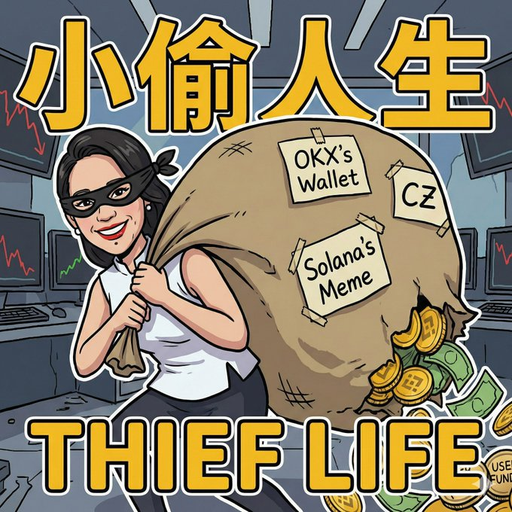
Trove's shift to Solana triggers market turbulence: $9.4 million ICO funds' whereabouts questioned, tokens plummet 95%
Recently, decentralized perpetual contract exchange Trove Markets suddenly announced a shift from the Hyperliquid ecosystem to Solana after completing an ICO of over $11.5 million, and decided to retain most of the raised funds. This caused its TROVE token to plummet over 95% within minutes of trading launch. The incident sparked intense discussions in the crypto community regarding project team responsibilities, fund transparency, and ICO ethics.
Event Review: An “Unexpected” Ecosystem Shift
Trove Markets was originally built as a decentralized perpetual contract exchange based on Hyperliquid infrastructure. Based on this vision, the project successfully raised over $11.5 million through a public token sale, far exceeding its initial goal of $2.5 million.
However, just days before the scheduled Token Generation Event (TGE), the project team unexpectedly announced they would abandon Hyperliquid and fully pivot to the Solana ecosystem for rebuilding. The project explained that the direct cause of this “Solana pivot” was the withdrawal of a key liquidity partner, who had originally promised to provide liquidity support of about 500,000 HYPE tokens. Losing this pillar, the team believed continuing development on Hyperliquid was “no longer meaningful.”
More critically, Trove later confirmed that despite the fundamental change in development roadmap, they would retain $9,397,403 of ICO funds to continue development on Solana. The project stated that approximately $2.44 million had been automatically refunded, another $100,000 would be gradually returned, and the remaining funds had been used or planned to be used for paying developers, front-end and back-end infrastructure, CTO expenses, consulting services, marketing, and operational costs.
Market Reaction: TROVE Token Experiences “Freefall” Crash
The sudden decision and controversy over fund management immediately triggered fierce market reactions. According to DEX data, within just ten minutes of trading, TROVE’s market cap plummeted over 95% from an expected approximately $200 million, with valuation briefly dropping below $20 million.
As of January 21, 2026, according to Gate market data, TROVE’s token price stabilized after sharp fluctuations, currently trading at a very low level. In contrast, its newly chosen underlying chain, Solana (SOL), experienced some volatility during recent market adjustments but maintained a solid ecosystem foundation and market share. Currently, SOL is priced at about $127.85, with a market cap of $72.17 billion, accounting for 2.49% of the cryptocurrency market share. Market analysis generally remains optimistic about Solana’s long-term technical roadmap and ecosystem development, but this has not prevented the collapse of the market value of the new project TROVE, built on its ecosystem, due to trust issues.
Community and Investor Concerns
This incident triggered strong backlash from investors and the community, with main concerns including:
Solana Ecosystem: Opportunity and a Test
Trove’s decision to pivot to Solana undoubtedly stems from its high throughput, low fees, and thriving DeFi ecosystem. SOL’s price has fluctuated significantly over the past year, but as a top-tier blockchain, its network activity and developer engagement continue to grow. For any project aiming to develop on Solana, strong technology is just the foundation; community trust, transparent operations, and firm execution are key to long-term survival.
The Trove incident serves as a wake-up call for all ecosystem participants: even on the most promising chains, project governance and moral standards are the primary factors determining success or failure.
Lessons and Outlook: How Should Investors Protect Themselves?
The Trove incident exemplifies the high risks inherent in the crypto world. For investors, it emphasizes the importance of conducting thorough due diligence before participating in any ICO or early-stage project:
Conclusion
Trove Markets’ “Solana pivot” and the subsequent token collapse are not just a project crisis but also a reflection on the entire crypto startup funding and governance model. While pursuing innovation and speed, integrity, transparency, and respect for investors must remain inviolable principles. Regardless of market fluctuations, these fundamentals are the cornerstone of building a sustainable crypto ecosystem.
For users interested in exploring frontier ecosystems like Solana, Gate will continue to provide comprehensive, timely market data, in-depth project analysis, and secure, reliable trading services to help users navigate the dynamic crypto world steadily.