

Trade
Basic
Futures
Futures
Hundreds of contracts settled in USDT or BTC
Options
HOT
Trade European-style vanilla options
Unified Account
Maximize your capital efficiency
Demo Trading
Futures Kickoff
Get prepared for your futures trading
Futures Events
Participate in events to win generous rewards
Demo Trading
Use virtual funds to experience risk-free trading
Earn
Launch
CandyDrop
Collect candies to earn airdrops
Launchpool
Quick staking, earn potential new tokens
HODLer Airdrop
Hold GT and get massive airdrops for free
Launchpad
Be early to the next big token project
Alpha Points
NEW
Trade on-chain assets and enjoy airdrop rewards!
Futures Points
NEW
Earn futures points and claim airdrop rewards
Investment
Simple Earn
Earn interests with idle tokens
Auto-Invest
Auto-invest on a regular basis
Dual Investment
Buy low and sell high to take profits from price fluctuations
Soft Staking
Earn rewards with flexible staking
Crypto Loan
0 Fees
Pledge one crypto to borrow another
Lending Center
One-stop lending hub
VIP Wealth Hub
Customized wealth management empowers your assets growth
Private Wealth Management
Customized asset management to grow your digital assets
Quant Fund
Top asset management team helps you profit without hassle
Staking
Stake cryptos to earn in PoS products
Smart Leverage
NEW
No forced liquidation before maturity, worry-free leveraged gains
GUSD Minting
Use USDT/USDC to mint GUSD for treasury-level yields

More

Trending Topics
View More19.01K Popularity
42.5K Popularity
12.32K Popularity
9.68K Popularity
38.51K Popularity




Pin
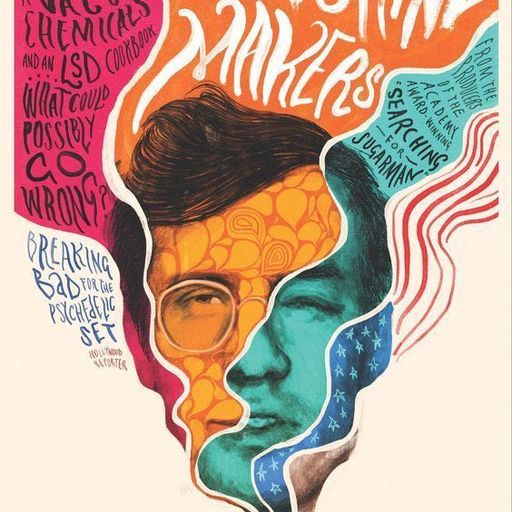
Satoshi Nakamoto Mystery: The Hidden Bitcoin Founder and Hundreds of Billions in Digital Inheritance
Whether it is his 50th birthday on April 5, 2025, or the more than 1 million bitcoins he holds, every detail about the Bitcoin creator sparks curiosity in the cryptocurrency world.
The Identity Enigma
Satoshi Nakamoto’s true identity remains the biggest unsolved mystery in the crypto world. According to the information he left on the P2P Foundation profile, he was born on April 5, 1975, and is from Japan. This birthday may carry symbolic meaning: 1975 was the year Americans regained legal ownership of gold, and April 5 is the date President Franklin D. Roosevelt signed Executive Order 6102, which made it illegal for U.S. citizens to own gold.
Bitcoin experts generally believe that this “birthday” was deliberately chosen to symbolize Nakamoto’s libertarian ideals and the vision of Bitcoin as “digital gold,” a store of value beyond government reach.
Genesis Moment
On October 31, 2008, Satoshi Nakamoto published the white paper titled “Bitcoin: A Peer-to-Peer Electronic Cash System” on cryptography mailing lists, proposing a decentralized digital currency system for the first time.
On January 3, 2009, he mined the first block of the Bitcoin blockchain (the Genesis Block). Embedded in this block is the text “The Times 03/Jan/2009 Chancellor on brink of second bailout,” referencing the headline of a British newspaper. This message not only confirms the creation date of the Genesis Block but also hints at Nakamoto’s motivation: creating an alternative to the traditional banking system in crisis.
The Disappearance Mystery
Nakamoto actively participated in Bitcoin development until December 2010, leaving over 500 forum posts and thousands of lines of code. His last confirmed communication was in April 2011, when he sent an email to Bitcoin developer Gavin Andresen. The email stated, “I hope you don’t portray me as a mysterious and ambiguous figure; the media will only treat Bitcoin as pirate currency.” Afterward, he transferred control of the Bitcoin source code repository to Andresen and completely vanished from the digital world.
Massive Digital Wealth
According to blockchain data analysis, researchers estimate Nakamoto mined between 750,000 and 1.1 million bitcoins in the early days of Bitcoin. More precise data comes from the crypto data platform Arkham Intelligence, which reports that 1,096,000 bitcoins are attributed to Nakamoto. At the Bitcoin price around $91,000 on January 8, 2026, this stash is worth over $100 billion. Surprisingly, this enormous wealth has never been spent.
Market Impact and Future Challenges
Nakamoto’s holdings account for over 5.5% of the circulating supply, but his continued inactivity has played a key role in reinforcing Bitcoin’s decentralization. By not moving or transferring these funds, he effectively enhances Bitcoin’s image as a truly neutral, leaderless financial tool.
Market analysts point out that if these bitcoins were to be moved, it could cause severe market shocks. Meanwhile, new technological challenges are emerging. Some experts warn that quantum computers could potentially crack Bitcoin’s current security architecture within the next 2 to 8 years.
Bitcoin’s Current Performance and Market Narrative
As of January 8, 2026, Bitcoin trades near $91,000, with a 24-hour decline of about 2%. Despite a short-term correction, Bitcoin reached a historic high of $109,000 in 2025.
A core market narrative currently is the “currency dilution trade” theory. This theory suggests investors buy Bitcoin to hedge against fiat currency devaluation, as governments expand money supply through debt and monetary stimulus, eroding purchasing power per unit. With a supply cap of 21 million coins and no central bank control, Bitcoin is viewed as a preferred asset to hedge this erosion.
According to Gate market data, Bitcoin’s trading price has stabilized above $90,000 in early 2026. The mysterious creator has left behind not only code and a monetary system but also an ideological experiment on decentralization, financial autonomy, and privacy protection. Over 1,096,000 bitcoins remain dormant in his address, valued at over $100 billion at current prices, yet never moved. Nakamoto’s wallet has become a “time capsule” of the Bitcoin network, reminding the world that true revolution often begins with the bold idea of an anonymous individual, and its impact far exceeds any personal identity or wealth.