GateUser-517aed04

vip
Age 0.1 Yıl
Peak Tier 0
No content yet
Opportunities are not distributed equally; they reward those who are willing to take some risks but can also manage those risks.
View Original
ExtremeWayBit
$BTC 【Latest Explanation of Pies Falling from the Sky】
One common saying people often hear is: “Pies won’t fall from the sky.”
👐 Whether pies fall from the sky depends on what era it is. What policies the Party and the country have, and so on......
💧 In Mao Zedong’s era, “struggle against local tyrants,” taking from the landlords and redistributing land—was that really like pies falling from the sky for poor, struggling people?
💧 Were the interest-free, no-maturity loans of the 1980s not like pies falling from the sky?
💧 In the 1990s, stocks turned how many people into millionaires, billionaires, and trillionaires overnight—was that not like pies falling from the sky?
💧 If at the end of the 20th century you bought a few properties in Beijing, Shanghai, or Shenzhen, today you’re at least a multimillionaire—was that really like pies falling from the sky!
💧 And as for the internet—if you had bought Ma Yun’s shares for 10,000 yuan back then, you would have already become a billionaire—was that not like pies falling from the sky?
💧 In fact, every trend of the times, every cutting-edge technological breakthrough in the development of science and technology, is like pies falling from the sky—it just depends on whether we have the foresight and the nerve to seize opportunities and catch the pies.
☔ If the pies come and you don’t reach out to catch them, if you can’t find your own hand, where would the pies fall? No matter how many pies there are, they still won’t fall into your hands, will they?
🌷 Because your thoughts weren’t prepared to let you catch this pie, you can only keep watching—watching—watching as the pies are caught again and again by other people.
🌷 🌷 The arrival of trends in every era is shared; whether to catch the pies or not is ultimately up to you!

  • Reward
  • Comment
  • Repost
  • Share
Lately, the secondary market royalties have been causing a huge fuss, kind of like a bridge encountering bad weather: everyone wants to cross quickly, but no one is willing to pay that "life-saving ticket." Others think turning off royalties just saves some transaction fees, but in reality, it’s more like cutting off a chunk of creators’ cash flow, and the quality and ongoing updates of content can’t be relied on to stay stable afterward.
I personally lean towards a systematic approach: royalties are not a moral issue, but an incentive design; without enforcement, they get wiped out by biddi
View Original
  • Reward
  • Comment
  • Repost
  • Share
Someone asked me whether restaking and shared security are “free gains,” but what I really want to say is: returns can stack, and risks can quietly stack too. The worst thing is taking “it looks safer” as if it were genuinely safer. Put simply—if you take the same collateral and use it to back multiple systems at the same time, once something goes wrong at the bottom layer (punishments, correlation blowups, and—on the bridge side—bad weather again), the domino effect can happen faster than you’d imagine.
Recently, modular and DA-layer discussions have been pretty lively. Developers look thrill
View Original
  • Reward
  • Comment
  • Repost
  • Share
If we can achieve a model that doesn't force spending, doesn't force grinding, and relies solely on social interaction and content circulation, then it will be stable.
View Original
Original content no longer visible
  • Reward
  • Comment
  • Repost
  • Share
I understand half of it; the other half will be made up in the comments section.
View Original
鱼馆鱼人
Haha😂😂😂
Did you understand?
repost-content-media
  • Reward
  • Comment
  • Repost
  • Share
I'll record this 🍸 for you first, and we can celebrate the second goal together later.
View Original
CryptoSat
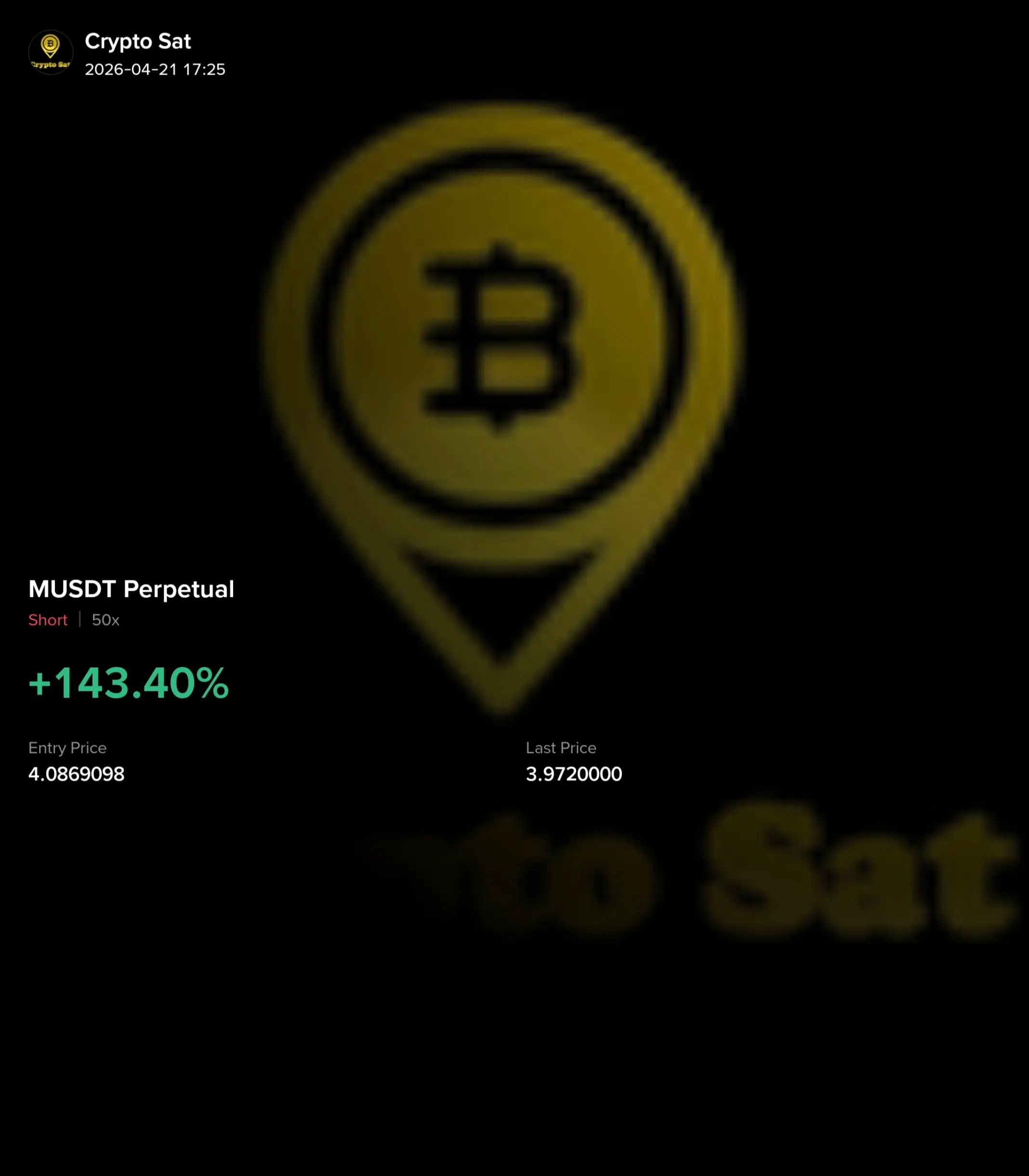
$M 1st Target completed 🍸
repost-content-media
  • Reward
  • Comment
  • Repost
  • Share
This kind of simple earning idea is correct: long-term competition is about the difference in detailed profit margins.
View Original
CarpenterLabs
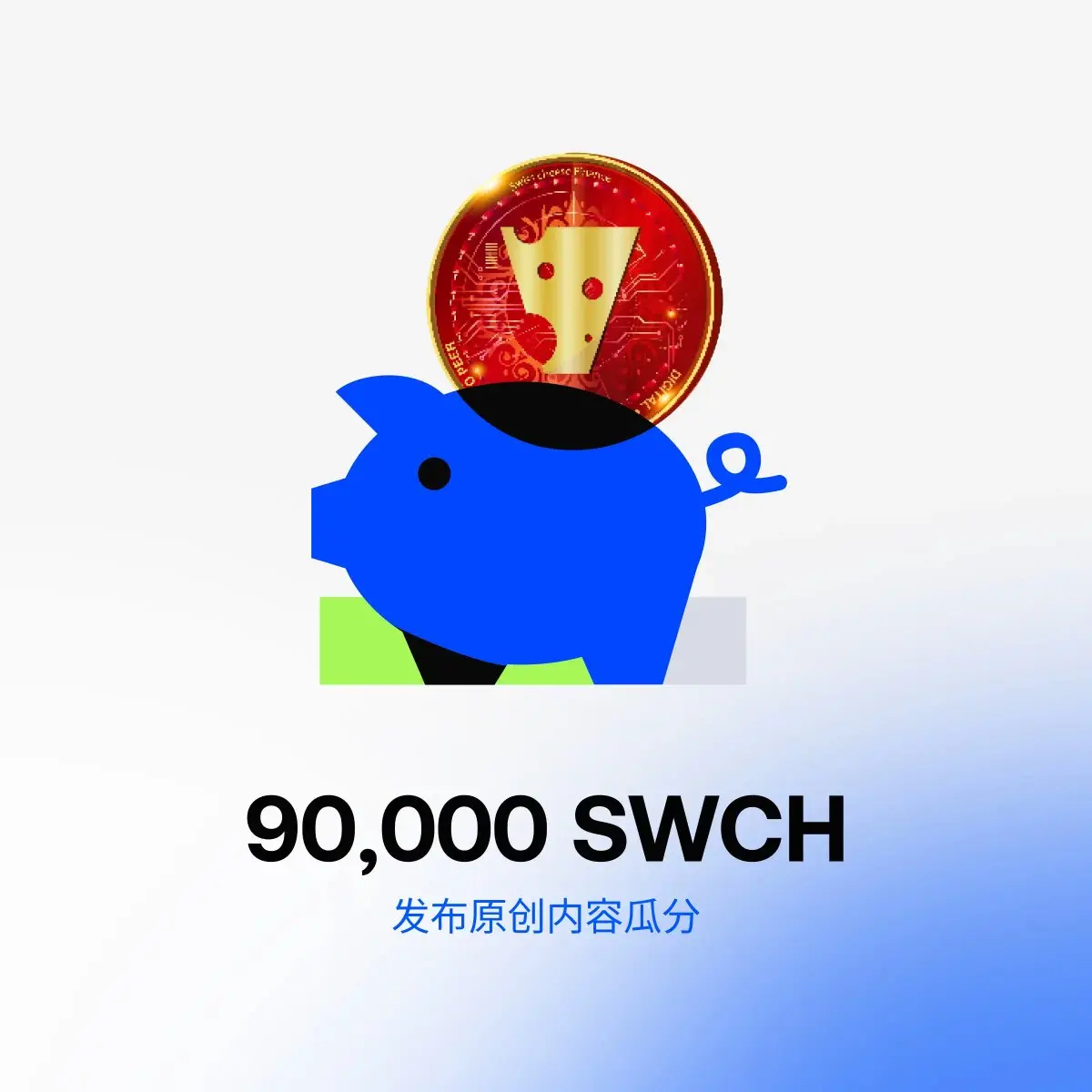
If you hold $SWCH and you don’t have a need for frequent short-term trades recently, Gate Spare Coins Treasure is the best tool to optimize your holding costs.
Ultimate efficiency: Idle assets are automatically invested and earn current/savings-style returns, with funds credited on time every hour.
Low risk: Platform backing, one-click management—say goodbye to complicated on-chain staking.
Super high incentives: The current $SWCH activity annualized yield has surged to 200%, which is an excellent window to reward holders.
Investment is a long-distance run—use every growth-enhancing detail well, and that’s how the gap gets widened.
👇 View details and apply:
#GateSimpleEarn
repost-content-media
  • Reward
  • Comment
  • Repost
  • Share
Traditional DeFi often involves betting on "everyone in the pool is fine," but once an issue arises, it's systemic draining.
View Original
BlockchainDiary
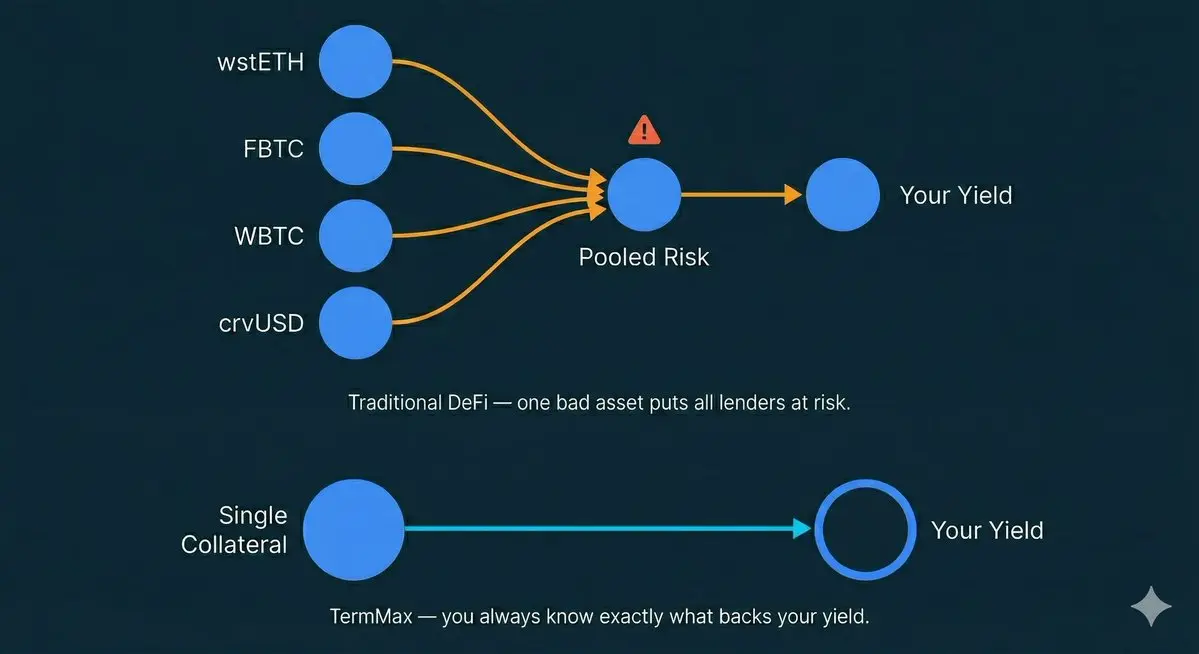
Traditional DeFi, at its core, is a liquidity pool model where you don't deposit a single asset but rather a mix of assets (wstETH, FBTC, WBTC, crvUSD). It appears diversified, but in reality, it's risk bundled together.
As long as one asset inside the pool encounters a problem, the risk can propagate through the pool, ultimately affecting everyone's returns and even the principal.
In contrast, @TermMaxFi takes a different approach: single collateral + market isolation.
Every profit has a clear corresponding collateral asset, with no mixing and no risk contagion, making it much safer compared to traditional DeFi.
repost-content-media
  • Reward
  • Comment
  • Repost
  • Share
Real estate tycoon ventures into satellite investment; didn't expect to end up in court.
View Original
CryptoFrontier
Oxley CEO Ching Chiat Kwong faces $1B lawsuit over failed Australian satellite venture
Property tycoon Ching Chiat Kwong, executive chairman and chief executive of Oxley Holdings, is facing a high-stakes lawsuit before Australia's Supreme Court of Victoria linked to the collapse of satellite firm NewSat. According to Bloomberg, Mr Ching had invested approximately US$100 million (S$127
  • Reward
  • Comment
  • Repost
  • Share
Recently, everyone has been talking about "why is on-chain data so slow," but what you're seeing as "on-chain" is mostly filtered through several layers of relay: the wallet connects to an RPC node that might already be several hundred blocks behind, and the browser relies on indexing services to fetch and organize data. If the index stalls or needs to rescan, the interface will look like nothing has happened. To put it simply, it's not that the chain isn't moving; it's that the window you're viewing has latency.
My mom asked me a couple of days ago: "You said on-chain data is transparent, so
View Original
  • Reward
  • Comment
  • Repost
  • Share
Looking at the APY of the yield aggregator, my first reaction isn't "Wow," but rather to check what actions it has actually taken for me: which vault the money went into, which strategy contracts were called underneath, whether the collateral was re-staked or borrowed again; then see who the counterparty is, who is doing the liquidation, who is covering the risk. To put it simply, APY is just the result; the longer the process, the more points of failure, especially with cross-chain setups where one loose link can shake the entire chain.
Recently, I've also seen people complain about validator
View Original
  • Reward
  • Comment
  • Repost
  • Share
I've been lurking in the group for a long time, and today I saw yet another argument about secondary market royalties, and I can't help but say: when it comes to royalties, it's not really about "whether it should be" but "whether it can be enforced." If you want exchanges and aggregators to all obediently deduct them, then it has to be written into the protocol rules, or at least have a default path that everyone agrees on. Otherwise, it ultimately becomes whoever has the most traffic gets to decide, and creators can only rely on shouting to defend their rights, which is exhausting.
What I wo
View Original
  • Reward
  • Comment
  • Repost
  • Share
I tried once to be a “miner” in a certain blockchain game: collect the daily output and then throw it back into the pool. A few days ago, watching the numbers felt pretty great, but I only later realized this: the output is essentially inflation. The pool’s small amount of real buy pressure/fees can’t support it at all. The more people come in to mine, the more it feels like slicing the same piece of pie into thinner and thinner layers. By the time someone starts selling in a concentrated way, liquidity gets drained in an instant, and the slippage in the pool becomes so large that it makes you
View Original
  • Reward
  • Comment
  • Repost
  • Share
Recently, I’ve again been seeing the secondary-market royalty disputes explode. Put simply, everyone wants smoother trades and fewer deductions, but on the creator side too, they genuinely rely on this “breathing room” to keep going. The more I look, the more I feel that the royalty issue isn’t as simple as “whether it should be charged”—it’s more like agreements and the market are fighting over the last word on interpretation: what you write on-chain does not necessarily get automatically recognized by the trading side; in the end, whoever has more traffic gets to decide.
What I need to be re
View Original
  • Reward
  • Comment
  • Repost
  • Share
The most obvious feeling from watching the market these days is not the rise or fall, but that the "water level" has suddenly dropped: thin order books, large slippage, even cross-chain bridges seem to be encountering bad weather, the puzzle pieces that could usually be assembled suddenly don't fit... At times like this, I really don't rush to buy the dip. First, clarify your positions and routes, withdraw if possible, and don't stubbornly hold until liquidity dries up and you find yourself unable to exit.
Recently, AI Agents and automated trading narratives are hot again. I actually want to
View Original
  • Reward
  • Comment
  • Repost
  • Share
Recently, I've seen everyone interpret ETF capital flows, U.S. stock market risk appetite, and cryptocurrency market fluctuations as if they are all tightly linked.
I just want to remind you: no matter what the market says, it can't control the "authorization" in your wallet.
Contracts give you an unlimited allowance, which is great, but if you don't revoke it, it's like leaving the key in the door lock all the time—one day if the protocol gets hacked, the front end is hijacked, or you click the wrong link, your money can leave faster than you can react.
My current habit is: revoke permi
View Original
  • Reward
  • Comment
  • Repost
  • Share
  • Pin