


Futures
Access hundreds of perpetual contracts
TradFi
Gold
One platform for global traditional assets
Options
Hot
Trade European-style vanilla options
Unified Account
Maximize your capital efficiency
Demo Trading
Introduction to Futures Trading
Learn the basics of futures trading
Futures Events
Join events to earn rewards
Demo Trading
Use virtual funds to practice risk-free trading
Launch
CandyDrop
Collect candies to earn airdrops
Launchpool
Quick staking, earn potential new tokens
HODLer Airdrop
Hold GT and get massive airdrops for free
Launchpad
Be early to the next big token project
Alpha Points
Trade on-chain assets and earn airdrops
Futures Points
Earn futures points and claim airdrop rewards


More





The Bitcoin Dilemma: Ordinals Upgrade May Lead to Centralized Fork
Last updated: January 4, 2024 02:17 EST . 2 min read
Disclosure: Crypto is a high-risk asset class. This article is provided for informational purposes and does not constitute investment advice. By using this website, you agree to our terms and conditions. We may utilise affiliate links within our content, and receive commission.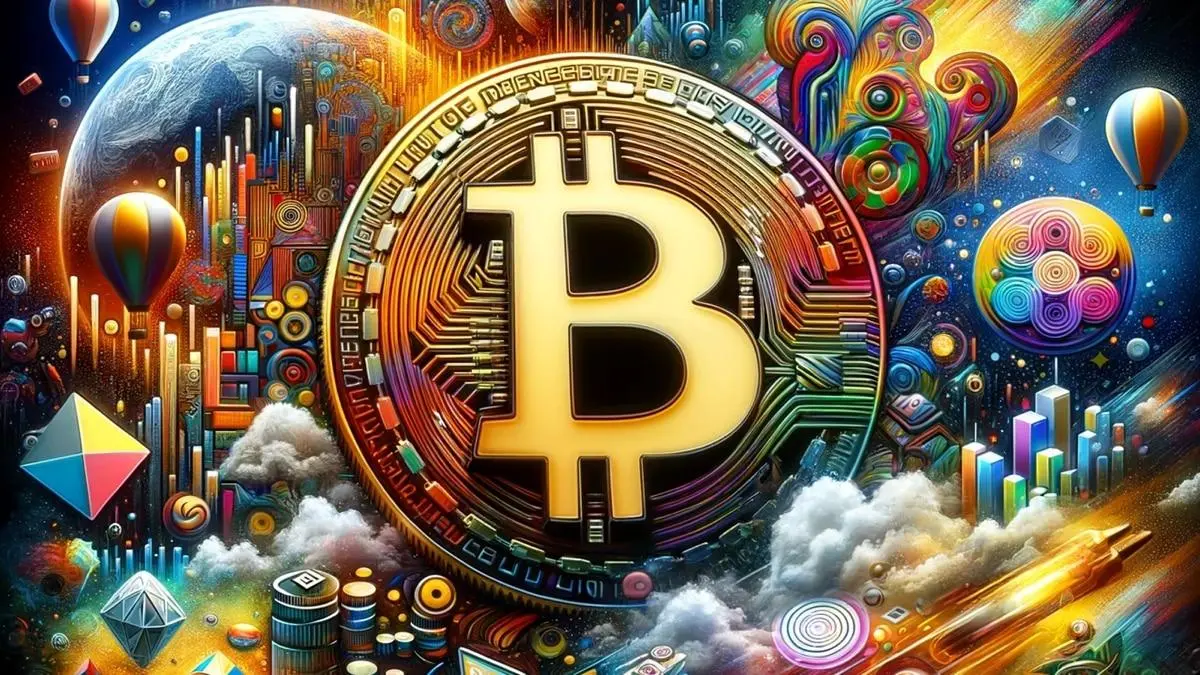 Source: DALL·EThe creator of Bitcoin’s fast-rising BRC-20 token standard is worried that one of its top marketplaces is attempting a sly takeover of the entire protocol.
On Monday, UniSat confirmed that it would implement the Ordinals Jubilee upgrade “to confirm that brc-20 is still on Ordinals without splitting into an isolated protocol.” However, BRC-20 creator Domo believes the company is effectively splitting with the interests of the surrounding BRC-20 community.
“I believe rushing these updates in BRC20 is reckless, disregards their peer indexers, and could potentially harm the broader community of BRC20 users,” wrote Domo to X on Thursday.
The Ordinals Jubilee update seeks to remedy the problem of “cursed Ordinals” – Bitcoin inions that are unrecognized by the the ord indexer, and thus don’t appear in current Ordinals wallets and marketplaces.
While keen on protocol enhancements, Domo said it would be unsafe to implement the update without proper testing, coordination, and infrastructure, citing issues with prior upgrades.
He also found the timing of the upgrade sketchy, declaring UniSat’s action is not simply “technically” driven, but “part of a considered, ongoing strategy to gain control of the protocol.”
Instead, Domo encouraged followers to follow the Layer 1 Foundation – a non-profit maintaining an indexer that prioritizes a “safety-first”approach to protocol maintenance.
In comments shared with Decrypt, Layer 1 agreed that UniSat was “misleading” its followers by claiming that it was trying not to cause a protocol “split.” The organization added:
Bitcoin ‘Fork’ VS ‘Split’
UniSat is a browser extension that lets users send, receive, and inscribe files into Bitcoin as NFTs or tokens, as well as shop for trending NFT collections. Its website claims an advantage over the official Ordinals wallet for not requiring users to run their own full Bitcoin nodes.
As UniSat clarified, a divergence between the Ordinals and BRC-20 community and ecos would constitute a protocol “split” rather than a “fork”.
The latter is similar to when Bitcoin Cash independently forked into a distinct blockchain from Bitcoin. The former would keep two different standards on the same chain, thus opening a “Pandora’s box of numerous cross-affecting cases” that are “much more hard to deal with than a fork.”
BRC-20 tokens were primarily responsible for driving up Bitcoin’s fees to over $20 per transaction in the past two months. Fees have since cooled to under $3 apiece, according to mempool.space.