
Futures
Access hundreds of perpetual contracts
TradFi
Gold
One platform for global traditional assets
Options
Hot
Trade European-style vanilla options
Unified Account
Maximize your capital efficiency
Demo Trading
Introduction to Futures Trading
Learn the basics of futures trading
Futures Events
Join events to earn rewards
Demo Trading
Use virtual funds to practice risk-free trading
Launch
CandyDrop
Collect candies to earn airdrops
Launchpool
Quick staking, earn potential new tokens
HODLer Airdrop
Hold GT and get massive airdrops for free
Launchpad
Be early to the next big token project
Alpha Points
Trade on-chain assets and earn airdrops
Futures Points
Earn futures points and claim airdrop rewards


More



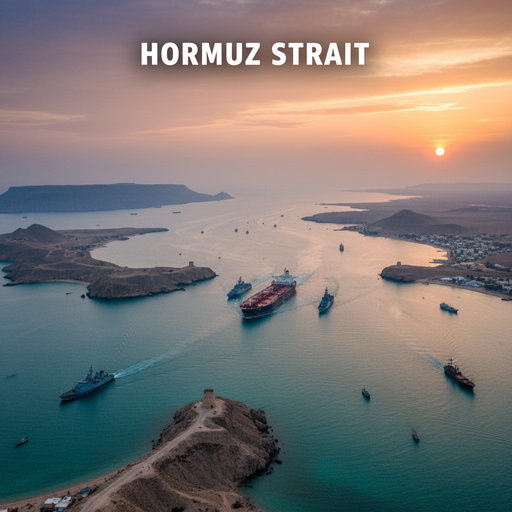
Field Investigation Report: Strait of Hormuz Enters New Phase of 'Hot War and Commercial Diplomacy'
On April 6, Citrini Research, the author of the ‘End of Day Report’, released a ‘Field Investigation Report on the Strait of Hormuz’. It is reported that Citrini Research sent an analyst fluent in four languages (including Arabic) to conduct an on-site investigation in the central part of the Strait of Hormuz to assess the actual situation. The analyst stated that investors should abandon the binary thinking of ‘open/closed’; the reality of the Strait of Hormuz is more complex, with hot war and commercial diplomacy running in parallel, and traffic volume is expected to gradually recover as the conflict continues. Current events cannot be simply judged by ‘conflict escalation/de-escalation’ or ‘strait open/closed’. The United States is conducting military operations, while its allies (such as France, Japan, and Greece) are actively negotiating navigation rights with Iran. This is a typical symptom of a multipolar world. Currently, Iran has established a functional navigation checkpoint between Qeshm Island and Larak Island, directing all approved traffic through Iranian territorial waters (rather than traditional routes). Vessels or their respective countries contact Iran through intermediaries, submitting ownership, cargo, crew, and other information, and paying tolls. After review, a confirmation code is issued, allowing escorted passage. Unapproved vessels must wait. The analyst noted that Iran’s position is ‘not wanting to close the strait’; its goal is to establish a sovereign system similar to Turkey’s management of the Bosporus Strait, controlling navigation and collecting fees while allowing commercial traffic to operate, thereby positioning itself as a responsible manager of global trade and isolating the United States. However, demands for Iran to open the strait without fees while simultaneously conducting military strikes are contradictory. A complete closure of the strait would lead to a global economic disaster (current estimates suggest a net loss of 10.6 million barrels per day in global commercial crude oil inventories). Most other countries (a rapidly expanding list including China, India, Russia, Japan, France, and Malaysia) are choosing to strike deals with Iran to secure their energy supplies. The analyst expects that as the conflict continues, traffic through the strait will increase. The process will be chaotic, primarily involving LPG carriers and small tankers, while large tankers like VLCCs will remain scarce. This is insufficient to avoid a global economic collision but is far better than a complete closure. Moreover, Iran is actively restraining the actions of the Houthis in the Red Sea/Bab-el-Mandeb Strait, holding this as an unplayed escalation card. Regardless of whether the strait is open, freight rates will remain high, and tanker stocks may not have peaked (such as BWET). The Federal Reserve may see through the impact of the conflict, with room for a shift in interest rate cut expectations, meaning cuts could occur earlier than current market pricing suggests, and this ‘advance’ expectation has further room to expand.