
Futures
Access hundreds of perpetual contracts
TradFi
Gold
One platform for global traditional assets
Options
Hot
Trade European-style vanilla options
Unified Account
Maximize your capital efficiency
Demo Trading
Introduction to Futures Trading
Learn the basics of futures trading
Futures Events
Join events to earn rewards
Demo Trading
Use virtual funds to practice risk-free trading
Launch
CandyDrop
Collect candies to earn airdrops
Launchpool
Quick staking, earn potential new tokens
HODLer Airdrop
Hold GT and get massive airdrops for free
Launchpad
Be early to the next big token project
Alpha Points
Trade on-chain assets and earn airdrops
Futures Points
Earn futures points and claim airdrop rewards


More


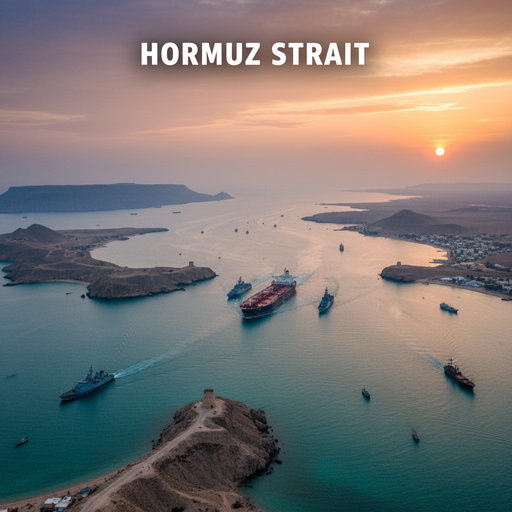


Iran’s Supreme Leader’s Adviser Warns: If the U.S. Makes Another Mistake, the Strait of Hormuz Could Be Blocked
Caixin News Agency April 6 report (Editor Liu Rui). On Sunday (April 5), local time, on April 5, Iran’s top leader’s foreign affairs adviser, Velayati, warned the United States that if it “makes the same mistake again,” Iran-led resistance front will take sealing the Strait of Hormuz as a countermeasure. This move may trigger yet another round of shocks to global trade and oil transportation.
According to CCTV, Velayati said in a post on social media that day:
The Strait of Mandeb connects the Red Sea and the Gulf of Aden, serving as a crucial passageway linking the Atlantic, the Mediterranean, and the Indian Ocean. Although this strait does not directly border Iran, it lies within the area controlled by the Yemeni Houthi forces. Iran has close ties with the Houthis in Yemen. In the late March this year, the Houthis began firing missiles at military targets in Israel.
If the Strait of Mandeb closes, it could further disrupt global trade and cut off yet another crucial passageway for oil-exporting countries to send oil and natural gas to overseas markets.
The U.S. Energy Information Administration (EIA) estimates that in 2024, about 4.1 million barrels of oil products are transported through this strait every day. For comparison, the International Energy Agency (IEA) estimates that in 2025, about 20 million barrels of oil products are transported through the Strait of Hormuz every day.
Against the backdrop of current disruptions to navigation through the Strait of Hormuz, the Strait of Mandeb is one of the alternative routes for oil-exporting countries to ship oil to Asia. According to data from maritime intelligence firm Kpler, currently about 7 million barrels of oil are transported by pipeline every day to Yanbu, a Red Sea port city in Saudi Arabia; then these oils are shipped outward through the Red Sea and the Strait of Mandeb.
JPMorgan analysts said last week that if the Strait of Hormuz fails to open for a long time, oil prices could spike to as high as $150 per barrel. At the same time, the analysts also specifically noted that once the Strait of Mandeb closes, it may lead to oil prices rising further.
Some media outlets believe that Velayati’s post is a response to the threats that U.S. President Trump made to Iran that day. Previously, Trump had threatened that if he could not reach an agreement with Iran’s leadership, he would destroy infrastructure critical to Iranian civilians.
A vast amount of information and precise interpretation—available in the Sina Finance app