
Futures
Access hundreds of perpetual contracts
TradFi
Gold
One platform for global traditional assets
Options
Hot
Trade European-style vanilla options
Unified Account
Maximize your capital efficiency
Demo Trading
Introduction to Futures Trading
Learn the basics of futures trading
Futures Events
Join events to earn rewards
Demo Trading
Use virtual funds to practice risk-free trading
Launch
CandyDrop
Collect candies to earn airdrops
Launchpool
Quick staking, earn potential new tokens
HODLer Airdrop
Hold GT and get massive airdrops for free
Pre-IPOs
Unlock full access to global stock IPOs
Alpha Points
Trade on-chain assets and earn airdrops
Futures Points
Earn futures points and claim airdrop rewards


More


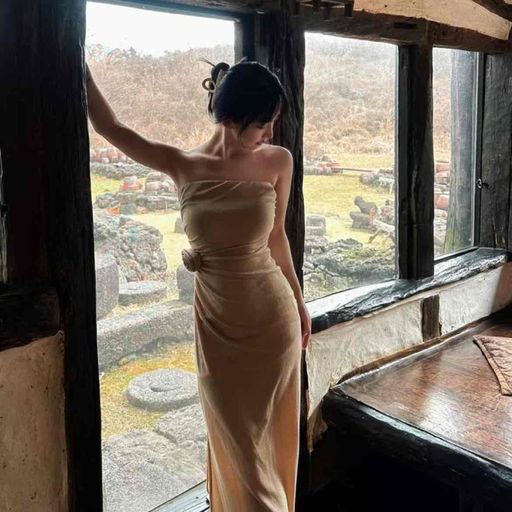


I recently came across a set of old photos—postpartum pictures taken by Liang Sicheng of Lin Huiyin. In 1929, Lin Huiyin had just given birth to her daughter, Liang Zaibing, and her frail body had not yet recovered, yet he kept holding the camera and pressing the shutter. Three years later, when their son Liang Congjie was born, it was the same. At first glance, it may seem a bit cold, but in fact, behind it lies the two people’s deep cherishing of life—Lin Huiyin actively requested that these moments be recorded, believing that childbirth is the most important turning point for women, from girlhood to motherhood, and that it deserves a true mark to be left behind. Liang Sicheng always fully supported her view.
Their story has to start with their family background. Lin Huiyin was born in 1904 in Hangzhou. Her father, Lin Changmin, had a close relationship with Liang Sicheng’s father, Liang Qichao, and the two children had known each other since childhood. Liang Qichao acted as a matchmaker; they studied together at the Songpo Library, and later went to the United States to study abroad together. Interestingly, when Lin Huiyin applied to the Department of Architecture, she was rejected—the school did not admit women—so she switched to the Department of Fine Arts, but she still insisted on auditing architecture courses. In 1925, Lin Changmin suddenly passed away, and Liang Sicheng stayed with her, helping her come out of her grief. Three years later, the two married in Canada. They even went to Europe to conduct a six-month survey of ancient architecture. After returning to China, Liang Sicheng founded the Department of Architecture of Northeast University.
After they married, they threw themselves into the Chinese Construction Society and began an in-depth investigation of ancient architecture. In 1932, they rushed to visit Dule Temple in Jixian County, Hebei; in 1933, they went to explore the Yungang Grottoes in Shanxi; in 1937, they discovered Tang-dynasty inscriptions at Foguang Temple on Wutai Mountain, which directly overturned the claim by Japanese scholars that China had no Tang wooden structural architecture. After the outbreak of the War of Resistance, they took their children south to Kunming and Lijiang. However difficult the conditions were, they were just as difficult—Lin Huiyin’s lung disease also repeatedly flared up, but they never stopped their research.
After the victory in the war, when they returned to Beijing, the two of them took on new work in the Department of Architecture at Tsinghua University. With the founding of the new People’s Republic of China, Lin Huiyin, despite her illness, participated in the design of the national emblem, and the core elements she proposed—such as the jade disk and five stars—were ultimately adopted. She also took part in the relief design of the Monument to the People’s Heroes and helped push for a transformation of the cloisonné enamel (Jingtailan) craft. In 1955, Lin Huiyin died of pulmonary tuberculosis at just 51 years old. Liang Sicheng personally designed her tombstone, carving the floral wreath pattern she herself had created onto it.
In 1972, Liang Sicheng also passed away. Together, they pioneered the beginning of modern surveys of ancient Chinese architecture and made contributions toward the protection of cultural heritage. Those postpartum photos, when viewed now, seem to represent not only Lin Huiyin’s insistence on beauty, but also the deep affection of two people who relied on and supported each other—captured and frozen on film, becoming the warmest memories in the passage of time.