


Futures
Access hundreds of perpetual contracts
TradFi
Gold
One platform for global traditional assets
Options
Hot
Trade European-style vanilla options
Unified Account
Maximize your capital efficiency
Demo Trading
Introduction to Futures Trading
Learn the basics of futures trading
Futures Events
Join events to earn rewards
Demo Trading
Use virtual funds to practice risk-free trading
Launch
CandyDrop
Collect candies to earn airdrops
Launchpool
Quick staking, earn potential new tokens
HODLer Airdrop
Hold GT and get massive airdrops for free
Launchpad
Be early to the next big token project
Alpha Points
Trade on-chain assets and earn airdrops
Futures Points
Earn futures points and claim airdrop rewards


More


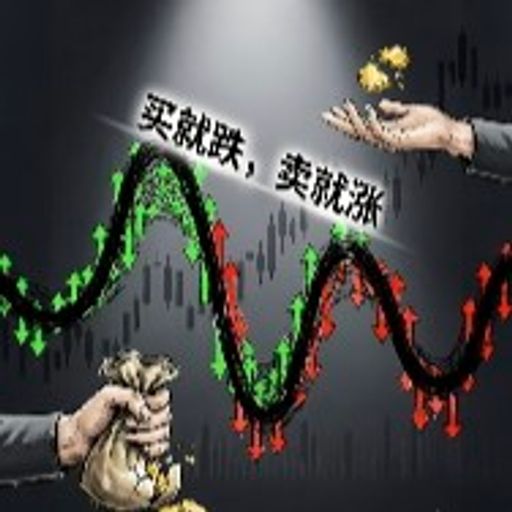


# Crypto Beginners Guide: What Exactly Are Fundamentals and Technicals? What Other Key Points Should You Pay Attention To?
Many newcomers to the space struggle to see the direction when facing various analysis approaches. Today I'll break down the most critical dimensions in trading using straightforward, easy-to-understand language so beginners can grasp it at a glance.
## I. Fundamentals: Determine Whether You Can Hold Long-Term
Simply put, fundamentals are about judging whether a project itself has value and is trustworthy, focusing on long-term holding.
Key points to look at: project team background and strength in risk management; whether investors are reliable and have formal institutional support; community engagement and consensus; whether there are actual applications, not just empty concepts.
The more solid the fundamentals, the more confident you can be holding long-term, making it suitable for value positioning.
## II. Technicals: Determine Whether You Can Enter Now
Technicals mainly look at price movement and identify buy/sell points through K-lines, trading volume, support and resistance levels, moving averages, and other indicators to judge short-term trends and entry timing.
Used for catching waves, defining entry/exit points, and timing the rhythm—leaning toward short-term trading and hands-on execution.
## III. Beyond the Two Core Dimensions, These "Factors" Are Equally Critical
Crypto markets are volatile and often driven by sentiment and capital flows, so you can't rely on just one dimension.
• **Sentiment Factor**: Is the market greedy or fearful? Is there chase-buying and panic-selling sentiment?
• **Capital Factor**: Are large players entering? Are whales accumulating or distributing?
• **Macro Factor**: Federal Reserve policies, data, international situations, and other external impacts
• **Policy Factor**: Regulation and industry direction—often directly shifting the market
Many times, even when technicals and fundamentals look good, they can't withstand key news and policy direction. Market sentiment moves faster than paper data.
Rather than repeatedly researching and debating judgments, it's better to follow practical trading strategies; listening to countless theories is not as good as keeping up with real execution pace and steadily capitalizing on opportunities. $BTC $ETH #Gate13周年全球庆典