
Futures
Access hundreds of perpetual contracts
TradFi
Gold
One platform for global traditional assets
Options
Hot
Trade European-style vanilla options
Unified Account
Maximize your capital efficiency
Demo Trading
Introduction to Futures Trading
Learn the basics of futures trading
Futures Events
Join events to earn rewards
Demo Trading
Use virtual funds to practice risk-free trading
Launch
CandyDrop
Collect candies to earn airdrops
Launchpool
Quick staking, earn potential new tokens
HODLer Airdrop
Hold GT and get massive airdrops for free
Pre-IPOs
Unlock full access to global stock IPOs
Alpha Points
Trade on-chain assets and earn airdrops
Futures Points
Earn futures points and claim airdrop rewards


More

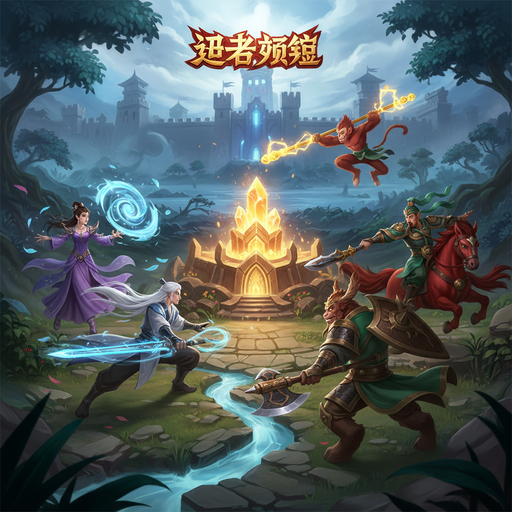


Revolution in the Gaming Industry: How Blockchain Games Are Changing the Rules of the Game
If you’re a gamer who has heard about blockchain games but doesn’t understand how they work or why people invest in them, this article is for you. Traditional games end where blockchain games begin — combining entertaining gameplay with real financial opportunities. Over the past decade, as blockchain technology has spread, it has fundamentally changed not only finance but also the entertainment world. Today, blockchain games are not just characters and levels but a comprehensive ecosystem of digital assets that truly belong to the player, along with earning systems that can generate passive income.
Blockchain Games: When Entertainment Meets Profit
Let’s start with the basics. Blockchain games are computer games built on blockchain technology, where players can earn cryptocurrency rewards, tokens, and digital assets in the form of NFTs. These games are often called crypto games, Web3 games, or GameFi projects, depending on which element is most prominent to players.
What makes blockchain games fundamentally different? There are three key features that form their magic triangle:
Decentralization — the game isn’t controlled by a single company but managed by a network of participants. Unlike studios that can shut down server-based games at will, decentralized games continue to exist as long as the blockchain is operational.
Interoperability — assets from one game can be used in another. A sword created in one game can theoretically be sold to a player in another game. This expands the value of each asset.
True Ownership — when you earn rewards or buy assets, they genuinely belong to you, not the developer company. You can sell, trade on other platforms, or gift them to someone else.
FatBoy is an example of such a game, accepting players regardless of their experience with cryptocurrencies, combining meme culture with Tamagotchi-like gameplay and earning potential.
The Three Pillars of Success: What Truly Works in Blockchain Games
Every successful game has three inseparable components. Understanding these components is critical if you want to distinguish a truly quality project from another shitcoin packaged as a game.
Earning Mechanics: Which Path Did the Game Choose?
Each game adopts one of three main earning methods for players. Play-to-Earn (P2E) — the classic approach where you play, complete quests, defeat enemies, and earn crypto. Move-to-Earn (M2E) relies on physical activity — the game pays you for steps or workouts. Free-to-Play (F2P) with blockchain allows playing for free, but monetization occurs through purchasing cosmetics or premium assets. This choice influences the entire game design.
Tokenomics: Will the Token Have Value in a Year?
Tokenomics is the economic system of the game, which can make or break a project. Developers must allocate tokens among:
Most importantly — what will happen to the token long-term? Will it just become cheaper due to inflation, as has happened with hundreds of dead games, or does the game mechanics create genuine demand for the token?
Accessibility and Community: Will Enough People Want to Play?
Even the best-designed game will die if the community doesn’t invest time and emotion. The game should be accessible on multiple devices, have an engaging storyline and characters that players want to develop. But that’s not all — the community demands sincere communication from developers. In an era where people quickly react to disappointment on social media, one misstep in communication can ruin years of work.
Open beta testing should be transparent, feedback considered, and developers visible on Discord and forums. The community can create or break a blockchain game much faster than a company can develop a new level.
From Theory to Practice: Player Checklist for Blockchain Games
When you encounter a new blockchain game, what should you really check before investing time and money?
First step: Economic analysis
Look at the token price, total circulating supply, and fully diluted valuation (FDV). Is there room for growth, or is the coin already at its peak before a crash? Compare with competitors. If a game looks like an exact copy of a successful project with more tokens in circulation and a higher price, it probably won’t perform better.
Second step: Study the whitepaper
Every serious game should have a detailed document describing its vision, asset rarity, and development plans. Read it critically. Who is the developer? What’s their history with previous projects? Does the team have experience in the gaming industry? Is the roadmap specific with dates and milestones or just pretty pictures?
Third step: Security and trust
On which blockchain is the game built? Ethereum is the safest but expensive. Polygon, BSC (Binance Smart Chain), and Solana are cheaper but carry different risk levels. Has the game undergone security audits by reputable firms like Slow Mist or CertiK? Are player rewards protected from theft or developer errors?
History shows: where there are no audits, rug pulls (developers stealing user funds) often occur.
Fourth step: User experience
Even if economics are perfect, if the game is boring, no one will play. Is the gameplay engaging or just clicking? Is character control intuitive? How fast does it load? Does the game crash often? Modern players, even Web2 ones, have high standards — Web3 players are no exception.
Final Recommendations for Players
There are hundreds of blockchain games on the market, but most are dead or dying. This doesn’t mean blockchain games are a bad idea — it means quality is critical. Don’t compromise on your choice, as you’re investing not only time but also your money.
Before joining any game, ask yourself:
If the answers are positive, you can proceed. Additionally, many successful blockchain games are in ecosystems like Polygon, BSC, and Solana, which offer low fees and fast transactions.
A truly quality GameFi game combines engaging gameplay, fair economics, and an active community. When all these elements come together, the result can resemble a snowball effect: the longer players are engaged, the more they earn, the more they invest in the game, and the more resilient the entire system becomes.
Important note on risks: The information and views presented in this article are for educational purposes only and should not be considered investment advice. The crypto market is highly volatile. Investing in blockchain games, like any cryptocurrency, carries the risk of losing all invested funds. Never invest more than you can afford to lose.