

Trade
Basic
Futures
Futures
Hundreds of contracts settled in USDT or BTC
Options
HOT
Trade European-style vanilla options
Unified Account
Maximize your capital efficiency
Demo Trading
Futures Kickoff
Get prepared for your futures trading
Futures Events
Participate in events to win generous rewards
Demo Trading
Use virtual funds to experience risk-free trading
Earn
Launch
CandyDrop
Collect candies to earn airdrops
Launchpool
Quick staking, earn potential new tokens
HODLer Airdrop
Hold GT and get massive airdrops for free
Launchpad
Be early to the next big token project
Alpha Points
NEW
Trade on-chain assets and enjoy airdrop rewards!
Futures Points
NEW
Earn futures points and claim airdrop rewards
Investment
Simple Earn
Earn interests with idle tokens
Auto-Invest
Auto-invest on a regular basis
Dual Investment
Buy low and sell high to take profits from price fluctuations
Soft Staking
Earn rewards with flexible staking
Crypto Loan
0 Fees
Pledge one crypto to borrow another
Lending Center
One-stop lending hub
VIP Wealth Hub
Customized wealth management empowers your assets growth
Private Wealth Management
Customized asset management to grow your digital assets
Quant Fund
Top asset management team helps you profit without hassle
Staking
Stake cryptos to earn in PoS products
Smart Leverage
NEW
No forced liquidation before maturity, worry-free leveraged gains
GUSD Minting
Use USDT/USDC to mint GUSD for treasury-level yields

More

Trending Topics
View More39.54K Popularity
72.72K Popularity
239.7K Popularity
16.28K Popularity
101.85K Popularity





Pin
Debt, Dollar Weakness, and Bubbles Point to a 2026 Economic Collapse – Gold and Silver in Focus
Source: Coindoo Original Title: Debt, Dollar Weakness, and Bubbles Point to a 2026 Economic Collapse – Gold and Silver in Focus Original Link: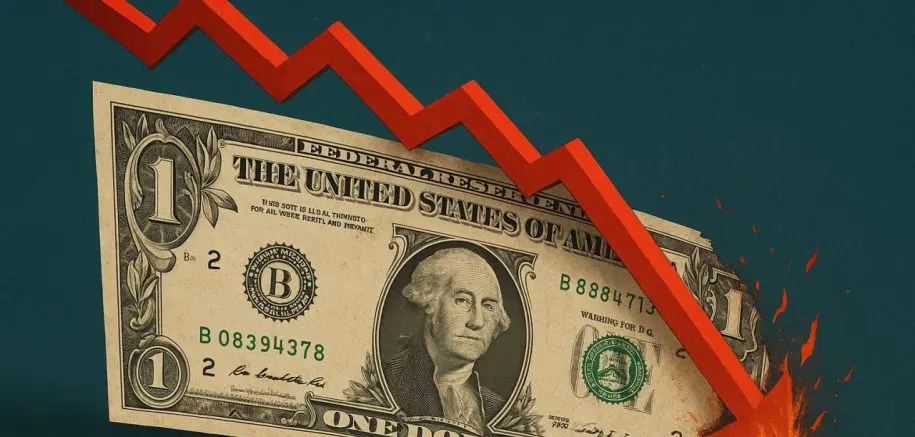
Doug Casey is not known for soft landings or optimistic forecasts, and his latest outlook pushes firmly in that direction. The veteran investor believes the global financial system is nearing a critical failure point, with the United States at the center of what he expects to become a severe economic depression beginning in 2026.
Rather than blaming a single shock, Casey argues the damage has already been done. Years of debt expansion, currency dilution, and artificial support mechanisms have, in his view, hollowed out the real economy while inflating financial assets. What remains, he says, is an unstable structure that can only be kept upright through constant monetary intervention.
Key Takeaways
Markets rising for the wrong reasons
Casey dismisses the idea that recent stock market strength reflects genuine economic health. He sees today’s rally as narrow and fragile, driven largely by a small circle of dominant technology and artificial intelligence companies rather than broad-based growth.
To him, this imbalance mirrors earlier speculative episodes. While he does not dispute that AI will reshape productivity over time, he believes capital has rushed ahead of reality. Valuations, he argues, already assume outcomes that may take many years to materialize – if they materialize at all.
That concentration risk is one of the main reasons he has avoided chasing equities, preferring to stay positioned for disruption rather than continuation.
Why hard assets matter in his framework
Casey’s defensive posture is anchored in tangible assets. Gold, silver, and selected commodities remain central to his strategy, not because of short-term price action, but because of what he sees as an irreversible weakening of fiat currencies.
He points to the US dollar as the clearest example. In his assessment, government finances have reached a point where deficits can only be sustained through aggressive money creation. That dynamic, he argues, steadily erodes purchasing power and forces investors to seek protection outside the traditional financial system.
Even dramatic price swings do not change his conviction. For Casey, volatility is a feature of real assets, not a reason to abandon them.
Quiet participation, not euphoria
One of the signals Casey watches closely is investor behavior. Despite sharp gains in precious metals, he notes that public enthusiasm remains subdued, particularly when it comes to mining equities.
Historically, he associates major market peaks with widespread excitement and speculative excess. The absence of that sentiment today suggests to him that the move in metals may still be incomplete, regardless of interim corrections.
A grim assessment of American prosperity
Casey also challenges the prevailing narrative around US economic strength. While the country appears to outperform many developed peers, he argues that this comparison is misleading.
In his view, relative strength does not equal real prosperity. Rising GDP figures, he says, mask a steady decline in living standards once housing, healthcare, education, and taxes are properly accounted for. He has gone so far as to suggest that a large portion of the population is far closer to financial strain than official statistics indicate.
He also expressed deep skepticism toward government-reported data, arguing that headline numbers often obscure more than they reveal.
Preparing for a different kind of cycle
Casey’s outlook is not built around timing market tops or bottoms. Instead, it reflects a belief that the current system is approaching an unavoidable reset. When that happens, he expects paper assets and leveraged structures to suffer the most, while scarce, real assets provide relative stability.
Whether or not his forecast proves accurate, his message is clear: the risks ahead are structural, not cyclical, and the next downturn may challenge assumptions that have held for decades.